Before I spoke to Father John Misty a few years ago, his management had referred to the musician as “Josh” in emails, so I did not doubt the name I should use when he picked up the phone. Even if a surname hadn’t been provided, I wouldn’t have felt discomfort with, “Hello, is this Father John Misty?”
The situation was much different with Bitch. The PR person used the stage name as if it was no different from any other. Email correspondence went like this: “Can I arrange a time for you to speak to Bitch?” “Bitch is available at 10:30am.” “You can call Bitch on Wednesday.” And so on.
“The hell with it,” I thought as I dialed the number.
“Hello? Bitch?”
“Hi!” the voice on the other end of the phone responded gleefully.
“So, I call you Bitch, correct?” It felt like I was breaking the law or something. I had to make sure it was okay before moving forward.
“Yes,” she chuckled. “Bitch is fine.”
Though I now know Bitch’s real name, she made me promise that I wouldn’t use it in this story. If you go to her Santa Cruz performance, Bitchcraft: How Bitch Became Bitch Starring Bitch, you’ll find out (and if you really love spoilers, it’s not difficult to locate online).
“By the end of the show, you will know what my parents named me,” she says as she walks a friend’s dog in Los Angeles. “Having people call me Bitch is like taking away the insult and embracing it. It’s empowering to use a word that’s often used to insult powerful women. I’m all about reclaiming [the word]. We’re finally at a point where we’re reckoning with this stuff.”
Like George Carlin, Bitch is intrigued by word origins, and thinks about why we use certain words as insults. This fascination goes way back, even before Bitch’s first band, the popular queercore folk duo Bitch and Animal, which formed in 1995 and went on to tour with Ani DiFranco, whom they met while playing a gig at a pizza shop in Provincetown. DiFranco signed the band to her label Righteous Babe Records, and co-produced the outfit’s 2001 release Eternally Hard, featuring fan favorite “Best Cock on the Block.” Their song “Pussy Manifesto” fueled a worldwide cult following. However, the pair decided to disband, and Bitch went solo in 2004.
Her music has been featured on The L Word, and she’s toured with the Indigo Girls and even done some acting; she appears in John Cameron Mitchell’sHedwig and the Angry Inch followup Shortbus.
But everything before Bitch’s 2022 release was preparation, education and inspiration that would culminate in Bitchcraft, which is the story of Bitch coming out of artistic hiding.
It all began with the multi-instrumental talent’s primary tool of the trade, the violin, and expanded from there. Throughout the eight-year period Bitch took to complete the record, the three years she lived with her partner in a log cabin in Northern Michigan was pivotal. After 15 years of the noise and chaos of New York City, Bitch was able to hear her thoughts without distraction. Like Bon Iver’s Justin Vernon, who found his voice while isolated in a cabin in Wisconsin, Bitch’s long and winding road towards Bitchcraft began in those remote woods. During the drive, before even stepping foot inside the rustic cabin for the first time, Bitch began composing “Hello Meadow,” which would become the third track on Bitchcraft.
“I felt like I was this fallen witch,” Bitch says. “As we approached the cabin, I saw this meadow nearby.”
It was like that meadow became a symbol for Bitch; the okay signal to move forward with her art at that log cabin.
“Hello Meadow” is early B-52s meets the Talking Heads, with Bitch’s electric violin sawing through with political dissonance: “Fill your tanks, create the ranks/ Make it cheap and easy, make it all so sleazy. You build your wall with bricks of fear/ When immigration’s why you’re here.”
Many songs that Bitch wrote at the cabin appear on Bitchcraft.
“It gave me space to think about the biggest version of myself that I could be,” she says.
Six years after Bitch began sculpting Bitchcraft, she thought it might be time to call it a day. She needed outside encouragement.
“I played a few things for some people,” she says. “They said, ‘Oh, my god, you have to keep going. You have to put this out.’ If I was left to my own devices, I might have gone off into a corner and shelved [Bitchcraft].”
That was all the momentum Bitch needed. Over the following two years, she enlisted assistance from everyone from the rapper God-des to Faith Soloway, who co-wrote some of the songs. She shapeshifted her sound into something unique: a colossal wall of synths, Bitch’s signature electric violin, Middle Eastern and Apalachin-inspired instrumental interludes and purposeful prose—some sung, some rapped; it’s the world as seen through Bitch’s eyes, and what it means to exist as a woman. Most importantly, Bitchcraft is about surrounding yourself with the people who genuinely care about you and finding joy in life.
“As an artist, you can get bitter and think, ‘Oh, nobody cares, and I’m just pissing in the wind,’” Bitch says. “I feel like at many points I could have easily given up on [Bitchcraft]. I was experiencing creative heartbreak. The reason I saw it through was out of pure encouragement.”
‘Bitchcraft: How Bitch Became Bitch Starring Bitch’ (with Kate Cash) happens Saturday, Nov. 19, 9pm at the Catalyst Atrium, 1101 Pacific Ave., Santa Cruz. $20/$25 plus fees. catalystclub.com.
Welcome to the giving season! This week we’re kicking off Santa Cruz Gives, our annual holiday giving campaign. We have a lot of work to do over the next month and a half, since you helped us raise more than a million dollars for local nonprofits in 2021—an incredible milestone, and a very high bar for this year!
So I urge you to get involved right away, starting with our cover story for this week. As has been tradition over the last several years, our campaign starts with a look at who you can donate to this year, and what project they will fund with your Santa Cruz Gives donation.
Here’s the thing, though: when we first started Santa Cruz Gives, we had somewhere around 20 groups participating, so there was plenty of room in our pages for lots of information about the organizations. As SCG has grown, we’ve had to squeeze more groups into the same space, and this year we’ve got 63 nonprofits in the campaign. So, like last year, we only had room in the cover story for each group to briefly explain their project. That will give you the basics, but there’s so much more to know about the great work all of these nonprofits do in our county, and you can go to santacruzgives.org to read way more about each of them. We’re so excited to be working with all of this year’s groups, and I want to thank our Santa Cruz Gives co-sponsors: Community Foundation Santa Cruz County (as well as the Joe Collins Fund and the Applewood Fund at CFSCC), the Volunteer Center of Santa Cruz County, Driscoll’s, Santa Cruz County Bank, Wynn Capital Management, the Pajaronian and the Press-Banner.
Also this week, our center pullout is a listing of our Best of Santa Cruz County winners for 2022. Back in the day, we used to run the winners in one gigantic issue every year. Now that we put out a whole magazine featuring the winners in March, we don’t do that issue anymore, but we wanted to make sure we ran the winners in the paper, so here they are. Congratulations again to all of them!
STEVE PALOPOLI | EDITOR-IN-CHIEF
PHOTO CONTEST WINNER
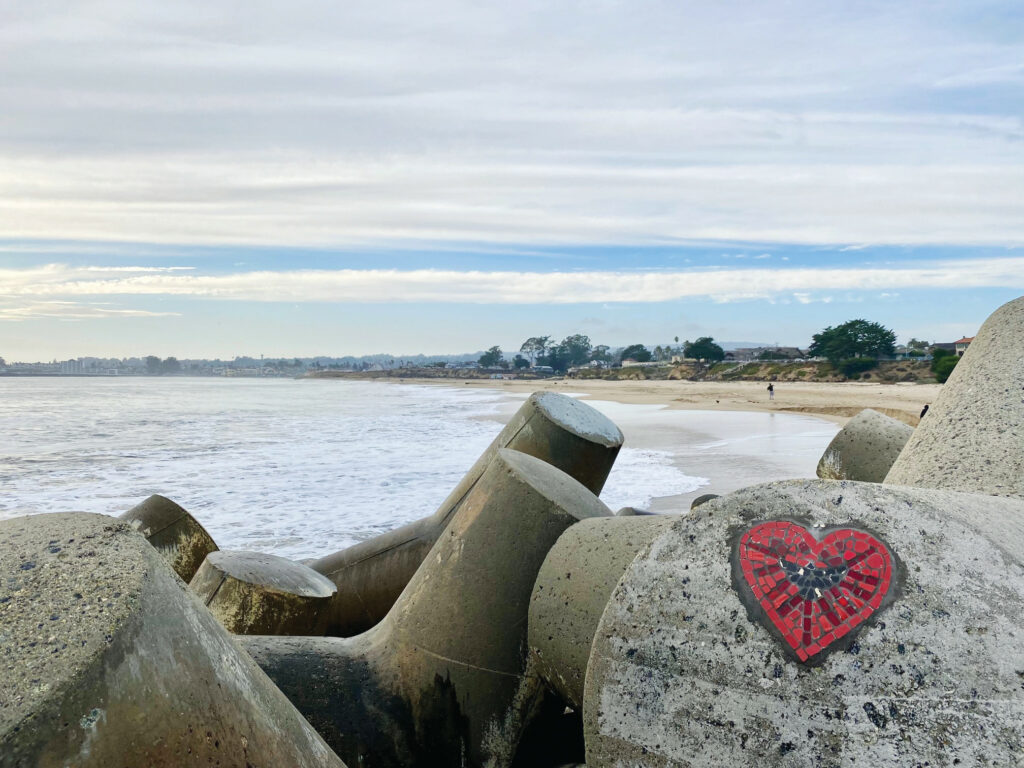
LOVE ON THE ROCKS On the jacks by the Walton Lighthouse. Photograph by Cristy Norian
Submit to ph****@*******es.sc. Include information (location, etc.) and your name. Photos may be cropped. Preferably, photos should be 4 inches by 4 inches and minimum 250dpi.
GOOD IDEA
UNITE FOR WHAT’S RIGHT
This week is United Against Hate Week, a call for seven days of local civic action by people in every community to stop hate and bias. The Resource Center for Nonviolence (RCNV) has seven days of workshops, trainings and discussions to educate people on how to stand up to racism. The week ends with a free screening of the documentary Repairing the World: Stories from the Tree of Life that includes a discussion with the filmmaker Patrice O’Neill and panelists. Learn more at rcnv.org/events.
GOOD WORK
SOUNDS GREAT
El Sistema Santa Cruz / Pajaro Valley is being nationally recognized for its youth music programs. On Monday, the Lewis Prize for Music 2023 Accelerator Awards announced El Sistema (one of this year’s Santa Cruz Gives groups) as a finalist for one of three $500,000 awards that go to programs throughout the country creating positive change through youth music programs. Learn more at thelewisprize.org.
QUOTE OF THE WEEK
“We make a living by what we get. We make a life by what we give.”
After sixteen months of attending court, the two men who committed a felony hate crime against our community in their vandalism of the Black Lives Matter mural have pled “no contest” to all charges. Their sentencing hearing is set for November 18th, 2022, at 10am in Department 6 of the Santa Cruz County Courthouse, with Judge Syda Cogliati presiding. The Santa Cruz Equity Collab is encouraging our community to show up to court on that day.
When they pled “no contest” on October 24th, 2022, the court indicated that their sentence would include: each man paying up to $10,000 in restitution, a number that is about five times less than the estimated value of the mural; their attendance of a “racial sensitivity class” or professional therapy, which the Judge referred to as a “unique” requirement for our county; 144 hours each of community service; and two years of probation, with the option to ask for their felony to be reduced to a misdemeanor after one year.
For the Santa Cruz Equity Collab, restorative justice would look like this: both defendants are ordered to be physically present for the sentencing hearing; community service that includes—but is not limited to—being part of the painting and planning process in restoring the mural, attending all community discussions, speeches, and educational opportunities associated with the mural and a presentation of a public apology to the community in attendance at the restoration event; participation in the Victim-Offender Dialogue Program through the Conflict Resolution Center; participation in weekly professional therapy for at least two years; payment of the estimated value of the mural in full as restitution; participation in a racial justice training/workshop that the Santa Cruz Equity Collab has co-created and/or co-facilitated and/or have the opportunity to research and weigh in on the choice of training/workshop; and at least five years of probation, during which they are not able to purchase firearms.
This is our opportunity to choose progress within this system through a restorative justice model; to explicitly show the defendants and our community that we both understand and deeply care about the harm that has been perpetrated through this hate crime, and the need for true amends to be made; and to publicly demonstrate that, as a community, we will not tolerate hateful, racist behavior. We appreciate the community and City Council’s ongoing support in pursuing justice in this case, and for generally being on fire for social justice in Santa Cruz.
SC Equity Collab | Santa Cruz
These letters do not necessarily reflect the views of Good Times.To submit a letter to the editor of Good Times: Letters should be originals—not copies of letters sent to other publications. Please include your name and email address to help us verify your submission (email address will not be published). Please be brief. Letters may be edited for length, clarity and to correct factual inaccuracies known to us. Send letters to le*****@*******es.sc
Re: “Caught Red-Footed” (goodtimes.sc, 11/12): We were trying to keep the booby on the down-low, or at least its location, as they are often aloof towards humans and this one is no different. Several people have tried to touch it; one person wrapped his arm around it to show everyone how friendly it is. One person allowed their 3-year-old to try to grab it, and if it has bird flu, this is a problem. Please, give the booby some space. It can fly, so we don’t want to rescue it, and they do belong here, contrary to previous articles. There are five established species of booby populations on the Farallon Islands, and this is likely where this one came from. We see them every year. Please stay at least six feet away from the booby, for your health and for the health of the bird. If it looks unwell and is not able to fly, please call us here at Native Animal Rescue at 831-462-0726.
Amy Redfeather | Santa Cruz
These letters do not necessarily reflect the views of Good Times.To submit a letter to the editor of Good Times: Letters should be originals—not copies of letters sent to other publications. Please include your name and email address to help us verify your submission (email address will not be published). Please be brief. Letters may be edited for length, clarity and to correct factual inaccuracies known to us. Send letters to le*****@*******es.sc
A New Home for Art and Artists: As Santa Cruz becomes the second most expensive place to live in the U.S., the 418 Project is keeping our town accessible and affordable for the many working artists who make their home here. With incredible faith from our supporters, we were able to purchase a building downtown. Now we are able to provide affordable teaching, work and performance spaces to literally thousands of artists from underserved groups. Your gift keeps artists in town and keeps Santa Cruz vibrant.
Alzheimer’s Association
Know Where Alzheimer’s Hides: More than 5,300 people in Santa Cruz County live with Alzheimer’s and other dementias, and another 10,000 loved ones and caregivers are impacted. Alzheimer’s disease often hides in plain sight. Help us educate our community on the 10 warning signs of Alzheimer’s and other dementia, and raise awareness of the importance of early detection and diagnosis in Santa Cruz County. All services are free and offered in English and Spanish by phone, virtually and in-person, including care consultations to help families anticipate and plan; support groups to connect with others who understand the journey; and education on topics such as how to have dementia conversations, self-care for caregivers and healthy living for brain and body.
Balance SCC
2023 Teacher Grants: Our Teacher Grant Fund grants more than $25,000 in supplies annually directly to local teachers and service providers for items they need but cannot afford. Typical items are Chromebooks, iPads, therapeutic chairs and swings, etc. We typically gift to approximately 60 local teachers/specialists who each work with 30-200+ students with unique needs each year. We raise the funds from the community to support this effort. We have also given free training to more than 100 local educators for school staff to help children learn constructive ways to handle crisis.
Barrios Unidos
Audio and Video Engineering: We are excited about teaching kids to edit videos and to record their own music because we can give the youth skills that can grow into a future career as a video director, musician, music engineer and more, as well as explore their creativity. We need to upgrade our music studio (audio and video recording equipment, and instruments). We also need updated computers, mixing boards and cameras. We have one part-time staff person but would ideally like to have two for this program. In the longer term, we would like to expand and offer this education to our local community.
Big Brothers Big Sisters of Santa Cruz County
After-School Enrichment Program ‘Together We Grow’: BBBS strives to broaden our impact through a partnership with a low-income housing community in Watsonville to provide mentorship and substantive after-school enrichment to more than 200 youth. A professional program coordinator, with trained volunteers, will execute a thoughtfully prepared science- and art-based curriculum designed specifically for multi-age youth. We will assist with development of study skills while providing engaging activities with a foundation in science, nature and the arts. We began serving in one housing location in October. Our service is constrained by currently available funds. With additional financial support, we can serve more children (by adding two more housing locations), with greater frequency and improved outcomes.
Birchbark Foundation
Love Heals: When a pet has a health crisis with a good prognosis, the unique love of a family animal must never be lost simply due to cost. BirchBark will provide stability to vulnerable families faced with fixable but unaffordable urgent veterinary care. Our goal is to provide healing love and save the lives of 100 pets with Santa Cruz Gives donor funds. Hundreds of people will benefit, because most households have one to six people. In addition, we help our veterinary partners, who often must euthanize pets and are extremely affected emotionally when clients do not have financial resources to save their animals’ lives.
Boys and Girls Clubs of Santa Cruz County
Power Hour and SMART Moves Programs: Our clubhouse-wide “Power Hour” program complements and reinforces what youth learn at school via daily 60-minute sessions in which every member at the club receives homework help, tutoring or participates in self-directed learning. We support social-emotional learning and help youth strengthen healthy decision-making, boost self-esteem, avoid risky behaviors, develop assertiveness, analyze media and peer influence and build resilience. With your support, we can develop these programs, keep school year membership fees to $75/year and never turn away any child for inability to pay thanks to our donor-supported scholarship fund. All club services are available to all youth, regardless of race, socioeconomic status, family situation or mental or physical ability.
CASA of Santa Cruz County
Serving Youth Involved in Justice: CASA of Santa Cruz County is expanding advocacy from youth in foster care (the Dependency Court system) to include youth in the Juvenile Justice system. CASA recruits, screens, trains and supervises volunteer Advocates. After extensive training, a background check and swearing in by the court, Advocates get to know their child’s situation and needs, help caregivers access resources and advocate for the child’s best interests. For older youth, an Advocate acts as a mentor and guide, assisting with life skills, and for justice-involved youth, this includes completing the terms of their probation. Youth with an Advocate are less likely to return to the system, are substantially less likely to spend time in long-term foster care and are more likely to become healthy adults who break the cycle of abuse.
Center for Farmworker Families
Comida, Cobijas, y Cariño (Food, Blankets, and Care): From December to April, when the berry harvest has been completed, few farmworkers work full-time hours As a result, their income and ability to purchase basic needs such as food are compromised. Already-low wages make it difficult for most families to save for the off-season. With your support, “Comida, Cobijas, y Cariño” (“Food, Blankets, and Care”) will be a new program that invites 20-30 members of our farmworker family constituents to participate in a monthly small-scale distribution meeting where they will not only receive food, but home goods such as blankets and bedding, cookware and personal health items such as toiletries.
Coastal Watershed Council
A Thriving Urban Riverwalk In Your Community: The San Lorenzo River is the primary source of drinking water for 100,000 residents and critical habitat for endangered species, and its adjacent Santa Cruz Riverwalk park provides opportunities to connect with nature in the heart of Santa Cruz’s downtown business district and diverse riverside neighborhoods. That’s why a community-driven and nature-based approach is fundamental to achieving our vision of a thriving urban riverfront where all Santa Cruzans can connect to nature in their daily lives. CWC supports residents who live along the river to regularly visit it, care for it and advocate for its protection, balancing ecology with a growing downtown. CWC engages and empowers youth to learn about the river and to share their new knowledge with others during in- and out-of-school programming.
Community Bridges
Let’s Learn English Together!: In Santa Cruz County, 56% of residents age 5 and older do not speak English very well or at all, according to the U.S. Census Bureau. This funding will teach non-English speaking parents during the day to speak English, and help pay for childcare for young children while their older children are in school. This will allow them to guide their children with schoolwork. In Santa Cruz County, the poverty rate among those who worked full-time for the past 12 months was 3%. Among those working part-time, it was 16% and for those who did not work, it was 19%. Community Bridges recognizes the importance of education in breaking the vicious cycle of poverty.
Community Music School
Beginning Music Lessons for Underserved Students: Although arts education is part of California’s Core Curriculum, many elementary school students in our county have little to no music instruction. We want to partner with other educational and nonprofit organizations to offer beginning music lessons as an after-school program. This will help balance the distribution of musical wealth, opportunities and privileges within our larger community. Students in this program will not only have weekly music instruction, but will get to keep their chosen instrument (either a melodica or a baritone ukulele) at the completion of the school year. For many participants, the benefits range from educational to inspirational or just plain fun. For others, these programs are life-changing; a number of our teens have gone on to careers as professional musicians and/or instructors.
County Park Friends
Parks = Health + Equity: Imagine a community where everyone in Santa Cruz County can access the amazing natural resources that make our home so special. Time in nature is shown to improve mental and physical health—and you can help us knock down barriers to access such as fees, language, transportation and accessibility. We make sure our public spaces and programs (such as swim lessons, wheelchair basketball and docent-led family exploration hikes) are truly welcoming so every kid can experience the wonder, health, wellness and joy available in our parks, beaches and trails. We ask you to invest in our free programming designed for health and wellness to ensure our community can thrive.
Dientes Community Dental Care
Healthy Smiles for All: All too often in our community and beyond, wealth = health. Dientes is committed to providing access to vital dental care for patients living in poverty so that everyone can have a healthy smile. We work to ensure that cost, insurance, income, race, language and transportation do not prevent people from visiting the dentist. For thousands of your neighbors in Santa Cruz County, dental care is simply out of reach—and cost is often the biggest constraint. Our “Dientes Cares” program helps make oral health care more accessible to all. For low-income, uninsured patients, we subsidize affordable sliding scale fees and offer free care to those who need it most.
Digital NEST
Watsonville Youth Workforce Development Program: Digital NEST Watsonville is a community-driven career development center for primarily Latinx youth that provides free technology skills training, paid internships and networking opportunities with professionals. Digital NEST members have access to technology and a safe space and are given training in essential workplace skills all at no cost. Through our paid internship program, members who excel can build professional portfolios while working with real clients and growing their professional skills. We connect members to internships with partners in industry and education and provide mentoring opportunities through our annual NEST Flight conference.
Eat for the Earth
Healthy Children, Healthy Communities: In the face of life-threatening health and environmental crises, citizens of Santa Cruz County are extremely concerned about their health, the health of the community and the state of our environment. Our project educates families, children and child-serving organizations about the dietary change that promotes vibrant health, reduces risk and severity of COVID, contributes positively to the environment and tastes great! We offer presentations, food samplings and demos, nutrition education, mentorship and resources to support the adoption of healthy, sustainable plant-based diets—in both English and Spanish.
Ecology Action
Youth Pedestrian and Bicycle Safety Education for All: Imagine a majority of Santa Cruz County students walking and biking to school safely, wearing helmets and knowing how to negotiate intersections—less exhaust, less greenhouse gas emission, fewer families making pick-up and drop offs, healthier, active, confident, happy kids. At Ecology Action, we work to make this a reality by delivering cutting edge school-based programs that teach life-saving bike and pedestrian safety skills to elementary students taught by nationally certified, bilingual educators: Walk Smart and Bike Smart. This program’s great success has inspired an expansion of our offerings with a focus on equity and accessibility by providing bikes directly to students who need it most.
Ecology Action
El Sistema Santa Cruz/Pajaro Valley
Watsonville Youth Symphony: For 10 years, El Sistema Santa Cruz has been reframing music education as a medium for increasing access to music countywide with a focus on South County. Thanks to partnerships with school districts foundations and community members, El Sistema has become a pre-orchestra program engaging over 1000 students after school and during summer with daily group lessons rehearsals and performances. With students graduating from their pre-orchestra program with the skills and qualifications required to perform in an orchestra, El Sistema started a youth symphony in March of 2022 that reflects the full diversity of the community. We now need your help to grow this newly formed symphony.
Encompass Community Services – Si Se Puede
Sí Se Puede Behavioral Health Center in Watsonville: Santa Cruz County is in the midst of a substance use epidemic and it will take our entire community to create real solutions. We are building a state-of-the-art Behavioral Health Center that will serve those in need countywide to deliver high-quality accessible, personalized bilingual substance use and mental health treatment to more than 1300 community members a year. Our all-in-one campus will help us meet every individual where they are in their recovery journey through connected programs with varying levels of residential and outpatient treatment—all in an atmosphere of dignity and respect where they can thrive.
Families in Transition
Restoring Credit and Opportunity: For those who experienced housing and job insecurity during the pandemic, it became much harder to maintain good credit scores. Our project will help families in our program to restore their credit in order to give them a better opportunity for housing. There are many low-income and affordable housing projects being built in our area, and in order to qualify for these units, a family will need to have good credit. Your donation will positively impact our participating families by giving them a fighting chance at renting these much needed housing opportunities.
Farm Discovery at Live Earth
Community Produce Distribution and Education Program: Farm Discovery at Live Earth seeks to maintain and enhance the organic produce distribution and education program, providing fresh, organic produce to underserved community members through three partner organizations. The program increases access to fresh fruits and vegetables, nutrition and environmental education, and relieves food and nutrition insecurity, resulting in improved community health and environmental stewardship. We donated 138,000 pounds (69 tons) of produce since March 2020, and grew, harvested and donated an additional 5,000 pounds in our education fields in 2022. An average of 25 pounds of produce feeds a family of four for one week; therefore, we feed about 50 families per week. This year, we hope to purchase an electric van to support delivery of produce to our partners and to the plates of our community most in need.
FoodWhat?!
Help Update the FoodWhat Outdoor Kitchen: For 15+ years, FoodWhat has been a safe space where youth historically excluded in our community are afforded the opportunity to redefine their health and well-being on their own terms and in lasting ways. For youth at our Watsonville farm site, this includes access to our safe outdoor kitchen space. After a decade of wear and tear, elements of the kitchen are nearing the end of their usefulness and need to be replaced. These include a 3-burner stove, cast iron pans, sink and drying rack, blender, plates, EZ UP tents, portable picnic tables, bins and Tupperware. These outdoor spaces are crucial to sustaining long-term diet change. Away from distractions, youth breathe fresh air, address their mental health by connecting to the land and cook nourishing meals for themselves, their families and their communities.
Friends of the Santa Cruz Public Libraries
Recover and Thrive: In this year-long initiative, we will identify and support increased opportunities to learn at the Santa Cruz Public Libraries through both proven and innovative means. 2020-2022 has shown that PreK-12 students need library materials, and they need in-person experiences and hands-on learning accessible regardless of language/culture, ability to pay or access to the internet/computers. FSCPL will build on its accomplishments and partnerships to provide opportunities that will allow students to begin their school year in September 2023 as a true continuation of learning.
Girls Inc.
Smart Choices Summer Camp: Smart Choices, a summer program for 8th and 9th graders, helps participants make positive life choices about school, relationships and health during a week spent at UC Santa Cruz. For 95% of our girls, this is their first time away from home. They experience college life and get a head start in planning for high school and beyond. The program addresses issues facing these girls by focusing on pursuing higher education—setting goals, making decisions, understanding the value of an education and taking the necessary steps to achieve their goals. With your support, we hope to serve 80 participants for 5 days: sessions from 9am-9pm, room and board, meals, materials and transportation.
Grey Bears
Engage at Every Age: This year, we will reach even deeper into our community to ensure all those who need us—seniors, veterans and farmworker families—receive our healthy food and meal deliveries, ways to socially connect, and access to recycling, thrift store, medical supplies, clothing, computers, books and other basic needs. With 65,000 hours of service from 700 volunteers, we will deliver 1.7 million lbs. of food to 5,000 residents; distribute 1.2 million lbs. of groceries daily rescued from 24 markets, bakeries, orchards and gardens; serve 40,000 fresh, locally prepared meals; repurpose 1,500 tons of household items and divert 7,000 tons of recycling and organics from landfills.
Grower-Shipper Foundation
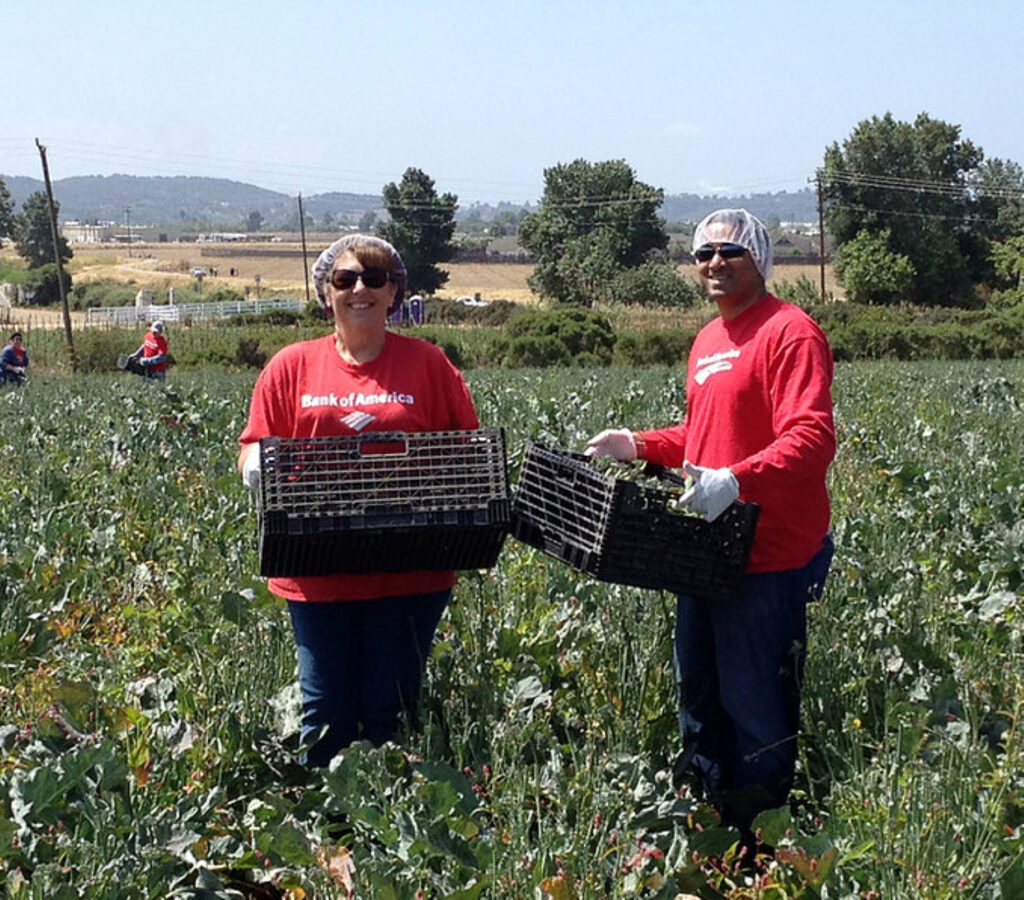
Ag Against Hunger: We provide an educational, volunteer-driven approach to gleaning excess produce left behind in the fields that might otherwise go to waste, and deliver that produce to food banks and distributors who serve those in need. Our project seeks to expand the program. Funding will help us reach 350 volunteers, provide up to 800 cartons of fresh produce, host four gleaning events in 2023 and provide reimbursement for transportation costs to food banks and distributors if needed.
Grower-Shipper Foundation
Habitat for Humanity Monterey Bay
Rodeo Creek Court Project: Rodeo Creek Court is an 11-home project that is part of our core program, Single Family Home Construction, for first-time home-buyers. To qualify, households must earn 50-80% of area median income, have a need for improved housing and be willing to partner with us to provide “sweat equity.” They help build their homes alongside the Habitat team of staff and volunteers. Two homes will be for families of someone with disabilities, and ADA-compliant. One goal is to construct these homes with 70% volunteer labor. We then provide in-depth homeowner education to improve and maintain all facets of their lives. This and the affordable mortgage mean families build strength, stability and self-reliance.
Homeless Garden Project
Expanding Feed Two Birds: Growing for Santa Cruz: In the face of increasing food insecurity, HGP has expanded our traditional CSA scholarship share by 50%, now donating fresh, organic local produce to 15 non-profit organizations in town at no cost. Terrific programs like Transition Age Youth and Black Health Matters Initiative receive three shares of our CSA weekly during our growing season, May through October. The produce is grown and cared for from seed to harvest by individuals experiencing homelessness in HGP’s core transitional employment program, raising self-esteem and demonstrating how their actions can positively impact our community.
Hopes Closet
Project Spare a Pair: Expanding on the success of last year, Project Spare a Pair will be launched with this year’s Santa Cruz Gives to provide new underwear, socks and tennis shoes for children in need. Underwear, socks and shoes are the most under-donated yet most needed items of clothing for vulnerable children. No child should be deprived of the simple daily necessity of clean underwear, socks and shoes that fit—items many of us take for granted. Many children are not able to participate fully in physical education at school or have optimal orthopedic health because they cannot afford shoes with proper support.
Housing Matters
Home Sweet Home Baskets: Housing Matters has a goal to permanently house 190 households currently experiencing homelessness in Santa Cruz County in 2023. Everyone in our community directly benefits when fewer of our neighbors live unhoused. Our programs change lives. Last year, we launched a project to create “Home Sweet Home” baskets for families and individuals who are receiving services through a Housing Matters program as they move from homelessness into permanent housing. We successfully launched the initiative and see the impact these move-in kits have. The baskets are filled with home essentials such as cleaning supplies, linens, grocery gift cards and a special housewarming gift. We want to improve on the contents this year and with your help we can include kitchen essentials, dry goods and more.
KSQD 90.7
Expand Community Radio for Santa Cruz County: KSQD has a rare opportunity to expand its service to more Santa Cruz County residents by purchasing 89.7 FM. It will improve the signal in already covered areas, triple the potential audience to 645,000 and will add Watsonville, Aptos and beyond. Radio licenses are not for sale often, so this opportunity is rare and immediate. KSQD broadcasts community-centered news, public affairs and music programs serving local needs. The station is volunteer-driven—by, for and about local people and topics. Please help us preserve local journalism by meeting a January deadline to purchase the license and build a microwave link.
Live Like Coco
Library Fund: As we’ve connected with public school librarians, we began dreaming of a fund these literacy experts could use to encourage reading—and beautify their spaces to enhance the reading experience for kids. Librarians could pay for author visits, a new collection of graphic novels or even a new mural. This fund would also be for our public libraries, including the Children’s Memorial Reading Garden at the Aptos branch of the Santa Cruz Public Library (we pledged to donate $70,000 to it by 2024).
Live Oak Education Foundation
Improve Youth Recreation: Upgrade Shoreline Middle School Gym: We are raising funds to replace and upgrade the gym floor at Shoreline Middle School. After 25 years and thousands of kids playing on it, the floor is worn and damaged. The gym is also rented after school and during summers by local youth and adult recreational groups (basketball, volleyball and wrestling). We dream of a functional, beautiful gymnasium that will serve our community and nearly 2000 youth per year. We have raised $40,000 which brings us halfway to our goal.
Monterey Bay National Marine Sanctuary Foundation
Experience Monterey Bay: The Foundation seeks to provide free, immersive learning experiences in Monterey Bay National Marine Sanctuary. The costs of participating in environmental education programs are often a barrier to students from low-income or marginalized communities. Expanding our bilingual staff and paid interns is an essential aspect of effectively serving this community, as well as establishing partnerships with new, diverse programs (including after-school, summer camp and family programs)—all in Santa Cruz County. By offering in-person and remote learning at no cost, we eliminate this barrier for up to 1,500 students each year to experience the sanctuary in a new, exciting and educational way. This year we will also engage with elementary schools in Watsonville by supporting in-person field trips to the Sanctuary.
Pajaro Valley Loaves & Fishes
Reopening our Dining Pavilion: Loaves and Fishes serves the community no-cost healthy lunches made fresh each day. This project will help reopen the dining area following the pandemic, and expand it to allow for a safer environment for lunch guests, volunteers and staff. Please join us in making healthy food accessible to our neighbors in need.
Pajaro Valley Loaves and Fishes
Pajaro Valley Shelter Services
Sustaining Emotional Stability: We are a small passionate team dedicated to our mission of providing children and their parents with a path and guidance to stable, self-sufficient futures. We employ a three-pillar model: Emotional Stability, Financial Stability, and Housing Stability. Our focus now is to strengthen and refine the Emotional Stability pillar programming to allow families the space and time to build resiliency through classes and one-to-one counseling. We use research on ACEs (Adverse Childhood Experiences) and Resilience Theory to inform programming. Individuals use a self-assessment tool upon entering and exiting the program—the Brief Resilience Scale (BRS). We have already seen a 21% increase in BRS scores for participating adults, and expect more increases as the program matures.
Planned Parenthood Mar Monte
A Safe Haven for All: Governor Newsom declared California to be a Reproductive Freedom State, and a safe haven to all who seek abortion care. Desperate people are already travelling thousands of miles for care at our health centers. Many who cannot travel for personal or financial reasons will die from ending their own pregnancies or seeking unsafe care—just as in the days before Roe v. Wade. We have been preparing for this moment by building larger health centers near airports and major transportation hubs, training more abortion providers and expanding hours so we can be open whenever our patients need us.
Queer Youth Task Force of Santa Cruz County
Trans Teen Visibility Project: We would like to support trans, non-binary and gender-expansive youth in Santa Cruz County this year with a website resource that educates and raises awareness among parents and the community about trans issues. We will facilitate conversations and understandings between trans teens and the wider community. Trans teens will control their own narratives and share stories and experiences that are important to them. Please help us raise funds to hire a part-time coordinator to keep the site updated and work with partners such as Santa Cruz Trans, TransFamilies and Big Brothers Big Sisters to support trans teens in Santa Cruz County, provide honorariums to trans youth for internships and pay student filmmakers for our documentary.
Regeneración — Pajaro Valley Climate Action
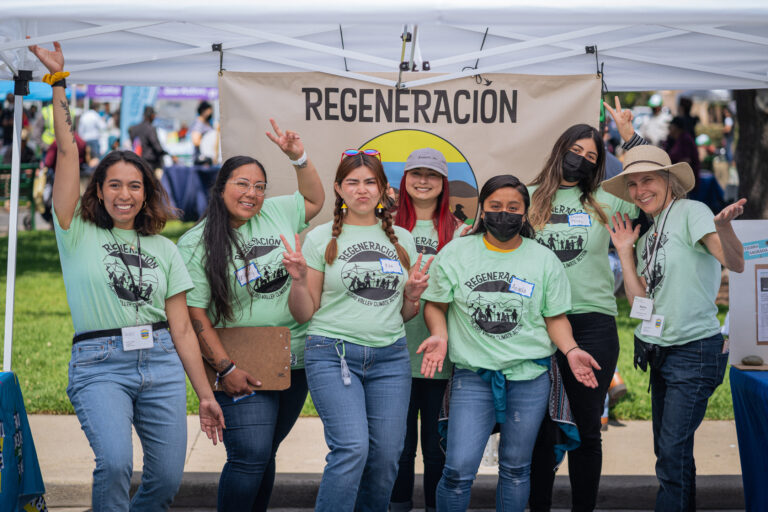
Creative Action for Climate Justice: A primary goal of Regeneración is to build public awareness around environmental and social justice, deepen community members’ love for the natural world and increase local climate action. Art is in our nature, and we hope to engage our community by integrating art activities into our climate action tabling events, host three or more artist-led workshops and gather people for our annual Climate of Hope forum with a theme of art and activism. As we create art, we can begin to imagine a different future.
San Lorenzo Valley Museum
Museum Your Way: For 2023, our big idea is to expand the ways that the museum’s collection can be experienced, including increased offsite in-person experiences and exhibitions in collaboration with community partners; increased online resources such as exhibitions, artifacts, photographs, and archives though platforms such as Google Arts & Culture, YouTube, and Flickr to be linked through the museum’s website; and expanded online resources for parents and teachers. Costs associated with the project include materials, platform related expenses, honoraria, and video production costs.
Santa Cruz Black
Melanated Makers: Our project is a youth leadership program that will connect Black youth in Santa Cruz County to employment opportunities, scholarships, community activism, mentorship and transferable skills. Youth who participate in this program will attend workshops, participate in a kitchen incubator, connect to vocational services programs and complete other activities in order to become future Black leaders.
Santa Cruz County Animal Shelter Foundation
Going the Extra Mile for Animals in Need: Your support will increase the number of animals and animal owners we can serve, with the goal of keeping pets in their homes and out of the shelter. We are accustomed to shattering and exceeding people’s expectations of what it means to be a public animal-welfare organization. We have long-embraced the principle that our work doesn’t start or end at the shelter’s doors; it is community-based, carried out by field officers, shelter staff volunteers, business partners and the grateful communities we serve. SCCASF goes the extra mile and provides life-saving services for the neediest animals in our community through progressive programs.
Santa Cruz Museum of Natural History
School Field Trip Transportation Scholarships: The Santa Cruz Museum of Natural History is committed to providing equitable access to our nature and science education field trips for all Santa Cruz County students. Studies show that students greatly benefit from on-site learning. Our field trips are inspiring and high-quality programs where young people learn about local natural history and science while connecting with nature. Not all schools have the transportation resources to participate. Please help ensure that our youth can benefit from this local resource.
Santa Cruz Shakespeare
Transportation Fund for Students: Often, schools in Santa Cruz County run into transportation difficulties when planning a school trip to enjoy a production at the Grove. To alleviate expense issues, Santa Cruz Shakespeare provides funds for buses, allowing these schools to bring students to a professionally produced Shakespeare or classic performance at an outdoor theater. Our goal is to ensure that every single high school student in Santa Cruz County has seen a live, professional production of a Shakespeare play by the time they graduate. We extend the summer season into September each year to offer student-only matinees. Please help us expand opportunities to more students.
Santa Cruz SPCA and Humane Society
A Safe Harbor for Animals in Need: The Santa Cruz SPCA doesn’t back away from challenges, and we are proud to provide safe harbor to animals that others are unable to care for. Our state-of-the-art facility on Chanticleer Avenue is an ideal environment to provide specialized care for animals with many kinds of special needs. With your support, this year we aim to see over 450 homeless animals adopted, give away over 25,000 pounds of dog and cat food to help keep pets with the families that love them, teach 4,000 local school children (elementary to high school) humane animal care practices and host 20,000 hours of soul-nourishing, animal-care volunteer hours.
Santa Cruz Welcoming Network
Welcoming New Neighbors: With perseverance, refugees and asylum-seekers—many from Ukraine, Afghanistan and Central America—made their way here. Our three-year-old Welcoming Network forms teams to work alongside these families and assist them to find housing, jobs, public schools for their children and advocate for their immigration case. We’re an all-volunteer group, so your donations go to each family’s needs. We spend about one year per family, begin with an initial needs assessment, organize a team of volunteers with experience or confidence in the areas of need and assist in finding the necessities the family has identified as critical.
Save Our Shores
Reducing Barriers to Coastal Access For Youth: Through our new Junior Sanctuary Program, Save Our Shores aims to reduce barriers to local coastal access, introduce underserved youth in the Monterey Bay to the coastal environment, connect them with shoreline/marine ecosystems and inspire them to become caretakers of this special place. For this after-school program, nature is the classroom! Tide-pooling, nature walks, litter removal, and data gathering make the experiences fun and inspiring for youth. At the end, participants are designated stewards and have opportunities to facilitate public education and outreach, serve as associate site cleanup captains and be Youth Advisory Board members for future junior stewards.
Save Our Shores
Second Harvest Food Bank
Food!: Help us help our partners! Your gift will have a ripple effect that supports nearly 100 other nonprofits. Over one-third of our county’s residents face hunger. That staggering statistic highlights how many people here are living on the edge financially. You can help us provide food for the 65,000 locals each month who depend on Second Harvest and our network to fill pantry shelves and provide hot meals. Only with adequate nutrition can children learn, adults work and the community thrive. Volunteers help power Second Harvest Food Bank, allowing us to distribute 10 million pounds of food each year.
Senderos
Cultural Arts Pathways for Latinx Youth and Families: To meet the increased needs of the community, Senderos will expand free after-school Mexican folkloric dance and traditional music instruction for Latinx youth, most of whom are low-income. We provide musical instruments and traditional dance outfits for practice and performance. Senderos programs connect young people to their family heritage, enhance self-esteem and push for academic success leading to higher education. Most of our participants will be the first in their families to attend college, so we’d also like to increase college scholarships offered to first-generation students. We will offer resource information assistance with applications and motivation with activities such as the Latino Role Models Conference presented with Cabrillo and county school districts.
Senior Network Service
Giving to Seniors: Choosing between food or medicine, or paying the rent but never having enough to visit an unmet grandchild. Paying a veterinarian bill to keep a best friend healthy or buying glasses to replace the pair that broke. Seniors in our community face choices like these daily—heartbreaking and sometimes dangerous choices. Giving to Seniors is a direct cash grant program. We are your link to a local senior in need; in many cases, a few hundred dollars would solve a problem right away, but traditional programs aren’t structured to address a wide variety of issues quickly. Through a direct cash grant we can assist seniors with needs that fall into the gaps.
Shared Adventures
Community Networking and Engagement: There are many agencies in Santa Cruz County that provide vital services to the disabled community. A piece that is often missing is meaningful recreational activities. This year, our priority will be to connect with a wide range of agencies (including San Andreas Regional Center) to develop a network sharing activities and information, which will increase Shared Adventures participation and provide more efficiency for all agencies that produce events, and more opportunities for participants and families to engage in activities.
Soroptimist International of Capitola-by-the-Sea
Live Your Dream Beyond the Cash: Our club funds three “Live Your Dream” cash awards of $2,000 to needy local women with at least one child who enrolled in or have been accepted into a B.A. or technical training program and are the heads of their households in Santa Cruz County. Most of our recipients are survivors of domestic violence, trafficking or sexual assault. Nearly all have overcome enormous obstacles, including poverty, teen pregnancy, and drug or alcohol addiction. All of our winners pledge to give back to their communities and help women who have struggled as they have. Our club’s dream is to raise enough to go “Beyond the Cash Award” and provide support for the special needs struggling families face, such as housing, food assistance and clothing.
Sustainable Systems Research Foundation
Regenerative Agriculture for Latinx Farmers: We collaborate with the California Alliance with Family Farmers and Whiskey Hill Farms, a pioneer in regenerative agriculture. Together, we are conducting a series of workshops designed to help increase productivity, conserve soil and water and earn greater profits targeted to new and experienced Latinx farmers. In these hands-on workshops, farmers learn about new, higher-value crops; how to adopt and adapt closed-loop regenerative technologies, techniques and practices to their specific conditions; the managerial and operational requirements for successful farming and opportunities for state and federal support. Your funds go directly to training costs. We received a U.S. Department of Agriculture grant supporting this project, but it covers only a portion of the cost.
Tannery World Dance and Cultural Center
Access, Equity, Excellence 2023: We’d like your support to host a dance festival for countywide youth led by a faculty of high-caliber BIPOC dance professionals from around the world. Many of our local BIPOC youth avoid school programs and extracurricular activities in spite of their interest and passion due to racism—both blatant and incessant microagressions—that they experience. We understand that the lack of Black and Brown teachers, mentors and leaders in Santa Cruz plays a significant role in this. Our goal for this festival is to support, inspire and elevate BIPOC youth dancers and to expose non-BIPOC youth dancers to high-powered BIPOC professionals, mentors and educators. We aim to present inspiring, thought-provoking performances while diversifying who and what is considered valued in dance creation, presentation, education and preservation.
Teen Kitchen Project
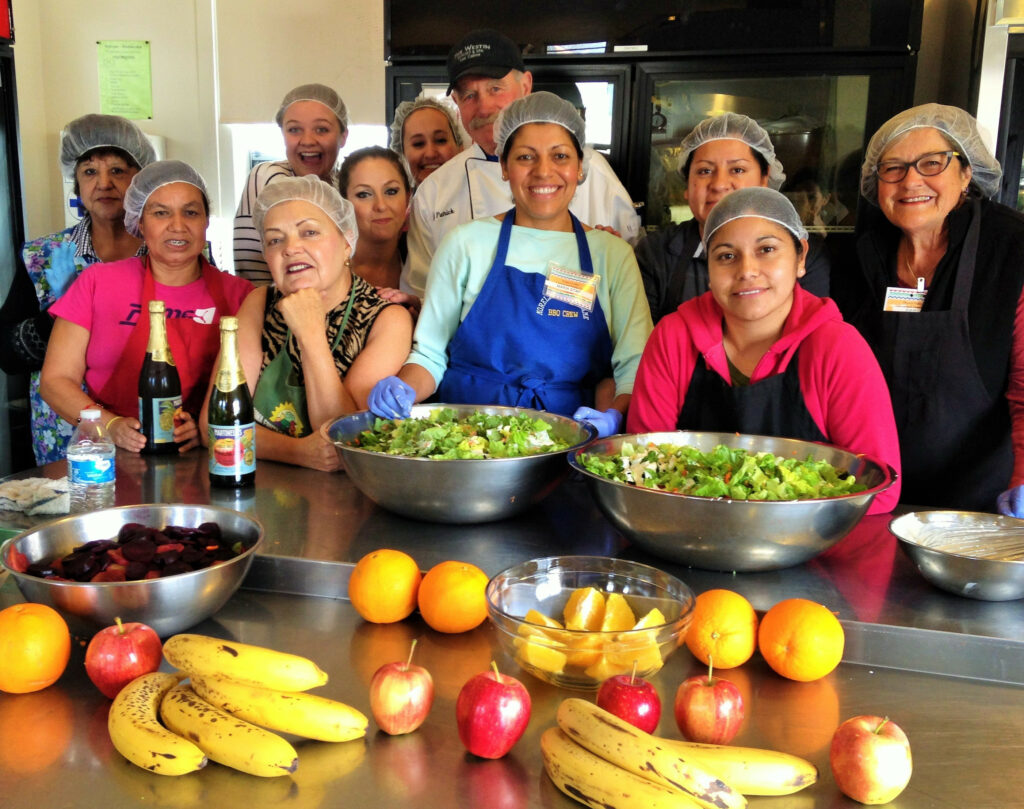
Meal Delivery for the Critically Ill in Santa Cruz County: TKP seeks support to provide approximately 800 critically and chronically ill members of the community with medically tailored meals in 2023. Professional chefs train employee/volunteer teen chefs in preparing, cooking and packaging meals for delivery. A registered dietitian evaluates meals for nutritional content and adjusts ingredients as needed to comply with heart-healthy guidelines. Meals are delivered for up to 24 weeks to individuals, their (unpaid) caregivers and children in the household under the age of 18.
UnChained
From Ruff to Ready: UnChained works with two vulnerable populations in Santa Cruz County: homeless dogs and underserved youth. UnChained offers innovative animal-assisted therapy in an 8-week program for youth and dogs twice a week, teaching teens to train dogs in basic skills, positive socialization and good manners. Our youth help place the dogs into adoptive homes after having achieved values of patience, respect and responsibility for themselves and others. Please help UnChained expand the services of our new licensed mental health therapist to every program and advance the social and emotional learning of our youth, who learn about their own thoughts and feelings through working with dogs, resulting in changes in beliefs and behaviors, and supporting greater personal growth.
Valley Churches United
Battling Today’s High Food Costs: We serve a region of the county that is chronically underserved. This past year, with the huge increase of food costs, we are experiencing more new clients in need of food than in the past seven years. We provide substantial quantities of healthy supplemental food that truly helps local residents stabilize their food expenses. Every week, we meet with clients that are still reeling from the impacts of the CZU fire as well as Covid-related issues. The inflationary costs of food, housing and gas this year have caused havoc for many local folks that were getting by on their own previously. We hope to raise enough funds to provide at least 15,000 pounds of food for our grateful clients—currently 7,000 annually: 5,000 adults and 2,000 children.
Valley Churches United
Ventures
Semillitas (“Seeds”): Semillitas provides opportunity and hope to every baby born in Santa Cruz County by providing all babies with their own college savings account (CSA) and making an initial “seed” contribution at birth. Investing early in children’s education and development will have the greatest impact on their well-being and the future of our county. Families can qualify for additional deposits to their child’s CSA by meeting developmental milestones (for example, dental and well-child visits), with the potential to earn up to $500 for their child’s account by the time they enter kindergarten.
Vets 4 Vets Santa Cruz
Home Repairs for Veterans: Requests for home repairs and building assistance have increased and we are asking your support to stabilize veteran housing in this way. We help with minor repairs, building wheelchair ramps, repairing or replacing old appliances and restoring deck safety. The costs for materials have risen, thus the request for funding at this time. Staffed by volunteers, moving assistance is another of our biggest programs. We need to purchase dollies, gas and paid helpers for some of the heavy lifting.
Village Santa Cruz County
Establish a Latino-Led Watsonville Village Community Circle: The Village is the only program in Santa Cruz County that combines social and assistance needs, and interacts with seniors at the neighborhood level. Village Community Circle members identify and build their activities around the specific wishes and needs in their area. We’d like to establish our first Latino-led Community Circle. This will involve conversational meetings with leaders and the senior Latino population, so we learn how a Village Circle can best work for the Latino community. The Village runs mainly on volunteerism and a sliding-scale membership fee. But establishing a new Circle requires outside funds. With your donations, we can conduct outreach, translate our publications into Spanish and employ a part-time Spanish-speaking person experienced in working with older, local Latinos.
Warming Center
No One Freezes This Winter: We as community members take it upon ourselves to provide warmth: a well-stocked, safe and clean warming center when temperature forecasts drop below 38° or rain is expected to exceed 1”. On all other nights of winter, in addition to our donation barrel program, we’ll purchase 2,000 blankets for distribution plus 500 for the pop-up shelter (two for each person), and provide laundry after each shelter use. We’ll hand out 5,000 hand warmers, 1,500 knit-gloves-and-beanie combos and as many as 200 rain tarps and 500 rain ponchos, depending on rainfall. After nine years in operation, this emergency pop-up program offers critical shelter and has served many thousands of people whose only alternative would be a doorway or tent.
Watsonville Wetlands Watch
Climate Corps Leadership Institute: Just 9% of Watsonville’s land is covered by tree canopy. WWW must triple that in order to meet its goal of at least 30% tree coverage in Watsonville and achieve parity with similar communities in the region. WWW’s Climate Corps Leadership Institute (CCLI) interns will plant shade trees and fruit trees at the homes of Watsonville seniors, and throughout the city in areas that lack adequate tree canopies. WWW staff provide free trees and consultations to homeowners and businesses, and organize volunteers to help plant them. Donations will support CCLI tree-planting projects during the spring 2023 semester and summer 2023 urban forestry internships for CCLI youth.
Wings Homeless Advocacy
Homeless to Home: Getting into housing for the first time in years is a huge achievement. But even after someone finally has a door to lock and make them feel safe, they may not have all the essentials for daily life. When people have what they need to be successful in their new space, they have a better chance of staying housed. Working with case managers from over 20 different county agencies, Wings dispatches volunteers to deliver beds, bedding and baskets of household and hygiene supplies to people exiting homelessness and moving into permanent housing. Wings serves families, veterans, seniors and victims of domestic violence—helping each household stabilize and heal as they transition into a new phase in life.
Donate to these Santa Cruz Gives groups at santacruzgives.org; follow @santacruzgives on Facebook and Instagram. The campaign runs through midnight on Dec. 31.
Voters have affirmed their support for Santa Cruz’s downtown library project, which proposes to build affordable housing, a new parking garage and an updated library at the site where the downtown farmers market currently meets every Wednesday.
Measure O, the controversial proposal that would have scrapped those plans, has been trailing in votes since results were posted on election day. As of Monday, Measure O had 40.48% of the vote, with 59.52% of the votes counted opposing it.
For the No on O campaign, housing was at the heart of the issue, with 124 affordable units at stake should the measure pass. Supporters of Measure O took issue with the project’s parking garage, and campaigned on the message that residents want more input on the project, which has gone through multiple iterations since planning started in 2016.
Former Santa Cruz Mayor Don Lane, a spokesperson for the No on O campaign, says voters have made their interests clear.
“This was the voters’ voice being heard,” says Lane. “The results affirm that people were satisfied with the process up to now—but even to the extent they weren’t, I think they’re glad to have a chance to vote on it. People are clear that they thought the project should move forward.”
Even though Measure O collected 7,652 yes votes, Lane says he isn’t expecting any lingering division over the project to last now that the results are in.
“I think there’s a lot of shared interest in especially the affordable housing issue, but also there’s certainly a desire on everyone’s part to have a really good library,” says Lane. “Even those who voted yes can recognize this project can still lead to some positives for those things we share in common.”
After the second batch of results were posted Friday, Rick Longinotti, a spokesperson for Measure O, called on the city to “heal the mistrust” that has come with the project.
“Thousands of city residents voted to oppose the city’s project, indicating a deep level of mistrust with the project and how the city has handled it,” Longinotti wrote in a prepared statement sent to GT.
Measure N
Results for Measure N, which would tax second homes that are in use less than 120 days per calendar year, are looking grim for its passage.
As of Monday, 8,077 (41.97%) votes were cast in favor of the tax, and 11,166 (58.03%) votes had been tallied against.
“The disinformation campaign funded by real estate money run by Santa Cruz Together appears to have worked in scaring voters,” Measure N campaign manager Cyndi Dawson says.
“All of us should be concerned that a campaign funded by those that benefit from the housing crisis may have prevented more affordable housing in Santa Cruz,” says Dawson.
Funds from the tax would have been dedicated to affordable housing, and the Yes on N campaign estimated the tax could generate millions for low-income housing.
Opponents of the measure said similar taxes implemented in other cities have yielded inconclusive results.
Measures K & L
Early results signaled strong support for K and L, bond measures that would generate $249 million and $122 million, respectively, for the Santa Cruz City Schools District. As of Monday, Measure K had garnered 65% of the vote, while L had gotten 69%.
“We’re incredibly grateful to our community for continuing to support our students,” SCCS Superintendent Kris Munro says. “These vital improvements to school infrastructures—made possible only through bonds—will have a lasting impact, improving the lives of generations of students.”
The work includes energy-saving projects such as lighting, insulation and windows, said district spokesman Sam Rolens.
“There are so many projects that can have a huge impact on our energy sustainability that we can begin straight away,” he says.
About 5% of the bond funds, Rolens said, would go toward a workforce housing project expected to bring an estimated 80 units of studio, one- and two-bedroom apartments to a location on Swift Street. Rolens said that the district has already worked with city and county officials to gauge what type of work it is authorized to perform. It has also tentatively contacted architects and will soon review possible plans to get them submitted to state officials for approval.
Measure P
Preliminary results show that Santa Cruz voters have approved increasing accommodation taxes on overnight stays at hotels and short-term rentals within city limits.
Measure P, the city’s transient occupancy tax increase, collected 79.6% of the 19,738 votes counted as of Monday.
The measure raises the overnight lodging tax from 11% to 14% for short-term residential vacation rentals, and from 11% to 12% for hotels, motels and inns. It is estimated to bring in $1.38 million annually to the city’s general fund.
This is a significant win for the city, especially after residents voted down a half-cent sales tax earlier this year. That measure failed by a mere 50 votes in July, denying the city additional revenue that officials have said they desperately need to support homeless services and offset the city’s budget deficit.
“We are grateful that the community recognized the need for additional revenues to maintain essential city services,” City Manager Matt Huffaker said in a statement. “From wildfire prevention, investing in affordable housing and our infrastructure, and continuing our progress on homelessness response. This funding will be put to good use.”
Casey Beyer, CEO for the Santa Cruz County Chamber of Commerce, says he’s not surprised the measure passed. It’s difficult to predict how a tax like this might affect tourism, Beyer says, but the key to evaluating the tax’s success will be looking at where that revenue is spent. Funds generated by the tax are not earmarked for specific issues, so the city council can spend it at their discretion.
“When you raise the tax, there is a human behavioral response,” Beyers says. “When it reaches a certain tipping point, you don’t travel as much … the city will have to identify and show that, ‘OK, the money that we collected, we can point to specific local issues and show our return on investment to the community.’”
Measure R
Watsonville’s half-cent sales tax increase had formidable support from voters in early results.
As of Monday, Measure R had amassed 64.4% of the 6,709 votes tallied. The general tax measure only needs a simple majority for approval.
Placed on the ballot by the Watsonville City Council in June, Measure R would raise the city’s sales tax to 9.75%—the highest rate in the county, along with Scotts Valley—and bring an estimated $5.1 million into the city’s general fund. City leaders say that the additional revenue would be used to upgrade and upkeep Watsonville’s parks and roads, as well as its library and older adult services.
If approved, it would be the second sales tax measure that has been embraced by Watsonville voters in three years. They overwhelmingly approved Measure Y, another half-cent sales tax that replaced 2014’s Measure G, in 2019.
Abel Sanchez, who served as the co-chair of the committee leading the charge on Measure R, said that the results show the trust Watsonville voters have in the city to use the funds correctly.
“We’re looking forward to using those funds to benefit our community, and I’m really proud of the community’s commitment to support those services,” said Sanchez, a representative on the County Board of Education and a member of the city’s Parks & Recreation Commission.
Measures Q and S
Watsonville voters have elected to extend the city’s urban growth boundaries for the next 18 years, rather than head back to the drawing board and determine a new growth plan.
Measure Q, the proposed extension of Watsonville’s Urban Limit Line (ULL) approved in 2002 via Measure U, was headed toward victory over Measure S, according to early voting results available Monday.
Roughly 67% of voters filled in “yes” for Measure Q, compared to around 50% of voters who elected to approve Measure S.
While both measures only need a simple majority for approval, the measure with the most “yes” votes will be the one that is approved.
Measure Q, the result of the Committee for Planned Growth and Farmland Protection’s (CFPGAFP) signature-gathering process, seeks to protect the ULL that has shielded the majority of the agricultural land surrounding Watsonville from urban development by establishing a modest 25-year growth plan for housing and economic drivers. But some of Measure U’s protections are set to expire this year, and the rest sunset in 2027.
Measure S, placed on the ballot by a divided Watsonville City Council in response to Measure Q, also proposed an 18-year extension of the ULL, but would have allowed the council to make adjustments to the boundary during its upcoming general plan update—a massive, multi-month undertaking in which the community will determine what Watsonville should strive to be by 2050.
Measure Q proponents told voters that their campaign is the only way to stop “urban sprawl” that would overtake the Pajaro Valley’s rich agricultural lands. Meanwhile, Measure S proponents said that an extension of the current growth boundaries would negatively impact the city’s ability to build new homes, entice large employers to set up shop in Watsonville and bring in more revenue to the municipality’s thin coffers.
CFPGAFP member Sam Earnshaw said in a phone interview on Thursday that the results serve as a “loud and clear” message from Watsonville voters that they want to preserve the Pajaro Valley’s agricultural land.
“Everything that we heard when we were gathering signatures held true, people don’t want to pave over our agriculture fields,” says Earnshaw, who adds that the CFPGAFP is looking forward to working with the city on its general plan update in the coming months.
As election updates continue to roll in from the Santa Cruz County Elections Department—and with some races still remaining undecided—one thing has become clear: The makeup of Santa Cruz County’s elected leadership at the state and county levels will soon be more diverse.
Former Santa Cruz County Clerk Gail Pellerin is the likely winner in the 28th Assembly District race, making her the first woman from the county to be elected to state office.
The County Board of Supervisors will also see a shift, as Shebreh Kalantari-Johnson—the current leader in the race for the 3rd District seat—could be the first woman to join the board since Ellen Pirie left in 2012. She would also be the first woman of color to serve on the board.
In the 4th District, meanwhile, Felipe Hernandez appears to be on track to become the first Latino to be elected to the board since Tony Campos first took office in 1998; Campos won reelection in 2002 and 2006.
Gail Pellerin
Results posted Monday show that Pellerin’s large early lead in the race for the 28th Assembly District has held firm. Her advantage over Republican Liz Lawler, who currently serves on the Monte Sereno City Council, grew in both Santa Cruz (78.2%) and in Santa Clara (63.8%) counties.
She says her historic feat—breaking Santa Cruz County’s glass ceiling—will not be the last.
“I will do everything in my power to continue to lift women up and encourage them to run for leadership roles and run for office,” she says. “I am doing a lot of work on that on the local level, and now we’ll have a state platform as well.”
When next year’s legislative season begins, Pellerin says she plans to focus on mental health, which she calls a “public health crisis.”
“We need to do everything in our power to make sure that everybody, especially our children, has access to good quality mental health care,” she says.
Pellerin also says she plans to address the state’s affordable housing crises, and tackle environmental issues.
That includes reducing the state’s greenhouse gas emissions, reducing the number of vehicles on the road and addressing the ongoing drought. Pellerin also hopes to look at improving education.
Shebreh Kalantari-Johnson
Kalantari-Johnson is poised to win the 3rd District Supervisor race and become the first woman of color on the board. Should she defeat Justin Cummings, Kalantari-Johnson plans on drawing on her experiences as a young immigrant to inform policy decisions in office.
“I was undocumented when we first moved here,” says Kalantari-Johnson. “So understanding what barriers individuals who are undocumented go through—food insecurity, housing insecurity, the challenges of navigating a system that you’re not familiar [with]—these are health and human services that are the real bulk of the work of the supervisors.”
Kalantari-Johnson credits her motivation to run for office in part to her experience of coming to the U.S. as an 8-year-old Middle Eastern immigrant who didn’t speak English. Now, as the only woman on the board, she feels a responsibility to represent not only the interests of minorities, but also to advocate for women’s issues.
“I’m bringing a unique lens that [the Board of Supervisors] don’t have,” says Kalantari-Johnson.
For the past two years, Kalantari-Johnson has served on the Santa Cruz City Council, where she has predominantly focused on education and youth issues, and has a track record of approving affordable housing projects.
Kalantari-Johnson says a primary and urgent focus, should she win the seat, will be advocating for more shelter spaces—a necessity for Santa Cruz after unhoused campers were evicted from the city’s largest encampment and dispersed across the city. She says her relationship with her colleagues on the council will help her facilitate partnerships with the city on homelessness approaches, and help improve city and county relationships.
“We don’t really have a choice but to make significant headway,” Kalantari-Johnson says.
Felipe Hernandez
Hernandez says that it’s important to note that he will not only be the first Latino to serve on the board since Campos was ousted by outgoing 4th District Supervisor Greg Caput in 2010, but he will also be the first progressive Latino in the county’s history to be elected supervisor. His victory was part of a larger trend for progressives, as dozens of their preferred candidates fared well across the nation.
Hernandez, who while serving as Watsonville’s mayor in 2016 introduced then-presidential hopeful Bernie Sanders during his visit to Santa Cruz, says that his voting record from his eight years (2012-2020) on the Watsonville City Council—during which time he voted to approve affordable housing projects, investment in public programs and transportation and support for unionization—shows that he carries the progressive values that have resonated with younger generations of voters.
“For me, that’s what it’s about—I’ve always shown my true colors,” Hernandez says. “But I’m also pragmatic.”
It’s this matter-of-fact approach to policy and his willingness to work with people from across the political spectrum that allowed him to develop a wide base of support that included his more conservative supe predecessor Caput. He believes this is why he was able to beat his competitor, Watsonville City Councilman Jimmy Dutra, in such a resounding fashion. As of Monday, Hernandez had a 1,045-vote lead on Dutra with around 7,513 votes counted—Caput beat Dutra in 2018 by 1,000 votes—and he believes his lead will only continue to grow over the coming days.
As the son of a former cannery worker and a farmworker, Hernandez says his victory serves as an important moment for him, his family and the people in South County—the majority of which are of Latinx descent—who might see themselves in him.
“People know my history,” Hernandez says. “Of course it matters. It’s important in so many ways.”
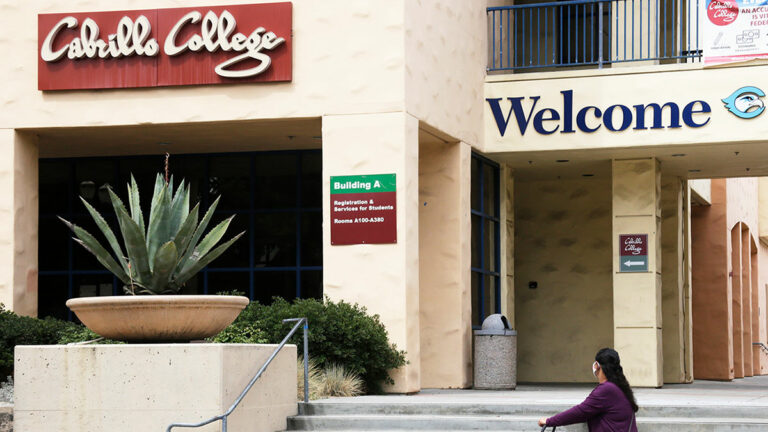
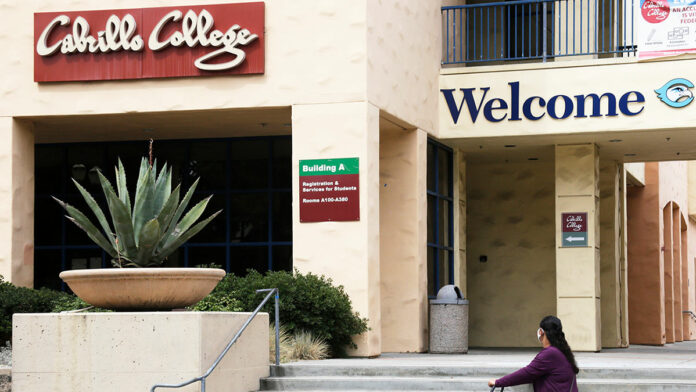
Cabrillo College’s governing board voted Monday to change the institution’s name after a two-hour discussion that included comments from dozens of community members. The trustees voted 6-1 in favor of renaming the college, with trustee Rachel Spencer dissenting.
The decision followed the Nov. 10 release of a 64-page report by the Cabrillo College Name Exploration Subcommittee and a seven-member Exploration Advisory Task Force, which included a survey of students, staff and Cabrillo Foundation supporters.
The drive to change the college’s name began in July 2020. As the Black Lives Matter movement grew following the murder of George Floyd by Minneapolis police, communities across the U.S. rethought the names and symbols bestowed upon their buildings, landmarks and institutions.
The college’s namesake is Juan Rodriguez Cabrillo, known for exploring the west coast of the Americas around 1542, as well as for being a murderous conquerer who enslaved and brutalized the Amah Mutsun people who lived here.
The committee’s recommendation came despite a majority of survey respondents (66.9%) saying they wanted the college to keep its name, with many citing cost and others saying that changing the name would not change the underlying historical issues associated with Cabrillo.
But Trustee Adam Spickler said that majority opinions are not always the best for minority communities. He pointed to Proposition 8, which voters passed in 2008, and limited marriage to men and women. A federal court found that law unconstitutional, a decision that was upheld by the U.S. Supreme Court. Spickler also said that a majority of people opposed desegregation in the early days of the Civil Rights movement.
Cabrillo officials will now begin the process of finding a new name, a process that likely will involve voluminous community input and begin in summer 2023.
The overall costs associated with a name change have ranged from $200,000 to $800,000 at other colleges that have done so, Cabrillo President Matt Wetstein said. But these will likely be spread out over several years, he added.
In explaining her vote, Spencer said that the committee tasked with exploring the name change contained no community members, and thus was “sorely lacking” in a vetting process.
She also said the report shows that a majority of respondents do not support a name change, and that going against that “will divide the community.”
ARIES (March 21-April 19): Virginia Woolf wrote a passage that I suspect will apply to you in the coming weeks. She said, “There is no denying the wild horse in us. To gallop intemperately; fall on the sand tired out; to feel the earth spin; to have—positively—a rush of friendship for stones and grasses—there is no getting over the fact that this desire seizes us.” Here’s my question for you, Aries: How will you harness your wild horse energy? I’m hoping that the self-possessed human in you will take command of the horse and direct it to serve you and yours with constructive actions. It’s fine to indulge in some intemperate galloping, too. But I’ll be rooting for a lot of temperate and disciplined galloping.
TAURUS (April 20-May 20): “The failure of love might account for most of the suffering in the world,” writes poet Marie Howe. I agree with that statement. Many of us have had painful episodes revolving around people who no longer love us and people whose lack of love for us makes us feel hurt. That’s the bad news, Taurus. The good news is that you now have more power than usual to heal the failures of love you have endured in the past. You also have an expanded capacity to heal others who have suffered from the failures of love. I hope you will be generous in your ministrations!
GEMINI (May 21-June 20): Many Geminis tell me they are often partly awake as they sleep. In their dreams, they might work overtime trying to solve waking-life problems. Or they may lie in bed in the dark contemplating intricate ideas that fascinate them, or perhaps ruminating on the plot developments unfolding in a book they’ve been reading or a TV show they’ve been binging. If you are prone to such behavior, I will ask you to minimize it for a while. In my view, you need to relax your mind extra deeply and allow it to play luxuriously with non-utilitarian fantasies and dreams. You have a sacred duty to yourself to explore mysterious and stirring feelings that bypass rational thought.
CANCER (June 21-July 22): Here are my two key messages for you. 1. Remember where you hide important stuff. 2. Remember that you have indeed hidden some important stuff. Got that? Please note that I am not questioning your urge to lock away a secret or two. I am not criticizing you for wanting to store a treasure that you are not yet ready to use or reveal. It’s completely understandable if you want to keep a part of your inner world off-limits to certain people for the time being. But as you engage in any or all of these actions, make sure you don’t lose touch with your valuables. And don’t forget why you are stashing them.
LEO (July 23-Aug. 22): I know I don’t have to give you lessons in expressing your sensuality. Nor do you need prods and encouragement to do so. As a Leo, you most likely have abundant talent in the epicurean arts. But as you prepare to glide into the lush and lusty heart of the Sensuality Season, it can’t hurt to offer you a pep talk from your fellow Leo bon vivant James Baldwin. He said: “To be sensual is to respect and rejoice in the force of life, of life itself, and to be present in all that one does, from the effort of loving to the breaking of bread.”
VIRGO (Aug. 23-Sept. 22): Many Virgos are on a lifelong quest to cultivate a knack described by Sigmund Freud: “In the small matters, trust the mind. In the large ones, the heart.” And I suspect you are now at a pivotal point in your efforts to master that wisdom. Important decisions are looming in regards to both small and large matters. I believe you will do the right things as long as you empower your mind to do what it does best and your heart to do what it does best.
LIBRA (Sept. 23-Oct. 22): Social media like Facebook and Twitter feed on our outrage. Their algorithms are designed to stir up our disgust and indignation. I confess that I get semi-caught in their trap. I am sometimes seduced by the temptation to feel lots of umbrage and wrath, even though those feelings comprise a small minority of my total emotional range. As an antidote, I proactively seek experiences that rouse my wonder and sublimity and holiness. In the next two weeks, Libra, I invite you to cultivate a focus like mine. It’s high time for a phase of minimal anger and loathing—and maximum reverence and awe.
SCORPIO (Oct. 23-Nov. 21): Scorpio author Sylvia Plath had a disturbing, melodramatic relationship with romance. In one of her short stories, for example, she has a woman character say, “His love is the twenty-story leap, the rope at the throat, the knife at the heart.” I urge you to avoid contact with people who think and feel like that—as glamorous as they might seem. In my view, your romantic destiny in the coming months can and should be uplifting, exciting in healthy ways and conducive to your well-being. There’s no need to link yourself with shadowy renegades when there will be plenty of radiant helpers available.
SAGITTARIUS (Nov. 22-Dec. 21): I like Sagittarian healer and author Caroline Myss because she’s both spiritual and practical, compassionate and fierce. Here’s a passage from her work that I think will be helpful for you in the coming weeks: “Get bored with your past. It’s over! Forgive yourself for what you think you did or didn’t do, and focus on what you will do, starting now.” To ensure you make the most of her counsel, I’ll add a further insight from author Augusten Burroughs: “You cannot be a prisoner of your past against your will—because you can only live in the past inside your mind.”
CAPRICORN (Dec. 22-Jan. 19): How would you respond if you learned that the $55 t-shirt you’re wearing was made by a Haitian kid who earned 10 cents for her work? Would you stop wearing the shirt? Donate it to a thrift store? Send money to the United Nations agency UNICEF, which works to protect Haitian child laborers? I recommend the latter option. I also suggest you use this as a prompt to engage in leisurely meditations on what you might do to reduce the world’s suffering. It’s an excellent time to stretch your imagination to understand how your personal life is interwoven with the lives of countless others, many of whom you don’t even know. And I hope you will think about how to offer extra healings and blessings not just to your allies, but also to strangers. What’s in it for you? Would this bring any selfish benefits your way? You may be amazed at how it leads you to interesting connections that expand your world.
AQUARIUS (Jan. 20-Feb. 18): Aquarian philosopher Alfred North Whitehead wrote, “The silly question is the first intimation of some totally new development.” He also said, “Every really new idea looks crazy at first.” With these thoughts in mind, Aquarius, I will tell you that you are now in the Season of the Silly Question. I invite you to enjoy dreaming up such queries. And as you indulge in that fertile pleasure, include another: Celebrate the Season of Crazy Ideas.
PISCES (Feb. 19-March 20): We all love to follow stories: the stories we live, the stories that unfold for people we know and the stories told in movies, TV shows and books. A disproportionately high percentage of the entertainment industry’s stories are sad or tormented or horrendously painful. They influence us to think such stories are the norm. They tend to darken our view of life. While I would never try to coax you to avoid all those stories, Pisces, I will encourage you to question whether maybe it’s wise to limit how many you absorb. The coming weeks will be an excellent time to explore this possibility. Be willing to say, “These sad, tormented, painful stories are not ones I want to invite into my imagination.” Try this experiment: For the next three weeks, seek out mostly uplifting tales.
Owner and host of Shadowbrook for 50 years, restaurateur Ted Burke recently spoke to me about the rewards of his work, changes and the worst day he ever had at the landmark restaurant—which is now celebrating 75 years of dining success.
How did you get started at Shadowbrook?
TED BURKE: Shadowbrook is the only restaurant that I have ever worked. I began there in the summer of 1972 as a summer job while attending the Institute for Foreign Studies in Monterey in preparation for graduate school starting in the fall in the field of international business. However, I never left. Though I had zero waiter experience and had never worked in a restaurant in any capacity, I was hired as a summer waiter. I worked hard, learned a lot, had a lot of fun and just before I was about to leave in the fall to pursue my Masters in international business I was asked to join the restaurant management team. I accepted the offer because I had fallen in love with the restaurant business. Then one day one of the owners approached me and said that he and his partner would like to move on from the restaurant business and would I be interested in buying the business. When I learned that they were intending to sell the Crow’s Nest operation as well, I suggested we contact Bob Munsey and we formed a partnership. It has been an extraordinarily wonderful business partnership that still exists after nearly 45 years.
Did you toss a coin to see who got the Crow’s Nest and who would take the Shadowbrook?
Bob and I began our working partnership in 1978, agreeing that we would start out for the first year focusing our efforts and time at the restaurant we knew best from our years of personal experience. So, I watched over the Shadowbrook operation, and Bob watched over the Crow’s Nest operation. Each of us had the intention of completing a lengthy list of “to-do” projects that we wanted to finish before we began daily work at both locations. We had intended that process would take about a year. However, after a year, our “to-do” lists had not shrunk at all from its full page length but rather had expanded to two full pages. Though we decided to continue to work independently and focus our time and work at the places we knew best, we did collaborate several times a week on common issues of legal and accounting, employee benefits, purchasing, insurance, advertising and promotion, etc.
Do you ever regret that decision?
I have never regretted my decision at all. I am just as fond of the restaurant, the staff and the customers today as I was 50 years ago. However, like many people who come to a Y in the road and decide to go left instead of right, they naturally look back at times and wonder where that other path might have led. But I am confident and very grateful that I found a career that I absolutely love every single day.
Does it irritate you when people talk of Shadowbrook as a ‘special occasion’ dining spot?
I do not get irritated at all at those who consider Shadowbrook a special occasion restaurant. In fact, I think it’s a very high honor to be a favorite venue; that people choose Shadowbrook for those very special times in their lives. It is a challenge for us at times to fulfill our customers’ high expectations. However, it’s a challenge that I, and our entire staff, thoroughly enjoy.
Name a few of the innovations of which you’re most proud.
We take pride in some unique marketing innovations, such as our Winemaker Wednesday program that promoted local wines and winemakers, as well as our Community Tuesday program that allowed local non-profit organizations to receive a full third of revenue that night. These marketing ideas were so innovative and popular at one time that many other local restaurants initiated similar programs of their own.
Is there a guiding theme for Shadowbrook’s culinary style?
We appeal to those who prefer traditional favorites, as well as to those who seek and enjoy our nightly menu specials that showcase our chef’s creativity and operational expertise to be offered in a high volume and busy kitchen. Shadowbrook has flourished in a sea of challenges and changes. It respects its vintage beginnings, but is always evolving to meet the menu and service needs brought on by culture changes, technology advancements and patron demands.
How do you stay engaged after so long?
Though I work long hours at the restaurant, I have been significantly involved with my trade associations such as the California Restaurant Association, the National Restaurant Association and the California Travel and Trade Commission. The related meetings and trade shows provided me opportunities to listen to and visit with peers, and enjoy restaurants and dining experiences outside my local environment. Plus, it’s pretty easy to stay fresh when you look at each day as a fresh start and one to improve upon yesterday’s performance.
What was your worst day, and your best one?
Actually, my worst day and best day were one in the same. That was Oct. 17, 1989, and the Loma Prieta earthquake. Fortunately, the restaurant suffered only very minor physical damage, but interruptions in electrical power and water service prohibited normal operations. Our staff came together and prepared a spaghetti dinner. We set up a temporary kitchen in our parking lot. I believe we had a total of 15 tables and 60 chairs that we set with candles and fresh linens. The chef boiled pasta in a propane-fueled stock pot that he served with his incredibly delicious meat and tomato sauce for our neighbors—whom we’d invited by hand-written flyers—to enjoy. It certainly was a night of some tragedy, but also full of resilience and togetherness.
What’s your favorite Shadowbrook memory?
Truly, it would be difficult to single out just one favorite moment out of so many favorite moments in Shadowbrook’s long biography. I have one favorite humorous moment, though, when I was a young manager working with a woman who was a cocktail server but served as a hostess one night in an emergency situation for staffing. As I passed by the hostess desk towards the end of the evening, she asked me if I knew what sweetbreads were. I explained to her that though I was fairly new to the restaurant business, I believed that they were part of a cow, usually a young cow or calf, and were an organ or glands that were sautéed. I added that I had enjoyed it once with a rich stock and cream sauce. She said to me, “Oh, they are meat, huh? I said, “Yes, why do you ask? “She replied, “Someone just called and asked if we had sweetbreads on the menu. “And I told her, “And what did you tell them?” She replied hesitatingly, “I told them no, . . . we just have sourdough.”
If you hadn’t gone down this path, owning and operating a legendary dining house, what career might you have chosen?
At one time I had thought about pursuing a law degree and practicing as a general purpose attorney. I am unaware of any other occupation that has the qualities that I enjoy most: hard-work, fast-paced, many daily challenges and very little time to overcome them, daily contact with wonderful people as customers, as well as co-workers who share my values of hospitality. I cannot imagine that I could work in any other industry as I have in the restaurant industry, where I have enjoyed it for 50 years and still enjoy it today. I do know that the sunset of my career is on the horizon. When that day comes I will feel so fortunate to have no regrets and countless memories.