
Free Will Astrology

0

ARIES March 21-April 19

On the outskirts of a village in Ghana, a healer gathers plants only when the moon says yes. She speaks the names of each leaf aloud, as if to ask permission, and never picks more than needed. She trusts that each herb has its own wisdom that she can learn from. I invite you to emulate her approach, Aries. Now is a good time to search for resources you need to heal and thrive. The best approach is to be receptive to what life brings you, and approach with reverence and gratitude. Halloween costume suggestion: herbalist, traditional healer, sacred botanist.

TAURUS April 20-May 20

A well-cut ship’s sail is not a flat sheet. It has a gentle curve that the sailmaker crafts stitch by stitch so the wind will catch and convert invisible pressure into forward motion. Too taut, and the cloth flaps, wasting energy; too loose, and power dissipates. The miracle lies in geometry tuned to an unseen current. I invite you to be inspired by this approach, Taurus. Build curvature into your plans so that optimism isn’t an afterthought but a structural feature. Calibrate your approaches to natural processes so movement arises from alignment rather than brute effort. Make sure your progress is fueled by what you love and trust. Halloween costume suggestion: Wear a sail.

GEMINI May 21-June 20

All of us can benefit from regular phases of purification: periods when we dedicate ourselves to cleansing, shedding and simplifying. During these intense times of self-healing, we might check our integrity levels to see if they remain high. We can atone for mistakes, scrub away messy karma and dismantle wasteful habits. Here’s another essential practice: disconnecting ourselves from influences that lower our energy and demean our soul. The coming weeks will be a perfect time to engage in these therapeutic pleasures, Gemini. Halloween costume suggestion: purifier, rejuvenator, cleanser, refiner.

CANCER June 21-July 22

Deep in the Pacific Ocean, male humpback whales sing the longest, slowest, most intricate love songs ever. Their bass tones are loud and strong, sometimes traveling for miles before reaching their intended recipients. The coming weeks will be an excellent time to compose and unleash your own ultimate love songs, Cancerian. Your emotional intelligence is peaking, and your passionate intensity is extra refined and attractive. Meditate on the specific nature of the gifts you want to offer and receive in return. Halloween costume suggestion: singer of love songs.

LEO July 23-Aug. 22

Between 1680 and 1725, Italy’s Antonio Stradivari and his family made legendary violins that are highly valued today. They selected alpine spruce trees and Balkan maple, seasoned the wood for years, and laid varnish in painstaking layers that produced sublime resonance. Their genius craftsmanship can be summed up as the cumulative magic of meticulousness over time. I recommend their approach to you, Leo. Be in service to the long game. Commune with people, tools and commitments that age well. Act on the theory that beautiful tone is perfected in layers. Halloween costume suggestion: a fine craftsperson.

VIRGO Aug. 23-Sept. 22

Trained women dancers in Rajasthan, India, perform the ancient art of bhavai. As folk music plays, they balance on the dull edge of a sword and hold up to 20 clay pots on their head. They sway with elegance and artistry, demonstrating an ultimate embodiment of “grace under pressure.” I don’t foresee challenges as demanding as that for you, Virgo. But I suspect you will have the poise and focus to accomplish the metaphorical equivalents of such a feat. Halloween costume suggestion: regal acrobat or nimble dancer.

LIBRA Sept. 23-Oct. 22

In 1968, researchers at Stanford conducted the “marshmallow test.” Children were offered a single sweet treat immediately. But if they didn’t quickly gobble down the marshmallow, thus postponing their gratification, they were awarded with two candies later. The kids who held out for the double reward didn’t do so by sheer willpower alone. Rather, they found clever ways to distract themselves to make the wait more bearable: making up games, focusing their attention elsewhere and adjusting their surroundings. I advise you to learn from their approach, Libra. Cultivate forbearance and poise without dimming your passion. Harness small triumphs of willpower into generating big, long-term gains. Diligent, focused effort invested now will almost certainly lead to satisfying outcomes. So please prioritize incremental, systematic grunt work over stunts and adrenaline. Halloween costume trick: carry two marshmallows.

SCORPIO Oct. 23-Nov. 21

In the late 18th century, Balloonomania came to Paris. Large crowds gathered to watch inventors and impresarios send hot air balloons into the sky. Spectators were astonished, fearful and filled with wonder. Some wept, and some fainted. I suspect you’re due for your own exhilarating lift-off, Scorpio—a surge of inspiration that may bewilder a few witnesses but will delight those with open minds. Halloween costume prop: wings.

SAGITTARIUS Nov. 22-Dec. 21

Don’t be too shocked by my unusual list of raw materials that might soon turn out to be valuable: grime, muck, scuzz, scum, slop, bilge, slime and glop. Amazingly, this stuff may conceal treasures or could be converted into unexpected building materials. So I dare you to dive in and explore the disguised bounty. Proceed on the assumption that you will find things you can use when you distrust first impressions and probe beneath surfaces. Halloween costume suggestions: sacred janitor, recycling wizard, garbage genius.

CAPRICORN Dec. 22-Jan. 19

In the tidepools of America’s Pacific Northwest lives the ochre starfish, a keystone species that keeps mussel populations in check. Remove the starfish, and the ecosystem collapses into imbalance. Let’s make this creature your power symbol, Capricorn. The visible effect of your presence may not be flashy or vivid, but you will hold a stabilizing role in a group, project or relationship. Your quiet influence can keep things harmonious. Your gift is not to dominate the scene, but to keep the whole system alive and diverse. Halloween costume suggestion: ochre starfish (More info: tinyurl.com/OchreStarfish).

AQUARIUS Jan. 20-Feb. 18

For hundreds of years, the Blackfoot people of North America built buffalo jumps. These were steep cliffs where herds of bison could be guided and driven over the edge during a hunt. It required elaborate cooperation. Scouts tracked the herd, decoys lured them toward the drop, and prep teams waited below to process the meat, hides and bones for the whole community’s sustenance. I hope you will engage in smaller versions of this project. Now is an excellent time to initiate, inspire and foster shared efforts. Make it a high priority to work with allies you trust. Halloween costume suggestions: shepherd, sheep dog, cowboy, vaquero.

PISCES Feb. 19-March 20

In the ancient Greek world, oracles spoke in riddles. This was not because they were coy, but because they understood that truth must often arrive obliquely. Directness is overrated when the soul is in motion. Mythic modes of perception don’t obey the laws of logic. In this spirit, Pisces, I invite you to make riddles and ambiguities be your allies. A dream, an overheard conversation or a misheard lyric may contain an enigmatic but pithy code. You should be alert for messages that arrive sideways and upside down. Tilt your head. Read between the flames. You will understand when your heart recognizes what your mind can’t name. Halloween costume suggestion: oracle or fortune-teller.

Homework: This Halloween, maybe pretend to be your secret self. Newsletter.FreeWillAstrology.com

© Copyright 2025  Rob Brezsny

Keepin’ It Weird

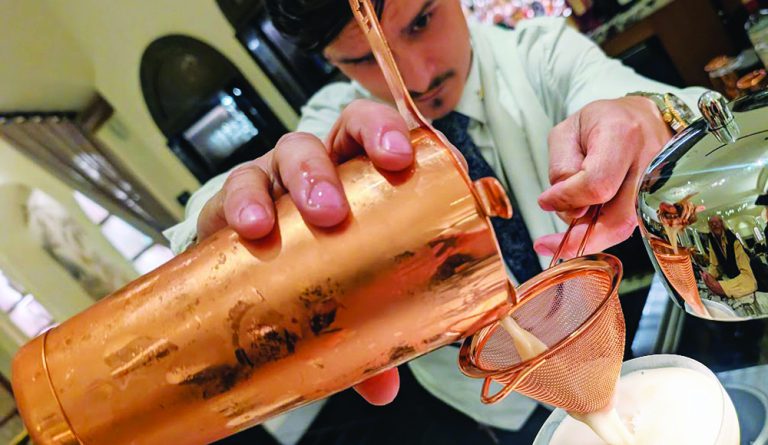
Jesse Thorn, creator and host of the NPR show Bullseye, which runs on more than 100 stations around the country, says Santa Cruz’s legendary tolerance of weirdness was a big help when he launched the program 25 years ago. So he is bringing his 25th-anniversary celebration to our little beach-and-college-town on Saturday, Nov. 1—the tour’s only other two stops are Los Angeles and New York.

Bullseye is also released as a podcast—Thorn was one of the world’s first podcasters, and now runs a pod network, Maximum Fun, which distributes more than 30 shows. His own has great breadth and pull: Over the past couple months, he’s interviewed Elizabeth Gilbert (Eat, Pray, Love), Sonia Manzano (Maria on Sesame Street) Ghostface Killa (Wu-Tang Clan) and three comic actors who need no identification: Bob Odenkirk, Jason Segel and Nick Offerman.

The Santa Cruz show will feature Adam Scott (Parks and Recreation; Severance) Boots Riley (The Coup; Sorry to Bother You), Glynn Washington (Snap Judgment) and Santa Cruz’s own The Mermen.

This conversation has been edited for length and clarity.

Not all of our readers will know that you launched your first show, The Sound of Young America, at KZSC when you were a student at UC Santa Cruz. And you became “Jesse Thorn—America’s Radio Sweetheart.” What inspired you?

JESSE THORN: What inspired me to get into radio was that I was always a public radio listener—that was what was on in my house. And when This American Life and Roman Mars from 99% Invisible’soriginal show, which was called Invisible Ink, were running on public radio, it sort of suggested to me that maybe there was a place in public radio for someone like me. You know, they’re both Gen Xers, but it was simply that they were making art on the radio.

And the truth is that I am the youngest person who didn’t have access to video. I’m an elder millennial, and when I got to college, a digital video camera that was worth using still cost $5,000. If you were a film major at UC Santa Cruz, you got to use a camera for one semester during your senior year. In contrast, one day I visited the radio station on a campus tour and realized that the person who was talking into the microphone was also running the board. And that up was louder and down was quieter. And that seemed within my means. And I feel really lucky that KZSC was not just a positive and supportive environment, but also a real radio station that people actually listened to.

My wife had a college radio show—she went to Sarah Lawrence in New York—and it ran on the cable television system on campus. Whereas when we were broadcasting on KZSC during drive time, there were thousands of people listening.

Definitely. KZSC was already kind of an institution.

Yes. And that meant that as soon as we started doing it, we felt responsible to make something worth listening to. I mean, we were getting up at 6:30 in the morning and walking across campus, because the campus buses didn’t run that early, to get to our 7:30am show. But we took that time slot because we knew that people would be listening from 7:30 to 8:30 in the morning. That’s when people listen to the radio.

So I certainly have heroes and inspirations in broadcasting—people like Ira and Terry Gross and David Letterman—but I also think that it was the medium that was available to us. I bought a This American Life How to Make Radio comic book for $6 and taught myself to use a program called Cool Edit. That was 1999. Got my mom’s cassette deck from her stereo from the ’70s that had a shoulder strap and bought a microphone at a thrift store, And we were off to the races.

That reveals a lot of stuff, including some pretty serious ambition.

Was it ambition? Or was it fear of embarrassment? There’s no question that we wanted to do things. We had started an improv group that still exists at UCSC; we started this radio show; but I didn’t imagine that one day I would be on NPR. I just thought if I am going to be on the radio and a thousand people or 5,000 people are gonna be listening, I should work really hard and try not to embarrass myself and see if I can make something good.

I hear that. And I did hear you say earlier that when you heard Ira on NPR, you thought maybe you could or should be too.

Well, the reason I wanted to go into public radio was because commercial radio sucked so hard. There were a few people whose talent was so incandescent that they transcended the limitations of the business, like Howard Stern or whatever. And there were some very talented people using their talent for evil, like Rush Limbaugh.

But for the most part, commercial radio was morning zoos that weren’t very good. There was no one doing actual comedy on the radio at all, I mean, when was the Firesign Theater—1976 or something? So public radio was the one place that was making something that, to me, was worth listening to.

You have invited Santa Cruz’s favorite son, Adam Scott, to join you for your anniversary special at Kuumbwa on Nov. 1. I listened back to a pod that you made with Adam a few months ago (and I want to suggest to Good Times’ readers that they go find it, because hearing you two guys talk about Adam working as a “candy boy” at Marini’s, pulling saltwater taffy on the Boardwalk, is priceless). And I want to ask you: What’s the weirdest thing about Santa Cruz, or one thing about Santa Cruz, that influenced you while you were here, that stays with you?

Well, there are things about KZSC that will live with me forever. There was a guy named Phineas—I don’t even know that he hosted a show on the station, and he didn’t go to UC Santa Cruz;  he went to Cabrillo and he worked at the Food Bin. And he would always be sitting on the sofa at KZSC eating almond butter or cashew butter out of a yogurt container with a spoon. And I think it goes without saying that he was a white guy with dreadlocks.

The first time we went on the air, a woman whose name was Clitia the Folk Goddess, who had another show on the station—and was an adult woman!—called in and told me, as I sat at the console two-thirds of the way through my first show, that Jordan and I represented everything that was wrong with KZSC.

I remember Clitia. Was this an on-air call?

We were on air at the time, but I don’t think she was; I think a song was playing when she called in. She literally said that to me, not to the programming committee or something. But the thing that I remember most vividly about my experience at KZSC was that no matter how ridiculous a thing we were doing, everyone thought it was a great idea.

I guess except for one time, during a fundraising drive. Jordan and I found out that the station had remote broadcasting equipment. We had no idea until one day somebody said, “I think there’s some remote broadcasting equipment in that closet.” So we got a friend of ours to run the board in the studio and someone to point the directional antenna down to the base of campus, and we set up at the base of campus in our underpants and shoes. And we did our whole show from the base of campus in our underpants.

And one of our guests was my now real-life adult friend, Marc Maron, who went on to revolutionize podcasting. At the time he was just on the phone from New York because he was probably doing some shows at Cobb’s in San Francisco, or had an album out or something. But we were down there at the base of campus interviewing him through this 1970s remote broadcasting equipment while cars drove by and honked at us because of how hunky we were, which we were very hunky. And I loved the fact that people just thought that was fine and were just like, “Yeah, do that. Sure. Why not?”

Well the fact that Marc Maron—who just ended his 16-year podcasting run last week by interviewing Barack Obama—happened to be your guest while you were doing this unforgettable prank is either a weird coincidence or proof that the universe is magic.

The Bullseye with Jesse Thorn 25th Anniversary Celebration takes place at 8pm, Nov. 1, at Kuumbwa Jazz Center, 320 Cedar St., Santa Cruz; $41.15 kuumbwajazz.org

Get Your Creep On

For 45 years, hair and makeup artist Steve Romero has been transforming faces into monstrous creations.

Romero, a young 70, honed his skills working on movie sets, opera stages and in haunted houses. His passion for makeup art hasn’t faded and you’ll find him religiously every Sunday face painting at the Live Oak farmer’s market.

Especially during Halloween, ghoulish werewolves, fire-eyed femme fatales and zombies are included in the vast array of characters Steve Romero can adeptly airbrush into life.

“It’s so rewarding to put a smile on their face, or a smile on their parents’ face,” Romero says, sharing the joy he finds in the farmers market community.

Romero says he’s been “doing scary, evil, crazy makeup” for a long time, gaining much of his experience working in a reputable haunted house in San Diego called The Scream Zone, where he prepped actors for their acts for more than 14 years.

Romero followed in father Nando’s footsteps, who started doing hair and makeup in the late 1950s. A year after starting beauty school in 1980, Romero joined his father and older brother at the family salon, The Hair House. He continued working in salons throughout the 1980s and 1990s into the 2010s while also shooting photography at his father’s fashion shows.

It was during this same period in the 1980s that Romero began working with his father doing theatrical makeup at the San Diego Opera. “I loved what I saw. I saw creativity and expression and I was hooked from day one,” Romero enthuses. Early on, he worked with Luciano Pavarotti. He learned to create effects for the stage, using water-based theatrical makeup to draw exaggerated lines. “If you’re on stage without makeup, you look drab and plain,” he explains. One technique is to draw heavy lines under the eyes, highlighted by white to bring out the eyes.

A move to South Lake Tahoe in 1992 gave Romero the opportunity to work on Hollywood movies being shot on location. One time in particular, Romero reminisces, he worked with iconic movie actress Betty White on the movie The Retrievers (2001):“That was a blast. That was the highlight of my career.”

Steve Romero made a move to Santa Cruz several years ago, leaving once again his native San Diego shores to find a new community. He has been painting faces at the farmers market ever since.

He still has contacts in the film business and sometimes gets a call at 5 in the morning to work on makeup for a movie set or a Kodak commercial. A little over a year ago, a director called up Romero to ask him to show up the next day to work on a short film, “I Said I Will,” with musician and local celebrity James Durbin.

“I love it because I love working with a crew,” Romero says. Anyone can jump in and share their vision or understanding for a shot, he explains, be it someone from lighting, the director or producers.

Generally, hair and makeup artists are given an illustration to work from. Romero recalls being on set for a production based on Showgirls. In one scene, there was a volcano behind the dancers and the producers had the idea of creating a fire flame effect on the dancers’ eyes. “We used Austrian cut rhinestones to create an arc along the eyebrows, while glitter strips were placed on the edge of the eyelids to accentuate the flame effect, explains Romero.

Find Steve Romero on Sundays at Live Oak farmers market stand. Call 951-795-9086 for a face-painting appointment.

Finding the Fun: A Modern Guide to Smart and Thrilling Play

0

Published in cooperation between wildz and Good Times.

The astounding success of online entertainment has had a rippling effect across multiple industries. The gaming industry is certainly most affected. Considering the immense impact that digital technology has on games it stands to reason that this would be the case. But the gaming industry encapsulates a lot more than just the simple fun that many associate with gaming. It is an ever-growing and expanding market. The goal we have set out in this text is to help any new fans of gaming understand how the industry has changed. 

The Immense Success of iGaming

Most think of classic titles like Super Mario or maybe even modern classics like Halo when the question of video games is brought up. But the industry stretches much further than that. The best example of the diversity of gaming can be seen in the incredible surge of online gambling throughout the world. Online casinos are taking off in Europe; spearheaded by countries like England and Finland. But it is also catching on in the United States as well. 

States are now much more likely to legalize the ever-expanding iGaming market. Many are likely inspired by its success in New Jersey, Pennsylvania and further north in Ontario. We see a growing interest in casino guide platforms and affiliate websites. But why has online gambling taken off in this new era? It all has to do with the increased capabilities of online gambling platforms thanks to the digital renaissance. 

Online casinos are now capable of running better games. But what is even more important is that the websites themselves can run much better. New technologies like 5G and Starlink have ensured that lag time is significantly reduced. We can’t be surprised at the industries growth when we couple those new inventions with the increasing capabilities of cybersecurity software. Online casinos today are not just better, but they are also safer.

Streaming Tech and How it Works

Streaming has become an everyday part of our lives. We watch films and televisions through streaming services like Netflix or Hulu. Many of us enjoy streamers who broadcast gaming footage on the web. Some may even be active streamers themselves in their free time. But streaming also plays a big role in the gaming industry. Nowhere is that more apparent than in the realm of eSports. 

Competitive gaming is a key component of the video game market. Games have always been built on competition. But never has competition been the end goal in and of itself. That is until the eSports community gained a lot of attention from the mainstream. Modern streaming services allow fans to watch and even wager on their favorite eSports events. But wagering on eSports is not the only way that streaming has altered iGaming. 

The one thing most people missed from online casinos was the ability to see a dealer face to face. That is no longer a concern thanks to streaming. Online casinos have brought a new level of immersion to their business by utilizing live streaming technology. Players can now join a stream in real time and play with a dealer who is actually there. They are even capable of interacting with fellow players and forging lifelong bonds of friendship. That is just one small way that streaming has changed even the gambling industry. 

Safety and Security When Gaming Online

We mentioned before that cybersecurity is going through a renaissance along with digital technology in general. We live in an era best described as the age of the internet. The digital sphere can give us information on everything we can possibly imagine. We can learn about café societies and the latest news all from the same webpage. But this revolution in cyber technology has also made us ever more susceptible to hostile third parties.

The growing development of digital technology has precipitated the rise of cybercrime. The Federal Bureau has warned the world that cybercrime continues to grow; even as digital platforms are finding new ways to combat the threat. Gaming websites have done their best to ensure their players are safe and sound. But there are some steps that the customers must take themselves in order to ensure their own safety.

Experts often share tips and examples of what you can do to stand against cybercrime. The best tip one can give is to create a strong password for any website that you join. It is also a good idea to frequently change your password for a website after a few months’ time. Cyber security professionals also recommend avoiding common key words like personal names or a sensible string of numbers. Most recommend a random assortment of letters, symbols and numerals that mean nothing to the person who is logging onto the website. 

What the Future of Online Gaming Holds?

The increasing interest in gaming means that more businesses are going to focus on the growing industry. We have already seen how gamification has affected markets outside of gaming. But how will external markets affect the gaming industry? Artificial intelligence is bound to play a big role in both gambling and traditional gaming. Many may find AI off putting these days. But it is good to know that generative AI is not the only form of machine learning out there. Video game companies have been using rudimentary software since the start of the century. The software will continue to improve and so will the games that rely on it. 

Virtual reality is another big component of the modern gaming and gambling industry. A lot of gamblers dream of an age when VR headsets can transport them to a virtual casino. Such a dream may have seemed more in the realms of science fiction two decades ago. But the growing popularity of video games based in VR seems to be pushing this fantasy into the realm of reality. Gamers are split on the concept of virtual reality right now. But in ten or twenty years the technology is bound to improve and reach new heights. 

The 3-Second Money Shift Saving Americans Billions

0

Published in cooperation between Poker Strategy and Good Times

Five years ago, you could still get away with promising to “get them next time,” but today, the money hits their account before you’ve even left the table. From Uber drivers cashing out after each ride to home buyers closing deals in hours instead of weeks, instant payments have completely changed how money moves through the economy.

A new analysis from Federal Reserve Financial Services shows that 78 percent of Americans actively select faster transfer options when offered – a habit banks can see in real time through surging Zelle traffic, which moved $480 billion last quarter alone.

It has become the connective tissue for daily cash flow, with 151 million users and more than $1 trillion in volume last year, embedding real-time movement directly into consumer banking.

On the back end, the RTP network operated by The Clearing House connects those same institutions, clearing about 1.18 million payments a day. After lifting its transaction cap to $10 million, it now supports everything from payroll cycles and supplier settlements to corporate transfers that once stalled under traditional wire systems.

The same push for speed has filtered through nearly every major industry, with gig platforms among the first to feel it—Uber and DoorDash drivers began choosing apps that could pay them the same night they worked, forcing competitors to upgrade their payout systems or lose their workforce.

Healthcare caught on next, with insurance companies ditching two-week check processing for instant claim payments, while real estate firms can finally close the deal within a single day instead of waiting for wire confirmations.

The gaming and entertainment industry went all-in on speed early, investing millions in automated verification systems and payment processor partnerships. Payment systems were rebuilt to sync directly with player accounts, removing the pauses that once broke the flow between rounds.

In high-stakes games like poker and blackjack, where winnings often roll into the next round, that immediacy changed how players manage their funds—and how analysts measure engagement. Every serious operator has to compete on transaction time, so pokerstrategy.com explains where to find fast payout casinos with proven track records for quick withdrawals.

These platforms blend multiple payment routes with automated verification and secure banking rails, giving players near-instant access to winnings and 24/7 support to keep systems stable.

That mindset spread into business banking, where idle funds started to look like wasted time. When a customer pays, the funds no longer drift through processing queues—they’re available almost immediately, feeding back into payroll, orders, and supply costs without delay.

For small firms, that cash turnover often decides whether payroll clears or a short-term loan becomes unavoidable.

Big companies treat it as a strategy, wiring live payment rails into procurement and logistics so capital moves the moment goods change hands. Payment visibility has become so precise that treasury teams monitor liquidity minute by minute, adjusting short-term lending or supplier terms based on live balances.

Siemens now uses JPMorgan’s programmable digital coin to trigger payments automatically when contract conditions are met, a glimpse of how automated transactions are starting to reshape corporate finance.

FedNow has gone from a quiet test run to a backbone of U.S. payments in less than two years. The Federal Reserve launched it in mid-2023 with just 35 banks; today, more than 800 use it to move money every hour of the day. Transaction volume has been climbing roughly 15 percent each month, hitting nearly 12 million transfers by September, as regional banks race to connect before the fiscal year closes.

That convenience has shifted expectations across the sector—72 percent of business clients say they would switch banks for faster settlement, a statistic that forced even the slowest institutions to modernize.

The race to control real-time money movement has turned into one of the fiercest battles in finance. Zelle handles more than half of all peer-to-peer transfers in the U.S., with 54.6 percent of the market, while Venmo holds 20.5 percent and Cash App trails at 10.6 percent.

Each platform is chasing the same goal—to make moving money feel no different from sending a message—but that accessibility has changed how people treat what they earn.

As money moves between checking, savings, and investment accounts, banks are learning that liquidity itself has become volatile. Balances circulate so quickly that overnight interest strategies barely register, pushing networks to expand capacity simply to handle the velocity of small-dollar transfers.

On October 3, 2025, The Clearing House’s RTP system moved $5.2 billion in a single day—a scale that shows how deeply instant settlement is now built into the country’s financial pulse.

The effect reaches far beyond personal transfers, though—hourly workers expect same-day pay, small businesses move cash across accounts in real time, and suppliers rely on immediate receipts to keep goods flowing. Raising RTP’s transaction limit from $1 million to $10 million sent average payment values soaring nearly 200 percent in one quarter.

More than 1,000 U.S. banks and credit unions already support instant settlement, and nearly 90 percent of the rest plan to follow within two years. At this point, slow processing looks like a system failure.

The next phase of this transformation is digital money itself. Stablecoins—tokenized currencies backed by cash reserves—have doubled in circulation over the past 18 months, climbing from $120 billion to $250 billion, with analysts projecting a $2 trillion market by 2028. JPMorgan, Mastercard, and Visa already use blockchain rails to move funds across borders in seconds, while Shopify accepts USDC to cut credit card fees that eat into merchant profits.

Lawmakers are finally moving to legitimize the trend: the GENIUS Act, advancing through Congress, would require full cash backing and monthly audits for stablecoin issuers, giving traditional banks a clear legal framework for participation.

When those systems connect, geography stops mattering. Dollars, tokens, and data begin to share the same network speed. A transfer to London will move as fast as one to Los Angeles, and the idea of waiting days for funds to clear will sound as outdated as writing a check.

Americans already expect money to move with the same speed as their messages or deliveries—and the financial system is racing to keep pace with that demand.

How Payment Systems Can Catch Up with Our On-Demand Lives

0

Published in cooperation between CasinoBeats and Good Times

Convenience has become something most people in Santa Cruz can’t live without. Meals arrive at doors within minutes, taxis appear at the tap of a screen and streaming queues never seem to end. Life here has grown around speed and ease, yet money still moves more slowly than everything it pays for. A payment might take a day to clear, a refund may linger for a week and cross-border transfers can feel like a relic from another era. Residents notice the lag between how fast they can spend and how slowly the money moves. Despite the progress in ordering, watching and traveling, the way people actually pay often trails behind the pace of life in Santa Cruz.

People have grown used to things happening instantly. Food, entertainment and even work tasks can be completed in moments, and that expectation has extended to money as well. The same desire for speed that drives one-click ordering has created demand for faster access to funds. Options for same day withdrawals at fast withdrawal online casinos illustrate this perfectly, letting users access winnings without waiting days for processing. Players can access their money immediately, which makes handling it less stressful. They also know exactly when payments have gone through, so there’s no guesswork. The principle is simple: if entertainment and services are available instantly, financial transactions should keep pace. Residents of Santa Cruz are experiencing this expectation firsthand, and banks and payment services are having to catch up. The appeal is not just in speed but in confidence, knowing money moves when it’s needed most.

Slow payments can cause problems for everyone, not just the person waiting. A small business on the Santa Cruz pier may wait days for sales revenue, while gig workers often find themselves caught between completed jobs and pending payouts. Even everyday consumers notice the lag when refunds or transfers take longer than expected. Waiting for money can be stressful, especially in a city where almost everything else moves fast. The frustration grows sharper when everything else feels immediate. People have grown used to seamless interfaces, yet beneath that polished surface sits infrastructure built decades ago. Money often has to go through a few different banks and systems, which can take time. What once felt efficient now feels cumbersome, particularly compared with the instant services residents rely on daily. The demand for speed is no longer a luxury; it is part of daily financial life in Santa Cruz.

Financial technology has gradually responded to the pressure for instant transactions. Digital wallets, instant transfers and open banking allow money to move without delays. Local banks are testing systems that post transfers in seconds rather than hours or days, and fintech platforms are streamlining verification and settlement. Residents can use their money almost immediately, which makes handling everyday expenses much easier. Payments confirm almost instantly, so there’s no wondering whether a transfer went through. That responsiveness matters for freelancers managing multiple clients, small businesses paying suppliers or anyone juggling urgent bills. Being able to move money quickly reduces stress and makes everyday financial management simpler. Over time, people in Santa Cruz begin to expect this speed as the norm, treating instant access to funds as part of routine life rather than a rare convenience.

People have come to expect payments that feel invisible and effortless. One-tap transfers, digital wallets and automatic billing are no longer novelties; they are standard features. Users want to complete transactions without thinking, with instant confirmation and minimal friction. When payments go through smoothly, people feel confident using a service again. Even small delays can be annoying, especially for people used to things happening instantly. Residents also want to know that fast payments don’t put their money or data at risk. Payment systems are now judged as much on how easy they make life as on the services they support. People appreciate services they can trust, and providers who deliver reliability and clear information get noticed in Santa Cruz’s busy lifestyle.

Residents are beginning to expect more than speed and accessibility. Notifications, clear records and easy-to-use dashboards let people see where their money is without any special expertise. Linking accounts and services together is also becoming more common. People expect the same experience whether paying through a mobile app, a card or an online portal, without delays or inconsistencies. Attention is also growing on the environmental footprint of payment networks. Rules are keeping up to make sure quicker payments stay safe. Some services give people straightforward ways to keep track of bills and subscriptions. With faster, simpler payments, managing money in Santa Cruz feels much easier.

In Santa Cruz, people are finding it easier to pay and get paid at local businesses. Whether it’s a corner café, a farmers’ market stall or a boutique shop, apps and digital services let money move quickly and smoothly, so residents don’t have to worry about carrying cash. Mobile payments and contactless options mean residents can shop locally without needing cash, while vendors benefit from faster access to funds that keep their operations running smoothly. Some platforms let people handle payments and keep track of rewards or memberships at the same time, making it simpler to manage both without extra effort. Beyond convenience, tools that show spending in real time or offer automated savings are helping people plan their finances with less effort. Users can see exactly where their money is going, set aside funds for bills or track goals without having to log into multiple accounts. A few platforms even include guides or tips for managing money responsibly, helping residents take control of their finances without feeling overwhelmed. In a city like Santa Cruz, where community life, work and leisure move quickly, these improvements mean managing money is no longer a source of stress. People can spend more time enjoying daily life and supporting local businesses, knowing their payments go through smoothly and without hassle. Seamless payments let people enjoy life without worrying about money getting in the way. With smoother payments, Santa Cruz residents can focus on life instead of money worries.

Ink and Insight

2

When two of the most influential storytellers in modern comics decide to team up, you pay attention. Bookshop Santa Cruz is bringing that dream collaboration to the Rio Theatre this week, hosting The Cartoonists’ Club—a new book and a family-friendly live event from New York Times best-selling creators Scott McCloud and Raina Telgemeier.

For parents who came of age reading McCloud’s Understanding Comics or Telgemeier’s Smile, this pairing is something like seeing Lennon and McCartney pick up pencils instead of guitars. The result is a richly illustrated invitation into the art and heart of making comics. It’s a guide for young creators that demystifies how pictures and words can spark emotion, humor and empathy.

Years in the Making

Telgemeier conceived the project after realizing how many of her young readers were hungry to learn how comics work. Her own creative awakening had come years earlier through McCloud’s landmark 1993 analysis of the medium, a book that treated panels, gutters and speech balloons as elements of a sophisticated visual language. She’d long wished she could hand a version of that book to the nine-year-olds who lined up at her signings. Eventually, she decided to make it herself and to ask the man who had inspired her to join in.

The collaboration took roughly five years to complete. Both artists poured their experience into characters designed to mirror the discovery and vulnerability of early creativity. The story follows four kids—Michaela, Howard, Art and Linda—each drawn to comics for different reasons: curiosity, self-expression, connection or the simple thrill of drawing worlds that didn’t exist yesterday.

The Spirit of the Book

McCloud sees a bit of himself in Art, the inquisitive experimenter who wants to test everything. As a boy, he treated comics as a laboratory for ideas, a mix of science, art and storytelling that felt infinite in scope. Telgemeier gravitates toward Linda, the shy artist who hesitates to share her sketchbook until she finds the courage to show her work. Through that act of opening up, she discovers both friends and a voice.

That dynamic—the moment a child’s private imagination becomes a shared language—sits at the center of The Cartoonists’ Club. The book gently encourages kids to let their creativity be seen, to take risks, and to understand that art becomes powerful when it connects one person’s inner world to another’s.

McCloud calls that courage “the real magic trick” of art: when curiosity and vulnerability combine. Telgemeier frames it as an invitation for young storytellers to find the version of themselves that draws from joy rather than fear. The tone throughout is playful, visual, and full of practical examples that make even complex ideas like perspective, pacing and composition feel accessible to a grade-schooler.

What to Expect at the Rio

The Santa Cruz stop promises more than a routine reading. McCloud and Telgemeier are known for turning presentations into performance art. Expect a kinetic slideshow that unspools like an animated comic strip, with panels sliding and morphing in sync to their narration. Telgemeier will do live drawing on stage, showing kids how a blank page turns into a character before their eyes. McCloud, ever the theorist, plans to punctuate the visuals with interactive games that let the audience test how pictures and words work together.

It’s part classroom, part comedy, part creative pep talk, and a chance for kids to see that the people who make books are still playing, experimenting and sometimes making mistakes on purpose just to see what happens next.

Parents will recognize a second layer here: this is a conversation between two generations of comics thinkers. McCloud spent decades convincing the world that comics were serious art. Telgemeier spent the last 20 years proving that they could also be intimate, funny and emotionally true. In doing so, she brought a new wave of readers into the medium. Their partnership closes that circle, offering the next generation both a toolbox and a reason to use it.

The Event

For Santa Cruz families, the event promises to be a night of big screens, fast sketches and creative energy in motion. Telgemeier and McCloud will be affirming to Santa Cruz kids that stories still start simply, with pencils, paper and a willingness to share what’s inside. The Cartoonists’ Club itself is less a manual than a gentle reminder that art isn’t about talent so much as imagination, persistence and play.

Bookshop Santa Cruz’s presentation at the Rio Theatre will bring that message to life for one evening and show how comics come alive when passed from hand to hand, generation to generation, panel by panel.

Tickets for the Bookshop Santa Cruz event are $22.99 per person, which covers everything—tax, fees, and a copy of The Cartoonists’ Club. Each attendee, adults and kids alike, will need their own ticket. Every ticket comes with two barcodes: one grants entry to the Rio Theatre program; the other is redeemed for the complimentary book.

The evening includes a 45-minute visual presentation and conversation with the creators, followed by a live audience Q&A and a photo opportunity—one picture per ticketholder—with Raina Telgemeier and Scott McCloud. Attendees also receive an exclusive signed bookplate and a free tote bag as keepsakes from the event.

Scott McCloud and Raina Telgemeier and The Cartoonists Club: 6pm on Oct. 28 at the Rio Theatre, 1205 Soquel Ave., Santa Cruz. Tickets: $22.99. bookshopsantacruz.com

Weighing in at the State of the Region

Government, business and nonprofit leaders around Santa Cruz, Monterey, and San Benito counties staged the 2025 State of the Region Oct. 17 at CSU Monterey Bay to discuss a vast list of topics from health care and air mobility to hospitality, tourism, advances in the agriculture, industry, climate issues and housing. 

Allen Radner, president and CEO of Salinas Valley Health, was the keynote speaker, charging head-on into the array of health care challenges set forth by the Trump Administration, his “One Big Beautiful Bill” and the ongoing government shutdown.

Headed up by the Monterey Bay Economic Partnership, the eight-hour event featured more than three dozen speakers and panelists.

​​Assembly Speaker Robert Rivas told the crowd that this past year has been “the most challenging year in my time in office.”

“I have made it my mission to ensure that regions like ours just don’t survive but that they thrive, that all Californians, from farmworkers to entrepreneurs, that everyone has a fair shot at opportunity,” Rivas said.

Rivas also touched on poverty and lack of affordable housing, and people who can’t afford to live near their jobs.

This year, Rivas helped streamline the largest expansion of housing opportunities in decades. 

“Our job isn’t just pushing back on Donald Trump, but about making real progress for California,” he said. “As California Democrats, we have to do a much better job at improving the lives of the residents who live here.”

Sen. John Laird told the crowd he wanted to look back over the year and “look forward to some of the challenges.” He touched on several major accomplishments, including the recent groundbreaking of the 670-bed student housing project at Cabrillo College, the Pajaro Valley Water Management Agency’s College Lake Pipeline Project, and improvements to the Pajaro River Levee improvement project.

He also mentioned the completion of improvements to Highway 156 between San Juan Bautista and Hollister.

On the subject of medical issues, Laird mentioned stepping in to help Watsonville Community Hospital.

“We are going to make sure that we do what it takes to keep our hospitals financially sound and operating,” he said.

Supervisors Table Kratom Ban

The Santa Cruz County Board of Supervisors on Oct. 21 tabled an ordinance that would have banned the sale of kratom, opting instead for a watered-down version that prohibits the sale to anyone under 21 but includes a public education component. 

Kratom is a plant grown in Southeast Asia and widely sold in various forms throughout the U.S. by retail establishments such as gas stations and smoke shops. 

Ingested by mouth, it is hailed by users and industry insiders as a reliever of anxiety and pain—as well as a natural way to ease opioid withdrawal. 

It has taken root in communities throughout the country and has garnered an estimated 12,000 users in Santa Cruz County and 15 million nationwide.

But to medical professionals, the plant—dubbed “gas station heroin” by detractors—is more dangerous than users realize. The active ingredient, 7-hydroxyitragynine, is more potent than morphine, and in fact affects the same brain receptors, said Supervisor Kim De Serpa, who brought the ordinance to the board.

“This is a substance that is not good for people, and certainly not good for our youth,” she said. “It is a gateway drug to get kids hooked.”

And because the $1.5 billion industry is unregulated by local, state or federal governments, the substance has no age restrictions and is available to virtually anyone, said De Serpa, who has spent her career as a medical social worker.

Use can cause dependence and addiction, liver injury, hypothyroidism, kidney failure, abnormal heart rhythm, seizures, nausea and vomiting, she said.

“I have seen many people, including youth, come in overdosed on kratom and in fact have lost a couple of those patients,” she said. 

The proposal was the second proposed by De Serpa that targets uncommon—but commonly abused—substances. 

In September, the board approved a ban on the sale of recreational nitrous oxide, commonly known as laughing gas.

Casey Grover, a Monterey-based physician who specializes in substance use disorders, said he has treated several people who have used kratom.

“The vast majority of my patients say something to the effect of, ‘if I had known what this stuff was, I never would have started it,’” he said. 

Santa Cruz County Public Health Officer Lisa Hernandez said that a 2019 survey showed that 62% of smoke shops have it for sale. It can also be purchased both online and in health stores.

“Taking action now is something that can help prevent kratom from becoming even more of a public health and substance use issue, especially in the setting of a community that is impacted by the opioid epidemic,” Hernandez said. 

Link to Creative Commons license for image

But numerous public speakers addressed the board, saying that they use the substance to deal with pain and addiction and asking the board to impose regulations rather than a ban.

A man named Anthony called in to say that kratom is the only thing that keeps him from lapsing back to alcoholism.

“Don’t punish responsible users,” he said. 

Supervisor Monica Monica Martinez said she was listening to the medical professionals who spoke on the hazards of the plant. 

“As a county, it’s our job to set policies that protect the public health of our residents,” she said. “It’s pretty simple.”

Supervisor Justin Cummings said that the majority of people who spoke were concerned about the highly concentrated potent synthetic products, not the natural plant form.

“If we ban this, we’re really just creating a black market where there is no regulation,” he said.

“I think we should not be cutting off the opportunity for people to access those naturally occurring substances that are sold in natural forms in a healthy way.”

The ordinance will be retooled and brought back to the board at a later date.

Anatomical Study

0

Mary Roach, who’s made it onto the The New York Times Best Seller list seven times, has a new book, Replaceable You: Adventures in Human Anatomy, which she’ll dissect at an Oct. 23 talk and book-signing at the London Nelson Community Center. The new tome is available at Bookshop Santa Cruz, which is cosponsoring the event with the Humanities Institute at UC Santa Cruz.

In Replaceable You, Roach takes us step by step through her firsthand research on the nitty and deliriously gritty details involved in such things as making a vagina out of intestines, the applicability of getting skin grafts from frogs, and harvesting usable 3D-printed body parts.

Roach’s honed literary style surgically removes the fiction out of sci-fi, and serves the science with shards of skin-crawling details, historical facts and needed humor.

We are surfing during an interestingly odd moment in the technological tidal wave. Even the Jetsons didn’t have synthetic androids with lifelike skin and brimming with the Neuralink consciousness of Elon Musk. Rosey the Robot was built out of nuts and bolts and spoke conversationally, with a droll and depressed tone (one of out two?).

You would think that with the leaps and the bounds that science takes every day, replacing our body parts must be right around the corner, right? Not quite.

Due to the stickiness of the human body, our meat suits do not neatly dovetail with things like new brains, skin or eyes. We know this because Roach cozies up right next to the dreaming innovators and the brightest and most beleaguered scientists. She’s constantly taking mental notes, asking pointed questions and ingratiating herself into arenas never really seen before, or at least never noticed in such detail.

The 20th century’s George Plimpton was famously known as a “participatory journalist.” Someone who cribbed from the first-person perspective of a “regular Joe,” wedging himself into professional baseball, boxing, acting stand-up comedy, and playing with a world-class orchestra.

But here’s one thing Plimpton never did, which Roach delightfully relates. “I did this column on a ‘Bashful Bladder’ for Salon,” Roach begins from her home in the Bay Area. “You know what that is? Paruresis. It’s a thing where it affects mostly, if not entirely, men. Where you can’t get started if you’re peeing in public, like in a urinal situation. Or the ballpark, where it’s a freaking trough.

“So there’s a treatment for that, which is kind of like the treatment for getting over the fear of spiders—where you just inch closer and closer,” she explains, “I was somebody’s pee buddy. What that means is I start out on the other end of the house. I say, “Okay, I’m over in the living room.” And the guy would drink a gallon of water. And then I would get closer and closer, and finally I was like, “I’m outside the door.” Roach is quick to point out that she “didn’t go into the bathroom with him.”

Roach, by all accounts, is an even-keeled persona, with an East Coast edge, a prolific writer by hook or crook, and someone who has been called “a humorous science author” by almost every major publication. You can also find other choice words like “wry” and “weird” in many descriptions of her.

So consider that when you take only the first word of her award-winning book titles—Stiff, Spook, Bonk, Gulp, Grunt and Fuzz—it sounds like the Seven Dwarfs’ Canadian cousins.

But don’t let that fool you into thinking these are just cutely titled books. What you get are deep spelunking explorations into the history of cadavers (Stiff), science’s hot takes on the afterlife (Spook), the study of sexual physiology (Bonk), the digestive tract and how digestion works (Gulp), how humans survive war (Grunt), and when nature breaks the law (Fuzz).

How does an author dive into so many diverse subjects?

“I would say to new writers, follow your curiosity,” Roach says. “Also, if something isn’t really interesting to you, you’re going to regret deciding to spend two years looking into it, because two years is a long time.”

Mary Roach will appear at 7pm on Thursday, Oct. 23 at London Nelson Community Center, 301 Center St., Santa Cruz. Tickets are $37 and include entry and a hardcover book. More info at bookshopsantacruz.com.

Free Will Astrology

Astrology, Horoscope, Stars, Zodiac Signs
Week of October 30, 2025

Keepin’ It Weird

Jesse Thorn in buttoned gray suit, white dress shirt and long black tie stands in front of anatomical posters.
Jesse Thorn, creator and host of the NPR show Bullseye, says Santa Cruz’s legendary tolerance of weirdness was a big help when he launched the program 25 years ago.

Get Your Creep On

Left, skull-like death face makeup, on the right, glamour eye make-up for the movie Showgirls.
For 45 years, hair and makeup artist Steve Romero has been transforming faces into monstrous creations. His passion for makeup art hasn’t faded.

Finding the Fun: A Modern Guide to Smart and Thrilling Play

Red xbox one game controller
Published in cooperation between wildz and Good Times. The astounding success of online entertainment has had a rippling effect across multiple industries. The gaming industry is certainly most affected. Considering the immense impact that digital technology has on games it stands to reason that this would be the case. But the gaming industry encapsulates a lot more than just the...

The 3-Second Money Shift Saving Americans Billions

money shift saving Americans billions
Published in cooperation between Poker Strategy and Good Times Five years ago, you could still get away with promising to “get them next time,” but today, the money hits their account before you’ve even left the table. From Uber drivers cashing out after each ride to home buyers closing deals in hours instead of weeks, instant payments have completely changed...

How Payment Systems Can Catch Up with Our On-Demand Lives

Payment systems catch up
Published in cooperation between CasinoBeats and Good Times Convenience has become something most people in Santa Cruz can’t live without. Meals arrive at doors within minutes, taxis appear at the tap of a screen and streaming queues never seem to end. Life here has grown around speed and ease, yet money still moves more slowly than everything it pays for....

Ink and Insight

Authors Raina Telgemeier and Scott McCloud
The Cartoonists’ Club, a book by Scott McCloud and Raina Telgemeier, is an illustrated invitation into the art and heart of making comics. Bookshop Santa Cruz presents the duo at the Rio Theatre at 6pm, Tuesday.

Weighing in at the State of the Region

Four people seated on a stage and speaking in front of a crowd
Leaders from Santa Cruz, Monterey and San Benito counties confab on everything from housing, hospitals and hospitality to air mobility.

Supervisors Table Kratom Ban

Plant with green leaves of different sizes
On Oct. 21, the board opted instead for a version that prohibits the sale to anyone under 21 but includes a public education component. 

Anatomical Study

Mary Roach best selling science author
in the technological tidal wave. Even the Jetsons didn’t have synthetic androids with lifelike skin and brimming with the Neuralink consciousness of Elon Musk.
17,623FansLike
8,845FollowersFollow