Santa Cruz guitarist Ken Kraft is sitting on his couch in Santa Cruz, reading a book. It’s 1980, and his band Snail is home briefly between tour dates, so rest and relaxation are his prime objectives. But Kraft’s head starts to ache. He tries to ignore it at first by focusing on his reading, but it hurts too much. He complains about it to his girlfriend, Ginger Charron. She suggests that maybe he’s having a brain hemorrhage.
What an absurd idea, Kraft thinks, but the pain gets so bad, he finally gives in and asks her to drive him to Dominican Hospital. There, he meets with a half-attentive doctor, who runs down a series of questions with him. He hands Kraft a prescription for codeine and says to come back tomorrow if he still doesn’t feel good.
His head is pounding now. He has just enough energy to crawl into bed, take some codeine and pass out. By the next morning, he’s back at Dominican, where the hospital staff gives him an MRI in an attempt to find out what the hell is happening.
Charron, it turns out, was right. He’s having a brain hemorrhage, and it’s getting more serious by the minute. There’s still time enough for the doctors to save his life.
Forty years later, Kraft knows how lucky he was. MRI machines weren’t common yet in 1980; it just so happened that one of the few in the country was in Santa Cruz. He was also lucky that he was home. 1980 was a busy time for him and Snail; they were almost always on the road. If he’d suffered a brain hemorrhage in Ohio after a sold-out gig … well, things might have not gone so great.
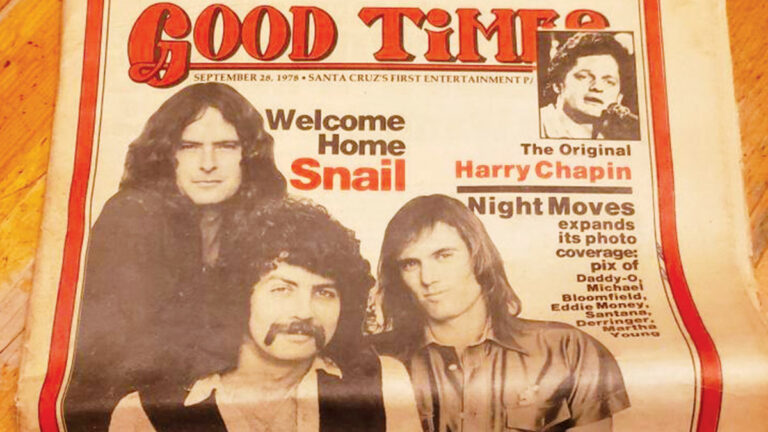
But there were consequences for both Kraft and the band. At the time, they were already the biggest rock band in Santa Cruz, with two full lengths on Cream Records, and they were set to break nationally. You could glimpse the painted-snail cover of their legendary debut LP on the set of Mork and Mindy. It hung on the wall next to the front door. They’d appeared on American Bandstand. They’d opened several arena gigs for Styx, in front of 45,000 screaming fans.
After his hemorrhage, Kraft wasn’t up to touring or recording and didn’t know how long he’d be out of commission, or if he’d ever get back to normal. While the band waited to see what would happen, drummer Donny Baldwin got an offer he couldn’t refuse: monster rock act Starship needed a drummer immediately. Bassist Brett Bloomfield took other gigs, and a few months later was also given an opportunity to join Starship. Guitarist/singer Bob O’Neill formed a new band, the Inflatable Dates, and they hit the ground running.
It took Kraft nearly a year to fully recover, and by the time he was ready to shred again, Snail was over. The band that seemed most likely to show the world how Santa Cruz rocked never really got the chance.
But in subsequent years, the Snail legacy has continued to reverberate in Santa Cruz, with sold-out reunion shows and lots of talk of the good ol’ days. Earlier this year, Snail released its first album of new material since 1979, Snail Now. The release party, which was to be the band’s first show in nearly a decade, was scheduled for Michaels on Main on April 4, 2020. Fans from all over the country—Florida, Ohio, New York, Washington—contacted the band, letting them know that they wouldn’t miss the show for the world. But miss the show they did, as a global pandemic put a stop to live music beginning in March.
Even without the big return to the stage, Snail Now has sold well, just from mail order. Like every other musician, they are anxious for live music to return in 2021 so they can finally have that proper release show.
Blasting Out of the Park
In 1967, Pacific Grove-raised Bob O’Neill, drummer Ron Fillmore, and bassist Dave Kibbler were blasting through a set of mostly Cream covers on a flatbed truck at San Lorenzo Park. The members of the up-and-coming Snail were a year out of high school. They felt like awkward weirdos and made up for it by playing as loud as humanly possible.
Recent Santa Cruz transplant Ken Kraft was in the crowd. He’d moved up from L.A. and was still resentful of his parents for plucking him from his life, which included a girlfriend and his garage band the Shaggs (not the cult-famous one that released Philosophy of the World in 1969). He was starting to adjust, partially because he’d formed a new band called The Bubble. That day, he’d gotten his first glimpse of Snail and he was blown away.
“These guys freaking rocked,” Kraft recalls.
Less than a year later, The Bubble and Snail shared the stage on a stacked local bill at the CBP Hall at West Harvey Park. O’Neill was equally impressed with The Bubble; not just their musical abilities, but also their hip image. O’Neill shyly approached Kraft and asked if he wanted to come over and jam. Kraft took him up on the offer.
“He had long hair. They were very hip. We were dorks,” O’Neill says. “I was surprised when he called. Anyway, it worked out.”
Kraft left The Bubble and joined Snail in 1968. That’s when things started to take off. Local realtor Ed Leslie fell in love with the band, and in the early ’70s he offered to manage them. As their manager, he let them stay in an old Victorian house he owned on Ocean View Avenue that had 18 rooms. The band built a fully soundproof practice room in the basement. Leslie also paid their bills so they could devote themselves fully to Snail. No longer encumbered by day jobs, they practiced for hours every day, perfecting their acid rock sound.
Snail branched out into the Bay Area scene right away. Leslie got them booked at the Carousel Ballroom in San Francisco on a Tuesday night.
“The place was falling asleep. Everyone was all stoned,” says O’Neill. “We opened with the beginning of [blues standard] ‘Rock Me Baby.’ We had these two Marshall stacks. Both of the guitars are doing this unison thing. It was so powerful. I remember everyone’s face was like, ‘What?’”
But their performance impressed promoter Bill Graham, who started booking them at several of his shows—the hottest shows in San Francisco at the time. In fact, he liked Snail so much, he offered to record some demos for them. He saw potential in the group and thought they could score a record deal. Their first demo recording session was in 1971 at the Automatt in San Francisco with engineer Fred Catero. Santana was in the other room recording what would be its sophomore album.
Snail was still a new band, but Graham, Leslie and other people around them saw something spectacular. A lot of it had to do with the chemistry of O’Neill and Kraft, the way their guitar styles balanced each other out.
“They were the best four-piece band in the world. I’d put them up against anybody,” says Snail’s road manager Roger Buffalo. “Bob is this force of nature—just goes to a whole other level. Ken is the schoolmaster, the guy that keeps order in the court. Bob is the guy that breaks the frigging rules. These guys have this great relationship that’s still going on to this day.”
Mass Appeal
Santa Cruz was a special place in the ’60s and ’70s, and the counterculture thrived. Snail was already a local legend, but it wasn’t the hippies and college freaks that were their primary audience.
“They were popular with common people. The working class. People that went to school at Cabrillo,” says former roadie Robert Crow. “The university crowd didn’t know them. They were into their own thing. They were set apart from the San Francisco sound. Bob’s stuff was more bluesy. He’s a pretty down-home guy.”
Snail was touring nationally by 1970. As they had in Santa Cruz, they attracted a blue-collar crowd on the road.
“We were doing really well down south. Not necessarily L.A., but in Bakersfield, Fresno—the desolate Midwest of California,” Kraft says. “We played Illinois, Iowa. The Midwest loves rock ’n’ roll. We would go to places like New York, and they would be like, ‘Rock ’n’ roll? Why aren’t you New Age? It had to be into whatever was happening right now. And it was like, ‘You guys are old hat.’”
In 1971, they were offered a record deal by Mr. Bakersfield himself, Buck Owens. Even though he focused on country music, he had wanted to start a rock subsidiary for his label. He felt he could relate to Snail, and wanted them to be the imprint’s first act. Besides, he’d been hearing local people talk about the huge crowds they were drawing in town. Owens sent some of his staff to meet Snail backstage at a Bakersfield gig, and the band agreed to cut a four-song demo. Owens offered them a contract. They didn’t sign it. The royalty split wasn’t bad, but the deal whittled their publishing share down to 10%.
After the Buck Owens disappointment, the group recorded a new, much better nine-song demo funded by Leslie. By this point, the band’s lineup had changed somewhat, including a third guitar player, Victor Phillips, and new bassist Larry Hosford (who joined in 1973), the country-loving musician from Salinas. Hosford wasn’t a great player, but he was a fantastic songwriter and had a smooth country voice that they all loved. Of the five members at this time, four of them were singer-songwriters. Each of those four members wrote and sang a couple of the songs on the demo. Hosford’s were in the country vein, of course.
“Country was, all the sudden, becoming popular in pop music,” Kraft says. “It used to be cornball. All the sudden Willie Nelson appeared with Red Headed Stranger. It happened right at that particular juncture with Larry.”
Capitol Records took a listen to these demo tapes and loved them—or rather, they loved Hosford’s songs. Instead of offering Snail a record deal, they offered one to Hosford, and he took it. For a while, he was the next big thing in Nashville. O’Neill and Kraft played on the record—they were still friends, after all. So did George Harrison and Leon Russell, as well as Santa Cruz musical saw icon Tom Scribner. There was a lot of anticipation for Hosford’s 1976 release, Cross Words. But when all was said and done, it didn’t yield a hit single. And Snail, well, they were out a bassist.
Signing Bonuses
The one upside of Snail’s bassist landing a major solo deal was it put more industry eyes on the group. A few years after Hosford went to Nashville to record his record, David Crook, an A&R man from Cream Records—a primarily soul label that had Al Green on its roster—offered Snail a contract. Crook was originally from Santa Cruz, and a hardcore Snail fan. This deal, the band accepted.
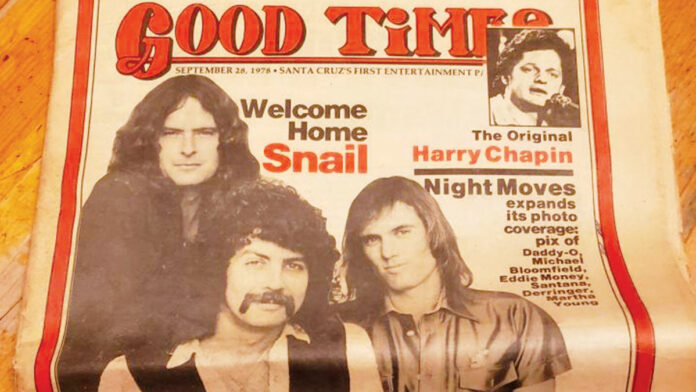
Snail’s debut self-titled album was released in 1978. The first song on the record, “The Joker” got a lot of radio play in scattered markets, mostly in rock centered cities in flyover country. The group also played—or at least mimed—the song on Dick Clark’s American Bandstand.
“With the cameras on you, it’s a little intimidating,” O’Neill says. “I was a little nervous, but once we started lip-syncing, it was okay.”
The record wasn’t a smash, but it did well enough that the label wanted another from Snail. They even gave them more control this time. For the first record, they allowed them a lot of input during the recording process, but didn’t really ask for their opinion when it came to the final mix.
“They were trying to get a hit,” O’Neill says. “They were going with what the industry was doing to have hits. Add violins, orchestrations, different sounds. They were trying to get into the mainstream and sell records. Whether we liked it or not, they didn’t care.”
There were no label shenanigans for Flow, their second album, released in 1979. They recorded it with their choice of producer, Allan Blazek, over the course of two months at Bayshore Studios, the Eagles’ studio. Snail got to record from 10am to 6pm, at which point the Eagles came in and worked on their The Long Run album all night long. Then back it went to Snail.
When Snail wasn’t recording, the band was on the road. They would piecemeal tours together where they would headline shows in cities where they’d fostered an audience—Iowa was a huge market for them—and would play to 1,000-3,000 fans. Then they would open for bigger groups like Styx, playing to 45,000 people. They had to adjust their set accordingly.
“You have to play at least five days a week, and you’d drive a lot,” Kraft says. “The record company leased us a really nice motor home. It had both conventional cooking appliances and a microwave. Our manager was with us and our road manager. They were both good cooks. We were not eating hamburgers from McDonalds.”
For hygiene, they’d swing by the local YMCA to shave and take showers.
“No one likes a stinky rock star,” Kraft says.
The band’s fame was growing, and Cream Records was excited to invest in a third Snail record and see how far they could get with this group of Santa Cruz oddballs. But then Kraft’s unfortunate brain hemorrhage stopped Snail in its tracks. The remaining members played a couple of shows without Kraft, using John Rocker as his replacement, but O’Neill felt like it just wasn’t the same. Waiting around wasn’t an option, because everyone needed to make a living.
“We let it go,” O’Neill says.
Shell of Their Former Selves
After nearly a year of recovering, Kraft started a new group called Room With A View. Through the ’80s, both his group and O’Neill’s new band, the Inflatable Dates, did really well and were able to support themselves as musicians. But they missed playing together. Even Donny Baldwin and Brett Bloomfield, who were playing huge gigs with Starship at their commercial peak, missed playing with Snail. In 1986, the four-piece played their first Snail reunion at the Catalyst.
“They had fun with us,” Kraft says of his two rock-star bandmates. “They were part of the group.”
Snail did several reunions in the ’80s and ’90s, including playing Good Times’ Halloween parties at the Coconut Grove. By the late ’80s, O’Neill moved back to Pacific Grove and landed himself a day job painting houses. Kraft continued to carve out a living doing producer work for local musicians and teaching music. The reunions got fewer and further between, because they wanted to do reunions as the four-piece that produced the two records—which were harder to organize. The last time they played together was in 2011.
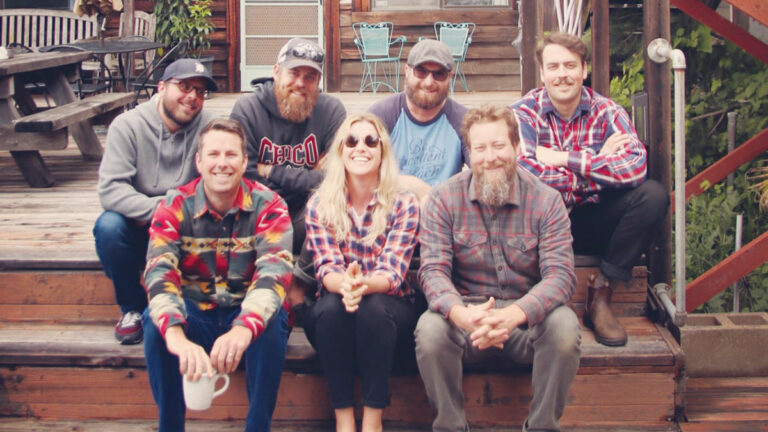
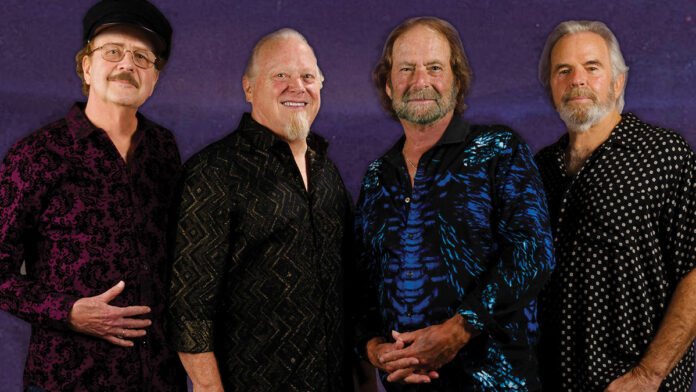
Something was missing from those reunions: new music. O’Neill and Kraft enjoyed writing together, and back in the ’70s they had an acoustic side project called the Shell Boys. This project popped up a few times in the ’90s, but that’s it. Then about 15 years ago, the two of them, with friend/bassist Craig Owens, got together and started an official acoustic group called the Messiahs. The group played some originals, but also played a lot of covers; songs that they would “Snail-ize.”
A couple years ago, excited by their ongoing collaboration, they went in the studio to record a Messiahs full-length album. They recorded it at friend and drummer Gary “Killer” Andrijasevich’s home studio. And occasionally, they’d invite Andrijasevich to hop on the drums.
Around two-thirds of the way through recording, it occurred to them: This is a Snail album.
“The light bulb went on. ‘What the hell?’” Kraft says. “A lot of people know us as Snail. We’ve been together for 50 years. We run into people that ask, why aren’t you guys playing anymore? We don’t know why. We’ve been Snail, so why not just be Snail?” O’Neill says.
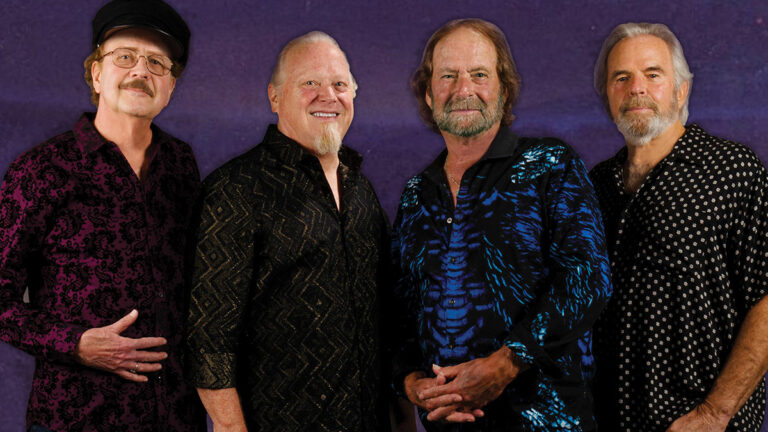
This year, they released the result, Snail Now, the band’s first studio album since 1979. This is a whole new era for Snail, and even without a release show, they sold a bunch of CDs just through mail-orders to their trusty old Snail P.O. Box. A couple months ago, they finally finished building a proper website, snailrocks.com, a slightly easier way for fans to purchase the album amid the pandemic.
When live music returns, they don’t plan to just play one reunion show. They want to be back again and gigging regularly. They’re keeping the Messiahs for the acoustic side they’ve fostered. They’ve even played a few Messiahs shows during the pandemic. But when it’s time to rock, they’ll play as Snail. They already have another new album completely written and halfway finished with the recording process.
Since Snail is a hard-rocking band that will pack out any local venue they choose, with people dancing as hard as possible, they are waiting for when it’s no longer required to have socially distanced sit-down shows. And they can’t wait.
“We’re hoping to be able to play and have people enjoy the music and relieve tension,” says O’Neill. “Music gives people hope and freedom, and a place to express themselves and socialize. When you don’t play for a while, something feels different. Something is a little odd. It’s therapy for us.”
The Messiahs are scheduled to perform at 5pm on Friday, Jan. 8, at Michaels on Main, 2591 Main St., Soquel. No cover. Call 831-479-9777 for updated show status.