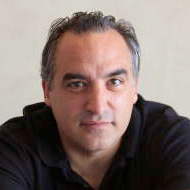
Warm and casual is the vibe at Soquel’s new breakfast and lunch spot, Pretty Good Advice, the brainchild of former SF chef Matt McNamara. A short menu of morning and noontime items is well stocked with outstanding breads and pastries created by Jen Jackson, while McNamara’s charcuterie recipes round out the house entrée offerings.
A recent morning visit rewarded us with outstanding Cat & Cloud coffee, plus a textbook cinnamon babka ($4), a tangy honey-thyme scone ($3.50) and ricotta toast with quince butter ($4.50)—all baked on the premisses in the exhibition kitchen that takes up half the tiny interior. Indoor picnic seating establishes the tone of PGA, while the café’s outdoor seating will be an obvious summer magnet for those who crave conversation and sunshine.
The ricotta toast was intriguing. The thick slab of bread—served, as is everything at PGA, in a coated paper basket—wasn’t actually toasted, but it was as warm and delicious any pain de campagne I’ve ever tasted. The thyme-scented scone exploded with flavor and texture, and we look forward to sampling more sweet and savory creations from this experimental baker.
Counter service rules here at Pretty Good Advice: you order, pay, take a number, gather your utensils, and pour your coffee into paper carry-out cups. No glass, ceramic, cloth, or metal in the place. At lunch we had a chance to sample the sophisticated entrée plates, which arrive partnered with toasted housemade bread, baby carrots, some pretty lettuces, and fresh pickles. The small portions are very attractive, though it’s difficult to cut through the ham and bread with the black plastic utensils provided.
Our favorite lunch item was the pork paté with grilled ham ($9.50). Paired with crunchy toast points, mustard (some mayo would also be welcome), and little pickles, this was the most substantial lunch by far. The small portion of green goddess salad ($6) was indeed small, but intensely flavored and liberally tossed with parmesan and avocado. The roasted garlic croutons were very thin. Tiny, crunchy and delicious. The classic though mild chicken terrine ($9) came with little carrots and pickled kumquat, plus toast and greens. It was a pretty grouping of ingredients, but a small portion. LeBron would need two orders. A dessert of griddled Meyer lemon loaf ($6) was delicious topped with whipped cream, fresh mint and bits of mandarin. I hope the menu expands.
Pretty Good Advice is open 7 a.m.-7 p.m. Wednesday-Sunday, closed Monday and Tuesday. 3070 Porter St., Soquel. 226-2805, prettygoodadvicesoquel.com.
Catch of the Day
Deciding that seafood is misunderstood and needs to be cast in a sustainable light, the folks from One Fish Foundation (onefishfoundation.org) are hosting a KNOW FISH dinner next Sunday, March 17, at 5 p.m. at the Santa Cruz Food Lounge.
Expect a show-and-tell dinner, where you’ll dine on fresh, delicious and responsibly harvested seafood while you learn more about what “responsibly harvested” really means. The hardest-working act in the the local fish biz, Ocean2table entrepreneurs Ian Cole and Charlie Lambert,will be on hand to tell stories about how they caught and processed the seafood you’ll be eating.
Chef Diego Felix of Colectivo Felix will fill participants in on the importance of sourcing locally harvested seafood, and you’ll learn about the changing “seascape” for domestic and global seafood. Tickets: $60 (plus tax and gratuity). eventbrite.com.
A California Michelin
The first ever statewide Michelin Guide California will launch this summer. In addition to the previously covered San Francisco Bay Area and wine country, the new all-California Michelin Guide will include restaurants in greater Los Angeles, Monterey, Orange County, Sacramento, San Diego, and Santa Barbara.
Expert script-flippage gives texture to the heartfelt female empowerment message within Captain Marvel. It starts as a war-on-terror movie, with the shape-shifting Skrulls as an insurgent enemy, hiding among the locals on a planet that looks like Afghanistan. We arrive at our more current malaise when the film’s true villain starts talking of foreigners who “threaten our borders.” When Captain Marvel is over, one notes that a conventional romantic lead wasn’t here, and also wasn’t missed. Directors Anna Boden and Ryan Fleck, and the five credited writers, give this heroine’s journey the same attractive solitude that male heroes—super and otherwise—have enjoyed in the movies forever.
Brie Larson’s appealing underplaying sells this material, which isn’t the freshest. Her character Carol Danvers has the same last name as Supergirl. In honor of copyrights, Stan Lee glommed onto the name of an established red-clad, magically powered superhero who predated the Marvel Universe. (That previous Captain Marvel is going to be back in the movies for the first time in decades under his new name, Shazam.) The creation of this Captain Marvel is as much a tribute to Lee’s relentless branding as is his mandatory cameo and the posthumous thanks to him before the titles.
Marvel is called “Vers,” an amnesiac soldier of the outer space Kree empire, with the ability to blast photon rays from her fists. The power is a gift from the Empire’s all-highest, an artificial intelligence simulation that appears to her in the shape of Annette Benning. Vers has a rep for being too unfocused and emotional, as she’s always reminded by her superior officer and sparring partner (Jude Law). After a skirmish, Vers is captured by the pointed-eared Skrulls. Her dormant memories are stirred up during an interrogation by their diabolical leader, the Cockney-accented Taros (an amusing Ben Mendelsohn).
After blasting her way off the ship, Vers falls to earth into 1990s North Hollywood. The ruckus summons America’s top secret agent Nick Fury (Samuel L. Jackson, digitized to a younger form, wearing a plastic-y wig, and still possessing both eyes). The corpse of a dead Skrull convinces Fury of Vers’ story. As they try to round up the aliens, the jagged bits of Vers’ past keep flashing back. She recalls her past life as a fighter pilot and her lifelong friendship with her fellow pilot Marie Rambeau (Lashana Lynch).
It’s possible that the lamentation of fanboys has been exaggerated publicity to make a blockbuster sound like an underdog. But there has been some public wailing by fans emasculated by a strong heroine. Hope they’ll save some tears for the scenes where Jackson does some things he may never have done in a movie: helping to wash the dishes and going gooey for a orange kitty called “Goose,” in honor of Top Gun.
Larson and Jackson have a smooth rapport. She brings in a great deal of feeling, but also some playfulness. In the patronization-free partnership with Fury, our heroine can be slightly bratty, pestering him at a bar about why he thinks everyone should call him by his last name. “And what will your kids call you?” “Fury.”
There was a Blue Angels flyby over Hollywood to promote Captain Marvel—the military-industrial-entertainment complex at work. Future historians could note this show of military might occurred during a week of public speculation about drafting women into the military.
But Captain Marvel’s exhilaration isn’t as supermacha as G.I. Jane or Starship Troopers (satire or otherwise, that Verhoeven film was what it was). The movie is not about Vers becoming a good, disciplined soldier. She finds her independence at last.The 1990s setting—used for grunge needle drops and jokes about the slowness of old-time computers—may have been there to remind us of that other intrepid blonde heroine of the era, Buffy Summers, the Slayer.
Despite some starchy Louisiana heartland sequences, this is an effective fantasy of power used with grace and without arrogance, featuring a constantly underestimated figure rising up again after being knocked down. Fully charged up and blazing in the heavens, this Captain Marvel is as fine an embodiment of the Superman figure as there has been in the movies. Hopefully, six weeks from now in Avengers: Endgame, this flying light goddess is going to barbecue Thanos and his conservative austerity program.
CAPTAIN MARVEL
Directed by Anna Boden and Ryan Fleck. Starring Brie Larson, Samuel L. Jackson and Jude Law. (PG-13) 123 minutes.
Longtime locals may be getting déjà vu at recent Santa Cruz City Council meetings. Tensions are running high, and divisiveness is approaching peak levels—in other words, it’s how the political climate gets around here every time homeless issues rise to the top of the agenda. It’s been that way for at least as long as I’ve been in Santa Cruz. Things got particularly nasty in the mid-’90s, in the wake of the Loma Prieta earthquake, and again in 2000, then again in 2002 … actually, I can remember more years it was bad than years it wasn’t.
The discourse has often gotten extremely uncivil. So is there any difference now, as the Ross Camp and overnight parking on Delaware Avenue become only the most high-profile issues splintering the current debate? Perhaps, as we have just witnessed the city’s mayor call out other councilmembers for what’s been called sexist and inappropriate behavior, bringing what was once mainly backroom scuffling into the light of public debate.
In this week’s cover story, Jacob Pierce takes a closer look at that debate, bringing in perspectives from everyone involved to examine the question of where the lines of acceptable behavior should be drawn in our city government. We can only hope the push to take such issues seriously will improve the situation not only now, while #MeToo and bullying are trending issues, but also every year this comes up again in the future.
Offshore wind in the Monterey Bay Marine Sanctuary? We don’t have to destroy the environment to “save” it if we emulate Sweden, France and Finland—countries that decarbonized decades ago, thanks to nuclear power. Instead, we emulate Germany, which—after spending hundreds of billions on wind and solar while closing nuclear plants—has failed to reduce CO2 emissions for 10 years straight.
Contrary to popular belief, civilian nuclear power and its waste have hurt no one in the United States. Worldwide, civilian nuclear power accidents have killed less people than are killed every single day by pollution from burning coal.
We need nuclear power and renewables. Read, for example, the new book A Bright Future: How Some Countries Have Solved Climate Change and the Rest Can Follow. Our existence depends on everyone understanding what it really takes to decarbonize.
Stephen Williams
Santa Cruz
Faith Restored
I must respond to the absurd comments of Marji Schoeneman (Letters, 2/27).
I also live in Watsonville, Marji. I live in the retirement community of Pajaro Village. One might think that older folks just love Trump and all his behaviors. Think again!
There is little respect left in my community for Trump. His disgusting, racist, misogynist, xenophobic behaviors were well outlined by our former secretary of state Madeleine Albright.
No, there was not one miniscule amount of respect for Trump in the article. And if you watched the Michael Cohen hearing on Wednesday, Feb. 27, you know why.
As I went door to door when I ran for city council in District 7, many voters wanted to know if I was a Democrat, and if I would help remove Donald Trump if elected.
I replied every time in the affirmative.
Fortunately, my two opponents were Democrats and have similar views to mine regarding Trump. Even though I did not win, I was struck by the anger, outrage and disgust with this POTUS. It reinforced my faith in the people of Watsonville. I resolved to do all that I can to remove him legally from office.
Thank you, Good Times, for your timely article regarding a true feminist leader from my generation. God bless Madeleine Albright. You go, girl!
Steve Trujillo
Watsonville
Speak Up For Green New Deal
The UN’s latest climate report claims we have 12 years to dramatically transform our economy and lifestyles to preserve the stable climate human civilization has depended on for millenia.
We need a massive mobilization of every sector of society on par with what science and justice demand. Local activist groups have already taken the initiative, but we need more people across a wider spectrum of backgrounds to speak up.
We need the parents of young children too young to speak for themselves and local high school and college students to demand action. These are the futures most jeopardized.
A Green New Deal will keep Americans safe from climate change and create millions of green jobs. It is common sense policy that is overwhelmingly popular with American people, regardless of political party or where they live.
Angela Barros
Santa Cruz
CORRECTION
In last week’s news story “Spin Vogue,” GT reported the incorrect name for the proposed Castle Wind project in Morro Bay. We regret the error.Spe
PHOTO CONTEST WINNER
Submit to ph****@*******es.sc. Include information (location, etc.) and your name. Photos may be cropped. Preferably, photos should be 4 inches by 4 inches and minimum 250dpi.
GOOD IDEA
Bike Santa Cruz County is looking for a leader with a vision for local transportation that’s sustainable and forward-looking, and who has the credentials to walk the walk. Current Executive Director Janneke Strause has announced plans to pursue a graduate degree in community and regional planning after implementing a new strategic plan. In less than three years under Strause, the organization expanded the youth-oriented Earn-a-Bike program, increased its budget by 30 percent, incorporated as a nonprofit, and moved to a larger office. For information about the opening, visit bikesantacruzcounty.org.
GOOD WORK
On Saturday, the Santa Cruz County Parkinson’s Group held the “My Life is Bigger Than Parkinson’s” symposium at Twin Lakes Church in Aptos. Filled to capacity, the free conference brought together an impressive slate of speakers that laid out the latest developments in scientific research and emerging technologies and treatments to attendees. One thing that was abundantly clear was the wide range of resources available in Santa Cruz County to people with Parkinson’s. To tap into them, check out easepd.org.
QUOTE OF THE WEEK
“When there is no enemy within, the enemies outside cannot hurt you.”
Making cannabis candy isn’t so different from what typical boutique candy makers do, says Daniel Thomas, chief operating officer of Santa Cruz cannabis-infused cough drop company Dollar Dose. “It’s pretty much standard candy making, with a little bit of special stuff added,” says Thomas, who once worked for Marini’s Candies.
It’s the process of getting the “special” THC into the hard candy, and keeping levels consistent across batches, that is Dollar Dose’s secret weapon. As of September, the company led by founder and CEO Jason Freeman had sold 170,800 of their $1 cannabis-infused lozenges, which come in four flavors: hibiscus sativa, indica root beer, indica apple, and Thomas’ favorite, watermelon sativa.
The candies are available all the way from Shasta County to Los Angeles, including here in Santa Cruz County at KindPeoples, Cannacruz, TreeHouse, Herbal Cruz, Central Coast Wellness Center, and Curbstone Exchange. In December, Dollar Dose became the first cannabis distributor to obtain a local conditional use permit.
What’s it been like navigating the regulatory framework?
DANIEL THOMAS: It’s been nuts. Until mid-January, there were no real permanent regulations. They were all temporary emergency regulations, and they changed several times. Some of those changes were pretty big shifts. Then they would propose new regulations.
Sometimes there would be things in those new regulations that would make us go, ‘Ah, that would be terrible!’ or ‘That would be sweet!’ They were just proposals. It’s this shifting puzzle. It’s hard to get clear answers. It was just us staring at the screen of regulations until our eyes start watering. Fingers crossed they don’t change them too much.
Cheech and Chong or Seth Rogen?
Cheech and Chong—timeless. Come on.
You should introduce a higher-THC night-time varietal and call it Dollar Doze.
Oohhh… shoot. [Nodding] We’re definitely looking at scaling. With this new sales bump, we’re gonna buy a new forming wheel. We’re gonna start getting new products rolled out. We are interested in doing higher dosages, as well as toffees, gummies, stuff along those lines.
The Santa Margarita Groundwater Agency, formed in 2017 to comply with California’s new Sustainable Groundwater Management Act, is hosting the last of their three-part educational series to engage and inform all people who rely on the water supply from the Santa Margarita Groundwater Basin. The Santa Margarita Groundwater Basin is the major water source for the San Lorenzo Valley, Scotts Valley and Santa Cruz. The topic is “Managing Groundwater: How Can We Prepare for an Uncertain Future?” Erik Ekdahl of the State Water Resources Control Board will give the keynote. Local water agency leaders will also present an interactive water management “myth-busting” exercise, and attendees will try their hand at water management planning themselves.
INFO: 9 a.m. Saturday, March 9. Felton Community Hall, 6191 Hwy. 9, Felton. 335-5621. Free.
Art Seen
The Real Irish Comedy Fest: Santa Cruz
Get St. Patrick’s Day off to a real traditional start—no cartoon leprechauns here. Come get a blast of blarney and Irish laughter just in time for the big day. The Real Irish Comedy Fest showcases the best blend of Irish comedic talent and is coming to Santa Cruz for one night only. Yes, accents are included, so you know it’s real.
INFO: 7:30 p.m. Sunday, March 10. Kuumbwa Jazz Center, 320-2 Cedar St, Santa Cruz. 427-2227, kuumbwajazz.org. $20.
Friday 3/8
‘Armistice100 Santa Cruz’
Local longtime videographer LB Johnson will be showing her video Armistice100 Santa Cruz to benefit local veteran groups and the Center for Spiritual Living. Armistice100 Santa Cruz documents the efforts of Santa Cruz Veterans For Peace Chapter 11, Armistice100 Santa Cruz and VFW Post 5888 to honor the 100th anniversary of Armistice Day last November. Johnson has worked with veterans-turned-peacemakers for 35 years, making videos of talks, concerts, protests, and marches. She documented Marines returning to Vietnam after 20 years
in 1989 and a Santa Cruz mayor’s delegation to Vietnam in 1995.
INFO: 7 p.m. The Center for Spiritual Living, 1818 Felt St., Santa Cruz. $10-$20.
Saturday 3/9
Estuary Restoration at the San Lorenzo
Historically, the San Lorenzo River has been home to abundant populations of coho salmon and steelhead trout. However, as an urban stream it has also seen significant land-use change that has highly impacted these species’ numbers. Join the California Conservation Corps and local environmental volunteers in weeding and replanting to reinforce stream banks and mitigate erosion at Mike Park, which will improve water quality in the San Lorenzo. Volunteers will remove weed suppression and invasive plants and weeds, spread mulch and plant native botanicals. All ages are welcome; don’t forget to bring closed-toed shoes, gardening gloves, water in a reusable bottle, and snacks. RSVP email or call required.
INFO: 9 a.m.-1 p.m. Mike Fox Park, 225 San Lorenzo Blvd., Santa Cruz. 420-3931, li************@**aa.gov. Free.
On a recent trip to Napa, we stopped by Ashes & Diamonds for a tasting. Friends had recommended this fairly new operation, both for the gorgeous wines and the unique mid-century-modern tasting room.
The brainchild of advertising executive Kashy Khaledi, a visit to Ashes & Diamonds is exciting and memorable. The winery’s 2014 Cabernet Franc ($75) is one of the better Cab Francs I have enjoyed in some time. Winemaker Steve Matthiasson has made a perfect, aromatic wine with enormous bold flavors. A blend of select vineyards from Napa Valley, one can almost taste the volcanic, clay and sandy soils from which the luscious black grapes sprang.
The Ashes & Diamonds team say their winemaking philosophy is simple: “A wine should be based on the quality of farming, minimal intervention in the cellar, and time-honored methods of healthy fermentation and harmonious blending.”
Khaledi strives to give the visitor not only world-class wines, but also a very memorable experience. He is the son of Darioush Khaledi, owner of the famous Darioush Winery in Napa, with its impressive entrance of Persepolis-style columns reminiscent of ancient Persia.
Ashes & Diamonds, 4130 Howard Lane, Napa. 707-666-4777, ashesdiamonds.com
Live Earth Farm
Along with its weekly delivery of fresh, organic produce, Live Earth Farm is now partnering with other local vendors.
Look for a hearty loaf of bread from Companion Bakeshop, pastas and pies from Pie Ranch in Pescadero, poultry and eggs from Sol Seeker Farm in Corralitos, and jams from Happy Girl Kitchen in Monterey. Additional partners include coffee from Hidden Fortress Roasters and honey from Rivas Bees and Carmel Honey.
Live Earth Farm, based in Watsonville, offers shoppers an abundance of choices for the weekly CSA (community-supported agriculture) delivery. And we can all look forward to the farm stand and U-pick opening again in May. In the meantime, you can find Live Earth at local farmers markets. Bonus: their nonprofit Farm Discovery educational programs (farmdiscovery.org) are integral to the farm’s community-supported success.
For more info on Live Earth Farm, including farm tours and field trips, visit liveearthfarm.net.
The topic before the Santa Cruz City Council was homelessness. Neighbors of the burgeoning encampment behind the Ross department store had been calling on the city to close it. Meanwhile, $10 million in state funding for homelessness was set to come down the pike for local communities like Santa Cruz.
But before getting into the details, Mayor Martine Watkins reminded everyone that councilmembers need to be honest, open-minded and respectful of one another. “Perceptions that are unnamed and go unaddressed can further divide us,” she said, “and my hope is to bring us together.”
Reading from a prepared statement in front of her, Watkins glanced down occasionally while addressing the crowd. She said she felt that Councilmember Drew Glover had been trying to bully her into placing his own list of homeless-related items onto that evening’s agenda. His list included reopening city parks, overhauling overnight parking rules, creating new transitional encampments, and reconsidering an additional 20-odd homeless ordinances. Glover had support on those items from fellow councilmembers Chris Krohn and Sandy Brown, but he submitted a rough draft of his ideas after the deadline. Watkins got the list on the day of her agenda review meeting, and the schedule for what would go on to be a 13-hour meeting was already full. So after the agenda got finalized without his items, Glover took Facebook and Twitter, writing a blog post titled “The Fierce Urgency of Now.”
Glover accused his colleagues on the council of showing “a severe lack of urgency.” He called on his supporters to write Watkins and pressure her to prioritize the items he called for as soon as possible. The mayor stood her ground.
As she spoke at the Tuesday, Feb. 12 meeting, Glover and Krohn whispered to each other. At one point, the audience at Santa Cruz City Hall guffawed at the notion that Glover tried to “smear” her character. Watkins told the crowd that it was her turn to speak.
“I also understand,” Watkins continued, “that there are perceptions that my colleagues, both Councilmember Krohn and Councilmember Glover, are intentionally bullying me because I’m a woman.”
Glover threw his head back and let out a heavy sigh in apparent disbelief.
Watkins intentionally didn’t say whether or not she agreed with these perceptions, but the statement was clear.
The tension comes a few months after Glover prevailed, along with new Vice Mayor Justin Cummings in a November election, where he had promised big changes. The new four-person majority has the authority to implement policy shifts, but the procedural framework haven’t changed, nor has the makeup or size of Santa Cruz’s city staff.
Former Santa Cruz Mayor Cynthia Chase supports Watkins’ decision to speak up, although she says that not everyone has been so encouraging. In the days following the meeting, Chase, who served alongside Krohn, heard a lot of second-guessing of Watkins, who was the top vote-getter in the 2016 City Council election and works for county’s Office of Education. And it hasn’t sat well with her.
“And this is supposed to be a liberal community? You don’t have to agree with Martine’s comments, but you can at least listen to her,” Chase says. “Would she actually say this if it wasn’t true? She has done nothing to show that she would make up a story.”
Most local officials who have spoken about the issue in the weeks since the meeting have defended Watkins.
But Glover says his feelings were hurt when Watkins singled him and Krohn out publicly. Glover felt blindsided by her comments, he says, but has tried to move past them. While he stops short of saying that he deserves an apology, he invokes Martin Luther King, saying that he’s forgiven Watkins for what she said.
“For me one of the first steps is forgiveness, and I want to move forward in the centering of forgiveness,” he says. “Not only for the mayor, but also for myself, to be as constructive and productive as possible.”
Glover says that he’s an avowed feminist, noting that he served for more than a year on the Commission for the Prevention of Violence Against Women (CPVAW). Krohn and Brown both nominated him in 2017.
Glover also says he’s hoping to chat with Watkins about what he did wrong, and how to prevent incidents like this in the future. Watkins, who stands by her comments, says she has spoken with Glover, and that she would be happy to do so again.
BLAME SPIRAL
Though Watkins has declined to go into detail about what specifically happened between her and the other councilmembers, some community members feel that a troubling pattern has begun to emerge.
One councilmember has filed a formal complaint against Glover, who took office in early December, under the Respectful Workplace Conduct policy, which the council adopted two years ago. GT made a request under California Public Records Act for complaints against councilmembers under the city’s Discrimination and Harassment Policy, approved by the council less than two years ago. Records Coordinator Kelly Thompson says in an email that all relevant records are currently in draft and note form and therefore not public. “The public interest in withholding the record clearly outweighs the public interest in disclosure due to the particular details and nature of the records,” she writes.
Other individuals have stepped up to defend Glover. The Santa Cruz Sentinel ran a letter on Feb. 16 from former City Councilmember Micah Posner arguing that Watkins was wrong not to agendize Glover’s submission. “Instead of bringing up gender politics,” the mayor “should apologize for her error,” he wrote.
“People of all genders make mistakes,” Posner explained.
A couple of days later, the paper ran a response letter from District 3 county Supervisor Ryan Coonerty defending Watkins. “Micah Posner’s letter asking Mayor Watkins to apologize for saying she felt bullied by Councilmen Glover and Krohn is a disgrace,”wrote the two-time Santa Cruz mayor.
He noted that it is the mayor’s job to set the agenda, and Coonerty felt that “she did her job well.”
“More importantly, the mayor called out a pattern of bullying over the last months, not just related to political differences of the last week,” Coonerty wrote. “I’ve heard the same concerns from a dozen women who’ve watched or are involved with city government. Their concerns need to be respected.”
COUNCIL CONTROVERSY Tensions are running high on Santa Cruz City Council. Pictured here are Councilmembers Chris Krohn (far left), Drew Glover, Donna Meyers, and Mayor Martine Watkins.
Over the next few days, Councilmember Donna Meyers voiced her support for the mayor in a letter of her own, saying that Watkins was right to speak out. Former Mayor Don Lane and his wife Mary Howe wrote their own letter reminding readers thatclaims of sexism should be taken seriously. Former five-time Mayor Mike Rotkin reaffirmed that it’s the mayor’s job to set the agenda—and for good reason, he argued, so that individual councilmembers can’t force their own ideas onto an agenda to the detriment of all other priorities.
Then, the Sentinel ran a pro-Watkins op-ed from nine women—some of them deeply involved in politics, including local Democratic Women’s Club President Carol Fuller, School Board Trustee Deb Tracy-Proulx, Capitola City Councilmember Yvette Brooks, and Rachel Dann, a county analyst for Coonerty. (Brooks is a coworker of Watkins’ and also ran her 2016 council campaign.)
Glover says members of the political establishment are only criticizing his behavior because he is “challenging the power structure” in local government. He draws a parallel to how critics at the national level have lobbed criticisms for newly elected democratic socialist U.S. Rep. Alexandria Ocasio-Cortez (D-New York), who’s taken strong stances on taxes, immigration reform and climate change.
“I’m disappointed in Supervisor Coonerty,” he says. “I’m disappointed in former Mayor Lane. I’m disappointed in Mike Rotkin, but that is what was to be expected when I came into this office.”
Other politicians have weighed in, as well. Former Councilmember Richelle Noroyan, who lost a reelection bid in November, put up a Facebook post summarizing stories she had heard two years earlier. Noroyan says that during her time on the council, three feminist women requested that she not support Glover’s appointment to the Commission for the CPVAW. Each recounted stories of how he spoke to them in a harsh manner compared to how he addressed men, she says, but they asked her not to reveal their identities.
Glover dismisses those claims as “vagueities.”
“I find it hard to appreciate Richelle Noroyan’s criticism,” he says.
In all, Glover says he enjoys being on the council, “minus all this unnecessary drama from people who are supposed to be ‘leaders in our community,’” he says, flexing his fingers to signify air quotes.
Gender aside, former Watkins says she sees another troubling trend. They draw parallels between Glover’s recent political approach and that of President Donald Trump—using a divisive, scorched-Earth strategy to declare crisis, create a villain, and try to secure funding as quickly as possible. Chase says she has seen Krohn use similar tactics.
Glover calls such charges against himself and Krohn “laughable,” and says that his critics are only trying to compare him to Trump because the president is so reviled. “What’s worse in Santa Cruz than being compared to Trump?” he asks.
MEET AND GRIT
Chase does not look back on certain aspects of her four-year run on the City Council—which ended in 2018—fondly. For one thing, she says she recalls Krohn putting constant pressure on her to do what he wanted, demanding long meetings with her every week and talking over her in City Council meetings.
“His behavior was incredibly aggressive—very harassing, bullying—to try to get his own agenda to happen,” says Chase, acknowledging that she wasn’t always able to get items heard at Krohn’s preferred meetings. “For me, it’s never personal about those things. I’m always trying. Nobody gets special treatment. We’re trying to do the business of the city, not no one individual’s agenda.”
She adds that the behavior of her former colleagues, Krohn included, was one reason she decided not to run for re-election last year.
During her year as mayor in 2017, Chase remembers one time in particular, when she says Krohn asked to attend an agenda-review meeting. Agenda review is the when the mayor meets with staff to decide which items will be discussed at any given council meeting. The two argued about whether or not Krohn could join, with Chase explaining to him that it would it would be unfair to extend that courtesy to one councilmember without also extending it to all members. When Krohn showed up at the meeting unannounced, Chase says she asked Krohn if the two of them could speak privately, and when he said no, she decided she had no choice but to cancel the meeting.
Krohn says he doesn’t understand why those agenda-review rules are such a big deal, and that he sat in on an agenda-review meeting during his previous stint on the council many years prior. He pushed in recent years for a change to the agendizing rules, so that three councilmembers at a time would rotate in and out of the review meetings, but it failed.
In general, Chase says she was surprised that Krohn was so pushy with her. She felt like the two of them shared progressive values and concerns about the homeless. The following year, her fellow councilmember David Terrazas took over as mayor, serving for one year just like she did. Chase felt that Krohn went far easier on Terrazas in council meetings than Krohn had been on her—interrupting him less and being less disruptive—even though he and Terrazas have less in common politically. Noroyan agrees. Chase says, in recent council meetings, that Krohn has been treating Watkins the way he treated her.
Terrazas says he’s not sure that’s true. Although he generally enjoyed working with Krohn, he says he’s not sure that Krohn treated him any differently. Terrazas explains that he tried to handle any potential issues before council meetings got underway. “I did my best to and schedule one-on-one discussions and address his concerns to prevent them from spilling out into the public,” says Terrazas, who adds that he fully supports Watkins and says there should be an investigation into whether there was misconduct.
Krohn says in an email that he’s “very sorry Mayor Chase felt disrespected,” and that he has no ill will toward her. He campaigned for her in 2014, he says, and had one of her signs on his lawn.
Krohn says he appreciated that Terrazas made a point of reaching out to him even when Krohn was in the minority, as he often was last year. Krohn adds that he hopes that he has been equally direct with each mayor, regardless of gender.
Chase says that she wasn’t the only councilwoman who bore the brunt of Krohn’s hard-nosed tactics. She says she saw Krohn be “verbally abusive” to Councilmember Sandy Brown, one of his allies, pressuring her to vote the way he wanted her to.
“I care for Sandy as a person, but we all witnessed it. It’s not a secret. But there’s not a lot we can do about it,” Chase says. “It’s very shitty to be in her position: ‘I wanted you to do something, and you didn’t. How dare you.’”
Brown disagrees, telling GT she has no problem with Krohn’s behavior or political style.
“There are different ways of communication,” says Brown, who adds that she misses Chase dearly. “Chris and Drew have a much more direct way of communication. That makes a lot of people uncomfortable. It’s never made me uncomfortable.”
SEAT SPOT
Internal disagreements aside, some of the homelessness proposals that Glover suggested are moving ahead with the blessing of the City Council (see page 14). Other items have stalled, due to lack of interest from other councilmembers.
When it comes to gender equity, Noroyan, a former chair for the Santa Cruz County Democratic Party, says she hopes what transpired last month can be “a teachable moment” for Glover and Krohn. She believes that sometimes men on the political left are so confident in the feminist politics they preach that they don’t take time to self-reflect and ask themselves if they are truly living up to the values they espouse.
“They don’t ever question themselves, because, ‘Look, I’m so woke when it comes to women’s issues. I couldn’t possibly do those bad things,’” she says.
That, she believes, is what’s going on with Glover and Krohn.
Noroyan admits that she had her own mea culpa moments when she was on the council. She earned scorn, for instance, whenshe lost her temper at a 2016 Coastal Commission meeting and was asked to leave. She says she always tried to learn from her mistakes. Noroyan isn’t sure she sees a self-reflective approach in the way Glover and Krohn carry themselves, but she hopes they can do the same.
Krohn writes that “of course” he believes he has the capacity to look back and grow from any missteps.
Glover says that, at the end of the day, the commotion has served as little more than a distraction from the work that he and his colleagues want to get done to improve the lives of city residents. There seems to be consensus on that idea.
Watkins says she wants to move forward as well. The City Council, she says, has work to do.
“We have work to do on so many issues that are important for our city,” Watkins says. “I hope that this can allow us to move in a positive direction. There are so many possibilities. That’s the beauty of local governance. You can see and feel ways to have an impact.”
Update 3/6/2019 11:09 a.m.: A previous version of this story misstated a detail of Glover’s appointment to the Commission for Prevention of Violence Against Women.
From Willie Nelson’s infused coffee beans to mascara and dog treats, CBD is the latest buzzy product that brands are promoting as the next big cure-all. But is the hemp- or cannabis-derived substance officially known as “cannabidiol” a new form of snake oil, or can CBD really cure us of our 2019 ailments?
When cannabis first became legal in California, I went to a local dispensary in hopes of finding a topical CBD cream, as suggested by a friend to help relieve wrist pain. A clerk handed me a tiny, $60 pot of orange-flavored cream. Any non-orange types? “No, that’s the only one we have right now—it’s flying off the shelves.” There was a massive warning label saying something about cancer and birth defects. Oh great, that makes me feel good.
This stuff reeked of sickly sweet concentrated orange, like the worst-flavored Starburst. It was sticky, and it didn’t absorb or rub in, so all I could do was apply, plug my nose and wait for it to soak in. I didn’t want to be a believer, but it actually did help.
Unlike tetrahydrocannabinol (THC), CBD is non-psychoactive, but it’s still known for medicinal aid. From relieving post-New Year’s workout soreness to more serious medical conditions such as multiple sclerosis and seizures, CBD converts position the stuff as something of a miracle elixir.
“The science is becoming more and more recognized, and as we lift layers of prohibition, we will be able to see a lot more of that research being done,” says Pat Malo, executive director of GreenTrade Santa Cruz, a local cannabis-industry organization . “From the medical cannabis community, we have seen so many people come through and say the topical use has made the difference for their arthritis and skin conditions.”
CBD options have expanded since my orange-scented ordeal. There are edible CBD gummies, hemp oils and terpenes, not to mention the fancy face lotions and creams available from big-name brands like Kiehl’s, which you don’t need to buy at a dispensary. According to a recent Fortunearticle based on Cowen and Co. analysis, nearly 7 percent of Americans use CBD, setting the stage for a market worth of around $16 billion by 2025.
At The Source
Alissa Maya Meredith is one local small business owner who’s ventured into the wide world of CBD with her company Akasha Apothecary. With her love of gardening and background in cannabis farming, Maya Meredith created Akasha Apothecary’s CBD products to relieve and heal in a more holistic, natural way—that also smells good.
“I wanted people to know what mainstream products actually do to their skin. I used ‘natural’ products and had an adverse reaction, and so who do you call? The 800-number? Or email Johnson & Johnson?” she says. “You are just another number on a list of people who have had similar experiences. That’s scary.”
Maya Meredith has a garden in the Santa Cruz Mountains where she grows and harvests ingredients for her products, which vary based on what’s in season. She sells her body butter, oils, bath soaks and more in local businesses, including Estrella Collective and Om Gallery. Because her products contain less than .3 percent THC, they do not need to be sold exclusively in a dispensary.
She is also starting to offer CBD massages, and hopes to eventually open her own local brick-and-mortar wellness space. Having tried her body butter and salves, I can say that the local sourcing and herbs makes all the difference when it comes to feel and smell—let alone relief for sore joints and visible improvement of skin blemishes and scarring.
Maya Meredith says that in the last few years, she’s seen people become a lot more open to experimenting with CBD, including numerous clients who have bought products for grandparents who may have viewed CBD’s association with cannabis as a stigma in the past.
But this wide-reaching adoption also means there are CBD products out there that aren’t necessarily the best quality. There are CBD pills and candies for sale in gas stations, beauty salons and all corners of the internet, many sourced from overseas and unregulated. Buyers don’t always know what, or how much, they’re getting.
“The unregulated products that are available in some places are not U.S.-grown. The quality of that isn’t necessarily the same as locally grown CBD in the medical dispensaries and stores,” Malo says. “The purity—what it might be contaminated with—is unknown for a lot of non-U.S.-sourced products that are popping up in unregulated places or the internet.”
A recent study by the National Center for Biotechnology Information found that nearly 70 percent of CBD products purchased online were inaccurately labelled. It’s because of this unknown that small businesses like Akasha Apothecaryare combating mass production with local, organic ingredients.
Maya Meredith believes that some people are probably experimenting with their own usage based on word of mouth, since CBD still isn’t tested in the same way that pharmaceuticals are. The Food and Drug Administration has approved only one drug containing CBD, Epidiolex, prescribed for treating seizures. The National Institutes of Health lists more than 500 ongoing and complete CBD-based studies, many of which have shown promise to help relieve epilepsy, opioid addiction, arthritis, and many other ailments.
While government labs and regulators debate where to go from here, CBD entrepreneurs like Maya Meredith are optimistic about the future.
“Santa Cruz is blessed in that we have so many amazing holistic and alternative medicines such as CBD and cannabis products,” she says. “I love creating products that are from the Earth that truly help people.”
Live music highlights for the week of March 6, 2019
WEDNESDAY 3/6
INDIE-FOLK
JAMIE DRAKE
Los Angeles singer-songwriter Jamie Drake is happiest when she’s on stage, plucking an acoustic guitar for an attentive audience. But for a decade, she was primarily hidden in plain site as a collaborator of artists like Moby, Willie Watson and Sean Watkins. She’s also dabbled in film and television; she co-wrote the theme for the CW’s Life Sentence. Her career as a folk-oriented singer-songwriter was there, but she’s really taking steps to put that front and center these days. And judging by the couple of heartfelt ’70s Laurel Canyon-esque songs she’s already released from her upcoming 2019 album, this could be the year people start to learn her name. AARON CARNES
Clive Carroll is what’s known in the industry as a “musician’s musician.” Over the years, this extraordinary virtuoso has earned his place as one of the world’s top acoustic guitarists. With a wealth of styles in his repertoire, from blues to jazz to 500-year-old lute ballads, it’s easy to see why Carroll caught the attention of stars such as Madonna and Guy Ritchie. MAT WEIR
INFO: 7:30 p.m. Michael’s on Main, 2591 Main St., Soquel. $15. 479-9777.
THURSDAY 3/7
BLUES
JORMA KAUKONEN
Though he was a founding member of Jefferson Airplane, Jorma Kaukonen has always been more about the blues than psychedelia. But there is something distinctly peppy about the blues in Kaukonen’s hands. Bright and jaunty, his acoustic finger-pickings shimmer like morning dew, bending blues progressions toward the San Francisco folk style he defined in Hot Tuna. And though he won’t be joined by his frequent collaborator Jack Casady, a night with Kaukonen is a tour through half a century of Bay Area rock history. MIKE HUGUENOR
INFO: 8 p.m. Rio Theatre, 1205 Soquel Ave, Santa Cruz. $30. 423-8209.
JAZZ
REBIRTH BRASS BAND
If you looked up the word “celebratory” in the dictionary, and it was a weird dictionary with pictures instead of definitions, you would find a picture of the Rebirth Brass Band. One of the truest institutions of the Big Easy, the Rebirth Brass Band have gone from locals-only Tuesday night gigs in the French Quarter to Grammy-winning, HBO-featured, Beyonce-entrance-music-playing superstars. It’s all due to their incredible musicianship and absolutely infectious spirit. Funk, hip-hop, jazz, and soul all go into the stew, coming out in ecstatic blasts of brass. You will feel the rhythm and be reborn. MH
Dante Elephante is the kind of band you play on your vintage stereo system in your obsessively clean and orderly bedroom. You invite all your friends over after your parents leave for their wedding anniversary steaks. And you all sing along gleefully to the catchy ’70s AM radio pop melodies, to which you’ve worked out some synchronized dance moves. Is it embarrassing? A little bit, but you feel it strong, and it’s just so much fun to get lost in earnest vocals and the smooth WKRP in Cincinnati grooves. AC
Sister Sparrow has spiked its neo-soul sound with a hefty dose of sparkly pop and a pinch of good old-fashioned whimsy. This newer, stronger concoction is a heady overdose of everything great about Sister Sparrow—the funkiness, the passionate hell-yeah vocals, the gritty brass—mixed with the charisma of singer Arleigh Kincheloe as she slow burns from one song to the next on the band’s new album Gold. Contemporary pop seems to have been Sister Sparrow’s missing ingredient, spinning old notions of soul and rock into irresistible ear candy gold. AMY BEE
Sacramento technical death group Alterbeast took their name, and some song titles, from video games, but don’t confused these guys for a bunch of nerds. Over the span of two albums, the band has delivered nosebleed-inducing, high-pitched riffs and screeching gutter cries. Alterbeast will be joined by locals Continuum, who will be celebrating a new CD release, as well as Aethere and Lost to the Void. MW
INFO: 7:30 p.m. Blue Lagoon, 923 Pacific Ave., Santa Cruz. $10. 423-7117.
MONDAY 3/11
ELECTRONIC
TWRP
Is TWRP the Weird Al of ‘80s synth-rock? My guess is most of you would say no, but c’mon, think about it! It’s feelgood synth jams that sound like parodies of feelgood synth jams. The members of Tupper Ware Remix Party (TWRP) claim they found each other through space and time and formed a band to disseminate synth-rock to the clock-stuck human lifeforms living in the new millennium. TWRP has no major message they’ve carried from the past or future, except they prefer that way you dance when you dance with no pants on. So go forth, have fun and fill your audio ears with digital TWRP. AB
At 66, tenor saxophonist Joe Lovano is one of the pivotal figures in contemporary jazz, a composer and bandleader with a vast web of creative connections spanning the world. After some two dozen albums for Blue Note, he recently released his first project as a leader for ECM: Trio Tapestry, a gorgeous session that moves from spacious, almost ambient soundscapes to fierce, tempestuous passages. The new ensemble makes its West Coast debut at Kuumbwa. A combustible combination of old and new, Trio Tapestry features the texturally inventive drummer Carmen Castaldi and piano master Marilyn Crispell. ANDREW GILBERT
INFO: 7 and 9 p.m. Kuumbwa Jazz, 320-2 Cedar St., Santa Cruz. $31.50 adv/$36.75 door. 427-2227.
As a butterfly floats around the screen of a virtual reality headset, the woman wearing the device moves her arms to control a protective crystal ball, keeping the butterfly’s wings dry from the coming rain. If it sounds like a futuristic game, that’s because it is. But the player’s real-world movements also double as physical therapy.
This is just one scenario playing out on the UCSC campus that highlights the intersection of gaming and more serious endeavors, like rehabilitation for stroke survivors or people with other physical impairments. While the repetitiveness of regular physical therapy can come to feel like a chore, using a game to engage people in that therapy can spark a new excitement in them, says Sri Kurniawan, a computational media professor at UCSC.
This type of game falls under a broader category known as “serious games,” or games designed with a primary purpose other than entertainment. While the games may still be entertaining, that playfulness engages the player in ultimately achieving some other goal.
Those who learned to type on a keyboard with “Mavis Beacon Teaches Typing,” studied geography while investigating fictional crimes in “Where in the World is Carmen Sandiego?” or navigated logic-based puzzles with blue, grape-shaped characters in “Zoombinis” are already familiar with some of the early serious games that emerged in the education space in the ’80s and ’90s.
Serious games are also designed to guide users through workplace training, educate them on social and political issues, and help them improve their health and well-being.
Students will be learning how to develop the next generations of such projects in the new UCSC master’s program on serious games launching this fall. The program joins one graduate-level and two undergraduate-level game-design programs already offered by UCSC, which are ranked among the top in the country by the Princeton Review. The new serious games graduate program is the first of its kind in the U.S.
The existing graduate program focuses more on developing games for entertainment. The new offering is in response to growing interest in serious games among faculty and students in recent years.
Among academics, there’s significant interest in the potential to apply games “outside of the realm of mere entertainment” and use them to tackle societal challenges such as education and health, says Jim Whitehead, professor and chair of computational media at UCSC.
“We are in this really fortunate position where a lot of schools that are starting to get into games are just initially trying to cover the bases, but we have the ability and luxury now to dive in and get really specialized and to have a degree program as focused as serious games,” he says.
It’s an opportunity for students to be in a more relatable environment, too. A student who wanted to design serious games could feel like the odd person out among peers focused on entertainment games, Whitehead says, since they’re not always as engaged in mainstream gamer culture or familiar with the design references to entertainment games.
There’s already been such a positive response to the new program that UCSC is reopening its admission window.
The program will be based at UCSC’s Silicon Valley Campus in Santa Clara, and span five academic quarters. Classes will cover game design, game technology, integrating subject-matter knowledge, measuring the efficacy of games, effective teamwork, and career planning. Students will also complete a capstone project.
The five-quarter structure means students will finish around late March of their second year. That’s a good time for them to start looking for jobs in the games industry, Whitehead says, since it’s often when game companies ramp up hiring for new projects.
They’ll enter what’s projected to be a rapidly growing industry, too. The worldwide market for game-based learning products and services is expected to reach $17 billion by 2023, according to research company Metaari.
While the official track dedicated to serious games is new, UCSC faculty are familiar with the field. Kurniawan’s career includes more than 10 years working in serious games. She joined UCSC in 2007 with a focus on assistive technology, or software targeted toward helping people with disabilities. But soon after arriving on campus, she says she was contacted by medical professionals across the state about developing more playful ways to help people with disabilities perform daily tasks. Ideas ranged from games for rehabilitation of stroke survivors to games that would offer social-emotional learning for people with autism.
“Gradually we moved into serious games at a time that the phrase was not commonly known,” Kurniawan says.
Increasing Impact
One of the most important parts of developing serious games, like the “Project Butterfly” virtual reality game for stroke survivors, is drawing on the knowledge of people who understand the game’s real-world goal and what it takes to achieve it. In “Project Butterfly’s” case, that means talking to the patients, caregivers and medical professionals who all interact with the game.
“Game designers and software application designers sometimes don’t really understand the importance, or even the type of outcomes that are desired,” Kurniawan says.
The games are also usually meant to complement more conventional ways of performing a task, Kurniawan adds, so it’s important for designers to understand how the game ties into other activities. Some of the new master’s program courses will be aimed at training students to understand how to appropriately and accurately get user input.
Students will not necessarily need a technical background to join the program, Kurniawan says. Faculty envision that students from different domains who want to understand more about games will enroll along with game designers who already understand the basics of games, but want to focus that knowledge on social good. The program’s speakers will include people from various backgrounds.
Another aspect of serious games that’s more specialized than the rest of the gaming industry is evaluating outcomes, says Michael John, a teaching professor of computational media at UCSC. He was in the commercial games industry for more than 20 years before joining UCSC about four years ago.
Measuring the effects of serious games is very difficult, John says. Usually, it involves looking at people who’ve played the game and people who haven’t and seeing how they differ. The “holy grail” of measuring outcomes in serious games, though, is that the game itself can report on a player’s progress, John says.
With that challenging task in front of them, students will come out of the master’s program with an empirical mindset for developing games, or creating user experiences more broadly, then measuring their effectiveness.
One of the most exciting things about teaching in existing gaming programs at UCSC is seeing the novelty of deas student are already bringing to serious games, John says. They often want to create games about political situations that are important to them, for example, or other personally relatable topics like women’s rights or understanding wildfire risks.
They believe games can change the world, John says. Now it’s officially game on—for the greater good.