A beloved sugarplum dream gets a mischievous twist this Halloween season in Nightmare Before Nutcracker, which reimagines the classic Christmas ballet as a spooky thriller.
This story begins not with a dream but with a nightmare. Nicknamed Spooky Nut, it’s fun, family-friendly, and filled with dancing in many styles, not just ballet.
This will be the second season that the International Academy of Dance in Santa Cruz has presented the Halloween-themed reimagining of Clara’s dream.
Unlike the Academy’s traditional Christmas production, which director Shannon Chipman and her dancers have presented since 2009, Nightmare Before Nutcracker gives the dancers a chance to let loose.
Expect to see rats making hip-hop moves and spiders dancing on pointe. The music promises to be just as creative, with modern interpretations of Tchaikovsky’s Nutcracker classics intermixed with some surprise song choices.
The spooky world of Clara’s dark dream will be illustrated with artful projections by local artist Cheyanne Donald-Diaz, and lighting effects are designed with strobe-sensitive audience members in mind.
Performances will include an intermission so guests can visit a Halloween “Boo-tique” and find home-made Halloween treats, with proceeds going to supporting the Academy’s teaching mission.
All are encouraged to dress up and join in a costume contest before each show. The evening is also interactive, with audience members invited to participate at times.
“It’s truly designed to bring families together and set a playful, festive tone for the season,” Chipman says.
Chipman has been a star in the local dance community since she performed as the Snow Queen in 1988. She left home to attend the Royal Academy of Ballet in London and the Juilliard School and spent 10 years as a professional dancer before training to become a commercial airline pilot.
Marriage and family led her to choose a career close to home over criss-crossing the skies, and an invitation to take ownership of a fledgling dance school proved to be a perfect chance to realize a longtime dream.
Chipman invites her dancers and volunteer stage crew to add their ideas to the choreography, costumes and story she has created, with inspiring joy always being most important goal in her productions.
“Dance has the power to bring people together across generations,” Chipman says. “It’s something we share, create and experience collectively.”
In December, look for the traditional Nutcracker at Cabrillo College. In June, the IAD and Santa Cruz City Ballet join together for the world premiere of Swan Lake: Wings of Stardust, a new take on the classic ballet that combines ballet with jazz, tap, hip-hop and more.
Asked what she hopes audiences will take away from their experience of the Spooky Nut, Chipman shares her belief in the power of dance—and the joy of sharing it.
“I want audiences to leave feeling full of fun and imagination and ready for Halloween. Our story reminds us that life is made of both battles and celebrations, and like the ebb and flow of any good tale, we can face challenges one step at a time. I hope people are reminded that it’s OK to ask for help when we need it, and that when we come together as a community, we can turn even the scariest nightmare into a dream.”
Nightmare Before Nutcracker runs Oct. 23–24 at 7pm and Oct. 25 at 1 and 4:30pm at The Landing, 251B Kings Village Rd., Scotts Valley. Tickets: $20.50–$25.50. iadance.com
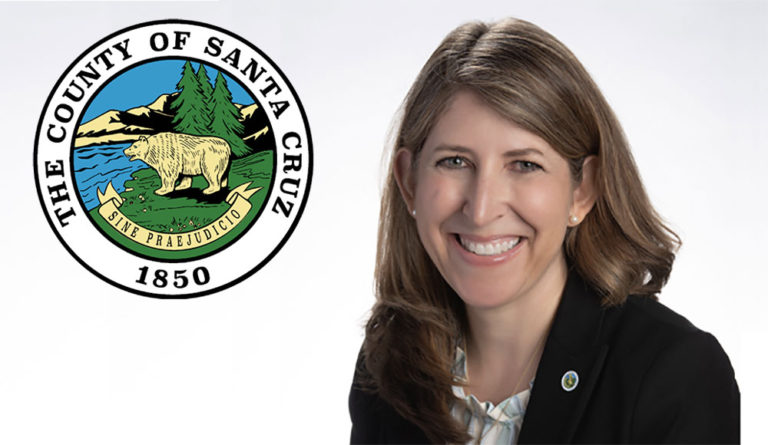
The County of Santa Cruz on Wednesday named Nicole Coburn as its new Chief Executive Officer, just over three months after Carlos Palacios announced his retirement from the position.
The Board of Supervisors unanimously chose Coburn after a nationwide search during which 139 candidates from across the country applied.
The board is expected to finalize the decision during its Oct. 21 meeting.
Coburn will be the second woman in county history to serve as county executive officer.
Salary for the position ranges from $276,058 to $370,032 per year.
She has served as assistant executive officer since 2017, overseeing the county’s public safety and justice departments and the budget, among other things.
She has been with the county for more than 12 years, starting in 2013 as a senior and then principal administrative analyst before stepping into the assistant CEO role in October 2017.
She earned her B.A. in communication studies from UC Los Angeles in 1998, and a Master of Public Policy from UC Berkeley in 2003.
Coburn takes the county’s lead role as cuts from the federal level, compounded by an impending recession, threaten services and positions countywide.
As assistant county executive officer, Coburn oversaw public safety and justice initiatives, communications, legislative affairs and budget management for the county’s $1.3 billion organization.
She led the creation of Santa Cruz County’s first Strategic and Operational Plans, and advanced initiatives to expand access to justice and behavioral health care. She also championed programs to strengthen equity and representation—such as the “A Santa Cruz County Like Me” initiative and the Youth Advisory Task Force.
In addition, Coburn identified new funding streams to improve public services including Measure S, which has led to the modernization and construction of libraries throughout Santa Cruz County, county officials stated.
She also played key roles in responding to the COVID-19 pandemic, the CZU Lightning Complex fires and multiple winter storms.
“Nicole Coburn has demonstrated exceptional leadership, integrity, and a deep understanding of the values that define our community,” Board Chair Felipe Hernandez said. “Her collaborative spirit, fiscal expertise, and commitment to equity will serve the County well as we continue to address housing, infrastructure, and climate resilience challenges together.”
Vice-Chair Monica Martinez also had praise for Coburn.
“She brings a deep commitment to collaboration, equity, and service, and upholds the highest ethical standards,” Martinez said. “Nicole’s steady leadership, compassion, and dedication to the people of Santa Cruz County will guide the organization toward a strong and successful future.”
The two-day selection process included the full board and an interview with a panel of community stakeholders from across the county.
Coburn spent part of her childhood living in Yosemite National Park and the Sierra Nevada foothills, which she said gives her a connection to the environment and a commitment to public service and the community to the role.
“Santa Cruz County is a community of resilience, creativity, and compassion,” Coburn stated in a press release. “I’m deeply honored to continue serving our residents, supporting our workforce, and collaborating with our partners as County Executive Officer. Together, we will build on our foundation of transparency, accountability, and innovation to make this a place where every resident can thrive and belong.”
There’s no telling how much popcorn and soda or how many Red Vines, Junior Mints or M&Ms will be consumed during the Santa Cruz Film Festival, but it will be a LOT.
Starting on Oct. 8, 90-plus films will screen over five days at six venues. After many of the films, visiting filmmakers, directors and producers will participate in Q&A sessions with the audiences.
Intermixed with all that will be parties, celebrities-about-town, industry panels, craft talks, an awards ceremony, musical performances, community engagement, discussion, debate and more.
And all this comes after a three-year hiatus that seems to have brought out a burst of furious energy, because the Santa Cruz Film Festival has come roaring back to celebrate its 25th anniversary.
Of the nearly 100 films, there are features, documentaries and shorts in a variety of genres, with both international standouts and essential local stories. Given the size, scope and scale of this ambitious festival, there’s no way to capture it all in one article, so we’ve turned our attention particularly to films with a local angle or connection—those that are for or from our community.
SAY WHAT? Collage from the festival premiere, Fu*cktoys not G-rated. Photo: Contributed
Everything kicks off on Wednesday, Oct. 8 at 7pm with a red-carpet premiere at the Landmark Del Mar Theater downtown with F*ckToys, the South by Southwest Grand Jury award-winning feature narrative film. Writer, director and star Annapurna Sirium will be in attendance.
Following that screening, the Festival’s Opening Night Gala takes place at 9pm at the Museum of Art and History (MAH) with music, drinks, art, filmmakers and lots of community engagement. DJ sets from Tide Swing will keep the dance floor popping. All are welcome and it’s free (with an RSVP ticket).
Be sure not to get too hungover after the Gala, because on Thurs., Oct. 9 there are daytime screenings leading up to the 7pm showing of Art & Life: The Story of Jim Philips, also at the Del Mar. Director John Makens and the film’s star, Jim Phillips, will be on hand.
Phillips, as we all know, is the genius behind skateboarding and rock culture’s electrifying art. According to the teaser, the documentary focuses on Phillips’ life in Santa Cruz, where he helped shape the golden era of skateboarding. The Film Festival summarizes it this way: “Jim’s story is a profound narrative of resilience, passion and enduring artistic vision. The documentary explores his life and career, showcasing his iconic work that has defined an era and secured his place in modern art history.”
The theme for the day is “Discoveries and Dialogues,” and there will be filmmaker Q&As all day, along with the screenings.
The Festival’s Spotlight Documentary, Out of Plain Sight, from Academy Award-winning L.A. Times Studios, will show on Oct. 9 at 6:30pm (The Colligan). There will be a Q&A with directors Daniel Straub and Pulitzer Prize finalist Rosanna Xia, along with Dr. David Valentine and wildlife biologist Joe Burnett.
The film explores the story behind how, in the years after World War II, as many as a half million barrels of toxic waste were quietly dumped into the ocean off the coast of Southern California—and the consequences continue to haunt the world today. The voiceover in the trailer is chilling: “It was one of those ‘holy crap’ moments. Somebody just filled this up with industrial waste, kicked it off a ship and it’s just been sitting here on the sea floor ever since.”
On Friday, Oct. 10 the theme is “Industry & Impact” with screenings all day throughout all six venues. Get ready to party again that evening, whenHWY 17 studioshosts filmmakers, press and partners at its huge (22,500 sq. ft.) new (as of July) event and production space on the Westside.
But before that comes a full day of screenings, including the Spotlight Film: “Arcadia,” by Yogos Zois (4:30pm at the Colligan Theater; in Greek with English subtitles). One of the characters is called to identify the victim of a tragic accident. As the story unfolds, the characters put the pieces of the puzzle together, revealing a haunting story of love, loss, acceptance and letting go.
Also on Oct. 10, UCSC alum Tadashi Nakamura premieres his new film Third Act (7pm Friday Santa Cruz Cinema)
Nakamura, who holds an MFA in Social Documentationfrom UCSC, is the son of Robert A. Nakamura, considered the godfather of Asian American film. As the filmmaking son of a filmmaking legend, Nakamura uses the lessons his dad taught him to decipher the legacy of an aging man who was a child survivor of the WWII incarceration of Japanese Americans, a successful photographer who gave it up to tell his own story, an activist at the dawn of a social movement—and a father whose struggles have won his son freedoms that eluded Japanese Americans of his generation.
As Parkinson’s disease clouds his father’s memory, Tadashi Nakamura sets out to retrieve his story—and in the process discovers his own. The two have made films together for years, but Third Act is most likely their last. Stay after the screening for a Q&A with Tadashi Nakamura.
The Industry Panel at the Paradox Hotel on “Community Day” (Sat., Oct. 11 at 11am) is expected to be a highlight. The conversation will center on a few important questions: “How can Santa Cruz lead the way in creating a thriving indie film scene?” “What partnerships, policies, and community support are needed to incentivize filmmaking across the Central Coast?” And “How can we ensure access for diverse voices, local storytellers, and the next generation of creators?”
The following industry guests are lined up to tackle this conversation:
• Marc Smolowitz—producer/filmmaker, Outerlands; founder, 13th Gen
• Kerri Wood Einertson—executive director of Government Affairs & Public Policy, SAG-AFTRA NorCal Local
• Sam Bempong—#MakeItBay/East Bay Film Collective
• Consuelo Alba—executive director and cofounder, Watsonville Film Festival
• Mattie Scariot—executive director, Poppy Jasper International Film Festival
• Christina Glynn—Santa Cruz Film Commission
• Ryan “RJ” Allen—founder, HWY 17 Studios
• Paul Kmiec—filmmaker/executive director of Santa Cruz Film Festival
Later on Saturday, catch “Central Coast Shorts: Crossroads of Longing and Belonging” (4:30pm, The Colligan), which will include a screening of the 20-minute short HomeTown Homeless by Santa Cruz nativeMaleah Rose Welsh, 26, who also received her MFA in Social Documentationfrom UCSC.
The project began as an interview and portrait project, initially focusing on the city-sanctioned Benchlands homeless encampment. Over time, as Welsh pursued her degree, it evolved into a short documentary exploring the meaning of home. At the core is Welsh’s relationship with Mama Shannon, a poet, writer and member of the unhoused community.
Welsh says Mama Shannon’s “participation was intrinsic” to making the film. “It was a total collaboration. She was involved in every step of the filmmaking. Every cut. She wanted to focus on the women, so we emphasized those stories. We earned each other’s trust as artists and friends.”
This collaboration, which deepened over the two years it took to make the film, was key, Welsh says, to “delivering a film that the unhoused community respects, is proud of and feels connected to. What’s most important is they gave me a lot of time, thought, energy and care,” Welsh says.
Everything culminates on Oct. 12 with more screenings, the audience awards and closing ceremonies. At 4:30pm at the Colligan Theater, the festival hosts a Local Spotlight featuring the film Playing with Fire: An Ecosexual Emergency, followed by a Q&A with directors Beth Stephens and Annie Sprinkle.
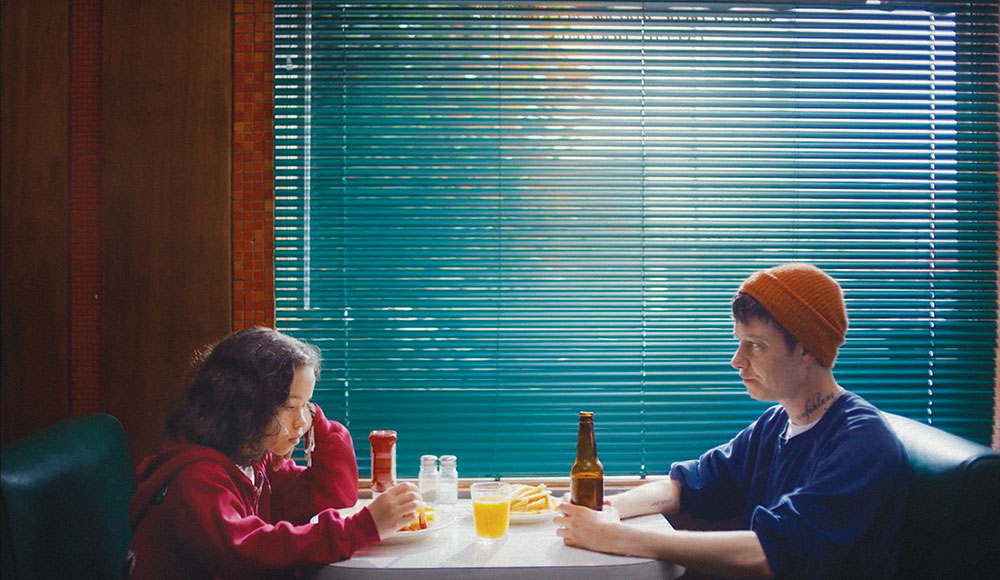
MAKING ENDS MEET In Outerlands Cass juggles jobs as a nanny, restaurant server, and party drug dealer in order to make ends meet and pay for their tiny San Francisco apartment. Photo: Contributed
The closing feature, showing at 6:30pm, is Outerlands, with director Elena Oxman on hand to field Q&As. Outerlands is already attracting of attention, with Variety calling it “a film of great cinematic sleight of hand.” The film’s star, Asia Kate Dillon—one of the first non-binary lead actors—is known from roles in Billions, Orange is the New Black or John Wick: Chapter Three.
The producer for Outerlands, Marc Smolowitz, is an award-winning independent filmmaker who is a UCSC Theater Arts alum and former Santa Cruz local.
“Festivals are where we connect with other people in a communal setting,” Smolowitz says. “People need to come down. Let’s get out, get together, watch stories together. It’s hugely important.”
Why is it important?
“Because the audience completes the story,” he answers.
Smolowitz has another film in the Festival: A Deeper Love: The Story of Miss Peppermint (Oct. 10, 7:30pm at The 418 Project), which tells the story of Peppermint, the first openly transgender woman to compete on RuPaul’s Drag Race. She also originated the role of Pythio in Head Over Heels, becoming Broadway’s first openly trans woman to originate a principal role. This highly personal documentary film follows her life as a performer, singer, actress and activist over a nine-year journey.
The awards ceremony on Oct. 12 takes place at Woodhouse Blending & Brewing at 8:45pm. The ceremony will feature the presentation of 18 awards, recognizing outstanding achievement among this year’s filmmakers. Music starts at 10pm with J.A.M. and the Buttered Biscuits ready to rock the house. Admission is free, and all are welcome.
Viewers are advised to start their pre-game by visiting theFilm Festival’s website andbuying tickets. Several films are generating big buzz and will probably sell out.
Tickets for all screenings, panels and events can be purchased at santacruzfilmfestivals.org. While all-access VIP passes and themed packages are available, tickets to most of the individual films are $12.
No relationship is like any other. The way we bond with another has a distinctive identity that embodies the idiosyncratic chemistry between us. So in my view, it’s wrong to compare any partnership to a supposedly ideal template. Fortunately, you Aries are in a phase when you can summon extra wisdom about this and other relaxing truths concerning togetherness. I recommend you devote your full creativity and ingenuity to helping your key bonds ripen and deepen.
TAURUS April 20-May 20
Poet Rainer Maria Rilke advised, “Be patient toward all that is unsolved in your heart and try to love the questions themselves.” These days, dear Taurus, that’s your power move: to stay in conversation with mystery without forcing premature answers. Not everything needs to be fixed or finalized. Your gift is to be a custodian of unfolding processes: to cherish and nourish what’s ripening. Trust that your questions are already generating the early blooms of a thorough healing.
GEMINI May 21-June 20
I am a great admirer of Bart Simpson, a fictional fourth-grade student on the animated TV show The Simpsons. He is a constant source of unruly affirmations that we could all benefit from incorporating into our own behavior when life gets comically weird. Since I think you’re in such a phase now, Gemini, I am offering a batch of Bart-style gems. For best results, use them to free yourself from the drone of the daily routine and scramble your habitual ways of understanding the world. Now here’s Bart: 1. “I will not invent a new religion based on bubble gum.” 2. “I will not sell bottled ‘invisible water.’” 3. “I will not try to hypnotize my friends, and I will not tell co-workers they are holograms.” 4. “I will not claim to be a licensed pyrotechnician.” 5. “I will not use the Pythagorean theorem to summon demons.” 6. “I will not declare war on Thursdays.”
CANCER June 21-July 22
During its entire life, the desert plant Welwitschia mirabilis grows just two leaves. They never wither or fall off but continually grow, twist, split and tatter for hundreds of years. They keep thriving even as their ends are worn or shredded by wind and sand. I love how wild and vigorous they look, and I love how their wildness is the result of their unfailing persistence and resilience. Let’s make Welwitschia mirabilis your inspirational symbol in the coming weeks, Cancerian. May it motivate you to nurture the quiet, enduring power in your depths that enables you to express yourself with maximum uniqueness and authenticity.
LEO July 23-Aug. 22
Have you been to Morocco? I love that so many houses there are built around spacious courtyards with intricate tilework and lush gardens. Sooner or later, of course, the gorgeous mosaic-like floors need renovations. The artisans who do the work honor the previous artistry. “In rebuilding,” one told me, “our goal is to create new magnificence that remembers the old splendor.” I hope you pursue an approach like that in the coming weeks, Leo. The mending and healing you undertake should nourish the soulfulness you have cultivated, even as you polish and refine.
VIRGO Aug. 23-Sept. 22
Virgo novelist Agatha Christie often planned her elaborate plots while cleaning her house or washing dishes. She said such repetitive, physical tasks unlocked her creativity, allowing ideas to emerge without force. I suggest you draw inspiration from her method in the coming weeks. Seek your own form of productive distraction. Instead of wrestling with a problem in a heroic death match, lose yourself in simple, grounding actions that free your mind to wander. I am pretty sure that your most brilliant and lasting solutions will emerge when you’re not trying hard to come up with brilliant and lasting solutions.
LIBRA Sept. 23-Oct. 22
Libra architect Christopher Alexander developed a sixth sense about why some spaces feel comfortable while others are alienating. What was the source of his genius? He avoided abstract principles and studied how people actually used spaces. His best architecture soulfully coordinated the relationships between indoor and outdoor areas, private and public zones, and individual needs and community functions. The “quality without a name” was the term he used to identify the profound aliveness, wholeness and harmony of spaces where people love to be. In the coming weeks, Libra, I hope you access your own natural gift for curating relationships and cultivating balance. Your solutions should serve multiple needs. Elegant approaches will arise as you focus on connections rather than isolated parts.
SCORPIO Oct. 23-Nov. 21
Some medieval mystics claimed that angels spoke in paradoxes because the truth was too rich for simple logic. These days, I believe you Scorpios are extra fluent in paradox. You are raw yet powerful, aching and grateful, confounded but utterly clear. You are both dying and being reborn. My advice: Don’t try to resolve the contradictions. Immerse yourself in them, bask in them, and allow them to teach you all they have to teach. This may entail you sitting with your sadness as you laugh and letting your desire and doubt interweave. The contradictions you face with open-heartedness will gift you with sublime potency and authority.
SAGITTARIUS Nov. 22-Dec. 21
The ancient city of Petra, built in sandstone cliffs in what’s now Jordan, was mostly hidden from the outside world for centuries. In 1812, Sagittarian Swiss explorer Johann Ludwig Burckhardt rediscovered it by disguising himself as a pilgrim. He trained extensively in the Arabic language, Islamic culture and local customs so he could travel incognito. You Sagittarians can benefit from a similar strategy in the coming weeks. Life will conspire to bring you wonders if you thoroughly educate yourself about the people and situations you would like to influence. I invite you to hike your empathy up to a higher octave, cultivate respect for what’s unfamiliar, and make yourself extra available for exotic and inspiring treasures.
CAPRICORN Dec. 22-Jan. 19
During the 1800s, countless inventors chased the impossible dream of perpetual-motion machines: contraptions that would run endlessly without any fuel source. Every attempt failed; such devices bucked the fundamental laws of physics. But here’s good news, Capricorn: You are close to cracking the code on a metaphorical version of perpetual motion. You are cultivating habits and rhythms that could keep you steady and vital for a long time to come. I predict the energy you’re generating will be self-sustaining.
AQUARIUS Jan. 20-Feb. 18
Octopuses have three hearts and blue blood. They taste with their skin, solve puzzles and squeeze their entire bodies through coin-sized holes. No wonder they are referred to as the aliens of Earth, just as you Aquarians are the aliens of the zodiac. According to my analysis, now is a perfect time for you to embrace your inner octopus. I authorize you to let your strangeness lead the way. You have the right and duty to fully activate your multidimensional mind. Yes, you may be misunderstood by some. But your suppleness, radical empathy and nonlinear genius will be exactly what’s needed. Be the one who sees escape routes and paths to freedom that no one else perceives. Make the impossible look natural.
PISCES Feb. 19-March 20
Dear Pisces, it’s like you’re in one of those dreams when you’re exploring the attic or basement of your home and discover secret rooms you didn’t realize existed. This is good! It means you are finding uncharted frontiers in what you assumed was familiar territory. It suggests you are ready to see truths you weren’t ready for before. Congrats! Keep wandering and wondering, and you will discover what you didn’t even know you needed to know.
What’s it going to take to get people back into movie theaters for something other than the latest superhero bash?
That’s what we are hoping to see with the revival of the Santa Cruz Film Festival after a three-year hiatus. How about more than 90 movies you can’t see on your home screens, all presented to take you on unimaginable adventures? Add panels with directors and producers answering your questions about a slew of new, experimental, ambitious and glorious films?
That’s enough to get me out of my house and into the theaters. So much of cable entertainment is so predictable. We need things to take us to new frontiers and to represent people like us, not people who fly or talking raccoons (as much as I love James Gunn).
Looking over the listing of movies coming up in Joan Hammel’s cover story in this issue, it’s got to be exciting to see underrepresented people on the big screen.
On the minus front, I’m still depressed about losing all the art films at the Nickelodeon, which were crucial to my Santa Cruz education. On the positive side, we have both the Watsonville Film Festival and now its Santa Cruz sister. Isn’t that what living in a double college, highly educated county is about? The Nick was always crowded, or so I thought, and I can’t understand why it’s gone.
But if we can’t have brilliant international and local movies all the time, at least we can catch them in these two festivals. I really hope this launch is for the long term. We deserve it. When we talk about making Santa Cruz great again, great movies—or should I be cultural and say films—is one of the things we need to go with our symphony, our jazz club, our poets, our theater companies, our writers, our actors and directors, and our range of ambitious food, to name a few things.
We have a more diverse and intelligent culture than cities 10 times our size and it’s something to be proud of and to support. And the parties should be awesome.
Other highlights: After the movies, what’s the best thing to do? Read a great book before it gets made into a movie. We’ve got a local author writing about A.I., (not A-1 sauce). Read about this new novel in Josh Logan’s arts story.
Maybe you want to take a farm tour and see the cutting edge of food tech and organics? Our dining column by Mark C. Anderson maps it out for you.
Street Talk is back, and nothing has generated more complaints than when writer John Koenig took a break. Topic this week is about musical inspiration. Can’t miss.
Here’s a request: we’re looking for people to write about where they think Santa Cruz will be 50 years from now for one of our anniversary issues. Want to contribute? Send your thoughts to ed****@*****ys.com.
Have a great week and see ya at the movies.
Brad Kava | Editor
PHOTO CONTEST
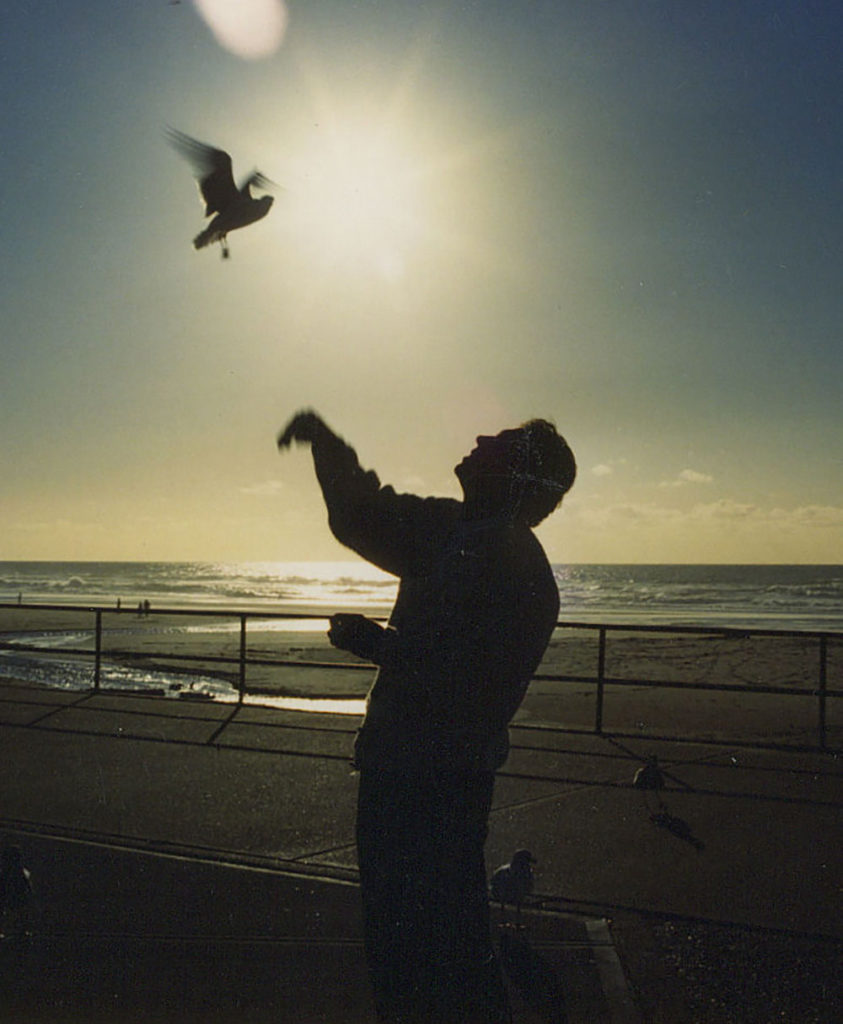
HITCHCOCK ALERT This dad is a bird magnet at New Brighton Beach. Photography by Laurie Mello.
GOOD IDEA
This may be the deal of the fall. You can buy two hours of arcade time at the Santa Cruz Beach Boardwalk for $24.95 on weekdays through Nov. 26. For this family, that’s like a savings of $200 or more. On Saturdays and Sundays from 10am–noon the arcade games are half price. The only bummer is that you don’t win tickets during the specials. But, with all the money you’ll save, you can buy a plushy somewhere else. Go to beachboardwalk.com and look up fall arcade specials. You’re welcome.
GOOD WORK
More than 260,000 California 2nd graders are starting this school year with a $500–$1,500 scholarship through CalKIDS, the program that helps families prepare for college and career training. Each eligible 2nd grader is automatically awarded a minimum of $500 in their CalKIDS Scholarship Account. Foster youth and students experiencing homelessness receive an additional $500–$1,000, for a CalKIDS Scholarship Account worth up to $1,500.
The account can be used to support their future college and career goals.To learn more, visit CalKIDS.org. Nice work!
QUOTE OF THE WEEK
“When people ask me if I went to school, I tell them ‘No, I went to films.’” —Quentin Tarantino
A friend of mine was a Marine Corps lawyer during World War II. He participated in the Nuremberg Trials—which sentenced many Nazi leaders to death after the war was over. He sent me a copy of a news article from The New York Times, dated February 4, 1939, just before the war started.
Hitler was just beginning to crush dissent, and the article describes how Hitler’s Propaganda Minister Joseph Goebbels destroyed the careers of five comedians because they criticized Nazis.
The Headline: “Geobbels Ends Careers of Five ‘Aryan’ Actors Who Made Witticisms About the Nazi Regime”
The lead: “Propaganda Minister Joseph Goebbels today ended the professional careers of five ‘Aryan’ comedians by expelling them from the Reich’s Chamber of Culture on the grounds that “in their public appearances they displayed a lack of any positive attitude toward National Socialism and therewith caused grave annoyance to party comrades.”
Sound familiar?
Don Eggleston | Aptos
NO ON MEASURES B AND C
Santa Cruz is already an expensive place to live, and Measures B and C would only make life harder. These proposals add new parcel and transfer taxes that hit regular people the most. Families, renters, and seniors are already stretched thin — more taxes aren’t the answer.
Supporters say this money will go to housing and community programs, but there’s no clear guarantee it will solve the real problems we face. What we do know is that residents will be paying more at a time when so many can barely keep up.
I love this community and want to see it thrive, but putting more financial pressure on locals is not the way forward. Please join me in voting no on Measures B and C.
Gayle Bradshaw | Santa Cruz
TO YEA OR NOT TO YEA
I am having a crisis of conscience with respect to Proposition 50, the statewide ballot measure strongly supported by Governor Newsom. The measure asks voters to approve a temporary change in how the state’s congressional district lines are drawn and would favor Democratic Party candidates running for election in those districts. The measure was placed on the ballot in response to partisan redistricting efforts in Texas that heavily favor Republican candidates. While I appreciate the opportunity to vote on the issue—a chance the voters in Texas did not have—our governor’s use of the political low road just doesn’t sit well with me. It may restore the political balance and help Democrats take back the House in 2026, but it most certainly does not maintain the karmic balance that allows me to vote impartially. Oh well, the ballot box awaits.
Steve Pleich | Santa Cruz
ONLINE COMMENTS
HOUSING PROBLEMS
I don’t understand why UCSC doesn’t build student housing on all that land they own. It seems Santa Cruz locals are forced out of the area because students occupy available rentals and outpay locals. And, landlords just keep upping the prices.
The Real Estate Transfer tax in Measures B and especially C are THEFT. Nothing less. That’s how they did it in pre-colonial times, tribal times, just raid your neighboring village and steal all you can. Those measures are the same except for the raping, kidnapping and torture parts. Just “take my house please” is not a joke. Yes, both will raise the cost of housing for almost all people, as usual by the city government in all they do.
I don’t live close enough to swing in for a casual coffee but I have been to many music shows there in the early evening. I don’t think it’s a moneymaker for Steve as other companies produce the shows (eg, Snazzy Productions), but Steve creates a wonderful, friendly and welcoming environment and has been present for every show. Really wonderful guy and the Ugly Mug has such a great vibe for a small concert. Thank you, Steve!
Craig Sherod | GoodTimes.sc
FOR NEXT WEEK
WEEK WITHOUT DRIVING
I’m sure all the Santa Cruz employers of people in Watsonville will understand. Not.
Spellbound. In a year dominated by headlines about artificial intelligence, Liz Shipton’s Dot Slash Magic bursts onto the scene as an urban fantasy that speaks directly to our moment—brilliant, timely and impossible to ignore. Shipton blends contemporary anxieties with striking imagination to create one of the most original releases of the year.
I was hooked from the first chapter: Shipton’s mix of humor, heart and high-stakes magic kept me turning pages long past midnight.
Magic Meets Machine
Dot Slash Magic introduces Seven Jones, a self-taught coder with commitment issues whose carefully controlled life unravels after a breakup leaves her living on a houseboat. While studying at a San Diego community college, she stumbles into an underground magic club. There she discovers she might be a “Maker”—someone who can wield real magic alongside artists and old-soul practitioners who distrust technology.
When meditation and grounding fail to tame her chaotic powers, she does what any coder would: she writes a program. Her AI assistant is meant to stabilize her magic but instead sparks a war between traditional sorcerers and her “artificial magic” approach. Dragons dive-bomb the campus quad. Krakens rise from the marina. Psychedelic monsters hunt students in broad daylight. Blamed for tearing holes in reality, Seven—helped by ex-Navy SEAL Logan—must fight monsters and prejudice alike.
But beneath the magical mayhem lies a deeper exploration. Shipton uses urban fantasy to examine our urgent anxieties about AI, creativity and connection. Her sharp humor keeps the story racing while asking essential questions: What happens when technology and magic collide? Who is responsible when power outpaces wisdom? And why does the human element matter when the tools themselves become extraordinary?
The Santa Cruz & San Diego Connection
While the novel unfolds in San Diego, Shipton’s Santa Cruz roots echo through its cultural backdrop. Her time at the Santa Cruz harbor helped shape the novel’s houseboat community, and her experience with Cabrillo Stage informed its community college theater scenes. Shipton also lived in San Diego for four years during college, an experience that directly inspired her choice of setting. The result is a world that blends the grit and energy of Southern California with the creativity and countercultural spirit she absorbed in Santa Cruz—an intersection familiar to anyone who has navigated between these two coastal hubs.
Life at Sea: Where Books Are Born
For four years, the author has lived off-grid on her 43-foot sailboat Loki, turning it into both a home and a floating writing retreat. The journey began in September 2021 and has since taken her down the Pacific coast and into the Caribbean. She says being responsible for her own survival clarifies what stories matter. It’s DIY in the truest sense—something Santa Cruz has always celebrated.
This nautical life inspired her self-published Thalassic series, and Shipton chronicles her adventures on Instagram with compelling visual storytelling—from coding sessions interrupted by dolphins to her loyal canine co-captain supervising edits. Her writing process reflects sailing’s mix of discipline and improvisation: She plots meticulously but leaves room for surprises. That go-with-the-flow ethos is pure Santa Cruz. One rule, however, is non-negotiable: Zero AI assistance in her creative process. “I wanted to explore our fears about AI from the inside,” she explains, “but the words themselves? Those have to be human.”
Social Media Sorcery
Shipton has gone viral on BookTok and Instagram with satirical reels lampooning fantasy conventions—her take on the “one-bed trope” is “no beds, just the floor.” Her perfectly timed riffs on spicy romance and slow-burn tension have made Dot Slash Magic essential reading for the extremely online fantasy crowd.
Beyond comedy, she cultivates a genuine community through interactive Q&As, live chats and spoiler-free world-building discussions that build loyalty across multiple audiences. As a “hybrid author,” Shipton has mastered both indie and traditional publishing, cementing her status as one of fantasy’s most exciting and adaptable new voices.
Why This Book Matters Now
Whether shelved as urban fantasy or speculative fiction, Dot Slash Magic does what the best genre-bending books do: it makes us laugh while forcing us to face what terrifies us about tomorrow. The genre distinction is one Margaret Atwood argues deserves its own proud bookstore section, though that’s a debate still alive in local shops. Gary, owner of Two Birds Books on 41st Avenue—my favorite well-curated bookshop—says he shelves Atwood under General Fiction.
The art-versus-technology conflict at its core isn’t abstract philosophy—it’s Shipton’s lived experience. Before sailing and coding, she was a musician who watched her industry transform. That tension between traditional craft and digital disruption gives the story its beating heart.
Beyond the Last Page
Liz Shipton’s trajectory—from Santa Cruz harbor to BookTok sensation, coding wizard to fantasy powerhouse—reads like fiction itself. With Dot Slash Magic, she proves that the best speculative literature helps us groove with our beautifully weird present moment. Her humor, technical chops, and genre-breaking storytelling position her at the forefront of fantasy’s next wave. For readers who want adventure with an eye on the future, Shipton’s work is unmissable. In true Santa Cruz spirit, Dot Slash Magic isn’t just a story—it’s an invitation to imagine braver, weirder futures together.
Dot Slash Magic is available now from Angry Robot Books. Local readers: Meet Liz on Oct. 11 at California Coffee in Aptos—grab a cappuccino and hang with Santa Cruz’s rising literary star.
Follow Shipton’s adventures (both nautical and magical) here: lizshipton.com, instagram.com/lizshiptonauthor and tiktok.com/@lizshiptonauthor.
Emily Henry knows how to work the music business in 2025. The indie pop singer-songwriter streams three times a week on Twitch, has been featured on the hugely popular fiction podcast “Welcome to Night Vale,” and recently released an album of acoustic versions of her tracks as chosen by her fans. She also builds her following the old-fashioned way, crossing the country to reach her listeners’ ears, with devotees frequently hitting the road themselves to catch multiple shows. Out-of-state plates on cars sporting Emily Henry bumper stickers are sure to be showing up in Santa Cruz this week. KEITH LOWELL JENSEN
Who names their band Cool Cool Cool? This Brooklyn septet, that’s who. Born from the ashes of funk act Turkuaz in 2022, Cool Cool Cool earns their name by blending R&B, funk, and house, all with a ’90s flavor for smooth beats and cavity-inducing sweet melodies. The band has gotten some big accolades, including people like Jerry Harrison (Modern Lovers/Talking Heads) and Adrian Belew (King Crimson/Talking Heads/David Bowie). When they announced the 40th anniversary tour of the Talking Heads’ Remain in the Light, they got Cool Cool Cool to not only be the supporting act but also the backing band as well. MAT WEIR
The fourth Festival of Dreams kicks off on October 10 at the MAH. This annual event brings together local and international dreamers to network and explore the power of their nighttime dreams and learn about the International Association for the Study of Dreams. Everyone dreams. Taking the time to study and learn about your dreams can help you build stronger connections with yourself. This event is the perfect opportunity for those curious about the power of dreams. The festival opens on Friday with the first round of presentations and art opportunities, followed by a no-host networking opportunity. The weekend will be filled with art, workshops, presentations, and networking opportunities. ISABELLA MARIE SANGALINE
INFO: 9pm, Santa Cruz MAH, 705 Front St., Santa Cruz. $178 429-1964.
SATURDAY 10/11
ACOUSTIC
SCHOOLCRAFT & MURRAY
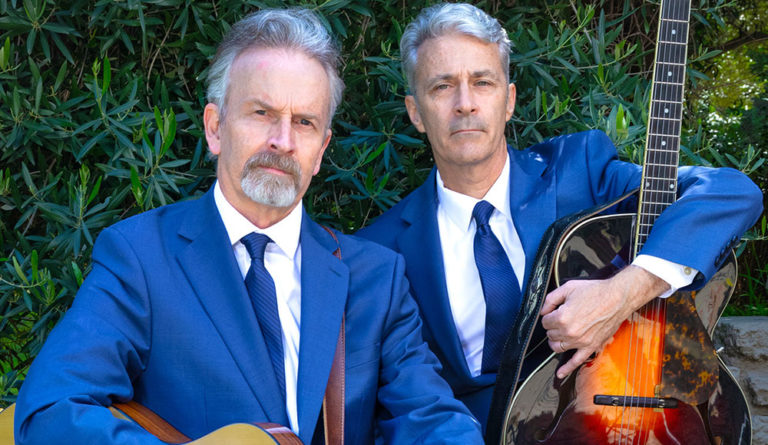
Add one part Flight of the Conchords, crack in a couple of Smothers Brothers, add a dash of yacht rock ala Blue Jean Committee (Fred Armisen and Bill Hader’s SNL band), and let it settle. The result is the smooth ’n’ hilarious Schoolcraft & Murray. They’re like if Tenacious D got into Steely Dan and Robert Hunter instead of Dio and Metal. Their songs are funny, and the boys bring charisma, but they are not a joke band by any means. These guys can actually play and sing, just with the added punch-up of songs like “Booty Call,” “STFU” and “Get Off The Phone.” MW
Deejaying as high art, including improvisation, accompanying installations of sculpture and other visual arts, with a healthy serving of abstraction and risk taking are all part of the gig when Lima, Peru born, New York City based turntablist/DJ/sound artist Maria Chavez employs her Deep Listening approach, following in the footsteps of her mentor Pauline Oliveros while also carving her own path. Utilizing shards of broken and scratched records and allowing chance to play a role, no two Maria Chavez sets are going to come out the same. Oakland’s Syrnx opens the show. KLJ
INFO: 8:30pm, Indexical, 1050 River St., Suite 119, Santa Cruz. $20. 509-627-9491.
JAM BAND
LAMP
Guitarist Scott Metzger honed his skills playing with Joe Russo’s Almost Dead, one of the most acclaimed Grateful Dead cover bands in a sea of GD cover bands. He joined forces with drummer Russ Lawton and organist and clavinet player Ray Paczkowski, who had already bonded with musically during their time with Trey Anastasio Band as well as their own Soule Monde duo. The three discovered in each other a key to unlock a special kind of jam in the recording studio and on stage. Felton Music Hall lists the venue as standing room, but one assumes there’ll be space for some twirling as well. KLJ
“The caged bird sings/with a fearful trill/of things unknown/but longed for still.” These immortal words from the late Maya Angelou made her a household name overnight. Her story of resilience, strength and autonomy in the face of racist oppression is one that seems to be needed now more than ever. This weekend Kuumbwa Jazz presents the third annual Let The Caged Bird Sing concert, bringing together the talents of local singers from The Musical Soulmates Performers Collaborative like Gina René, Anthony Jones, and teen sensation Jocelyn Reyes. Backed by Nextie Musician of the Year Mak Nova and band, this intimate performance of covers and originals showcases the collective healing of art for Domestic Violence Awareness month. MW
INFO: 5pm, Kuumbwa Jazz Center, 320-2 Center St., Santa Cruz, $50/adv, $60/door. 427-2227.
TUESDAY 10/14
HIP HOP
SHORELINE MAFIA
Shoreline Mafia captures Los Angeles’ street culture with bars and beats. Debuting as a quartet, the four began rising to popularity in the late 2010s with honest and passionate rhymes. In 2018, they were signed to Atlantic Records and released their Billboard-charting Party Pack Vol. 2 in 2019. Soon after their studio debut, Mafia Bidness, made the US Top 30, the group disbanded, but OhGeesy and Fenix Flexin’ would reunite as a duo. The two first connected tagging and skating around LA, and after Shoreline Mafia’s hiatus, they picked up right where they left off. SHELLY NOVO
INFO: 7pm, Catalyst, 1101 Pacific Ave., Santa Cruz. $59-$280. 713-5492.
WEDNESDAY 10/15
JAZZ
JEONG LIM YANG
Virtuoso and bassist Jeong Lim Yang leads the Zodiac Trio, featuring pianist Santiago Leibson and drummer Mark Feber, in a performance melding together precision and spontaneity. The evening will showcase Yang’s latest record, Zodiac Suite: Reassured, a reimagining of Mary Lou Williams’ 1945 album Zodiac Suite. Yang’s lyrical and melodic approach to the bass mixes avant-garde jazz and chamber music to create something wholly her own. Poised and percussive, the trio will orbit the zodiac from Aries to Pisces, exploring each sign through improvisational interplay. Yang’s compositional leadership honors William’s visionary spirit while transforming the composition into a unique contemporary piece. SN
INFO: 7pm, Kuumbwa Jazz Center, 320-2 Cedar St., Santa Cruz. $29-$32. 427-2227.
LITERARY
FESTIVAL OF MONSTERS
It’s that time of year again. The air is crisp. The veil between realms is thinner. And the Festival of Monsters is back with a full lineup of creepies, crawlies, and things that go bump in the night. This year, it kicks off with a free-to-the-public lecture at the MAH with keynote speaker David Livingston Smith, author of Making Monsters: The Uncanny Power of Dehumanization. There are three more public events—a writer’s panel at Bookshop Santa Cruz, an artist signing at Atlantis Fantasy World, and game play at GAME Santa Cruz, all held on Saturday, Oct. 18. MW
INFO: 5:30pm Santa Cruz MAH, 705 Front St., Santa Cruz. Free. 429-1964.
Transport me to Swanton Berry Farm, where the pioneering organic strawberry operation continues its legacy of caring for both land and labor, welcoming visitors year-round for jams, shortcakes and ocean-view picnics.
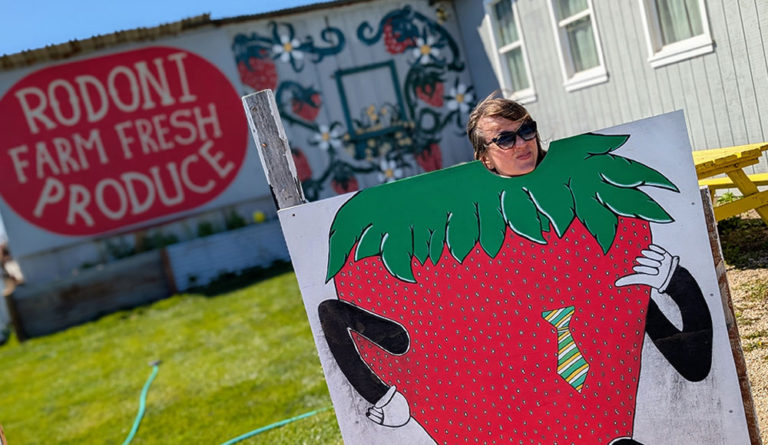
Take me to Rodoni Farms and its pumpkin patch and corn maze.
Get me over to Post Street Farm and its seasonal flowers and Halloween-ready “skull gourds” that make every visit a visual venture.
Drive me up the coast to Pie Ranch and goofy selfie spots, native gardens and milling demos.
Help me rediscover Homeless Garden Project, Santa Cruz’s first CSA, and—while we’re at it—Santa Cruz Permaculture in all its sustainable glory (plus a special Harvest Dinner 5:30–7:30pm Sunday, Oct. 12), and Flip Flop Farm too, the latter a fresh destination for a new generation of growers leveraging its own interactive tours, flower U-Picks, and sun-warmed tomato tastings.
That’s all a long way of saying one of the Santa Cruz area’s coolest traditions is growing in new ways this weekend. All of those aforementioned farms are brand-new 2025 additions to the Open Farm Tours, happening Saturday–Sunday, Oct. 11–12, with 16 Santa Cruz County locations participating total.
The nine returning farms represent other local luminaries in Prevedelli, Live Earth Farm, Beeline Blooms, Blossoms Biodynamic Farm, Esperanza Community Farms, Dos Aguilas Olive Grove, Luz Del Valle Farm, Sea to Sky Farm and Thomas Farm.
There’s even a barbecue lunch 11am–3pm with pitmaster Charlie Brown doing pulled pork sandwiches, stuffed portobello mushrooms, Corralitos sausages and veggie kabobs Saturday at Luz Del Valle Farm in Aptos and Sunday at Sea to Sky Farm in Bonny Doon.
And before that a CAFF Farm Dinner materializes 5:30–7pm at Pajaro Pastures Ranch in Corralitos with Jessica Yarr executing a menu starring ranch products and local ingredients.
This go-round the weekend is divided regionally, with tours at seven South County farms on Saturday and nine North County farms on Sunday.
The price remains reasonable, at $25 per car with as many as five people for all the spots.
All farm profiles, schedules and activities are up on openfarmtours.com, where visitors can also use the interactive map for easy directions.
GREEN IS GO
More than 50 purveyors of sublime wine, craft beer, top-shelf spirits and foods up to the name of the festival gather in Aptos Village Park noon–4pm Saturday, Oct. 11, for the latest Gourmet Grazing on the Green to boost the Santa Cruz Cancer Benefit Group. Some of the dozens of participants—check out the full list at sccbg.org—include Friend in Cheeses and Fruition Brewing, Haute Enchilada and Hula’s Island Grill, Sante Adarius and Sante Arcangeli, The Crow’s Nest and The Hollins House. Tickets run $99/general; $45/age 10-20; free/9 and under; $60/designated driver. Two pro tips: 1) Park at Cabrillo College lot K and take a shuttle running every 15 minutes 11:30am–5pm; 2) Bring a blanket because the GGG presents a PP, aka picnic paradise.
NEWS NUGS
Soif Wine Bar and Merchant’s wine bar-restaurant is gradually coming together in the Dr. Miller’s building/former Caffe Pergolesi (418 Cedar St., Santa Cruz): Last month the Historic Preservation Commission mostly approved the proposed updates and called for an ADA access route around the back of the building, new front porch steps and porch railing, a renovated front entry, and a fresh Soif Wine Bar sign replacing one of the Dr. Miller’s sign, while its more famous sister Cedar will persevere…The Food As Medicine Health Conference gathers healthcare pros, researchers and experts from various fields to explore the latest findings, clinical applications and practical strategies related to plant-based diets Friday, Oct. 17, at 1440 Multiversity in Scotts Valley, foodasmedicinesantacruz.org…From the Future Is Now files: Dave’s Hot Chicken has launched a new drone delivery system in suburban Northridge near Los Angeles…Drive this tractor to the barn, Wendell Barry: “The soil is the great connector of lives, the source and destination of all.”
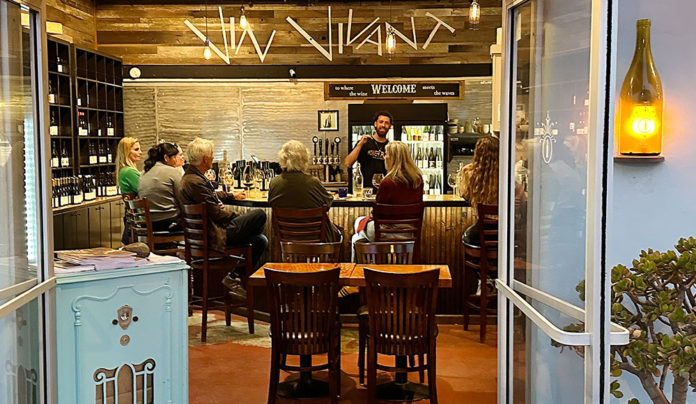
Co-owner of the new Vin Vivant in the Capitola Village, Ryan Cooley has a 14-year industry pedigree that includes seven years as a certified sommelier. His interest in wine germinated as a fine dining server who found himself volunteering his time helping his restaurant’s wine director. In exchange, Cooley gained experience and encouragement along with a growing sense of passion.
He then became a somm, working at a Michelin star restaurant in Carmel where he met Vin Vivant’s other co-owner John Haffey, himself an award-winning sommelier. Sharing an ethos centered on a combined love of wine and hospitality, they began looking to start a business and opened Vin Vivant two months ago. Cooley describes the space as cozy and comfortable, small and quaint, with vintage art, a plant wall and an ocean view patio providing ample ambiance. Their wine selection features 400 labels and over 1,000 bottles, about 30 available by-the-glass, with eclectic options both local and worldly.
The food program is intentional artisan-crafted small bites curated as ideal pairings. Chef Talia Damon designs and cooks a pastry program featuring tomato milk bread with rosemary compound butter and smoked sea salt, an olive oil cake and more. Other culinary offerings include high-end charcuteries from northern California purveyors, rotating craft cheeses, Castelvetrano olives and Marcona almonds.
What about wine inspires you?
RYAN COOLEY: My love for wine comes from my passion for hospitality and storytelling. Behind every bottle of wine, especially ones that we select, there is often a story to be told about a small grower that is farming consciously and intentionally, producing wines sustainable on the land and made with minimal intervention. Drinking these wines, I create a picture of what the grower and the land went through during that vintage, and tasting that balance and interplay between farming and wine-making technique leads to the experience I love about wine.
What is your favorite part of drinking wine?
I’ve never been the best at calling out specific flavors or spices, but one thing I’ve always had a knack for is discerning structure and texture in wine. Things like levels of tannins, sugar, alcohol and acid, and how all these elements contribute not only to flavor and food pairings, but also the texture and mouthfeel of wine, which can sometimes be overlooked but contributes greatly to overall drinkability.
International Academy of Dance in Santa Cruz presents a Halloween-themed reimagining of Clara’s dream with the fun, family-friendly Nightmare Before Nutcracker.
At the Santa Cruz Film Festival, 90-plus films will screen over five days at six venues. Filmmakers will participate in Q&A sessions with the audiences after many of the films.
What’s it going to take to get people back into theaters other than the latest superhero bash? That’s what we hope to see with the revival of the Santa Cruz Film Festival...
Imagine if Tenacious D got into Steely Dan and Robert Hunter instead of Dio and Metal. That's The smooth ’n’ hilarious Schoolcraft & Murray. Saturday at Ugly Mug, 7pm.
Vin Vivant wine bar is small and quaint, with vintage art, a plant wall and an ocean view patio providing ample ambiance. The wine selection features 400 labels.