
Vampire pics are a perennial. Tales of undead blood suckers are probably the sturdiest horror film subgenre—outranking Frankenstein’s monster or, say, zombies—largely because of their morbid sexual component.
Typically, vampires sneak into their victims’ bedrooms late at night while they’re asleep, loosen the victims’ clothing, enter their dreams, and mount them in order to bite them and drain their blood. Those who survive are left in a somnambulistic daze. They typically wonder out loud, before they “die” and become vampires themselves, about this sensual, recurring nightmare they can’t seem to escape.
F.W. Murnau made the single best vampire film, Nosferatu: A Symphony of Horror, as a silent in Germany in 1922. Of all the various remakes and spinoffs, among the scariest are Tod Browning’s Dracula (1931), Carl Theodor Dreyer’s Vampyr (1932), Werner Herzog’s Nosferatu the Vampyre (1979), Francis Ford Coppola’s Bram Stoker’s Dracula (1992) and the Hammer Films remakes, especially Terence Fisher’s 1958 Horror of Dracula. Most of the rest are burlesques.
With that in mind, we arrive at writer-director Robert Eggers’ brand-new Nosferatu with a certain weary wariness. Surely we already know everything this kind of film could ever show us.
Eggers—maker of such iffy oddities as The Lighthouse and The Witch—hews closely to the Murnau and Herzog versions with his tale of a strange foreigner with evil intentions, vamping on a placid 19th-century European family.
Decadent undead nobleman Count Orlok (Bill Skarsgård) fits into the moldy gothic milieu quite adequately, but it’s Eggers’ disturbing scene construction that draws the viewer in. The modified black-and-white settings in Wisburg and Transylvania objectify various night terrors—frightened Rom villagers, a naked young woman on a horse, incomprehensible Romanian dialogue and above all Orlok’s castle, with its deep-black recesses. It’s a place where nothing lives.
The ancient names of Paracelsus and Agrippa, stirred into the discussion by learned Professor Albin von Franz (Willem Dafoe, dependable yet too familiar in this sort of costumer), only reinforce the murky mysticism. The dread enveloping the figure of Orlok is the dread of decomposing flesh come to life and now suddenly clawing at the existence of ordinary, unassuming people. Men and women with warm blood in their veins. The idea of Orlok’s apparent eternal invincibility is more frightening than any makeup effect.
Nicholas Hoult’s Thomas Hutter and his melancholic wife Ellen (overmatched Lily-Rose Depp) offer only token resistance to the threatening forces around them. Under Orlok’s influence, Ellen kisses Thomas in a way he’s never been kissed before. Meanwhile, the experience of their friend Anna Harding (Emma Corrin) is truly terrifying—being haunted by a fiendish Carpathian vampire is no way to spend a period of gestation.
Contrast the travails of these discomfited bourgeois folks with the plight of real estate agent Knock (Simon McBurney), Count Orlok’s insane, lick-spittle slave, confined in a Victorian madhouse yet monstrously obedient to his master’s commands. The vampire/Dracula subgenre has enjoyed some delightfully gaudy performances by its Renfields/Knocks over the years: the unforgettable Dwight Frye, Tom Waits, Roland Topor and Richard Jenkins (a standout in Matt Reeves’ Let Me In) immediately come to mind. McBurney’s Knock tends the garden admirably.
Eggers’ Nosferatu is not perfect. There’s too much superfluous dialogue, and the omnipresent sound cues detract from the creepiness—Murnau’s silence was far more disconcerting. When Ellen goes into Exorcist-style paroxysms in one scene, her husband shtups her violently—what kind of supernatural sexuality is that? As for Dafoe’s learned expert, when that actor turns on the sub-Freudian blather, there’s nowhere else to go.
The moody black-and-white cinematography of Jarin Blaschke is the best reason to stay with this well-intentioned tribute to the vampires of the past. There are a few nicely composed scenes, but nothing to make us forget about, for instance, Chloë Grace Moretz’s feral teenager in Let Me In. Eggers’ Nosferatu is a reminder of other, better horror films. Let it rest in peace.
Playing at Cinelux in Capitola, Scotts Valley and Watsonville; and Santa Cruz Cinema.
“Every person is a new door to a different world.” —Six Degrees of Separation
Village Santa Cruz County is a nonprofit, peer-support group of volunteers dedicated to aging better by increasing our social engagement and connections, and through shared knowledge and mutual support. The Village helps older adults remain independent, with less reliance on public services, and gives them a sense of purpose.
Mary K., a group member, explains, “On retiring I lost my daily social group; I felt isolated. With Village I found folks who share my joy of making new friends and helping others learn ways to celebrate or cope with life’s changes. I appreciate that we all come with unique stories.”
Now the Village wants to bring together adults of all ages to improve life for everyone.
Recent studies show that across the age spectrum, people are affected by social isolation and loneliness. And while the highest rates of social isolation are found among older adults, young adults are almost twice as likely to report feeling lonely as those over 65.
Breaking apart age group silos opens us to different perspectives. Just like members of Village help solve each other’s difficulties as they come up, to best solve community and world problems we need to all come together, sharing talents and strategies to make our world a better place. No single group can do this alone.
A Village Santa Cruz County gathering at Wilder Ranch. PHOTOS: Contributed
Our Village project for 2025 will add monthly co-generational programs with a long-term goal of forming lasting bonds between older and younger adults.
Forming lasting bonds takes time and a commitment to showing up. Area-based Community Circles and concept-focused Interest Group meet-ups are ongoing and in small groups, providing a venue where members can develop trusted relationships, ask for help from each other, and socialize with and learn from each other.
One such gathering is the Memoir Group, going into its fourth year. Participants Bruce and Dede share their thoughts on participating, with one describing it as “a safe and supportive place to share the highs and lows of my life’s journey” and the other explaining, “The confidential nature of our writings has enabled us to know one another at a deep and meaningful level and has enriched all of our lives.”
Sandy started the Solo Agers group in 2023, after her daughter moved to Portland, leaving her with no family in town. Solo Agers meet once a month to share their specific concerns and issues. They go out to lunch after the meeting. “So far, we’ve helped each other during knee replacement recovery, rides to/from medical procedures, and we’ve shared experiences and resources for repairs,” Sandy says.
Members reside throughout Santa Cruz County. In FY23-24, Village held 247 events with a total of 1,545 attendees. A monthly newsletter containing a wide variety of information is sent to more than 500 community members. And educational presentations are often open to the public.
Village Santa Cruz County is participating in Santa Cruz Gives, the holiday fundraising program started by Good Times in 2015. Donations via SantaCruzGives.org will help launch and sustain Co-generational Connections, bringing together the talents of young and old to build a more resilient Santa Cruz County community. Aging better together…at every age and stage.
Mary Howe is chair of the Village Advisory Board.
Santa Cruz Gives is funded by the Volunteer Center of Santa Cruz County, Community Foundation Santa Cruz County, Applewood Foundation, Joe Collins, Driscoll’s, Inc., Monterey Peninsula Foundation, 1440 Foundation, Santa Cruz County Bank, and Wynn Capital Management, as well as readers of Good Times, Pajaronian and Press Banner.
Some wonderful-looking Chinese food, Hunan beef and chicken.
Malou Knapp, 80, Retired
MARIA
I’m Venezuelan, and we make hallacas.They’re wrapped in banana leaves instead of corn husks. It’s a dough filled with beef stew that you spend a day making. We put peppers and raisins and an almond. So good!
Maria Isabel Alvarez, 28, Founder & CEO, Leaf and Vine on Pacific Avenue
ATHENA
Our son Charlie was born on Christmas, so he picks the meal every year. It’s kind of stress-free for us. The first year it was Cheetos and Mac and Cheese. This year he turns 20, and it’s going to be carbonara and burrata bruschetta and ube flan.
Athena Taylor, 38, Team Leader
CREO
I look forward to making tamales. Sometimes we make a pot roast, and with the leftovers we make tamales. I make a chipotle and guajillo chile sauce, fresh, and it’s great.
Creo Manrique, 32, Barista at Cat and Cloud, Abbott Square.
CLAY
My mom makes little thin Italian breadsticks, wrapped in bacon, and then covered in brown sugar. And then you bake it. It’s delicious!
Clay Powell, 32, Operations Supervisor, Leaf and Vine on Pacific Avenue
CARLOS
We try to make tamales every year for Christmas. We make chicken and pork, and then cheese with jalapeno strips, which is called rajas. Sometimes we make sweet ones made with pineapple or strawberry batter.
Choosing not to imbibe at a holiday gathering can feel a bit like turning down cake at your best friend’s birthday party.
Whether you’re skipping alcohol for health reasons, staying sober for the drive home or simply wanting to keep it light, there are plenty of reasons to go alcohol-free. And here’s the good news: it doesn’t have to be all or nothing.
If, like me, you love a good glass of pinot but don’t want to overindulge in the holiday season, there are better alternatives than to be stuck clutching a V8 or Diet Coke in a can.
Why not put mocktails in a class all their own? It’s easy to make them as much of a treat as the best seasonal cocktail, muddle and all.
That’s why I’m here to celebrate the art of the mocktail—to create something so delicious that you’ll never feel like you’re missing out. And with a few sensational local ingredients to guide you, it’s easy to make it your own.
A great mocktail should channel the vibe of its cocktail muse, matching it in flavor, presentation and garnish. Instead of cranberry, orange juice and seltzer with a squeeze of lime for effort, a real mocktail needs complexity, aromatics and adult taste appeal. It needs to be served in a proper glass and garnished appropriately.
With the right ingredients and a little know-how, you can whip up non-alcoholic drinks that are as much of a conversation starter as the finest craft cocktail. And no, it doesn’t have to be complicated. Let me share a few simple recipes that pack a punch—minus the next-day regrets.
Strawberry Lemon Shrub
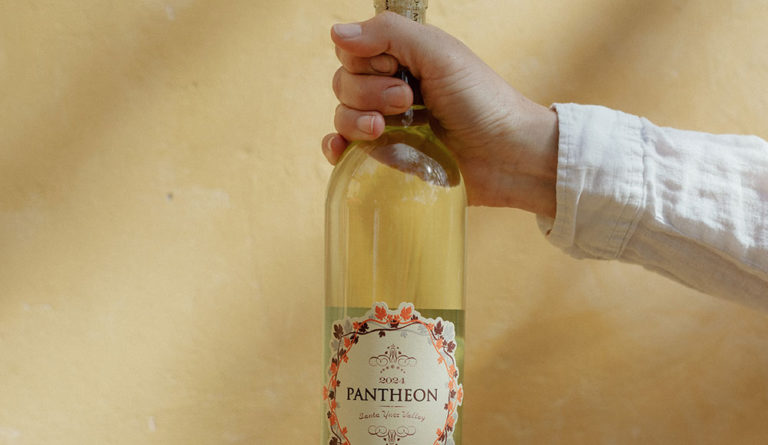
This is a longtime favorite courtesy of the Homeless Garden Project’s Strawberry Meyer Lemon Shrub. A shrub (or drinking vinegar) is a concentrated syrup that combines fruit, sugar and vinegar. This version is made from strawberries grown at the garden and harvested by the trainees.
To make it, simply fill a wine glass with one cup of cold water and add 2 tablespoons of shrub. Stir to combine, and enjoy.
Cranberry Pear Sparkle
I love combining sparkling water with an intensely fruit-flavored balsamic vinegar. A visit to Olive Oil Story in Aptos led to a helpful conversation with Julia Jafarian, who recommends Cranberry Pear balsamic as a flavorful way to level up your mocktail.
Here’s how to make it:
Add a few cubes of ice to a highball glass.
Fill with ¾ cup sparkling water.
Add a tablespoon of Cranberry Pear balsamic.
Splash in some cranberry juice for extra color.
It’s tangy, refreshing and as festive as any cocktail on the menu.
Hibiscus Pom Fizz
Looking for something bold and colorful? This tea-based mocktail looks and tastes like a less sugary version of your favorite sangria. Pick one box each of your favorite hibiscus and ginger teas. I use looseleaf, but pre-bagged works just as well. Here’s the recipe:
Bring 1 cup of water to a boil and pour over 2 teabags, one hibiscus and one ginger.
Let the water cool to room temperature and remove the tea bags.
Stir in a tablespoon of pomegranate or elderflower syrup (found at many grocery stores).
Pour over ice, add a splash of sparkling water, and top with an orange slice.
The result? A drink that’s as complex and satisfying as anything you’d find at the cocktail lounge.
The Takeaway
NA drinks don’t have to be whatever the children are drinking. With just a few key ingredients and a dash of creativity, they can become the star of your holiday gatherings—giving you all the cheer without any of the regrets. So raise a glass to festive drinks that everyone can enjoy.
Just a few months ago, many of us believed that weed might easily be federally legalized soon, assuming that Kamala Harris would win the presidency and the Democrats would win at least one house of Congress.
After Election Day, when Harris and the Democrats lost it all, the presumption was that those hopes were dashed, given congressional Republicans’ refusal to get any such measure through. The Senate proved to be the place where legalization bills, and many other cannabis reforms, went to die, thanks mainly to Majority Leader Mitch McConnell.
Last week, the podcastInside Cultivation, hosted by “BigMike” (Michael Straumeiti, the CEO of Advanced Nutrients), seemed to indicate that maybe things don’t look so bleak for legalization after all. It promised to reveal Trump’s “Blueprint for legalization.”
It turns out, though, that even the optimistic guest—GOP apparatchik, Trump advisor and lobbyist Bryan Lanza—thinks it will take longer than Trump’s four-year term to get it done, though he does believe that the feds will liberalize medical-pot laws and make some other reforms, like finally passing a bill to shield banks from liability for serving cannabis clients.
Lanza called that a “short window.”
Lanza is a longtime Republican operative from California whom the U.S. Cannabis Council, a lobbying group, recently decided to hire to push its agenda in Washington. He is a “senior advisor” to the Trump transition team.
For normal people, at least those who were adults before the rise of fascism in the United States starting a decade ago, there’s something very disturbing about watching people talk about Donald Trump as if he were a normal political figure and as if he cared one way or the other about policy in general. He cares mostly, of course, about himself and what people are willing to do for him, or against him.
This happens across the media. The New York Times, CNN, NPR and the Washington Post all treat Trump as if he were basically a more colorful version of the dull Republican policy wonk Jack Kemp from the ’80s and ’90s. This installment of Inside Cultivation was all that and more, with these two guys talking calmly about Trump’s supposed “plans” for cannabis as if they were talking about Ronald Reagan’s budget policies on Meet the Press in 1987.
Not mentioned during the podcast: that Donald Trump represents a grave threat to the American republic. Immediately after this podcast in my email feed was a news roundup from The Guardian about Trump’s allies talking publicly about him running for an unconstitutional third term and about Trump threatening to criminally prosecute his political enemies. He’s also talking openly about filing defamation lawsuits against news organizations, and he’s planning to deport perhaps tens of millions of people after herding them into concentration camps.
Meanwhile, he’s nominated a bunch of deeply unqualified lunatics and buffoons for cabinet posts and other positions, with zero regard for how well they’ll run their offices. The man has never shown the slightest interest in policy except when it will in some way affect him.
We can’t possibly know what he will do, or what he will ignore. Cannabis is likely way, way down on his priority list even though he talked about it some during the campaign. (He said he favors medical pot and decriminalization, but not legalization.)
Perhaps the best thing that can be said for the cannabis industry as Trump takes office is that he’ll likely leave it alone for the most part, and maybe a few reforms will be passed that he doesn’t care about, but will sign into law. But legalization is clearly not part of his “blueprint,” despite what Inside Cultivation says.
First things first: this ain’t yo mama’s circus; this is the Heavy Drift by Flynn Creek Circus: an original and comedic holiday circus act in the film noir style featuring acrobatics, aerialists and entertainers. Under the big top, audiences will meet Danger Jones, PI, and his trusty assistant Patsy as they embark on several entertaining and high-flying capers. Between Dec. 20 and Jan. 5, only five shows out of 29 are adults only, meaning circus lovers can bring the kids during the daytime for popcorn and hot chocolate with a family-friendly show, then bring their dates later for beer, wine and a titillating good time. MAT WEIR
Trinidadian reggae pioneer Marlon Asher doesn’t stop at celebrating his love of all things marijuana in his lyrics; he also chronicles the difficult lives of weed farmers dealing with authorities raiding their operations, burning their fields and putting them behind bars. His single “Ganja Farmer” was quite controversial upon its release, and he was called on to address lyrics describing a rocket launcher being used against law enforcement. Asher explained, “I am showing the anger that a farmer has inside when he sees his field being burnt. That anger and frustration is real.” The air will indeed smell a certain way when he and Bay Area favorites Native Elements take the stage. KEITH LOWELL JENSEN
Grateful Dead has been honored, covered, reinterpreted, and otherwise filtered through myriad sensibilities for over half a century since the groundbreaking group began making its mark on the musical and cultural landscape. While a common method to the Dead’s body of work involves the spontaneous and inspired interplay between several musicians, Joel Martin’s take on the Dead strips the music to its bare essence with a one-person, acoustic guitar and voice approach that puts the focus upon the songwriting artistry of Jerry Garcia and his band mates. BILL KOPP
It’s safe to say real Santa Cruzans are already familiar with SambaDá. For well over a decade, the Afro-Brazilian group has excited audiences and kept the dancers twirling across venues throughout the county and beyond. Their unique blend of samba and African reggae funk unites cultures and traditions, paying homage to their roots while bringing new life to the music. This is SambaDá’s last performance of the year, filled with all-night jams, deep grooves and catchy melodies, lots of laughter and tons of fun. MW
After a year-long battle of not one but two complaints brought by neighbors to city hall against Woodhouse Brewery’s outdoor event space, dancers and music lovers throughout Santa Cruz can rejoice, thanks to the overwhelming support of the local community who showed up to support the brewery. The Santa Cruz City Council unanimously denied the latest appeal, keeping the door open for Woodhouse to throw events like this weekend’s Outernational Dance party. Deejayed by Selecta 7 and some special guests, the party features the hottest, irie-est in reggae, dancehall, dub and rocksteady. What’s more Santa Cruz than reggae during the holidays? After all, the Christmas colors are two-thirds of the Rasta flag. MW
6pm, Woodhouse Brewery, 119 Madrone St., Santa Cruz. Free. 313-9461.
ROCK
FLEETWOOD MACRAMÉ
While Fleetwood Mac started in the ’60s as a searing British blues band under the leadership of Peter Green, it’s the ’70s version of the band—the one legendary for soft-rock hits and internecine affairs—that sold records in blockbuster proportions. With many of the highest-profile musical acts of the ’60s and ’70s (including Fleetwood Mac) disappearing from the touring circuit due to breakups, death, well-earned retirement or even all three, tribute bands have rushed in to fill the vacuum. The Bay Area’s Fleetwood Macramé gets the sound and the look just right, providing a fun and nostalgia-filled experience. BK
8pm, Felton Music Hall, 6295 Hwy 9, Felton. $27. 704-7113.
INDIE
EYES LIKE LANTERNS
Combining Southern rock with folk rock elements, Santa Cruz foursome Eyes Like Lanterns headline a four-band evening featuring all local talent. (See article in this issue.) Also on the bill are tradition-minded Rumors in Virgo (who describe their music as twee), Corralitos-born folk rocker Alecia Haselton (performing with a full band) and Thelves, a San Jose indie surf-alt group. BK
8pm, Catalyst, 1101 Pacific Ave., Santa Cruz. $19. 713-5492.
SUNDAY 12/29
ROCK
THE WHITE ALBUM ENSEMBLE
The Beatles have exerted incalculable influence over popular music, and this Bay Area ensemble often pays tribute to the group by presenting albums performed from start to finish. The core lineup is augmented with additional players (strings, brass, etc.) when needed to allow faithful recreations of the later years’ more complex material. This show presents a slimmed-down White Album (presumably eliminating the musique concrète of “Revolution 9” and a few others) to make way for a complete run-through of the very different but equally monumental 1965 classic Revolver. BK
8pm, Rio Theatre, 1205 Soquel Ave., Santa Cruz. $38. 423-8209.
MONDAY 12/30
HIP HOP
GRIEVES
Hailing from Chi-town is hip hop wordsmith Benjamin Laub, known as Grieves. The Seattle-based artist signed to Rhymesayers Entertainment and debuted with Irreversible in 2007. He’s since gained recognition with albums like Together/Apart, which hit #112 on the Billboard Top 200. His albums Winter & the Wolves, Running Wild and the acclaimed EP The Collections of Mr. Nice Guy showcase the rapper’s evolution in the genre. LA producer DJ Hoppa and Tucson hip hop artist Marley B. rounds out the evening. MELISA YURIAR
8pm, Catalyst, 1011 Pacific Ave., Santa Cruz. $27-$86. 713-5492.
An amalgamation of traditional Irish, English and American pubs, Parish Publick House in Aptos is described by co-owner Joel Sawtell as “the community’s second living room.” Born in Maine and raised in New Hampshire, Sawtell came to Santa Cruz on a one-way train trip at age 19. He began working in local restaurants both back-of-house and front-of-house, getting bit by the industry bug and eventually meeting future business partners Nate and Erik. They saved their money and were able to partner with Karen, a prominent local restauranteur, becoming a part of the Parish seven years ago.
Sawtell describes their menu as pub-based California cuisine with European influence and twists. Palate-awakening appetizers include chicken wings with choice of eight different sauces and beer-battered Southern pickle spears. Entrée bests are the Bangers and Mash with locally sourced sausage and the Irish Dip sandwich with roast beef, Irish cheddar cheese, Irish stout mayo and Jameson au jus. Another favorite is the Out and In Burger, a play on an In-N-Out animal style burger. The dessert headliner is the house specialty chocolate bread pudding.
How do you find purpose in owning a restaurant?
JOEL SAWTELL: One of my passions that I try and pay forward came from previous owners and co-workers mentoring me and giving me a chance to grow in the industry. They helped me carry on and embody what it means to be a family restaurant that supports each other and the community, and now I try to pass along those same virtues. I love getting to be a part of seeing people grow and move on to college and other jobs, finding direction in their lives as they go through life’s journey.
What does the Parish mean to Aptos residents?
I feel like we have become a great place in the community, providing a welcoming spot for locals to come together. We have many regulars who are here multiple times a week, and we greatly appreciate their support. We also host a lot of special events like birthdays, holiday parties and wedding receptions. We have a great private party room that really makes these events extra special and fun; people have a great time.
My existence led by confusion boats Mutiny from stern to bow Ah, but I was so much older then I’m younger than that now.
—Bob Dylan, “My Back Pages,” 1964
Precisely two decades ago, the iconic, well-traveled and weather-beaten singer-songwriter Bob Dylan appeared on the CBS Sunday evening television show 60 Minutes to promote the release of his hypnotic, quasi-fictional “memoirs,” Chronicles: Volume I, that had raced up the best-seller charts in the autumn of 2004.
Interviewing Dylan was the venerable Ed Bradley—strong-voiced, steady, straightforward—who had been a stalwart on the mainstream news program since the early 1980s.
They seemed like an odd couple. Bradley, donning a suit and well-trimmed beard, was direct and sincere in his approach to Dylan (he said he had wanted to interview the singer-songwriter since he first joined 60 Minutes in 1981), while his counterpart Dylan—pale, his curly, graying hair disheveled, and donning what appeared to be the hint of a pencil mustache—came off as elusive, even mysterious, his celebrated blue eyes darting into the distance, apparently operating in a different realm entirely.
It made for a fascinating, revelatory encounter.
Early on, Dylan provided awkward and disengaged one-word answers: When Bradley asked Dylan if he had written, as legend has it, his early-’60s anthem “Blowin’ in the Wind” in just ten minutes, his answer was a hesitant “Probably.”
“Just like that?” Bradley followed.
Dylan nodded his head and eventually muttered, “Yeah.”
Bradley pressed on. “Where did it come from?” he queried.
Dylan muttered: “It just came, uh, it came from, like um, right out of that wellspring, uh, of creativity, uh, I would think, you know.”
As the interview progressed, Dylan opened up, little by little, like a tightly wound jelly jar. “I don’t know how I got to write those songs. Those early songs were almost magically written…” He then quoted from his 1964 classic, “It’s Alright, Ma.”
Darkness at the break of noon Shadows even the silver spoon The handmade blade, the child’s balloon Eclipses both the sun and moon To understand you know too soon There is no sense in trying…
“Try to sit down and write something like that,” Dylan offered. “There’s a magic to that, and it’s not Siegfried and Roy kind of magic, you know? It‘s a different kind of a penetrating magic. And, you know, I did it. I did it at one time.”
Bradley asked him if he thought he could do it again today.
“No,” Dylan acknowledged, like an aging baseball pitcher who had lost a mile or two on his fastball. “You can’t do something forever. I did it once, and I can do other things now. But, I can’t do that.”
LIKE A ROLLING STONE Bob Dylan praised Timothée Chalamet’s portrayal of him in this new biopic. Photo: Macall Polay
The that referenced ruefully by Dylan—the truly phenomenal creative outpouring in which he wrote and performed dozens of profoundly brilliant songs—songs that are still vital and penetrating today—was his journey that began in the early 1960s, when he had just turned 20. It ended mid-decade, when fatherhood and a nearly fatal motorcycle accident sent him into a rural hiatus in upstate New York. That is the subject of and creative force, I would argue, of James Mangold’s superb, compelling and nearly perfectly crafted new film, A Complete Unknown, opening tomorrow (Christmas Day) at theaters throughout Northern California—including the Del Mar in downtown Santa Cruz, the CineLux Capitola Cafe and Lounge, the CineLux Scotts Valley Cafe and Lounge and the CineLux Green Valley Cinema in Watsonville.
Let me note here at the outset that, as a Dylan aficionado of roughly 60 years, I had great trepidations when I first heard that Mangold (Girl Interrupted, Kate & Leopold, Indiana Jones and the Dial of Destiny) was intending to make this movie. I felt that he had done an absolutely splendid job in directing the Johnny Cash musical biopic, Walk the Line, with an inspired turn by Joaquin Phoenix in the lead role, but Dylan was a figure of many different stripes and far more iconographic complexities than Cash.
Indeed, I recall cringing when I heard about it (visions of the cartoonish Bob Marley biopic One Love came immediately to mind). No one can pull that off, I felt, finding and directing someone to capture and recreate Bob Dylan and that at once grungy yet seemingly golden era in New York’s Greenwich Village in the early ’60s. No one.
I was wrong. Quite wrong. In a masterful turn of inspired casting, Mangold chose the talented young actor Timothée Chalamet in the lead role (he of Call Me by Your Name, Wonka, Lady Bird, Beautiful Boy and Dune fame, among others). Chalamet captures and embodies the young Dylan in a profound way that, for me at least, was unimaginable. He is remarkably convincing.
In this respect, there was something thoroughly fortuitous (and unforeseen) in leading up to production, which was originally slated to initiate roughly five years ago. Due to the Covid pandemic and some labor strife in Hollywood, rather than having only four months to prepare for the role of the iconic young Dylan, the 28-year-old Chalamet had five years. He made the most of it.
Chalamet immersed himself in Dylan’s music. He learned to play the guitar and the harmonica, practiced his Chaplin-esque mannerisms, and captured the essence of his voice and delivery—so much so that the real Dylan, now a salty 83, registered his approval in a posting on X (my god, Bob Dylan now tweets!): “There’s a movie about me opening soon called ‘A Complete Unknown’ (what a title!). Timothée Chalamet is starring in the lead role. Timmy’s a brilliant actor so I’m sure he’s going to be completely believable as me. Or a younger me. Or some other me.”
The film is loosely (as in very loosely) based on Elijah Wald’s 2015 book Dylan Goes Electric!: Newport, Seeger, Dylan, and the Night That Split the Sixties, which chronicles Dylan’s ambitious journey to New York City in 1961, his maturation in the growing folk music scene (around the likes of Dave Van Ronk and Pete Seeger), and his controversial transformation from acoustic folkie to an electric rock ’n’ roller, highlighted by his iconoclastic electric set at the Newport Folk Festival in 1965. It’s a well-told tale and highly familiar to Dylan acolytes worldwide.
The screenplay for the film was adapted by Mangold and his longtime associate Jay Cocks, who I read somewhere actually interviewed Dylan in 1964 while Cocks was a student at Kenyon College in 1964. Mangold and Cocks have clearly used Wald’s book for the narrative structure of the film and played around with the dramatic tensions in the form of Dylan’s complex and often contentious relationships with Seeger, as well as his longtime girlfriend, Suze Rotolo, whose name was changed (rather inexplicably at Dylan’s direction) to “Sylvie Russo” in the film. I suspect that Dylan’s Chronicles and Rotolo’s own introspective memoir, A Freewheelin’ Time, added considerable depth and breadth to these portrayals.
That’s the basic narrative of the film, with dramatic tensions emanating from Dylan’s complex relationships with fellow folk singers Pete Seeger (played by Edward Norton) and Joan Baez (Monica Barbaro) and girlfriend Russo (Elle Fanning). The actors all deliver exceptional performances in their respective roles and all deserve Academy Award nominations.
License to Cinema
Just so true and pure Dylan fanaticos (of which there are legions) know that I was paying attention when I attended a press screening of the film in San Francisco two weeks ago, I couldn’t help but notice the considerable cinematic license that Wald took with the real-life material on which his film was based (spoiler alert). Seeger is given a much larger presence in Dylan’s life in the film than is actually warranted (he was not at Woody Guthrie’s hospital bed when Dylan first arrived, and Dylan never crashed his TV show, much less appeared on it).
The same can be said about Johnny Cash (who wasn’t even at the 1965 Newport Folk Festival in which he is portrayed to have played a supportive role to Dylan’s musical development). And Baez is depicted as playing a guitar in her duets with Dylan, which she never did; Dylan alone played it (but Mangold apparently liked the visual balance the two of them holding acoustic guitars together created).
And, since I am a bit of a geographical geek, the four-corner intersection of Bleeker and McDougal streets in the film is much broader than the narrow cul-de-sac in which the two streets come together in the West Village (which I walked through on my first trip there in 1971 and to which I have always visited whenever I return). I could go on and on.
In fact, it’s been widely reported that Dylan went so far as to insist that a completely made-up scene be included in the film. I have no idea which one it was, though it well could have been a supposedly improvised scene with a Delta blues singer named “Jesse Moffet”; as far as I can tell, there was no musician who went by that name, and Dylan never appeared on that show.
MY BACK PAGES Chalamet as Bob Dylan and Monica Barbaro as Joan Baez perform together in this not always accurate film. Photo: Searchlight Pictures
Apparently Dylan imposed the same instructions to Martin Scorsese in Rolling Thunder Revue, which was supposedly a documentary about Dylan’s 1975-76 tour of the same name. The whole bit about actress Sharon Stone, crashing the Dylan entourage as a rebellious teen, was completely made up, reportedly to Dylan’s delight.
None of those details matter, of course, because Dylan’s explosive artistic impulses are what matter and are at the true heart of the film. But I do have a couple of issues in respect to context and which do in fact inform Dylan’s journey.
The first is that there is really no mention, or significant reference, to the so-called British Invasion, headlined by the Beatles, of course, but also the Rolling Stones, the Kinks, the Dave Clark Fine, ad infinitum. That invasion had a powerful impact on Dylan’s drive to go electric and break free of the rules and limitations of the folk traditions.
The second, and equally significant, matter, is that Dylan, in his late teens, did not initially view himself as a folksinger. Not even close. He was inspired by the likes of Little Richard, Elvis, Chuck Berry, Jimmy Reed and a host of others. His first band, the Shadow Blasters, formed in Hibbing in 1957, pounded out rock ’n’ roll for concerts at Dylan’s high school. His musical birth was conceived in the hard-driving rhythms and pulse of rock ’n’ roll, hence the title of his electric breakthrough album, Bringing It All Back Home, which included rockers “Subterranean Homesick Blues” and “Maggie’s Farm.”
Then, of course, there is the widely reported matter of Dylan’s extensive drug use at this time, which almost certainly fueled his creative flights. Not a single reference to that in A Complete Unknown, either.
ROCK ROOTS
My own personal (and, admittedly, lifelong) encounter with Dylan actually began where A Complete Unknown ends, early in 1966. I was 10 or 11, riding in my mother’s Ford down Highway One near the once-rural community of Soquel, when “Just Like a Woman,” from Dylan’s Blonde on Blonde album, played over the radio. It’s a moment that still resonates strongly to this day.
His was a voice with emotional tonalities I’d never encountered before, and, let’s face it, have encountered few times since. He was one of a kind, and like so many others of his fans across the nation and across the world, I knew it the instant I heard it. It changed my life. His voice and his passion and his complex, poetic lyrics profoundly touched something deep inside my youthful soul. It was a moment of self-discovery that would repeat itself over and over again.
Dylan, nearly a full generation older than I, provided the soundtrack to my life and for many members of my post-war generation and beyond. Dylan’s evocative phrasing, with all of his trademark nasal intonations and dramatic emphasis on variant syllables, touched deep into the soul of the songs’ various characters and their setting, defining not only who we are as a people but where we’ve been.
A few years later, I discovered Logos, a used records and bookstore, then located on Cooper Street, across from the old Richardson Romanesque Cooper House before it was torn down following the 1989 Loma Prieta Earthquake. I bought my first books and most of my first records there (all of which I still have, much to my kids’ chagrin), and where I discovered strange and rare Dylan bootleg records that were titled “GWW” (meaning Great White Wonder) and printed in honey-gold see-through vinyl. It was like a magic world had opened up.
One of the bootlegs contained a recording of Dylan with “the king of all Dylan nuts,” as Rolling Stone’s A.J. Weberman, who used to go through Dylan’s garbage in New York while creating a rather preposterous analysis of Dylan’s songs, would describe them.
There was also an early interview with Cynthia Gooding, a widely respected Village folk singer and musicologist who had begun hosting a radio program on WBAI in New York. In February of 1962, she hosted Dylan for an interview in anticipation of the release of his eponymous first album, Bob Dylan, issued by Columbia Records. It also included some songs that I had never heard before, part of Dylan’s folk repertoire before he had landed in his first recording studio.
Gooding, then more than twice Dylan’s age, conducted an intimate (even flirtatious) conversation with Dylan, which was woven between his performance. But what really caught my attention was his claim he’d just come there from South Dakota.
He claimed to have worked “with the carnival, off and on, six years,” doing “just about everything. I was the clean-up boy. I used to be on the main line on the Ferris wheel. Used to run rides … I didn’t go to school a bunch of years. I skipped this and skipped that…” He talked about a “lady I knew in the carnival. It was … they had a freak show in it, all the midgets and all that kind of stuff. … Her skin had been all burned and she was a little baby, didn’t grow right, so she was like a freak.
“All these people would pay money to see. That really sort of got me. It’s a funny thing about them. I know how these people think. They want to sell you stuff, those spectators. Like they sell little cards of themselves for ten cents. They got a picture on it, and it’s got some story. Here they are on stage. They want to make you have two thoughts. They want to make you think that they don’t feel bad about themselves and also, they want to make you feel sorry for them. I always liked that, and I wrote a song for her. It was called, ‘Won’t You Buy a Postcard.’ Can’t remember that one, though.”
FOREVER YOUNG Timothée Chalamet learned guitar and harmonica to cover rock’s rambling man.PHOTO: Searchlight Pictures
All of this struck me as odd. I knew enough of the Dylan canon to know that he had grown up in Duluth and Hibbing, on the Iron Range, that he had attended the University of Minnesota, in the Twin Cities, and that he had dropped out in 1961. The carnival tale, stories of being a cowboy out west in Wyoming and New Mexico, had all been made up as part of the back story to his creative genius.
I spent too much of the evening listening to the song over and over again, well into the late-night darkness, just as I had to dozens of other Dylan songs from my adolescence into middle age. I simply could not let it go. The song, the voice, the lyrics, they were all inside me, providing, in a strange way, a cosmic shelter from the storm, while at the same instant challenging me and feeding an interior anxiety about the world and our fates and our times. At the watershed year of 50, I was still coming of age. It was an epiphany.
That is, of course, Dylan’s great interpretive gift and his genius: His ability to condense and crystalize so much emotion, so much sagacity, into a single song or performance; it has been what has made him the most fascinating and compelling musician (and, I would argue, artist) of the past half-century.
Over the closing credits of A Complete Unknown, Chalamet’s recordings of Dylan’s songs are used until the end, when Dylan’s version of “Tambourine Man” is played until the screen turns black. One can’t help but to be struck immediately by the subtle contrast between the two. Dylan’s voice and guitar performance had complexities and a richness and depth that Chalamet’s did not. They haunted me as I walked out of the theater into the cold chilled streets of San Francisco.
There are only a handful of ’60s heroes who have survived as Dylan has; ever-changing. More than a half-century after the era depicted in A Complete Unknown, Dylan is still busy being born, his creative juices still flowing and flowering, perhaps not as they did during that magical moment, but flowing and flowering nonetheless. As a very wise man once told me, there’s nothing like the real thing.
Following up on last week’s letter Endangered Monarchs, the Center for Biological Diversity, instrumental in the U.S. Fish and Wildlife listing of the monarch as threatened, is now taking action to protect Mexico’s migration forests. The exploding U.S. demand for avocados is fueling the ruining of monarch habitats, pushing the imperiled monarchs toward extinction. The center is asking U S. grocers to adopt avocado-sourcing policies that protect human rights and monarch habitat. What we can do is ask local grocers to stop buying avocados from Mexico, and buy from CA sources. Santa Cruz has the largest population of monarchs in CA because of the ideal habitat protected and enhanced by its citizens. Santa Cruz is #1 on the planet for monarchs.
Fiona Fairchild | Monarch Activist 🦋
HATE CRIME
JOINT STATEMENT FROM SANTA CRUZ PRIDE AND PAJARO VALLEY PRIDE CONDEMNING THE HATE CRIME AGAINST THE NEIGHBOR’S PUB ON DEC. 10
The Neighbor’s Pub opened to a robust crowd of people on December 5, 2024, and just five nights later, the LGBTQ+ establishment was the target of a hate crime. Areas around the front door were set on fire, and a homophobic slur was carved into the glass window. We strongly condemn such actions—hate crimes have no place in our communities.
The Neighbor’s Pub is a place to “foster and emphasize community within the LGBTQ+ community. It’s a place where LGBTQ+ community members gather, learn, celebrate, and give back. It’s a place for LGBTQ+ community members to be in community with one another.”
We stand with owner and developer Frankie Farr for their initiative to create this space for the Santa Cruz community and will continue to support their efforts to maintain a welcoming and safe environment. Acts of hate will not deter us. We will show up with PRIDE, embracing our authenticity and visibility. Together, we stand united. Together, we demonstrate our resilience in the face of adversity and refuse to let these actions silence our community. We are neighbors, and we are here to stay!
ONLINE COMMENTS
On Bruce Bratton’s Death
Not only has Santa Cruz lost its heart. It is now without a Soul, RIP BRATTON. Where is that bumper sticker of the week?
Jimmy Kelly | GoodTimes.sc
Farewell, Bruce
I just learned the sad news from Bruce’s email list column. I thank you, Christina, for your piece here, which seems to this old (1983-2005) Santa Cruzan to be spot on. I, too, cannot imagine Santa Cruz without Bruce. I’m glad to read that he died in his sleep, presumably without current painful health issues or other bad vibes.
Leslie Sweeney | GoodTimes.sc
Thanks, Christina Waters
Thanks for this Christina. I didn’t know Bruce personally or professionally, but his presence was ubiquitous. I knew he was important to this town, and full of its history. I learned more from your article.
When I arrived in Santa Cruz, Ed Ferrell hired me to work the graveyard shift at Ferrell’s Donuts, the old one on Mission Avenue where Pizzeria Avanti sits now. A cast of characters walked through the door between midnight and 6am, and my job was to flip over a mug, pour coffee and suggest donut options.
One night a disheveled, mumbling character with curly hair walked in and sat down. He confided in me that he was Bob Dylan and told me a few stories. Was he or wasn’t he? I asked him a few challenge questions to try and authenticate him, and while his answers weren’t entirely convincing, there was no way to prove him an imposter either. He paid for his coffee and left.
He was like the guy I’d run into on the Pacific Beach boardwalk each night who claimed to be Kiss’ Peter Criss, which was impossible to disprove without makeup.
The notion of Dylan appearing in a Santa Cruz donut shop at 3am was not entirely implausible. The Internet hadn’t been invented yet. There was no way to call an image up. Celebrities and literary figures could remain mysteries. They communicated through cryptic lyrics.
Dylan spoke with songs, and some evoked the Biblical prophets. Dylan found drugs, then Jesus, and then drifted away from the church.
Dylan was a larger than life figure in the way that no one can be these days. From that era, memories come shrouded in an aura. Was that mystical fog there when we were living in those days, or does it simply appear when we reminisce, like a movie flashback that flips to black and white when it comes on screen?
Dan Pulcrano | Publisher
PHOTO CONTEST
EARLY BIRD DINNER An osprey having a fresh seafood dinner overlooking West Cliff. Photograph by Vanessa Lee
GOOD IDEA
County libraries are seeking applicants to serve as the second Youth Poet Laureate. This initiative celebrates the vibrant world of youth poetry. The Poet Laureate will serve a one-year term, spanning from April 2025 to April 2026. This award offers reading and publication opportunities for the selected poet. The position is open to individuals 13-18 who live in the county and can commit to serving locally throughout the program year.
UC Santa Cruz is highlighting two transformational gifts to its campus. The recently established Sabatte Family Scholarship will provide four years of tuition plus living expenses for up to 50 high-achieving undergraduates annually for the next 30 years. StrathearnRanch, the newly announced University of California natural reserve, will be the seventh stewarded by the campus, offering invaluable ecological, educational and research opportunities to UC students, faculty and other researchers for generations.
QUOTE OF THE WEEK
“Let us sacrifice our today so that our children can have a better tomorrow.”
What is your favorite Christmas dinner tradition?
Some wonderful-looking Chinese food, Hunan beef and chicken.
Malou Knapp, 80, Retired
I’m Venezuelan, and we make hallacas.They’re wrapped in banana leaves instead of corn husks. It’s a dough filled with beef stew that you spend a day making. We put peppers and raisins and an almond. So good!
Maria Isabel Alvarez, 28, Founder & CEO,...
The Neighbor’s Pub is a place to “foster and emphasize community within the LGBTQ+ community. It’s a place where LGBTQ+ community members gather, learn, celebrate, and give back.