

Pro-Palestinian Protestors Descend on Lockheed Martin

1

Chants echoed across the mountaintops on Friday morning as around 25 pro-Palestinian demonstrators showed up at Lockheed Martin Space System’s Bonny Doon facility to call for a ceasefire in the ongoing Israel-Gaza conflict.

Protestors stood outside the gates of the facility and lined the road leading up to it, yelling chants of solidarity with the people of Palestinians into a bullhorn.

Yulia Gilich, one of the organizers, said demonstrators were there to protest Lockheed Martin for profiting off the conflict.

“Lockheed Martin is an arms manufacturer and those are arms that are sold to Israel to kill and bomb Palestinian people. So Lockheed Martin is a war profiteer that is making money off of the genocide of the Palestinian people,” Gilich said. 

The facility at the top of Empire Grade is owned by Lockheed Martin Corporation, an aerospace, arms, defense, information security and technology corporation and has operated the site for decades. 

The company has ongoing contracts with the U.S. Department of Defense. In September of this year, Lockheed Martin signed a contract for over $800 million with the U.S. Navy, according to defense.gov. The Israeli government is also a client of Lockheed Martin, with the Israeli Air Force being the first to acquire its fifth-generation F-35 fighter jet. 

Now in its second month, the conflict began on Oct. 7 when Hamas militants launched an attack on settlements in Southern Israel, killing 1,400 people. In response, Israel declared a goal of eradicating Hamas, and since has bombed the Gaza strip and killed over 11,000 people, according to the Associated Press. 

Demonstrators at the Bonny Doon facility want the Santa Cruz community to know that Lockheed Martin has a presence in the county.

“Lockheed doesn’t make fridges, they make weapons,” said Michael Gasser, one of the protestors.

At one point, protesters  began chanting “From The River To The Sea, Palestine Will Be Free.”

According to the Anti-Defamation League, the chant is an antisemitic slogan calling for the destruction of the Israeli state and the killing of Jews. Earlier this week, Michigan Democratic Rep. Rashida Tlaib was censured in Congress for using the slogan, as Jewish lawmakers called for her to face consequences for “hate speech.” Tlaib is Palestinian and has shown support for the people of Gaza.

“I think it’s a wrong interpretation,” said Gilich, who is a Jewish Israeli. “People are seeking antisemitism where it doesn’t exist. [It] means that we want the Palestinian people to be free from Gaza, to Israel proper, to the West Bank. That chant does not imply any violence against Jewish people, Jewish Israelis.”

80-year-old Joyphil Greenleaf showed up to the protest holding a sign reading “Ceasefire- Jewish Voice for Peace.” She said that she and other Jewish grandmothers are begging for the killing to end.

“I care about all the children,” Greenleaf said. “Bombing needs to stop.”

A spokesperson for Lockheed Martin said that the company respects the right to protest and stands by its partnership with the U.S. military.

“Lockheed Martin’s core values are to do what’s right, respect others and perform with excellence. These values provide clear, unambiguous and uncompromising standards for how we treat each other with understanding and compassion. We respect the right to peaceful protest and we are honored to partner with the U.S. military and our international partners to deliver strategic deterrence and security solutions.”

Peggy Townsend and the Call of the Wild

0

Santa Cruz author Peggy Townsend talks about her brand new adventure novel, The Beautiful and the Wild, launched Nov. 7 at Bookshop Santa Cruz.


Christina Waters: In your previous Aloa Snow books you capitalize on physical jeopardy with which to trigger the action surrounding (and propelling) your main characters. In this new book as well, your protagonist finds herself in personal danger. What is it about this scenario that appeals to readers, and writers?

Peggy Townsend: That’s a great question. I think our attraction to stories of physical jeopardy stems not only from some ancient part of us that was built to survive wild animals, starvation and storms but also because we live in a society where risk is constantly being mitigated. I think that many of us still crave that adrenaline rush of physical jeopardy, a way to test our strength and power. It’s why we climb mountains, run rivers, attempt marathons, surf big waves. We long for adventure and physical challenge—both in our lives and in our books. I wanted readers to feel that rush when they read.

CW: Does this thriller contain a degree of true, personal confession? Have you ever experienced this kind of physical danger?

PT: I wouldn’t say there’s anything confessional in this book but a novelist can’t help but draw on personal experiences when they write. I’ve been in a few tense situations both as a journalist and as a mini-adventurer. I used those fear experiences to fuel the actions and responses of my protagonist in this book.

CW: I know you spend time each year in breathtaking Sierra backcountry. What drew you to Alaska as a setting for this new book?

PT: My husband and I spent two months traveling the Yukon and Alaska in our van. We were stunned not only by the beauty of the place but also by the sheer scale of it. We found ourselves camped by lakes without another person in sight and hiking toward mountains we thought were close but were actually miles away. When I set out to write a book about secrets being concealed and revealed, Alaska seemed like a place where you could hide but also where the harshness of the land would peel back your layers of protection.

CW: Your new book free-ranges across descriptions of densely forested landscape, tense exchanges between romantic rivals, apparently casual conversations in which dangerous secrets must be hidden, and technical descriptions of wilderness survival techniques. Plot, characters, and environmental description: which of these was most difficult?

PT: I like that idea of free-range writing. I would say that for me, the most difficult part of the writing process was capturing the feeling of living in a harsh wilderness. I had to combine research with my time in Alaska and the winters I spent in our little cabin in the woods. In those early years, we had to hike a quarter-mile through the snow to bring in groceries and supplies, chop and haul wood to heat the cabin, keep the pipes from freezing. I multiplied those experiences by one hundred to come close to what my characters were experiencing.

CW: Your protagonist and her special-needs son form the emotional center of this book. Was the choice of a developmentally alternate character a plot device intended to deepen the bond with Russo?

PT: From the beginning, I wanted my protagonist to be a mother who was driven to save her son. At one point, I happened to come across an article about Williams Syndrome, a genetic condition that is characterized by cardiovascular problems and learning challenges that come side-by-side with a love of music, wonderful verbal abilities and highly social personalities. I read more and my character Xander was born. His superpower is honesty and openness, which the adults in this novel clearly don’t have.

Finally, Some Water

0

There was good and bad news for the 1,200 customers of the struggling Big Basin Water Company who have had their drinking water trucked in at a cost of $60,000 a month.

In the last two weeks, BBWC has stopped trucking in water, has cut the cost of importing water by 60% and is now able to stock reserve tanks.

However, “Well 4”, the primary source of drinking water for customers, was operating at about 100 gallons per minute, a third of its capacity. 

That was the update given at a Nov. 2 town hall, where 50 people packed the Boulder Creek Fire Protection District headquarters and an additional 40 via teleconference.

“We have water ready and available and in reserve in our tanks,” attorney Nicholas Jaber said.  “Likewise, for the first time in many, many months water levels are in fact, steadily rising in our primary tanks.”

The public meeting, which was hosted by the office of District 5 Supervisor Bruce McPherson, also served to introduce Jaber, an attorney with Silver & Wright LLP, who has taken on the task of steering the receivership. Silver & Wright signed on as the public receiver for BBWC on Oct. 5.

In the month since Santa Cruz Superior Court ruled to assign a public receiver for Big Basin Water Company’s (BBWC) drinking water operation to take over the company’s finances and bring it back into compliance with state water regulations,  the efforts to steady the situation of the troubled private utility have begun to take shape. BBWC customers have been waiting years for a solution to the problems with drinking water and wastewater services. 

Steady Flow

Since the receiver took over, problems with the flow of water from wells that feed the drinking water system for BBWC forced the operation to truck in water to serve customers. Jaber said that, on average, trucks would haul in around 4,000 gallons a day. In the last month, Jaber said it was a “huge problem” and “ financially unsustainable for the receivership.” 

A positive development came with working with the San Lorenzo Valley Water District. Now, flow between the San Lorenzo Valley system and BBWC’s has increased from 15 gallons per minute to 62 gallons per minute.

The receivership has so far managed to stabilize the water flow, but in late October any progress made seemed in jeopardy.

When Silver & Wright took over as receiver on Oct. 5, BBWC’s operations were being managed by Central States Water Resources (CSWR), a private utility company which had entered into a tentative agreement to buy BBWC. At 6:30 a.m on October 20, CSWR sent out a notification to customers of BBWC it was terminating its contract as operator effective immediately.

Jaber informed town hall attendees that with the help of Santa Cruz County and Supervisor McPherson’s office they were able to secure $40,000 to “keep the lights on” at BBWC. The money was used for the “day-to-day operations” and “primarily-purposed to support water hauling.” Jaber also revealed that the county recently obtained a $240,000 grant from the California Department of Water Resources to fund the purchase of “emergency” water.

“Without these funding packages I’m not really sure where we’d be right now, but it would be pretty dire,” Jaber said.

Jaber acknowledged that customers would see an increase in their water bill as BBWC anchors itself and builds a comprehensive billing system. He said that, at the moment, they are purchasing water from San Lorenzo Valley Water District for roughly 13 cents per unit and are selling it to customers at about 3.5 cents per unit. How much the increase will be for customers is yet to be determined.

Jennifer Epp, a representative of the Central Coast Regional Water Quality Control Board, which regulates BBWC’S wastewater operations, said that her office was blindsided by the abrupt departure of CSWR. CSWR also operated the wastewater facility, and now officials are working on short-term solutions to keep the plant running. Roughly 30 customers are serviced by the plant. 

The water board filed a complaint on Oct. 24 in Santa Cruz Superior Court against BBWC owners Thomas J. and Shirley Moore and CSWR, according to Epp. The court issued an order the next day requiring CSWR to run the plant until Nov. 9.

“We took them to court for basically walking away from you guys and we prevailed,” Epp said.

The wastewater plant is still running and decisions are being made on a day-to-day basis. The next court date is Nov. 9 and further steps will be determined after.

Monarchs Flutter In

1

Lily Aravanis is fielding visitor questions, selling butterfly paraphernalia and on this Wednesday afternoon talking to a reporter all at once—still, she doesn’t skip a beat as she says that there are an estimated 3,500 monarch butterflies at Natural Bridges State Beach.

It’s the busiest time of the year for the small visitor center according to Aravanis, a marine biologist who works behind the desk at Natural Bridges. 

From the end of October to December, people from around the world come to see the monarch butterflies that are flying around Santa Cruz, concentrated in a few groves around the city. It’s only 1pm and the Natural Bridges gift shop and visitor center has been open for an hour, but already Aravanis says she has helped around 130 customers.

This is the best time of year to see the butterflies, Aravanis says, as they are still out flying from plant to plant as they try and stock up on food before going into hibernation.

“They’re still in their stage where they’re trying to fatten up as much as they can, so you’ll see some clusters, but you’ll also see them flying,” Aravanis says. 

The butterflies will continue to arrive in the city and gather in groves up until the end of November, when they go into hibernation. Last year around this time there were an estimated 7,000 monarchs, but Aravanis is optimistic with the number of butterflies staff has counted in the groves so far—especially considering the storms earlier this year.

Before January of this year, Santa Cruz had around 8,000 monarchs hibernating throughout the city. After the series of storms that began New Year’s Eve last year, that count dropped to around 2500. Aravanis says that the drop in numbers could have been attributed to various factors, not all related to death: some monarchs could have blown to different areas, for instance. 

Still, overall trends show the monarch population declining—largely as a consequence of climate change causing weather extremes, like wildfires and storms. 

“Monarch butterflies are kind of like Goldilocks,” Aravanis says. “They really need an area that’s not too hot, not too cold. So if you start getting areas with more extreme weather patterns, then there’s going to be less places for them to survive.” 

When Monarchs go into hibernation in winter months, Aravanis explains, they do so to conserve their energy to continue their trek down the state and into Mexico. More extreme weather likely means more movement—which, when considering that the butterflies migrate from as far north as Canada to central Mexico, can mean life or death. 

“They have huge migrations, it’s a lot for a person to do that distance, and they’re butterflies,” Aravanis says. “They have a lot of environmental factors that are working against them, but they persist anyways.”

The other challenge is habitat loss, she says. 

“We need to be protecting our groves making sure that they’re not being cut down, or the trees when they fall down that they’re replaced,” she says. 

Aravanis, who graduated from UC Santa Cruz and would spend her spare time examining the tide pools at Natural Bridges, says that before she worked at the visitor center, she didn’t appreciate the butterflies as much. 

“I didn’t realize just how cool it was. But the butterflies are really special. There’s something about them and like I have a science brain I don’t use the term magical lightly,” she says. “But there’s something about hanging out down the grove and watching the butterflies and it really kind of is magical.”

A Quest for Justice

0

Glenn Schaller, whose grassroots work touched nearly every aspect of local progressive politics for the past four decades throughout California, died Oct. 30 in his Santa Cruz home. 

He was 66.

His friends and family say that, despite his work on high-profile issues such as leading multiple campaigns or battling Proposition 8—the 2008 law that banned gay marriage—Schaller strove to stay out of the spotlight, maintaining that notoriety was not the reason for his work.

So, what was the reason?

“A quest for justice,” said Sen. John Laird—Schaller ran Laird’s campaign for Santa Cruz City Council in the 1980s. “That was just it all the way. If you ever talked to him, if he was ever surprised by anything, it was that somebody might not be doing their best in the quest for justice, and that just drove him all along the way.”

Born in East Northport, N.Y., Schaller was raised by politically active Republican parents who taught their kids the importance of civic duty by having them stuff envelopes or bring lunch to the people in the polling places, his sister Merrie Scaller said. 

While his older siblings did anti-war work in their universities in the 70s, Schaller joined another brother and his family on a cross-country road trip in a converted school bus.

“He wandered around all over the place and ended up in Santa Cruz and fell in love with it,” Merrie Schaller said. “That was 1976.”

It was here that Schaller followed his first passion, studying early childhood education and embarking on a 25-year career in education.

In the meantime, he was involved in housing issues such as rent control with the Housing Advisory Committee. He was a founding member of  the Community Credit Union and worked as a coordinator with Santa Cruz Action Network.

Glen was perhaps best known for his work supporting the LGBTQ+ community. His involvement earned him a proclamation in 1987 from Santa Cruz Mayor Jane Weed, Merrie Schaller said.

“He has been an ally to so many communities, and a mentor to a whole lot of people,” she said. “I am really proud of my little brother.”

It is not clear how Scaller died. He suffered from both congestive heart failure and diabetes, although neither has been linked conclusively to his death, his sister said.

What is clear, however, is that Glen Schaller was often so wrapped up in his community that he neglected his health, she said.

“Sometimes we get all involved with the public work and we don’t take care of ourselves or each other as well as we should,” she said. 

Cabrillo College Trustee Adam Spickler, the first transgender man elected to public office in Santa Cruz County, said that Glen Schaller’s work extended to teaching other straight and cicgender people how to be allies for the LGBTQ+ community.

“Glen was just phenomenal, and he showed up in those ways politically, which really mattered at a time when things were really challenging for our community, in the 80s, in the 90s,” Spickler said. 

Schaller led the statewide drive against Prop 8, which passed with 52% of the statewide vote, but was later declared unconstitutional. 

He was also adept at recruiting young people who were upset about Prop. 8, but didn’t know how to get involved, Spickler said.

“Glen was masterful at pulling and drawing in youth,” he said. “And helping them understand that this was part of the larger fight for LGBTQ equality.”

Schaller put his skills and knowledge to use in the latter part of his career as a political organizer with the Monterey Bay Central Labor Council.

“He was a great strategist, a big thinker and had a good core compass,” said Executive Director Cesar Lara. “Glen was a tireless advocate for community issues, he made a big impact not just in the County of Santa Cruz but in the Central Coast.”

In a post on the social media platform formerly known as Twitter, Rep. Jimmy Panetta said that Schaller “didn’t just preach solidarity, he lived it.”

“You could always count on Glen to be on the frontlines for workers, working families, and equality,” Panetta said. “In his passing, our community has lost someone who knew that we can and must continue to do better for one another.”

Community Speaks Against Pesticides

0

Members of the California Department of Pesticide Regulation (DPR) presented a plan on Oct. 30 that aims to strengthen the way the state regulates agricultural pesticides—but many members of the public expressed skepticism over the effectiveness of the regulations. 

The four-year plan was presented in Watsonville to a crowd of about 50 people at the Ramsay Park Family Center.

If approved, it aims, among other things, to reduce California’s dependence on toxic pesticides, gradually replacing them with less toxic products and chemicals. Presenter Karen Morrison, the DPR’s Chief Deputy Director, also touched on being transparent to the public with a mission of “protecting human health and the environment.”

But people from Watsonville, Salinas, Gonzales and as far away as Santa Maria and Ventura took turns at the open mic to voice concerns and doubts about the plan. 

One person questioned the timing of the meeting—4pm on a Monday—a time when many farmworkers are heading home to clean up for dinner and unable to attend.

Victor Torres, 17, addressed environmental and racial justice, saying he was exposed to pesticides at a young age and had to be rushed to the hospital.

“Many of those pesticides that were applied that day that caused my asthma attack are still on the market and are used throughout the state,” he said. “I am here today… to advocate for other members of my community that couldn’t be here today. Stop prioritizing profits over people’s lives.”

Woody Rehanek of Watsonville, a former farmer, said in the Pajaro Valley Unified School District, 67 farms, greenhouses and nurseries are within a quarter-mile of schools. 

“16 growers are organic; 50 growers use conventional chemicals,” he said. “Conventional berry farms within a quarter-mile of schools use the carcinogenic fumigant 1,3-D, which has been banned in 34 countries. Does this make sense?”

He stressed that while California boasts the strictest pesticide regulations in the world, it allows 133 chemicals that the European Union has either banned or not registered for use at all. 

“The European Union just voted to eliminate 50% of all pesticides by 2030, and 65% of restricted pesticides by that date,” he said. “California needs to follow this lead while converting to organic, regenerative agriculture. Instead, DPR proposes eliminating 50% of restricted pesticides by 2050.”

After reading the plan, retired certified organic farmer of 30 years, Tom Willey said, “I don’t know why there is no recognition or even encouragement for the adoption of organic production.” 

He pointed out that there are around two million certified organic acres in the state and that such farming practices largely eliminates all toxic inputs into production systems, “and if that is seemingly your ultimate goal, I can’t figure out why you’re not willing to encourage the adoption of certified organic farming.” 

Watsonville resident and former PVUSD middle school teacher, Sarah Ringler, raised the health implications on consumers as well as farmers.

 “Getting rid of pesticides saves lives in the fields but it also saves lives of consumers—so why does the United States do such a poor job of protecting its consumers?” Ringler said.

From Mill to Rosé

0

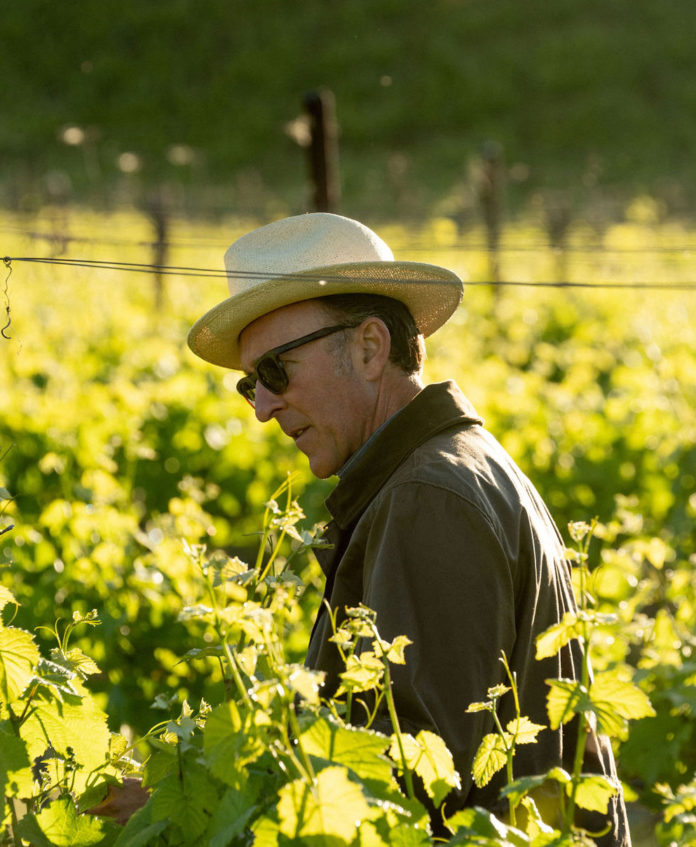
Delicious aromas of fresh cranberry, ripe strawberry and vanilla bean introduce this bright 2022 Rosé by The Mill Keeper (under $20). “The mineral-driven palate is balanced by notes of watermelon and dragon fruit with secondary hints of white flower and crushed rock.”  With its gorgeous salmon hue, its creamy body and bright acidity, this is a palate-pleasing Rosé and then some!

Founded by Tom Gamble, The Mill Keeper in Napa was inspired by Napa’s first mill keepers of the mid 1800s, “who transformed the Napa Valley into a thriving, prosperous community.”

The Mill Keeper wines (by Gamble Family Vineyards) are generally inexpensive and sell out quickly. If you can’t find the Rosé, then try their Bordeaux Blend, Cabernet Sauvignon, or a tasty white blend of Sauvignon Blanc and Chardonnay. These wines are mostly sold at wine and spirits stores all over. The Gamble Family Vineyards wines are available to taste at their beautiful facility surrounded by vines.

Gamble Family Vineyards, 7554 St. Helena Hwy., Napa, 707-944-2999. Gamblefamilyvineyards.com

Holding an Event at Silver Mountain

Have an event planned for fall? Silver Mountain Vineyards has a lovely venue for private events such as a reunion, birthday or anniversary. Their vineyard sits at 2,100 feet – with stunning views of the Monterey Bay. The venue space can be either casual or elegant, depending on your needs. A Vineyard Amphitheater offers a large space with tables and seating, and there is also a gazebo. Or simply make a picnic reservation – with picnic and table awaiting you on arrival.

Silver Mountain Vineyards, Silver Mountain Drive (off Old San Jose Road), Los Gatos. 408-353-2278. Contact Ann at wi******@*******tn.com for info.

Silver Mountain’s Santa Cruz tasting room is at 328D Ingalls St. – just off the Swift Street Courtyard complex. Silvermtn.com

Street Talk

2

How do you feel about setting your clock to “fall back”? Do you prefer early mornings or longer days?

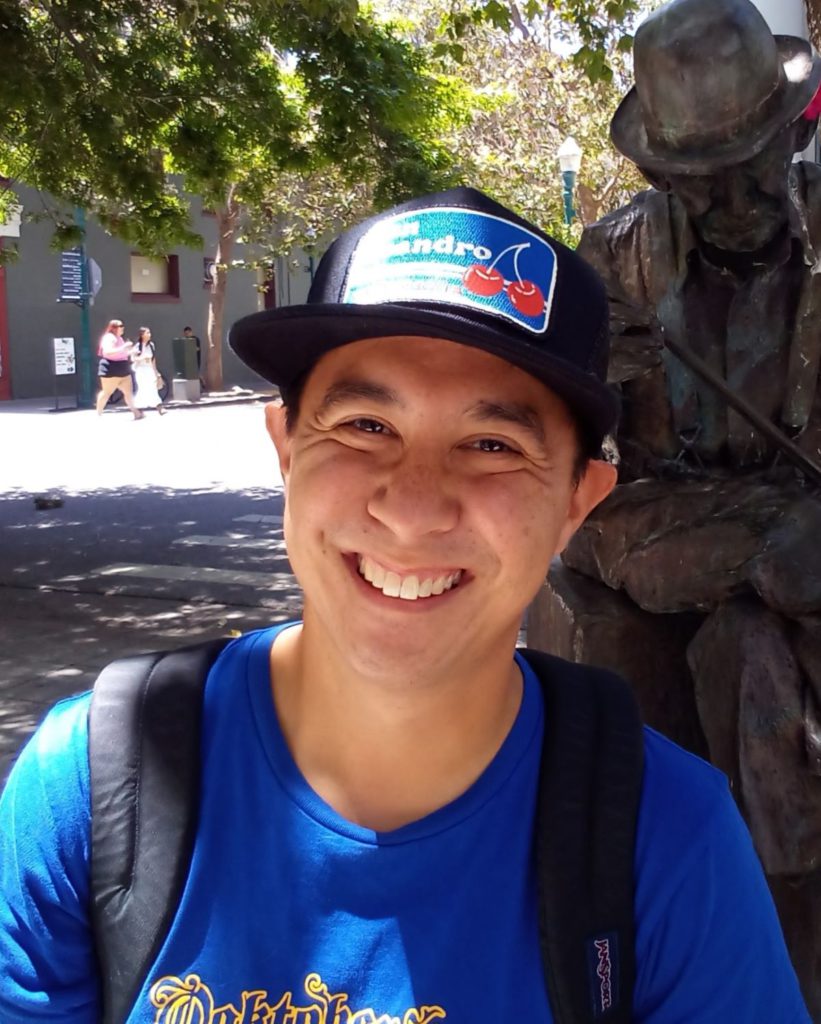
Maria Chavez, 53, Amateur Botanist

“I like having a longer day. I like when it’s bright and happy, and you can be more productive. It’s easier to stay in bed when it’s dark. But I don’t like changing the time, just let it be natural.!”


Oliver Grubb, 17, Street Musician

“I didn’t know the time was changing. I woke up and it was an hour earlier than I thought. It was nice because I hadn’t gone busking for a while, so it felt like I had more time to do that.”


Zoe K, 21, “Olympic” Hacky Sack Player

“I’d rather have the day last longer, but I don’t pay attention to time. If I have to be somewhere on someone else’s timeline I’ll be there, but personally I just follow the sun doing its thing.”


David Regus, 40, Self-Defense Instructor

“I enjoy longer nights. I live in the mountains of Bonny Doone, so I get to see more stars. But I don’t like the time changing—I’d rather settle on a steady time and just let the day do what it’s going to do.”


Catherine Gallagher, 56, Scientist

“I have mixed feelings. I don’t like the longer nights, but I have early morning meetings so it’s a lot easier to get up in the morning. It would be a lot easier if we kept the same time all year.”


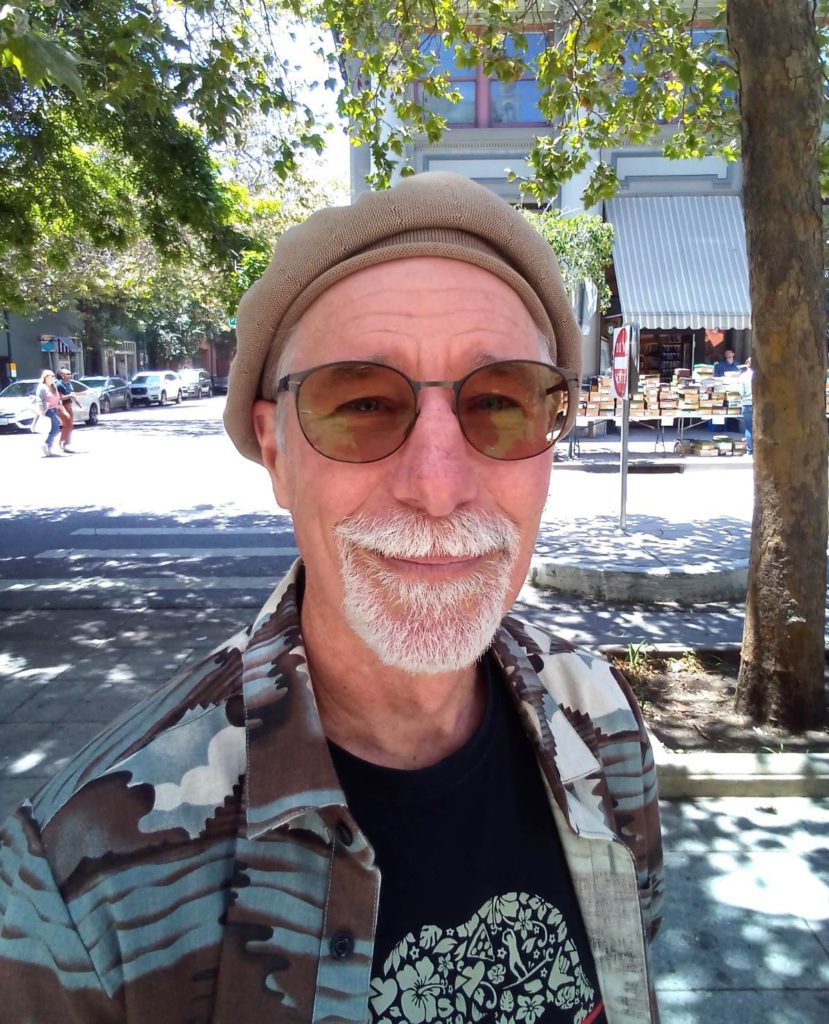
Jim Hamilton, 53, Retired

“When you fall back it feels OK, you get an extra hour of sleep—but when you spring forward, you feel like you’re being robbed. They say that heart attacks increase when we spring forward.”


Free Will Astrology

0

ARIES (March 21-April 19): Your victories-in-progress are subtle. They may not be totally visible to you yet. Let me describe them so you can feel properly confident about what you are in the process of accomplishing. 1. A sustained surge of hard-earned personal growth is rendering one of your problems mostly irrelevant. 2. You have been redefining what rewards are meaningful to you, and that’s motivating you to infuse your ambitions with more soulfulness. 3. You are losing interest in a manipulative game that doesn’t serve you as well as it should. 4. You are cultivating more appreciation for fascinating and useful problems.

TAURUS (April 20-May 20): Taurus physicist Richard Feynman was a smart and accomplished person who won a Nobel Prize. He articulated a perspective that will be healthy for you to experiment with in the coming weeks. He said, “I can live with doubt and uncertainty and not knowing. I think it’s much more interesting not knowing than to have answers which might be wrong. I have approximate answers and possible beliefs and different degrees of certainty about different things, but I’m not absolutely sure of anything, and there are many things I don’t know anything about.” Give Feynman’s approach a try, dear Taurus. Now is an excellent time to explore the perks of questioning everything. I bet you’ll be pleased with how free and easy it makes you feel.

GEMINI (May 21-June 20): To earn money, I have worked as a janitor, dishwasher, olive picker, ditch-digger, newspaper deliverer, and 23 other jobs involving hard labor. In addition, I have done eight artistic jobs better suited to my sensitive temperament and creative talents. Am I regretful or resentful about the thousands of hours I toiled at tasks I didn’t enjoy? A little. But mostly I’m thankful for them. They taught me how to interact harmoniously with a wide array of people. They helped forge my robust social conscience. And they motivated me to eventually figure out how to get jobs I really loved. Now I invite you to take an inventory of your own work life, Gemini. It’s an excellent time to evaluate where you’ve been and where you want to go in the future.

CANCER (June 21-July 22): There are so many kinds of sweetness. Zesty spicy sweetness. Tender balmy fragrant sweetness. Sour or bitter sweetness. Musky piquant sweetness. Luscious succulent sweetness. One of my favorite types of sweetness is described by Cancerian poet Stephen Dunn. He wrote, “Often a sweetness comes as if on loan, stays just long enough to make sense of what it means to be alive, then returns to its dark source. As for me, I don’t care where it’s been, or what bitter road it’s traveled to come so far, to taste so good.” My analysis of the astrological omens suggests to me that you are about to commune with at least three of these sweetnesses, Cancerian. Maybe most of them.

LEO (July 23-Aug. 22): Author Dan Savage advocates regular indulgence in sloth. He notes that few of us can “get through 24 hours without a little downtime. Human beings need to stare off into space, look out the window, daydream, and spend time every day being indolent and useless.” I concur, and I hope you will indulge in more downtime than usual during the coming weeks. For the sake of your long-term mental and physical health, you need to relax extra deep and strong now—to recharge your battery with delicious and delightful abandon.

VIRGO (Aug. 23-Sept. 22): According to my deep and thorough analysis of your astrological rhythms, your mouth will soon be a wonder of nature. The words emerging from your lips will be extra colorful, precise, and persuasive. Your taste buds will have an enhanced vividness as they commune with the joys of food and drink. And I suspect your tongue and lips will exult in an upgrade of aptitude and pleasure while plying the arts of sex and intimate love. Congratulations, Mouthy Maestro!

LIBRA (Sept. 23-Oct. 22): In addition to being a masterful composer, Wolfgang Amadeus Mozart (1756–1791) played the piano, violin, harp, bassoon, clarinet, horn, flute, oboe, and trumpet. His experience led him to believe that musicians best express their skills when they play fast. It’s more challenging to be excellent when playing slowly, he thought. But I will invite you to adopt the reverse attitude and approach in the coming weeks, Libra. According to my astrological analysis, you will be most successful if you work gradually and incrementally, with careful diligence and measured craftiness.

SCORPIO (Oct. 23-Nov. 21): In my horoscopes for Scorpios, I tend to write complex messages. My ideas are especially thick and rich and lush. Why? Because I imagine you as being complex, thick, rich, and lush. Your destiny is labyrinthine and mysterious and intriguing, and I aspire to reflect its intricate, tricky beauty. But this time, in accordance with current astrological omens, I will offer you my simplest, most straightforward oracle ever. I borrowed it from author Mary Anne Hershey: “Live with intention. Walk to the edge. Listen hard. Play with abandon. Choose with no regret. Continue to learn. Appreciate your friends. Do what you love.”

SAGITTARIUS (Nov. 22-Dec. 21): In her poem “Requiem,” Anna Akhmatova says, “I must kill off memory . . . and I must learn to live anew.” I think most of us can benefit from periodically engaging in this brave and robust exercise. It’s not a feat to be taken lightly—not to be done more than once or twice a year. But guess what: The coming weeks will be a time when such a ritual might be wise for you. Are you ready to purge old business and prepare the way for a fresh start? Here are your words of power: forgiveness, clearing, cleaning, release, absolution, liberation.

CAPRICORN (Dec. 22-Jan. 19): We need stories almost as much as we need to breathe, eat, sleep, and move. It’s impossible to live without them. The best stories nourish our souls, stimulate our imagination, and make life exciting. That’s not to say that all stories are healthy for us. We sometimes cling to narratives that make us miserable and sap our energy. I think we have a sacred duty to de-emphasize and even jettison those stories—even as we honor and relish the rich stories that empower and inspire us. I bring these thoughts to your attention, Capricorn, because you’re in a phase of your cycle when you will especially thrive by disposing of the bad old stories and celebrating the good ones.

AQUARIUS (Jan. 20-Feb. 18): I could be wrong, but I don’t think so: You are smarter and wiser than you realize about the pressing issues that are now vying for your attention. You know more than you know you know. I suspect this will soon become apparent, as streams of fresh insights rise up from the depths of your psyche and guide your conscious awareness toward clarity. It’s OK to squeal with glee every time a healing intuition shows up. You have earned this welcome phase of lucid certainty.

PISCES (Feb. 19-March 20): In Indigenous cultures throughout history, shamans have claimed they have the power to converse with and even temporarily become hawks, coyotes, snakes, and other creatures. Why do they do that? It’s a long story, but one answer is that they believe animals have intelligences that are different from what humans have. The shamans aspire to learn from those alternate ways of seeing and comprehending the world. Many of us who live in Western culture dismiss this venerable practice, although I’ve known animal lovers who sympathize with it. If you are game for a fun experiment, Pisces, I invite you to try your own version. Choose an animal to learn from. Study and commune with it. Ask it to reveal intuitions that surprise and enrich you.

Homework: What increasingly unnecessary duty could you abandon and thereby fuel your drive to be free? Newsletter.FreeWillAstrology.com

Acid Mothers Temple

0

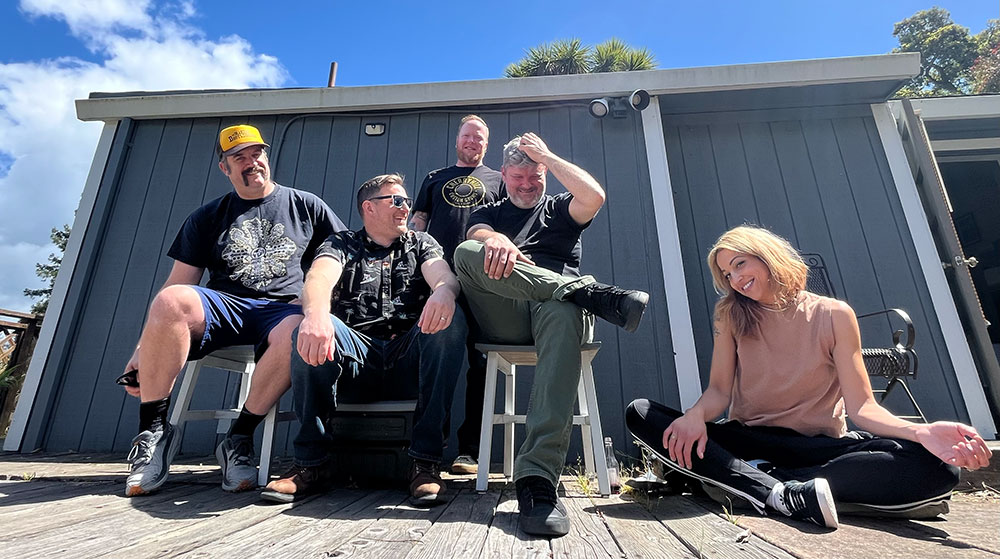
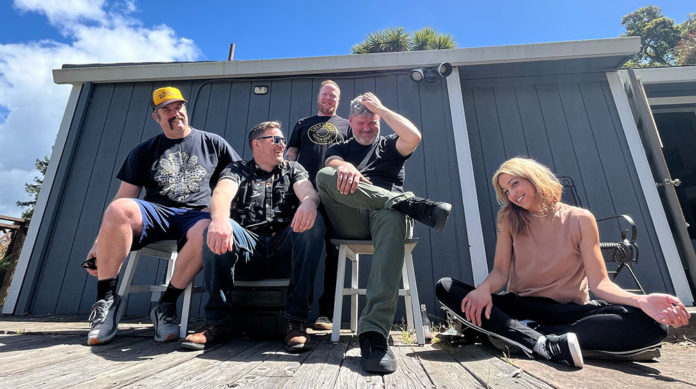
Musical prophets without honor in their home country, Acid Mothers Temple & The Melting Paraiso U.F.O. have been making mind-melting psychedelic music for nearly three decades. The quintessential underground band is among the most prolific groups in all of music, and its free-wheeling, improvisational excursions have earned it a devoted cult. Led by guitarist, founder and mainstay Kawabata Makoto, the group comes to Santa Cruz’s Moe’s Alley for one performance on Nov. 9.

The origins of psychedelic rock – that is, rock music influenced directly or indirectly by the culture of consciousness-expanding drugs – extend back to the mid 1960s. Arguably the first-ever group to describe its music using that label was a Texas-based group, the 13th Floor Elevators. Both the Beatles and Grateful Dead were early leaders in the movement, one which eventually spread around the globe.

One of the least likely places for psych rock to have taken hold was Japan. Mid-’60s Japan was experiencing a homegrown cultural flowering of its own, thanks to figures like filmmaker Kurosawa Akira and printmaking artist Saitō Kiyoshi.

Pop music in Japan wasn’t immune to global trends: the so-called GS (“Group Sounds”) scene was a decidedly Japanese take on Western rock and pop styles like surf and garage rock. And by the late part of the decade, influential Japanese personalities who had visited places like London, New York and San Francisco brought back records, tapes and stories of the burgeoning psychedelic movement.

Yet the psych rock scene in Japan would remain quite small, and never really broke through to the wider public. “I don’t know so much about the Japanese underground scene,” says Kawabata, leader of Acid Mothers Temple, today the premier Japanese psychedelic group. “I’m not sure there was any psychedelic rock scene in ‘60s and ‘70s Japan.” He suggests what did exist was likely “just bizarre copies of Western music.”

Kawabata’s own musical journey began in 1978. And in those early days, few seemed to appreciate what he was doing. “Nobody could understand my music, so I couldn’t connect with them,” he says. But he followed his inspiration, making his own psychedelic rock, imbued with an Asian character.

Drawing not only from American and British styles, AMT often incorporates elements of noise (from avant-garde composers like Karlheinz Stockhausen) and drone (from the repetitive and hypnotic motorik of German “krautrock”).

The results are every bit as heady as a Grateful Dead “space” piece, but with a Japanese quality all its own. For his part, Kawabata characterizes AMT’s studio work as musique concrète, using recorded sounds as raw material.

 The first official AMT album, Acid Mothers Temple & The Melting Paraiso U.F.O. was released in 1997. Asked how the album was received by the Japanese public, Kawabata laughs. “Totally no reaction,” he says. The media there ignored it, too.

But the five-track album (featuring a nearly 20-minute drone freakout titled “Speed Guru”) did get noticed. UK magazine The Wire named the album one of the year’s best. The group – a shifting cast of players with Kawabata as the guiding force – embarked on a busy schedule of concert tours around the globe. A staggeringly prolific outfit, AMT has released more than 100 albums to date.

While early psychedelic music pioneers found inspiration among the drug culture. Kawabata’s group stands apart from that tradition.

“All of my music comes from my cosmos,” he explains. “I catch music from my cosmos, and I play with instruments to people. So I don’t need anything like mind-altering substances.” His goal is to remove ego from the process. Because, he says, “my ego/personality gets in the way of reproducing music.”

And while flashing, colored lights and surreal projected visual images are often part of the psych-rock aesthetic. Kawabata says that his group doesn’t emphasize those things. The group often plays in near-darkness.

“I can’t even see my stage,” he says. “Anyway, the most important thing is the music; if people have their own [mental] images from our music, that’s the perfect visual for me.”

The music of Acid Mothers Temple is sometimes said to bring on a state of trance. Kawabata’s goals, though, are decidedly more down to earth. “Music is just music: nothing more, nothing less,” he asserts. “I want to make people happy. Only this.”

Acid Mothers Temple w/ Dead Leaf Echo + Mammatus, Thursday, Moe’s Alley.

$20 advance/$25 door/Doors 7pm / Show 8pm

21 and over

Pro-Palestinian Protestors Descend on Lockheed Martin

This is the second Pro-Palestinian action in the area this week.

Peggy Townsend and the Call of the Wild

Santa Cruz author Peggy Townsend talks about her brand new adventure novel, The Beautiful and the Wild, launched Nov. 7 at Bookshop Santa Cruz. Christina Waters: In your previous Aloa Snow books you capitalize on physical jeopardy with which to trigger the action surrounding (and propelling) your main characters. In this new book as well, your protagonist finds herself in...

Finally, Some Water

Big Basin Water patrons have had to depend on trucks for their drinking water

Monarchs Flutter In

The monarchs have arrived at Natural Bridges and throughout Santa Cruz

A Quest for Justice

Longtime political activist Glen Schaller dies

Community Speaks Against Pesticides

50 people spoke against toxic pesticides

From Mill to Rosé

Delicious aromas of fresh cranberry, ripe strawberry and vanilla bean introduce this bright 2022 Rosé by The Mill Keeper (under $20). “The mineral-driven palate is balanced by notes of watermelon and dragon fruit with secondary hints of white flower and crushed rock.”  With its gorgeous salmon hue, its creamy body and bright acidity, this is a palate-pleasing Rosé and...

Street Talk

row of silhouettes of different people
How do you feel about setting your clock to “fall back”? Do you prefer early mornings or longer days? “I like having a longer day. I like when it’s bright and happy, and you can be more productive. It’s easier to stay in bed when it’s dark. But I don’t like changing the time, just let it be natural.!” “I didn’t...

Free Will Astrology

Astrology, Horoscope, Stars, Zodiac Signs
ARIES (March 21-April 19): Your victories-in-progress are subtle. They may not be totally visible to you yet. Let me describe them so you can feel properly confident about what you are in the process of accomplishing. 1. A sustained surge of hard-earned personal growth is rendering one of your problems mostly irrelevant. 2. You have been redefining what rewards...

Acid Mothers Temple

Musical prophets without honor in their home country, Acid Mothers Temple & The Melting Paraiso U.F.O. have been making mind-melting psychedelic music for nearly three decades. The quintessential underground band is among the most prolific groups in all of music, and its free-wheeling, improvisational excursions have earned it a devoted cult. Led by guitarist, founder and mainstay Kawabata Makoto,...
17,623FansLike
8,845FollowersFollow