After Legislative Whirlwind, New Pajaro Valley Healthcare District Nears Goal

Watsonville Community Hospital’s history of local ownership dates back to 1895, nearly three decades after its namesake city was founded.

That changed in the early 1990s, when declining revenues and low reimbursement rates from managed health care plans prompted the hospital’s board of directors to consider a corporate partnership. What followed was 30 years of rocky management by three out-of-town corporations, which came to a crux in late 2021 when the hospital announced it was facing imminent closure unless a buyer came forward.

Enter the Pajaro Valley Healthcare District (PVHD), a nonprofit created by the County of Santa Cruz, the City of Watsonville, the Community Health Trust of Pajaro Valley and Salud Para La Gente with the sole mission of purchasing and operating the hospital.

That group won its bid on Feb. 18, canceling a planned auction and setting the stage for a hearing on Wednesday, when the court will consider PVHD’s finances and purchase proposal to possibly give the final approval for the sale.

That group cleared its first hurdle on Feb. 4, when Gov. Gavin Newsom signed Senate Bill 418—roughly three weeks after author Senator John Laird introduced it—officially creating PVHD.

Laird, who wrote the law along with Senator Anna Caballero and Assembly Members Robert Rivas and Mark Stone, says that bills normally take around seven months to wind their way through the legislative process. He says the speedy passage and unanimous concurrence of both the Assembly and Senate—it passed 62-0 and 34-0, respectively—was a testament to the importance of the issue.

“This was at legislative warp speed,” Laird says. “It is impossible to understand how we would respond if that hospital goes under. So I took this issue on with a lot of urgency.”

Defining a District

A board of elected leaders similar to county boards of supervisors and school trustees—and governed by the same rules—health care districts are created to oversee some aspect of local health care. Because they are public agencies, they have bylaws that require open meetings and public input when any changes are proposed.

California currently has 77 health care districts, 32 of which run hospitals.

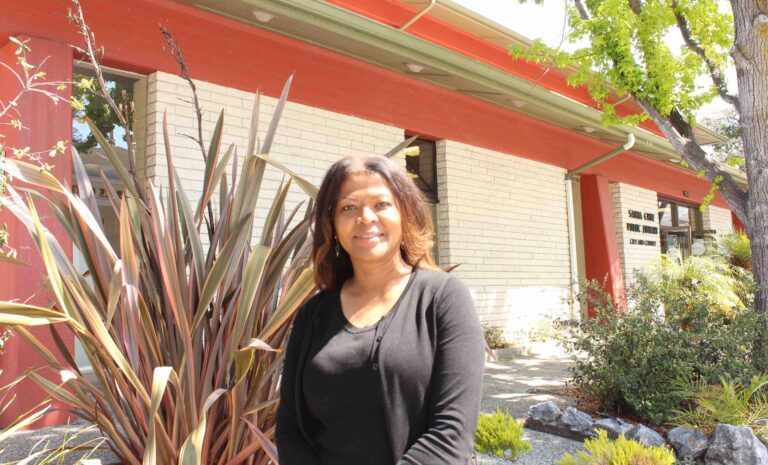
Better still, health care districts are not bound by the profit-centric models of many hospitals, says organizer Mimi Hall, who formerly served as the Santa Cruz County Public Health Director.

Hall adds that they often serve rural communities with health care provider shortages, large populations of under-insured and uninsured people as well as those on MediCal.

“They meet a need that probably only government is going to properly meet,” she says. “The whole reason we’re forming a health care district is we want a local form of government that is directly accountable to the communities they serve. It assures open government, oversight, transparency and it’s mission-focused. Our mission is to make sure that the community’s needs are met forever.”

PVHD will be made up of five members that, because of the quick formation and need for immediate action, will be appointed by the Santa Cruz County Board of Supervisors, Hall says. In the future, members will be chosen by voters.

“I believe we had broad community support,” she says. “The only reason we took this very, very abbreviated route was because we didn’t have the luxury of time.”

The next step––and perhaps the most challenging one––is to secure the funds needed to make the purchase and then to run the hospital, Hall says.

Team Effort

Leaders throughout the Pajaro Valley have already begun to step up. The County of Santa Cruz has pledged $5.5 million, the Community Health Trust has offered $4.65 million and the Central California Alliance for Health and County of Monterey have each devoted $3 million. The City of Watsonville also chipped in $130,000.

If PVHD makes a successful bid, it still faces a $25 million operating deficit, Hall says.

Financial projections show the organization breaking even from this deficit by 2023, and going into the black by 2026. That, Hall says, would make the hospital “creditworthy” in the eyes of lenders.

Making the task more difficult is that PVHD will not have the property tax apportionment allotted to health care districts under state law, since those rules are not retroactive. But the organization has no immediate plans to ask the public to approve a special tax, Hall says.

“We didn’t think this was the time for our community to be taxed,” she says. “So going into it we knew that that would be a part of our business plan.”

This means asking local health providers such as Kaiser, Dignity and Sutter for their help, and also counting on financial support from the state, Hall says.

Still, Hall says, the challenges can be met.

“If they were insurmountable, we would not move forward,” she says. “Because it’s not responsible to expend all this energy and effort and money to do something that won’t become a reality. We believe that it’s possible.”

In all, PVHD representatives have said that they would need to raise just under $67 million to purchase the hospital and continue its operations.

Hall calls the formation of PVHD, and the efforts necessary in moving forward, a “labor of love.”

“I want the community and anyone out there to remember that we have our eyes far on the horizon,” she says. “The whole reason we’re doing this is that, after a couple of decades, we have an opportunity to truly return this hospital back to the community and serve the community in the ways that it needs.”

Hospital History

It all began in 1895, when Dr. Peter Kemp Watters bought a house on Third Street (now called Beach Street) and built the five-room Watsonville Sanitarium next door for $1,097, according to historical records. This was enlarged in 1901 and renamed Watsonville Hospital and Training School of Nurses.

For the next 90 years, Watsonville’s hospital retained its private ownership, even as it grew and moved from 311 Montecito Ave. (where Montecito Manor nursing home currently is) to 294 Green Valley Road (where Pajaro Valley Unified School District is headquartered) and then to its current location at 75 Nielsen St.

The hospital remained under local control—overseen by a board of directors made up of doctors—even as it was incorporated and as leaders sold shares to stockholders (which were later bought back.)

It became a nonprofit organization in 1950.

But in 1993, the hospital’s financial future was looking grim, and so the board of directors partnered with Community Health Systems (CHS), which took over operations, starting 30 years of shaky corporate leadership. 

CHS created a spinoff company called Quorum Health Corporation in 2016, which sold the hospital to Los Angeles-based Halsen Healthcare in 2019. That company—formed exclusively to purchase the hospital (and which still officially owns it)—sold the physical building and grounds to Alabama-based Medical Properties Trust (MPT), to lease it from them in a so-called sale/leaseback.

The hospital board ousted Halsen in January 2021, stating that the company was unable to meet “financial obligations to various stakeholders.” In its place, the board installed Los Angeles-based Prospect Medical Holdings.

Watsonville Community Hospital registered nurse Roseann Farris said that she and her colleagues are “cautiously optimistic” about the new leadership, with the only concern being whether the PVHD can find enough funding to make the purchase and keep it running.

“It’s very exciting to think about the growth that could occur, and this facility could be something that not only the employees and the physicians can be proud of, but that the community is proud of,” she says.

Farris is among dozens of nurses at Watsonville Community Hospital who have multiple times during the pandemic demonstrated against hospital leadership, claiming that staffing levels and working conditions had plummeted as the hospital struggled to make ends meet. 

“This is a huge thing for our community, and for health care in general,” she says. “If it does come to being a district hospital, it can be very positive for this community, and I’m hopeful that it can be something that other communities can see as a way of preserving health care for their communities.”

Inaugural ‘Cookout’ Aims to Celebrate Santa Cruz’s Black Community

Community organizer and UCSC researcher Ayo Banjo was relaxing on a local beach when he began reflecting on the local Black community in Santa Cruz County. The 22-year-old alumnus of UCSC realized that aside from Juneteenth, the annual holiday commemorating the emancipation of slaves in 1865, the county did not have many other events highlighting his community.

“Blacks here make up about 1% of the county population,” Banjo says. “And those numbers are around the same within UCSC. And there’s a lack of connection between the campus and the larger community. So my question was, ‘How can I bring together those relationships that have been so fundamental to me here in Santa Cruz?’”

The first thing that came to Banjo’s mind was to host a cookout, a gathering where a meal is prepared and served outdoors with neighbors, friends and family. The tradition formed and is still popular today within the Black community in the U.S.; it is distinctive from a simple barbecue. 

“A cookout is a very special event for a lot of Black people,” Banjo says. “It’s where they find a lot of healing and joy.”

Banjo’s original idea for the Cookout started small. He first reached out to the Santa Cruz County Black Health Matters Initiative, a community initiative aiming to improve the health, equity and overall quality of life for Black residents in Santa Cruz County.

Cat Willis, founder and director of Black Health Matters, says she had already been aware of Banjo’s political work at UCSC and with the Santa Cruz County Black Coalition for Justice & Racial Equity. 

“He was saying how important it is to replicate the experiences he had had growing up in a Black community,” Willis says. “That feeling when you’re at a cookout, with your aunt and uncle making food, the dancing, the joy … those memories, you don’t forget. Knowing he wanted to do that here, Black Health Matters was like, ‘Oh yeah, we’re definitely supporting that.’”

Black Health Matters had recently received a grant from the Silicon Valley Community Foundation’s Black Freedom Fund and offered to use some of the funds to bring in the resources and leverage needed for the Cookout.

Word quickly spread from there, and soon the London Nelson Center, the City of Santa Cruz Parks and Recreation Department and others were contacting Banjo to be part of the event.

“It transformed. It went way beyond what I thought it would be,” Banjo says. “What initially started as a small cookout within our tight-knit community came to represent something larger, that could take on a life of its own.”

The Cookout will be held this Saturday from 2-5pm at Harvey West Park, 326 Evergreen St. Word of Life, one of Santa Cruz’s oldest Black churches, will prepare a meal of barbecue ribs, chicken, cornbread and greens. Two local musicians, August Lee Stevens and Alexandra the Author, will perform throughout the afternoon. 

Oakland-based Negus in Nature will be on hand holding relay races and track and field events. Insight Global, a talent and staffing agency from San Jose, has agreed to donate and come to the event to recruit more Black youth into their summer internship roles. And the Santa Cruz Chamber of Commerce will be offering services for Black-owned businesses. 

The event is open to everyone, and will be family-friendly, with activities for kids such as face painting, balloon animals and more. No alcohol will be served on the premises. 

“We definitely want kids to feel safe,” Banjo says. “I want to feel a sort of Disney energy—that kind of magic is what I’m going for.”

For Banjo, bringing together his UCSC family and Santa Cruz’s Black community was a major reason why he wanted to create the cookout.

“I have had so many different people who keep me grounded, who help me navigate my space here in Santa Cruz,” he says. “Those outside community connections are crucial. My job is not only to create a cookout, but I want to create something where we’re really bringing in the actual identities of Santa Cruz.”

Willis says she was looking forward to seeing what Ayo puts together. 

“He’s so incredible, so meticulous as a community organizer,” Willis says. “I’m really excited to see people show up and experience this.”

Banjo’s biggest hope is that this will become an annual event, continuing to garner more support from the rest of the greater community while giving black folks a place to feel heard and seen.

“I want people to let go of the restraints we have on ourselves,” he says. “I don’t want anyone to feel like an imposter in this community, or feel like they don’t belong. I want them to feel included, that they have a stake and role to play in Santa Cruz. I don’t want us to just tolerate diversity—I want us to encourage it, embrace it and understand that it’s actually a benefit.”

Rob Brezsny’s Astrology: Feb 23-March 1

Free will astrology for the week of Feb. 23

ARIES (March 21-April 19): “A dead thing can go with the stream, but only a living thing can go against it,” wrote author G. K. Chesterton. Amen to that! Please regard his observation as the first part of your horoscope. Here’s the second part: It’s sometimes the right approach to move in harmony with the flow, to allow the momentum of elemental forces to carry you along. But now is not one of those times. I suggest you experiment with journeys against the flow. Go in quest of what the followers of easy options will never experience. Do it humbly, of course, and with your curiosity fully deployed.

TAURUS (April 20-May 20): “You’re never allowed to step on people to get ahead,” said TV personality and author Star Jones, “but you can step over them if they’re in your way.” I suspect the coming months will be a time when you really should step over people who are in your way. There’s no need to be mad at them, criticize them or gossip about them. That would sap your energy to follow your increasingly clear dreams. Your main task is to free yourself from influences that obstruct your ability to be the Royal Sovereign of Your Own Destiny.

GEMINI (May 21-June 20): Gemini-born Gina Rowlands is retired now, but she had an award-winning six-decade career as an actor. At age 20, she decided what she wanted to do with her life, and her parents offered her their blessings. She testified: “I went home and I told my mom that I wanted to quit college and be an actress, and she said, ‘Huh, that sounds fascinating. It’s wonderful!’ And I told my father, and he literally said, ‘I don’t care if you want to be an elephant trainer if it makes you happy.'” Dear Gemini, in the coming months, I would love for you to receive similar encouragement for your budding ideas and plans. What can you do to ensure you’re surrounded by influences like Rowlands’ parents? I hope you embark on a long-term project to get all the support you need.

CANCER (June 21-July 22): As you enter an astrological phase when vast, expansive ruminations will be fun and healthy for you, I will offer you some vast, expansive thoughts. Hopefully, they will inspire your own spacious musings. First, here’s artist M. C. Escher: “Wonder is the salt of the earth.” Next, author Salman Rushdie: “What’s real and what’s true aren’t necessarily the same.” Here’s poet Allen Ginsberg: “When you notice something clearly and see it vividly, it then becomes sacred.” A proverb from the Omaha people: “Ask questions from your heart, and you will be answered from the heart.” G. K. Chesterton: “Let your religion be less of a theory and more of a love affair.” Finally, playwright Tony Kushner: “I’m not religious, but I like God, and he likes me.”

LEO (July 23-Aug. 22): “Out of love, you can speak with straight fury,” wrote author Eudora Welty. Here’s how I interpret that in light of the current chapter of your life story: You have an opportunity to recalibrate some misaligned energy. You have the necessary insight to fix an imbalance or dissolve an illusion or correct a flow that has gone off-course. And by far the best way to do that is by wielding the power of love. It will need to be expressed with vehemence and intense clarity, however. It will require you to be both compassionate and firm. Your homework: Figure out how to express transformative truths with kindness.

VIRGO (Aug. 23-Sept. 22): Virgo political science professor Tatah Mentan was born and raised in the African country of Cameroon, which has never fully recovered from its grueling colonization by Germany, France and England. The democratic tradition there is tenuous. When Mentan first taught at a university in the Cameroonian capital, authorities found his ideas too controversial. For the next 16 years, he attempted to be true to himself while avoiding governmental censorship, but the strain proved too stressful. Fearing for his safety, he fled to the US. I’m turning to him for advice that will serve you well in the coming weeks. He tells us, “Peace does not mean to be in a place where there is no noise, trouble or hard work. Peace means to be in the midst of all those things and still be calm in your heart.”

LIBRA (Sept. 23-Oct. 22): “Anything you do from the heart enriches you, but sometimes not till years later,” wrote author Mignon McLaughlin. I’m pleased to inform you, Libra, that you will soon receive your rewards for generous actions you accomplished in the past. On behalf of the cosmic rhythms, I apologize for how long it has taken. But at least it’s finally here. Don’t underestimate how big this is. And don’t allow sadness about your earlier deprivation to inhibit your enthusiastic embrace of compensation.

SCORPIO (Oct. 23-Nov. 21): No matter how reasonable and analytical you are, Scorpio, you possess a robust attraction to magic. You yearn for the refreshing invigoration of non-rational mysteries. You nurture urges to be delighted by outbreaks of the raw, primal lust for life. According to my astrological assessment, you are especially inclined to want and need these feelings in the next few weeks. And that’s good and healthy and holy! At the same time, don’t abandon your powers of discernment. Keep them running in the background as you enjoy your rejuvenating communions with the enigmatic pleasures of the Great Unknown.

SAGITTARIUS (Nov. 22-Dec. 21): Author Diane Ackerman tells us, “In the absence of touching and being touched, people of all ages can sicken and grow touch starved. Touch seems to be as essential as sunlight.” This is always important to remember, but it will be extra crucial for you to keep in mind during the coming weeks. I advise you to be ingenious and humble and frank as you collect as much physical contact as you can. Be polite and respectful, of course. Never force yourself on anyone. Always seek permission. With those as your guidelines, be greedy for hugs and cuddling and caresses.

CAPRICORN (Dec. 22-Jan. 19): “Education, fundamentally, is the increase of the percentage of the conscious in relation to the unconscious.” Author and educator Sylvia Ashton-Warner said that, and now I’m telling you—just in time for one of the most lesson-rich times of a year that will be full of rich lessons. In the next nine months, dear Capricorn, the proportion of your consciousness in relation to your unconsciousness should markedly increase. And the coming weeks will be a favorable phase to upgrade your educational ambitions.

AQUARIUS (Jan. 20-Feb. 18): You’re entering a phase of your cycle when your ability to boost your finances will be stronger than usual. You’ll be more likely to attract good luck with money and more apt to discover useful tips on how to generate greater abundance. To inspire your efforts, I offer you this observation by author Katharine Butler Hathaway: “To me, money is alive. It is almost human. If you treat it with real sympathy and kindness and consideration, it will be a good servant and work hard for you, and stay with you and take care of you.”

PISCES (Feb. 19-March 20): Author Deb Caletti made the following observation: “You have ordinary moments and ordinary moments and more ordinary moments, and then, suddenly, there is something monumental right there. You have past and future colliding in the present, your own personal Big Bang, and nothing will ever be the same.” In my vision of your destiny in 2022, Pisces, there could be several of these personal Big Bangs, and one of them seems to be imminent. To prepare—that is, to ensure that the changes are primarily uplifting and enjoyable—I suggest you chant the following mantra at least five times every day: “I love and expect good changes.”

Homework: Give yourself a blessing. Say why you’re wonderful and name a marvelous event that’s ahead for you. Newsletter.FreeWillAstrology.com

Smith & Hook Wines’ Hand-Harvested 2018 Cabernet Sauvignon Reserve

Smith & Hook Wines are a “sister brand” of the Hahn family’s estate. Founders Nicky Hahn and his wife Gaby Hahn first planted vineyards back in the 1970s, and thanks to them, the Santa Lucia Highlands has garnered so much respect as a wine region. They put it on the map. 

Nicky Hahn, born in Switzerland, died in 2018 and left an incredible winemaking legacy. Philip Hahn, Nicky’s son, had a thriving career on Wall Street but eventually returned to his agricultural roots in Soledad to take the helm as chairman of Hahn Family Wines. He has run the business since 2007. 

The 2018 Cabernet Sauvignon Reserve ($45) is a premium wine made with fruit sourced from three different Paso Robles vineyards. “This Reserve wine is hand-harvested from prized, sun-drenched vineyards,” says the team at Smith & Hook. The result is an intensely flavored wine with “excellent structure and naturally balanced acidity.”

Aged in French oak, this beautiful crimson wine has aromas of cherries, cassis, cedar, warm gravel and graphite—leading to plum, leather and tobacco accents. Expressive and delicious, the wine also features blackberry, dark cherry, cassis and mocha layers. It is truly a gorgeous wine—and I’m just going to pour myself another glass!

If you visit the estate in Soledad, breathtaking views of their Santa Lucia Highlands estate vineyards and the greater Salinas Valley and Gabilan Range are yours to behold—a glass of wine in hand! Or head to their tasting room in Carmel-by-the-Sea.
Hahn Family Wines, 37700 Foothill Road, Soledad. 831-678-4555. smithandhook.com.
Carmel-by-the-Sea, Carmel Plaza on Ocean Avenue. 831-250-7937.

Spring Wine Walk
The Downtown Association Santa Cruz holds the next Wine Walk 3-6pm, Sunday, May 1. This fun event not only supports our local wineries but is an introduction to many shops, spas and salons whose portals you might not have entered before. downtownsantacruz.com.

Lillian’s Brings East Coast-style Italian Cuisine to Santa Cruz

Matt Moreno and his family had felt that Santa Cruz was missing something—an East Coast-style Italian restaurant. So, in 2007, they opened Lillian’s, named after the family’s Sicilian grandma who was born and raised in Yonkers, New York.

Transitioning from working in the golf industry to restaurant owner/GM was a steep learning curve, but Moreno had Grandma Lillian’s recipes to lean on. He defines the menu as “family-friendly comfort food.”

Along with Grandma’s recipes, the fresh local fish specials and housemade black truffle-stuffed gnocchi (with gorgonzola cream sauce) keep the place packed. The char-grilled filet is another staple. Traditional cannoli and tiramisu for dessert accompany authentic New York-style cheesecake.
Moreno spoke to GT about his former life in the golf world and the woman who inspired Lillian’s.

How do golf and Lillian’s intersect?

MATT MORENO: Working for local golf courses for eight years really helped me build many friendships and relationships with pillars of our community, and now I see a lot of those same faces at Lillian’s. We really pride ourselves on being a friendly, local neighborhood spot, and our staff really goes out of their way to build personal relationships with our guests. And in golf and the restaurant industry, you often fail more than you succeed, so that helps me be patient and weather the storms that come with managing a restaurant. 

What is the most Italian thing about Lillian’s?

For one, the strong family ties and aspect—we are a totally family-run restaurant. I’m the general manager, my brother Chris is the chef, and my mom and dad do the rest. Mixing business and family can often tear families apart, but it’s actually made ours stronger. It’s fulfilling and enjoyable, and it is a blessing to work every day with people you love so much. And also, it’s very lively, upbeat and boisterous here in a very New York way. It’s a family-centered atmosphere filled with wine, passionate discussions and lots of moving hands.

1148 Soquel Ave., Santa Cruz. 831-425-2288; lilliansitaliankitchen.com.

Silver Mountain Vineyards Wins Big at Chronicle Wine Competition

Congratulations to vintner Jerold O’Brien, who founded Silver Mountain Vineyards 43 years ago. His wines, organically grown and consistently elegant, keep acquiring awards for their outstanding quality. In this year’s prestigious San Francisco Chronicle Wine Competition, Silver Mountain’s 2014 Syrah took Best of Class, while the 2014 Santa Lucia Highlands Pinot Noir received a double gold. Tasting is believing, so make sure you stop by the tasting room at 402 Ingalls Street in westside Santa Cruz to sample these wines, as well as Silver Mountain’s other award-winning pinots and chardonnays. Saturday and Sunday, noon-5pm. silvermtn.com.

More Sparkle

Recently discovered Bitters & Soda, a dry, aromatic elixir made with gentian tincture from Hella Cocktails. This stuff is the bomb. Part of the expanding wave of alternatives to booze, and/or soft drinks, such as Coke, rootbeer and ginger ale. Seriously compelling, Hella offered a sophisticated blend of sparkling water and bitters (allspice, peppercorns, caraway, cinnamon sticks, cloves, wormwood, rose hips, angelica root, gentian root, star anise, chamomile), plus assorted fruit juices. We found it refreshing all by itself, but we went further, and in our taste test we drank half of the attractive 12 oz. can contents straight. Then we poured a splash of Campari into half of the other half, and Luxardo bitter vermouth into the other half. Both of these alco+ concoctions were terrific. One can only imagine how fab gin would have tasted when mixed with this stuff. They have other flavors, but my money’s on the Bitters & Soda. A 12-pack runs around $38 bucks, or $3 a can. Straight out of the can it’s an all-day tipple.

So we moved on to try another sparkling drink, a Tepache from De La Calle, based on the ubiquitous “pineapple beer” street drinks found widely in Mexico. In a bright green can, picked up at the venerable Food Bin on Mission Street, we found the delightful Tamarind Citrus flavor tepache filled with hints of fermented pineapple, turbinado sugar and the cola perfume of tamarind. Tamarind is one of the great flavors of the natural world, and in this zesty drink it mingles with agave, orange juice, rosemary, cinnamon, black pepper and various probiotic cultures. For $2.99 you’ll be on a total flavor ride. Fabulous with anything—grilled cheese, tacos, left-over steelhead, avocado, pretzels. Great discovery.

Non-Sparkle

Intrigued by the sophisticated possibilities, we moved on to sample the highly touted Seedlip, which turned out to be far less than all the hype. One of the leaders in the non-alcoholic spirits realm, this bland creation delivered nothing, unless you count the gorgeous bottle. Yes, packaging is a plus, but so is flavor. I was game enough to pop for $35 to test drive this product. The “flavor” I purchased was called, poetically enough, Garden. Great to walk in, not so much to drink. If Seedlip is viewed as a mixer—one of several ingredients you add to a cocktail which might also include soda, fruit juices, gin, bitters, herbal purees—that would be one thing. But we tried it in a glass of ice and soda. The flavor was barely detectable and not particularly pleasant. Peas, hay, thyme and spearmint do not a pleasing flavor experience make. Desperate for some flavor, we added a healthy splash of Luxardo Bitters, which clashed unpleasantly with Seedlip’s pea undertone. Maybe a glass of gin with a splash of Seedlip would work, but that utterly defeats the non-alcohol promotion of this fermented beverage. I was disappointed with Seedlip, but the discovery of the bracing and distinctive tasting Hella Bitters & Soda more than made up for it.

Construction Begins On Hwy. 17 Wildlife Undercrossing

The California Department of Transportation (CalTrans) has begun nighttime work on a wildlife undercrossing near Laurel Curve on Highway 17, which is expected to reduce traffic to one lane in the north and southbound directions.

The work is slated to begin on Tuesday on Highway 17, from 0.6 miles south of Laurel Road to 0.2 miles north of Laurel Road.

During the first phase of construction, travelers in both the north and southbound directions of Highway 17 can expect overnight work that will result in the reduction of travel down to one lane, with delays up to 10 minutes.

The work will run in the northbound direction from 8pm to 5am, and in the southbound direction from 9pm to 7am. Overnight work will begin Sunday evenings and conclude Friday mornings.

Message and directional signs will be in place to assist travelers in the area, and CHP will assist with traffic control.

Workers will begin by removing the existing concrete barrier between travel lanes and then placing a temporary guardrail.

The work is a partnership between Caltrans, Santa Cruz County Regional Transportation Commission and the Land Trust of Santa Cruz County, which has preserved 460 acres of mostly undeveloped land on both sides of the highway. 

According to Caltrans, the roadway is built over natural drainage and is, therefore, an ideal location for a wildlife undercrossing. The project is expected to increase travel safety by keeping animals off the highway.

Graniterock has been selected as the contractor for the $5.4 million project. It is scheduled to conclude at the end of July.

CDC Isn’t Publishing Large Portions of the COVID-19 Data It Collects

By Apoorva Mandavilli, The New York Times

For more than a year, the Centers for Disease Control and Prevention has collected data on hospitalizations for COVID-19 in the United States and broken it down by age, race and vaccination status. But it has not made most of the information public.

When the CDC published the first significant data two weeks ago on the effectiveness of boosters in adults younger than 65, it left out the numbers for a huge portion of that population: 18- to 49-year-olds, the group the data showed was least likely to benefit from extra shots, because the first two doses already left them well-protected.

The agency recently debuted a dashboard of wastewater data on its website that will be updated daily and might provide early signals of an oncoming surge of COVID-19 cases. Some states and localities had been sharing wastewater information with the agency since the start of the pandemic, but it had never before released those findings.

Two full years into the pandemic, the agency leading the country’s response to the public health emergency has published only a tiny fraction of the data it has collected, several people familiar with the data said.

Much of the withheld information could help state and local health officials better target their efforts to bring the virus under control. Detailed, timely data on hospitalizations by age and race would help health officials identify and help the populations at highest risk. Information on hospitalizations and death by age and vaccination status would have helped inform whether healthy adults needed booster shots. And wastewater surveillance across the nation would spot outbreaks and emerging variants early.

Without the booster data for 18- to 49-year-olds, the outside experts whom federal health agencies look to for advice had to rely on numbers from Israel to make their recommendations on the shots.

Kristen Nordlund, a spokesperson for the CDC, said the agency has been slow to release the different streams of data “because basically, at the end of the day, it’s not yet ready for prime time.” She said the agency’s “priority when gathering any data is to ensure that it’s accurate and actionable.”

Another reason is fear that the information might be misinterpreted, Nordlund said.

Dr. Daniel Jernigan, the agency’s deputy director for public health science and surveillance said the pandemic exposed the fact that data systems at the CDC, and at the state levels, are outmoded and not up to handling large volumes of data. CDC scientists are trying to modernize the systems, he said.

“We want better, faster data that can lead to decision making and actions at all levels of public health, that can help us eliminate the lag in data that has held us back,” he added.

The CDC also has multiple bureaucratic divisions that must sign off on important publications, and its officials must alert the Department of Health and Human Services — which oversees the agency — and the White House of their plans. The agency often shares data with states and partners before making data public. Those steps can add delays.

“The CDC is a political organization as much as it is a public health organization,” said Samuel Scarpino, managing director of pathogen surveillance at the Rockefeller Foundation’s Pandemic Prevention Institute. “The steps that it takes to get something like this released are often well outside of the control of many of the scientists that work at the CDC.”

The performance of vaccines and boosters, particularly in younger adults, is among the most glaring omissions in data the CDC has made public.

Last year, the agency repeatedly came under fire for not tracking so-called breakthrough infections in vaccinated Americans, and focusing only on individuals who became ill enough to be hospitalized or die. The agency presented that information as risk comparisons with unvaccinated adults, rather than provide timely snapshots of hospitalized patients stratified by age, sex, race and vaccination status.

But the CDC has been routinely collecting information since the COVID-19 vaccines were first rolled out last year, according to a federal official familiar with the effort. The agency has been reluctant to make those figures public, the official said, because they might be misinterpreted as the vaccines being ineffective.

Nordlund confirmed that as one of the reasons. Another reason, she said, is that the data represents only 10% of the population of the U.S. But the CDC has relied on the same level of sampling to track influenza for years.

Some outside public health experts were stunned to hear that information exists.

“We have been begging for that sort of granularity of data for two years,” said Jessica Malaty Rivera, a public health researcher and part of the team that ran the COVID Tracking Project, an independent effort that compiled data on the pandemic until March 2021.

A detailed analysis, she said, “builds public trust, and it paints a much clearer picture of what’s actually going on.”

Concern about the misinterpretation of hospitalization data broken down by vaccination status is not unique to the CDC. On Thursday, public health officials in Scotland said they would stop releasing data on COVID-19 hospitalizations and deaths by vaccination status because of similar fears that the figures would be misrepresented by anti-vaccine groups.

But the experts dismissed the potential misuse or misinterpretation of data as an acceptable reason for not releasing it.

“We are at a much greater risk of misinterpreting the data with data vacuums, than sharing the data with proper science, communication and caveats,” Rivera said.

When the delta variant caused an outbreak in Massachusetts last summer, the fact that three-quarters of those infected were vaccinated led people to mistakenly conclude that the vaccines were powerless against the virus — validating the CDC’s concerns.

But that could have been avoided if the agency had educated the public from the start that as more people are vaccinated, the percentage of vaccinated people who are infected or hospitalized would also rise, public health experts said.

“Tell the truth, present the data,” said Dr. Paul Offit, a vaccine expert and adviser to the Food and Drug Administration. “I have to believe that there is a way to explain these things so people can understand it.”

Knowing which groups of people were being hospitalized in the U.S., which other conditions those patients may have had and how vaccines changed the picture over time would have been invaluable, Offit said.

Relying on Israeli data to make booster recommendations for Americans was less than ideal, Offit noted. Israel defines severe disease differently than the U.S., among other factors.

“There’s no reason that they should be better at collecting and putting forth data than we were,” Offit said of Israeli scientists. “The CDC is the principal epidemiological agency in this country, and so you would like to think the data came from them.”

It has also been difficult to find CDC data on the proportion of children hospitalized for COVID-19 who have other medical conditions, said Dr. Yvonne Maldonado, chair of the American Academy of Pediatrics’ Committee on Infectious Diseases.

The academy’s staff asked their partners at the CDC for that information on a call in December, according to a spokesperson for the AAP, and were told it was unavailable.

Nordlund pointed to data on the agency’s website that includes this information, and to multiple published reports on pediatric hospitalizations with information on children who have other health conditions.

The pediatrics academy has repeatedly asked the CDC for an estimate on the contagiousness of a person infected with the coronavirus five days after symptoms begin — but Maldonado finally got the answer from an article in The New York Times in December.

“They’ve known this for over a year and a half, right, and they haven’t told us,” she said. “I mean, you can’t find out anything from them.”

Experts in wastewater analysis were more understanding of the CDC’s slow pace of making that data public. The CDC has been building the wastewater system since September 2020, and the capacity to present the data over the past few months, Nordlund said. In the meantime, the CDC’s state partners have had access to the data, she said.

Despite the cautious preparation, the CDC released the wastewater data a week later than planned. The COVID Data Tracker is updated only on Thursdays, and the day before the original release date, the scientists who manage the tracker realized they needed more time to integrate the data.

“It wasn’t because the data wasn’t ready, it was because the systems and how it physically displayed on the page wasn’t working the way that they wanted it to,” Nordlund said.

The CDC has received more than $1 billion to modernize its systems, which may help pick up the pace, Nordlund said. “We’re working on that,” she said.

The agency’s public dashboard now has data from 31 states. Eight of those states, including Utah, began sending their figures to the CDC in the fall of 2020. Some relied on scientists volunteering their expertise; others paid private companies. But many others, such as Mississippi, New Mexico and North Dakota, have yet to begin tracking wastewater.

Utah’s fledgling program in April 2020 has now grown to cover 88% of the state’s population, with samples being collected twice a week, according to Nathan LaCross, who manages Utah’s wastewater surveillance program.

Wastewater data reflects the presence of the virus in an entire community, so it is not plagued by the privacy concerns attached to medical information that would normally complicate data release, experts said.

“There are a bunch of very important and substantive legal and ethical challenges that don’t exist for wastewater data,” Scarpino said. “That lowered bar should certainly mean that data could flow faster.”

Tracking wastewater can help identify areas experiencing a high burden of cases early, LaCross said. That allows officials to better allocate resources like mobile testing teams and testing sites.

Wastewater is also a much faster and more reliable barometer of the spread of the virus than the number of cases or positive tests. Well before the nation became aware of the delta variant, for example, scientists who track wastewater had seen its rise and alerted the CDC, Scarpino said. They did so in early May, just before the agency famously said vaccinated people could take off their masks.

Even now, the agency is relying on a technique that captures the amount of virus, but not the different variants in the mix, said Mariana Matus, CEO of BioBot Analytics, which specializes in wastewater analysis. That will make it difficult for the agency to spot and respond to outbreaks of new variants in a timely manner, she said.

“It gets really exhausting when you see the private sector working faster than the premier public health agency of the world,” Rivera said.

This article originally appeared in The New York Times.

Mt. Madonna Students Help With Elkhorn Slough Monitoring

0

On World Wetlands Day, students from Mount Madonna School in Watsonville helped sample water and learn about the slough ecosystem. 

Peggy Foletta, the education specialist at the reserve, showed buddy pairs of fifth-and ninth-graders how to measure salinity, pH, wind speed, water transparency and tide period.

Their measurements will go to the Global Learning and Observations to Benefit the Environment (GLOBE) program. The NASA-sponsored program involves over 30,000 schools around the world.

Foletta, who used to be a schoolteacher, now trains teachers for the program. She says collecting the data helps students connect to their surroundings and the scientific process. 

“It makes them better-informed citizens to make important decisions about the environment,” she says. 

For the older kids, it also provides a chance to mentor younger students. 

“I think when you teach a concept is when you really know it,” says Nicole Silva Culbertson, a middle and high school science teacher at Mount Madonna. “And so it’s a fun way for the kids to be outside and to really see how science works.”

The slough is a particularly important ecosystem for students to learn about. 

“It is a nursery for a lot of wildlife that people eat, for example,” says Foletta. “Fifty-five% of the fish caught in Monterey Bay—this is their nursery.” 

Elkhorn Slough also provides habitat for hundreds of species of birds, mammals and amphibians and helps buffer the coastline from storms.

More than 90% of the wetlands in California have disappeared to agriculture, development or other disturbances. In order to keep Elkhorn Slough from a similar fate, scientists and nonprofit partners are working on a large-scale restoration.

To learn more about the restoration efforts and educational programs, visit elkhornslough.org

Cabrillo Plans to Begin In-person Classes Tuesday

Cabrillo College’s students will return to in-person instruction, about one month after beginning the spring semester with a distance learning model.

Cabrillo President and Superintendent Matt Wetstein said the decision comes as the number of people testing positive for Covid-19 declines and as the Omicron variant surge dwindles.

Students are required to show their proof of having gotten a Covid-19 vaccine when they register, and to wear a mask while in class. They are also being asked to mask up when gathering in groups outside.

The college will provide surgical masks for students who need them. 

“For our community, the protocols we have in place for students to come back are really good,” he said. “We have a good emphasis on keeping people healthy, which means we’re keeping the community healthy.”

Around 8,420 students are enrolled, said Cabrillo spokeswoman Kristin Fabos. That number is expected to change as late-start classes begin.

Staff and administrators will work welcome tables at both the Aptos and Watsonville Campus locations on Feb. 22 and 23 from 7:45am until 6pm, to welcome students back to campus and answer questions. There will be free breakfast burritos, Cabrillo swag, and snacks for students who stop by.

After Legislative Whirlwind, New Pajaro Valley Healthcare District Nears Goal

A ‘warp speed’ approval process has community group poised to purchase Watsonville hospital

Inaugural ‘Cookout’ Aims to Celebrate Santa Cruz’s Black Community

Organizer Ayo Banjo saw few events celebrating Black heritage

Rob Brezsny’s Astrology: Feb 23-March 1

Astrology, Horoscope, Stars, Zodiac Signs
Free will astrology for the week of Feb. 23

Smith & Hook Wines’ Hand-Harvested 2018 Cabernet Sauvignon Reserve

Also, the Downtown Association Santa Cruz’s Spring Wine Walk returns

Lillian’s Brings East Coast-style Italian Cuisine to Santa Cruz

Matt Moreno’s giant leap from the golf industry to the restaurant biz

Silver Mountain Vineyards Wins Big at Chronicle Wine Competition

Plus, more sparkling goodies and not-so-tasty non-sparkling offerings

Construction Begins On Hwy. 17 Wildlife Undercrossing

The project is expected to increase travel safety by keeping animals off the highway.

CDC Isn’t Publishing Large Portions of the COVID-19 Data It Collects

Two years into the pandemic, the agency leading the country’s response to the public health emergency has published only a fraction of the data collected.

Mt. Madonna Students Help With Elkhorn Slough Monitoring

mount madonna students
Watsonville students help sample water and learn about the slough ecosystem on World Wetlands Day.

Cabrillo Plans to Begin In-person Classes Tuesday

Students are required to show their proof of having gotten a Covid-19 vaccine when they register, and to wear a mask while in class.
17,623FansLike
8,845FollowersFollow