This year’s extremely unusual circumstances have led to a radical rethinking of the wildly popular Open Studios Art Tour, the annual three-week vision quest that allows the public at large to visit the workspaces of artists throughout Santa Cruz County.
The format has changed, but the 34-year-old mission remains the same: to provide a showcase for over 300 artists and their exciting variety of creative work.
At the helm for 17 years, the event’s director Ann Ostermann knew all the ropes of organizing and publicizing the event. Until this year.
“I really had to pivot,” she admits with a laugh. Nixing a virtual tour, Ostermann’s board agreed that nothing replaces actually meeting artists—so they wouldn’t call it Open Studios. Instead, organizers have launched a new website—the Visual Arts Network—designed to bring artists and art lovers together online.
“Basically, it’s a curated web directory 350 members strong,” she explains. “There’s a landing page that people can go to and then look for artists by name or by medium. They’ll click on those links and each artist will have a page.”
Artists will be able to showcase and market their works with images, artist statements, contact information and links to websites, social media pages, and sales portals. “We’re the middlemen for those links, which could lead to studio visits by appointment.”
Stephanie Martin, an award-winning printmaker, has participated in Open Studios for the past 14 years. And she already feels its absence on her calendar. “How strange it is to be feeling the changing season and light in September and not be preparing for Open Studios,” she says. “I’m excited about the Visual Arts Network, and hopeful that people might be moved to seek art during these hard times.”
An important feature of the new Visual Arts Network is that the web directory is up all year long. “The artist will be able to refresh pages and add new images throughout the year,” explains Ostermann. She says that after surveying over 100 participating artists, she found that only 45% of them had websites. Most of them, she discovered, had Instagram, Etsy, or Facebook presences. “And many of them had exposure at in-person venues, fairs, and events and hadn’t needed websites. Now they will have one. We’re offering other features, such as workshops on how to use Instagram for the art business, and social media development instruction by experts like Karen Kefauver.”
The number of artists who have signed on reveals how important this mega-website is right now. “We charged a $65 flat fee for the entire year,” says Ostermann. “We kept it affordable. I’ve learned to see silver linings wherever I can,” she says. “We’ll keep this up all year. It’s good visibility for the artists, and newcomers will be learning new skills. We’re going to do a big ad campaign for the launch, then a large postcard mailing in November, and another ad push in the spring.”
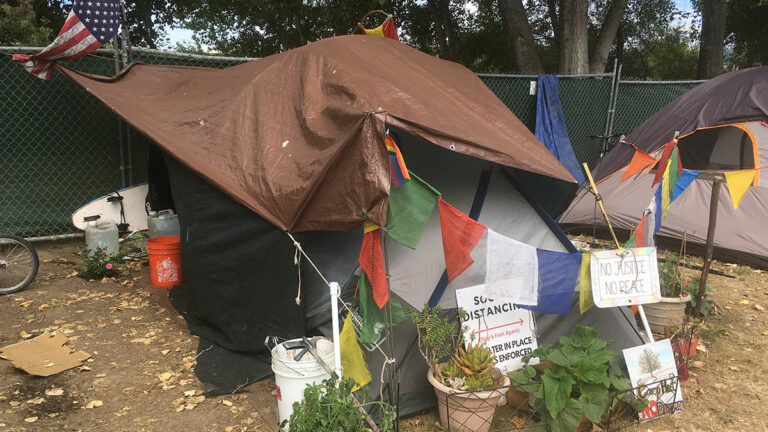
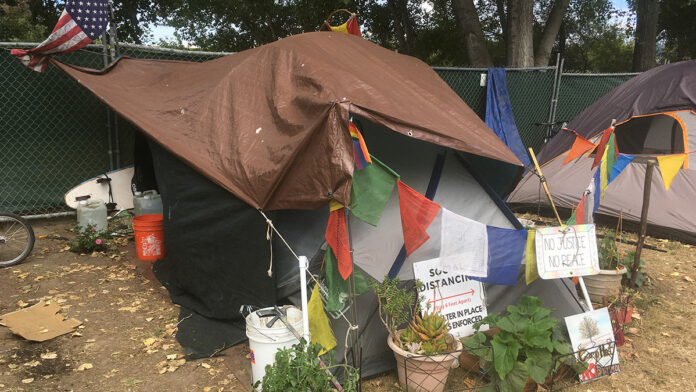
It was three years ago now that the first large-scale encampment popped up on the San Lorenzo Park Benchlands—in the shadow of the Santa Cruz County Government Center and above the banks of the San Lorenzo River.
The camp both started and grew with the blessing of Santa Cruz city leaders, including Police Chief Andy Mills. At the time, however, Coastal Watershed Council (CWC) Executive Director Greg Pepping told me he thought the camp had negative environmental consequences and that it ran counter to efforts to activate the levee path system, known as the San Lorenzo Riverwalk. “Maybe this encampment is the right idea, but it’s in the wrong place,” Pepping said in 2017.
In the three years since, Santa Cruz has seen plenty of similar encampments in the San Lorenzo River watershed, including a controversial camp behind the Ross department store in early 2019 and another short-lived one toward the end of the year. Now, there is a managed camp—overseen jointly by the city and county—in the same spot where the old Benchlands camp once was. Additionally, there are unmanaged homeless camps on the Riverwalk and along the banks of the river itself as well.
We recently checked in with Pepping to see what he thinks of the current encampments, what has changed in the past three years, and what hasn’t.
When we spoke in 2017, the initial Benchlands encampment had only been around for a little more than a month. Do you remember how you felt at the time?
GREG PEPPING: For that first one, I thought it was not the place for people to camp. My thoughts have evolved on it a lot.
How has your thinking changed?
I realized that, as a community, we don’t have any solutions for meeting people’s needs. Not complete solutions, anyway. So parks are a part of the solution, I think. We were totally against it, and now we see parks as a possibility when they are managed well. Managed camps are the key, meaning people’s needs are met.
That current managed encampment on the Benchlands is fenced in. It has bathrooms and other facilities. So is that one going well from your perspective?
I toured it recently. It’s an excellent example of meeting people’s needs and using a park to do so.
What about the other camps—the ones along the levees, for instance, and closer to the river and near the Soquel Avenue bridge?
Those are not managed from what I can see. There are no sanitary services. There’s not trash pickup that seems to be working. It’s a very different situation. The managed camp meets people’s needs and protects the river. It’s not either/or. It’s not people or the river. That managed camp is an example of how we can balance these things.
What negative impacts do unmanaged camps have on the environment?
Trash, needles, people relieving themselves in the river. I’m careful not to criminalize homelessness, but sometimes there’s really aggressive behavior when people are allowed to do whatever they want right on the path or right down by the river.
How does that aggressiveness manifest itself? Why is it bad?
And I’m talking about the aggressiveness of some people. Last week alone, five different people—donors, volunteers, people who walk the river—told me they felt threatened by those sitting on the path. And these aren’t people who look down on people experiencing homelessness. Five different people told me they were uncomfortable and might not come back to the river. It’s a public path. And we don’t have a solution for homelessness. I hope we can keep a bike and pedestrian path open for everybody, not for a few people.
What about the Ross Camp last year? Leaders of that camp indicated it had some level of internal structure, and it gave homeless people a sense of community, but there was certainly dysfunction as well—including litter impacts and a decent amount of controversy. What did you think of how that saga played out and wrapped up?
That was quite a mixed bag, because it was unmanaged, and then there was an attempt to manage it, and then there was a legal battle. So there’s a lot to say around that one. It seemed to me that the city and the county learned a fair amount on jointly operating that type of operation. What CWC asks for is that, where there’s a campsite, the city and the county communicate on who’s doing what. And we ask that the neighborhood and the environment be protected from the impacts of the campsite. And we ask that there be a limit to the scope of it—that the footprint be limited, so we know what’s the campsite and what’s not.
You recently wrapped up a four-year term on the Santa Cruz Planning Commission. What role can the city or the county play in reducing homelessness?
That’s a pretty hard question to answer in a soundbite. We need a long-term strategy, and we need to take immediate steps, so it’s a combination. The main thing that I keep saying is that it’s a false choice to choose between protecting the environment and meeting people’s needs. It’s a false choice to choose between people and the river. We can protect the river and meet people’s needs.
Do you have anything to add?
We’re really striving to be an environmental organization that shows that we appreciate human beings. We honor the dignity of people experiencing homelessness. We say ‘hi’ to people camping by the river. We think about their perspectives. I try very hard to make sure, when I’m sticking up for the river, that I care about people and that people get that. That’s one piece that I try to make sure comes through. Again, I don’t think it’s either/or.
The other thing is that we—as a community, as residents asking the city and the county to solve these problems—need to remember that we’re part of the solution. And the city doesn’t have a homelessness budget or a homelessness department. The city does public safety. And the county does mental health and public health and environmental health. So it is a joint effort. That fenced-in camp in the Benchlands is a county operation in a city park. Now, not all substance abuse and mental health is related to homelessness, but unfortunately some of it is. All substance abuse and mental health issues in the city are county issues. All of this stuff requires city and county cooperation. It really is an opportunity for local leaders to demonstrate how they can work together. And even then, it won’t be easy. So I just try to remind myself—and others—who has the budget here and who has the leadership opportunity and how it’s a shared one. I always try to convey that complexity to people.
The Santa Cruz Warriors’ season ended more than seven months ago—cut short due to the Covid-19 pandemic—but the NBA G League franchise has found different ways to score points in Santa Cruz County.
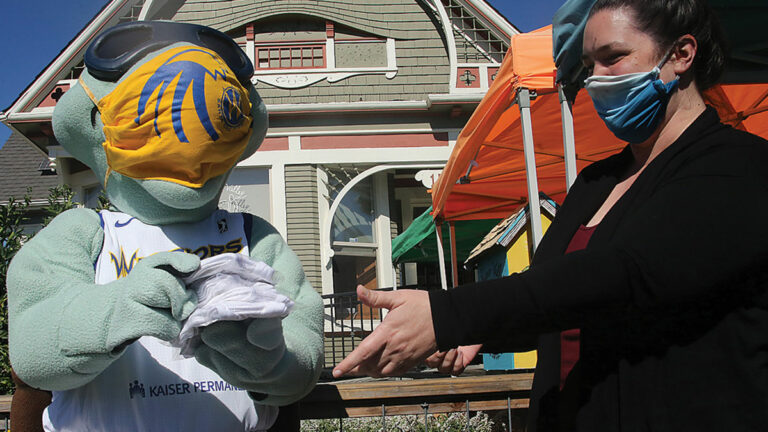
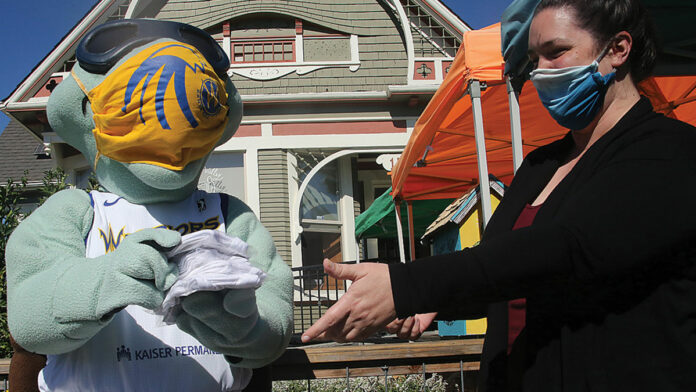
Team mascot Mav’Riks dropped off a special delivery of 2,000 masks to Pajaro Valley Loaves and Fishes in Watsonville on Oct. 12.
The Warriors distributed more than 7,000 masks in total, provided by the Muslim Coalition for America, to six community organizations serving vulnerable populations most affected by the novel coronavirus in Santa Cruz County. Other spots include the Boys and Girls Clubs of Santa Cruz County, Digital NEST at Cabrillo College in Watsonville, CASA of Santa Cruz County, and the United Way-Santa Cruz County.
Ashley Bridges, executive director at Loaves and Fishes, said the organization was grateful and excited that it was selected as a drop-off location for masks.
“I love when organizations partner with us, care about us and our clients and the people we serve,” Bridges said.
Bridges said Loaves and Fishes primarily serves two of the most vulnerable populations in the Pajaro Valley: farm workers and people who are experiencing homelessness. Thanks to the donation, she said, they now can replace dirty masks and provide new ones to people who can’t afford to purchase one.
“It’ll definitely help with the spread of Covid-19 and help with letting our clients know that we care about them,” she said.
Bridges said being able to have a mask supply for the demand has been a big deal for her personally. Loaves and Fishes is a small organization, so it relies on volunteers and donations to keep the place running.
“It means a lot to be able to give back, give what our clients need,” she said.
Founded in 1989 in response to the Loma Prieta Earthquake, Loaves and Fishes is a community-based organization dedicated to alleviating hunger among working poor families, farm workers, elderly, disabled and homeless individuals of the Pajaro Valley.
The Golden State Warriors partnered with the Muslim Coalition for America, a national non-partisan organization led by American Muslims, to support vulnerable communities and disadvantaged children around the Bay Area.
“It was no question that it was something we saw as a great collaboration and partnership,” said Yoyo Chan, Golden State Warriors vice president of government and community relations.
Chan said they’ve been working to distribute masks in Watsonville and other parts in Santa Cruz County for populations that have been disproportionately impacted by Covid-19. She said they heard there was a big need for personal protective equipment along with food.
“With all of the wildfires that have happened, we know that this is a very vulnerable time for the Santa Cruz County community and we’re just doing everything we can to make sure we can be there as neighbors,” Chan said.
Omar Qudrat, founder and chairman of the board for the Muslim Coalition for America, said it is undisputed that face masks slow down the spread of Covid-19. But coupling a state mandate to wear one can be an economic burden for disadvantaged families and the homeless population.
“We felt like everyone deserves a chance at being safer and our focus is our most vulnerable populations,” he said. “We want to make sure that anyone who wants to have a mask can access one regardless of having to deal with costs and so forth.”
Qudrat said Golden State’s involvement with communities and their impact missions are impressive. He said partnering with an NBA franchise was fortunate because the Warriors have the ability to execute an unprecedented social impact mission such as the masks distribution.
Quadrat also mentioned it is organizations such as Loaves and Fishes that are doing the hard work and have the access to the communities.
“Our goal is to deliver masks to the most vulnerable populations hit hard by Covid-19 in the Bay Area and surrounding,” he said.
The Watsonville City Council approved changes to the city’s rules on accessory dwelling units (ADUs) in hopes that those modifications will produce additional and safer housing options.
Spurred by more than a half-dozen state laws approved over the past three years, the changes limit parking requirements, reduce the application review time and remove impact fees for smaller ADUs.
An ADU is an additional living unit on a property that is detached from a home. It can also be a garage that has been converted into a living unit. A living unit created within the walls of a proposed or existing single-family residence is a Junior ADU (JADU). The latter must be 500 square feet or less, and both must have an entrance independent of the primary home.
The California Department of Housing and Community Development says ADUs are low-cost projects that can provide an additional dependable source of income for homeowners and help house seniors, young people, small families or friends that are looking for cheap, no-frills housing.
While most of the changes passed at Tuesday’s meeting are mandated by the state and have already been in effect since the start of the new year, some Watsonville-specific changes were included in the rewrite of the municipal code. Maybe the most significant of the local additions: a 50% discount on building fees for residents looking to legalize ADUs that were illegally built before Jan. 1.
Councilwoman Trina Coffman-Gomez was unwilling to accept that half-off offer because city staff was unable to provide the council with an estimate for how much revenue the city would miss out on because of that deal. She had concerns that the city would be responsible for subsidizing several thousands of dollars—at the very least—of work on private property.
Her motion to accept the changes except for the 50% discount—she instead wanted the city to pursue a deferred payment method—failed 4-3, with Mayor Rebecca J. Garcia and Council Members Francisco “Paco” Estrada, Aurelio Gonzalez and Felipe Hernandez voting “no.”
The changes as recommended by city staff were approved 5-2, with Coffman-Gomez and Ari Parker dissenting.
Hernandez said the discount was a necessary incentive to persuade property owners who have constructed illegal and unsafe ADUs to come forth and legalize their units.
“This is about creating safe and livable housing stock,” Hernandez said.
Gonzalez agreed with Hernandez but had concerns that the legalization of illegal units could lead to mass evictions of individuals and families currently living in those unsafe units.
“We have to have a plan for this,” Gonzalez said.
Community Development Department Director Suzi Merriam said she did not know how many illegal ADUs were in the city limits. But, according to a staff report from the July Watsonville Planning Commission meeting, between July 2019 and May 2020, her department received complaints about 70 illegally constructed ADUs, 90% of which the city confirmed were constructed without proper permits.
Councilman Lowell Hurst and Councilwoman Parker both had concerns about the effects ADU construction would have on their districts. Hurst said the new ADU rules would indeed help increase the city’s housing stock, but worried that the city did not receive enough public input on the topic.
“There’s going to be a lot of fallout for this,” he said. “Some of it good, and some of it not so good.”
Parker said many of the changes passed down from the state—especially the easing of property line setbacks and parking restrictions—would “alter neighborhoods” in District 7. She said the new rules do not take into account small communities that are already struggling with high-density housing situations such as Watsonville.
“The quality of life is going to go down here in Watsonville,” she said.
The city had not updated its rules on ADUs since 2003.
Under the new rules, ADUs are allowed in most residential areas, have a height limit of 28 feet and must meet a minimum 4-foot property line setback. Conversions of an existing structure, however, are not required to meet setback requirements so long as they do not exceed the 16-foot height limit.
Owners of properties with 10,000 square feet or less are allowed to construct one ADU of varying size (850-1,200 square feet) and maximum bedrooms (1-3 bedrooms). Owners of properties that are 12,000 square feet or greater are allowed to construct one ADU of 1,200 square feet and a maximum of three bedrooms, or two ADUs of 750 square feet and two bedrooms.
A maximum of one off-street parking space is required for every ADU, though that can be waived if the project meets certain criteria such as its proximity to public transit.
Impact fees can, too, be waived if an ADU is 750 square feet or less, and separate utility connections are not required for an ADUs under 800 square feet. Removing impact fees could save developers thousands of dollars, according to Watsonville Associate Planner Ivan Carmona.
Merriam said the city’s Housing Division is looking into creating a loan program for property owners interested in building an ADU.
Check back here for continuing coverage of the CZU Lightning Complex fire, and find more in-depth coverage here. The most recent updates are added at the top.
Oct. 14, 2:45pm: PG&E power shutoffs coming; county outlines new assistance options
Pacific Gas and Electric company is planning for a widespread Public Safety Power Shutoff that will affect numerous Northern California counties, including Santa Cruz County.
According to the company, power shutoffs are likely Wednesday evening between 8-10pm, with more than 6,000 local customers potentially impacted. Full restoration is expected Friday, Oct. 16 at 10pm.
Dry fuel conditions and anticipated high winds have placed parts of Santa Cruz County at critical risk for fire, and a Red Flag Warning is in effect.
The scope of the shutoff includes part of the Summit Area between Castle Rock State Park and the upper Corralitos area and the upper San Lorenzo Valley, including parts of Boulder Creek. (A previous notice also included the Davenport/Swanton Road area, but that region was subsequently removed from the warning.)
PG&E is establishing several Community Resource Centers in the area, allowing residents to charge devices including communications and medical equipment. The Centers will open from 5-10pm today, and from 8am–10pm thereafter through restoration.
St. Michael’s Church, 13005 Pine Street, Boulder Creek
Highlands Park, 8500 Highway 9, Ben Lomond
Enterprise Technology Center, 100 Enterprise Way, Scotts Valley
GOVERNMENT ASSISTANCE AVAILABLE
Government agencies are reminding victims of the CZU Lightning Complex fire that there are many forms of assistance available.
The FEMA Individuals and Housing Program is available to all eligible renters and homeowners in Santa Cruz County who suffered losses during the fire. Federal funds may help pay for temporary housing and other needs not covered by insurance, FEMA noted in a press release. The initial rental assistance is for two months and may be reviewed for continuation.
Renters may also qualify for an award under FEMA’s Other Needs Assistance Program for essential personal property and other disaster-related expenses. That includes replacement or repair of personal property such as furniture, appliances, clothing, textbooks or school supplies; replacement or repair of tools and other job-related equipment; vehicle repair; and medical and dental bills.
People looking for assistance or who have questions about submitted applications can visit disasterassistance.gov, download the FEMA app to a smartphone or tablet, or call the FEMA Helpline at 800-621-3362 (TTY 800-462-7585). Multi-lingual operators are available. The toll-free lines are open 7am to 10:30pm daily.
Through Oct. 22, Disaster CalFresh food benefits may be available to victims of the fire. People who might not otherwise qualify for CalFresh benefits may qualify for Disaster CalFresh, according to a county press release.
Santa Cruz County residents can learn more about eligibility and apply online at mybenefitscalwin.org or call 1-888-421-8080 between 7:30am-5pm, Monday-Friday. Paper applications can also be dropped off at 18 W. Beach St., Watsonville, or 1020 Emeline Ave., Santa Cruz, between 8am–5pm, Monday-Friday. Additional information is available at cdss.ca.gov/disastercalfresh1.
Oct. 8, 4pm: Assistance deadlines extended; wineries help each other recover
The federal government extended the deadline to Nov. 21 for individual assistance and small business assistance for victims of the CZU Lightning Complex fire, Santa Cruz County said in a press release.
Registering for disaster assistance through the Federal Emergency Management Agency (FEMA) can make individuals and families eligible for a range of assistance programs, “including rental assistance, essential home repairs, personal property losses and other serious disaster-related needs not covered by insurance,” the county said.
Learn more and apply at disasterassistance.gov, by downloading the FEMA app to a smartphone or tablet, or by calling the FEMA Helpline at 800-621-3362 (TTY 800-462-7585) between 7am and 10:30pm.
The Small Business Administration has a Virtual Disaster Loan Outreach Center for homeowners and renters, open daily 5am to 5pm. Email FO************@*ba.gov or call 800-659-2955 for help with SBA’s disaster loan program and application process.
The county has detailed information on the fire recovery process, including rebuilding, hazards and cleanup, at santacruzcounty.us/firerecovery.
Wineries were just one type of business affected by the CZU Lightning Complex fire: Five wineries including Big Basin Vineyards, Beauregard Vineyards, Hallcrest Vineyards, and McHenry Vineyard were in or near evacuation zones. In the cover story of this week’s Good Times print edition, Santa Cruz Mountains winemakers share how they are helping each other through the fire, smoke and many challenges that have made for one of the strangest harvests in memory.
Sept. 28, 4pm: County lays out feds’ environmental debris removal plan
A fire broke out in Wilder Ranch on Sunday, and after a few aerial attacks crews were able to contain it to just one acre.
This week, environmental health experts are starting their debris removal and cleanup, an important step in the recovery process for residents impacted by the CZU Lightning Complex fire.
Beginning next week, crews from the U.S. Environmental Protection Agency (EPA) will begin cleaning up household hazardous waste in the CZU Lightning Complex burn area. Removing hazardous waste protects the health and safety of residents and the environment, and federal officials are doing it at no cost to property owners.
Phase I debris removal will take several weeks, and include the removal of everyday products like paints, cleaners, solvents, oils, batteries, herbicides, pesticides, and pressurized fuel cylinders. Crews will identify weapons, ammunition and other dangerous materials for the Santa Cruz County Sheriff’s Office for further processing.
The EPA’s various crews, equipment and vehicles may cause traffic delays. Crews wear white protective clothing and are clearly identified as EPA team members, including carrying identification. They’ll never approach residents individually for special access or to solicit goods or services.
EPA’s Phase I Status map will be coming soon to the county’s fire recovery page, santacruzcounty.us/FireRecovery.aspx. Completed properties will display a white EPA placard and be noted on the Phase I Status map. Once properties are completed, property owners will be eligible to move into Phase II debris cleanup. Property owners may choose a public option or pursue private debris removal, which includes removal of ash and fire-related debris. Both require prior approval of the Santa Cruz County Environmental Health Division.
Sept. 24, 12pm: CZU fire fully contained, but challenges remain statewide amid record-breaking fire season
The CZU Lightning Complex fire is 100% contained, Cal Fire’s San Mateo-Santa Cruz Unit announced Tuesday evening.
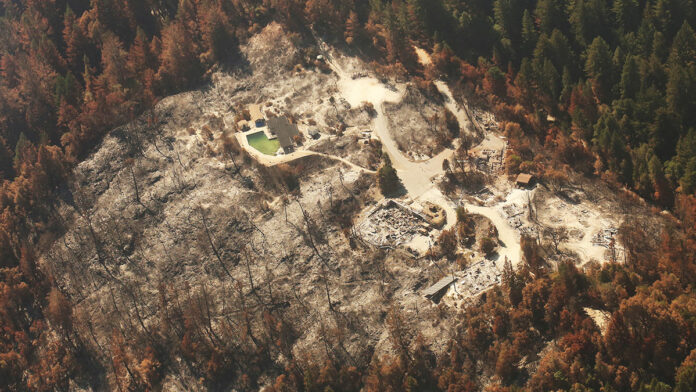
All told, the fire destroyed 928 homes and damaged 90 others. In total, it destroyed 1,490 structures and damaged 140 more.
The local Cal Fire team released a video expressing gratitude for all the thank you letters they received from the community.
GRATITUDE: We received hundreds of "thank you" cards, and now that the #CZULightningComplex is 100% contained, we thought we'd share with you how much your words have meant to us. ? pic.twitter.com/g67qOdjxWT
For a window into how fires affect those who lose their homes, see News Editor Jacob Pierce’s story on the county’s climate refugees.
Cal Fire announced Wednesday that there was a fire in Zayante, but crews contained it to a quarter of an acre. Investigators are looking into the cause.
The August Complex, the largest fire in California history, is currently burning in Mendocino County and in five other counties. Five of the six biggest-ever wildfires have burned this summer. All seven of the largest wildfires in state history burned within the last seven years.
The CZU Lightning Complex was the 11th-most destructive wildfire in state history. Three of the fires on that list that created more damage also started this past summer.
Sept. 18, 1:30pm: Fire nearly fully contained; county clerk lays out voting procedures for evacuees
Firefighting crews have contained 97% of the CZU Lightning Complex fire, and it’s been two weeks since the fire grew in size, after burning 86,509 acres.
Cal Fire’s San Mateo-Santa Cruz unit continues to lift and modify evacuation orders. Most recently, the agency lifted all remaining evacuation orders for San Mateo County.
Earlier this week, the Santa Cruz County Board of Supervisors voted to move forward with plans to streamline rebuilding in the burn area, where the fire destroyed more than 900 homes. Also, Fire Chief Ian Larkin warned the board about the severity of risk from coming mudslides and debris flows, especially once the year’s rains start.
Also, the county announced that it will stop accepting donations related to fire relief at 4pm today. Community members donated at least 20,000 cases of water, 2,500 blankets, 2,000 sleeping bags and pillows, 1,200 tents, and 1,000 tarps.
At the height of the evacuations, the Santa Cruz Office of Emergency Services was running seven shelters locally. Now, the American Red Cross is managing the only remaining shelter at the Santa Cruz County Fairgrounds, where FEMA has established a presence and campers are negotiating a bureaucratic maze, as they apply for assistance and try to move back home.
Sue Child, a registered nurse from southern California, has been working at the shelter, where she says guests are grateful but the days can be hard. “You’ve got some that are really down, and some that are very optimistic, and it can flip-flop day to day,” Child said.
Voters displaced by the CZU Lightning Complex do not need to re-register to vote. They can fill out a change-of-address form on the County Elections Department’s website at votescount.us. The mailing address can be a place of work, the home of a family member or friend, or a post office box. Residents may also go to an in-person location to get a ballot or sign up to receive a ballot via email. “Ballots cannot be forwarded,” Pellerin explained in a press release.
Sept. 10, 4pm: Containment grows slowly; water quality issues persist
Although the CZU Lightning Complex fire is only 84% contained as of this morning, the fire has stopped growing. The size of the burn zone has been at 86,509 acres for a full week now.
But as fires continue spreading across the state, the number of personnel at the local fire has dropped. There are currently 810 firefighters at the CZU Lightning Complex. Cal Fire continued to lift and reduce evacuation restrictions in the Boulder Creek area yesterday. Other parts of San Lorenzo Valley, Bonny Doon and the Swanton Road area remain closed.
Santa Cruz County Chief Sheriff’s Deputy Chris Clark told reporters yesterday that if anyone needs to enter the evacuation zone to assess their property or bring in an insurance adjuster, they should call the sheriff’s office at 831-471-1121. “We’ll set up an escort for you,” he said.
Clark said 510 customers in the San Lorenzo Valley Water District are on a do-not-drink order and 271 customers are without water service.
Water quality issues could extend beyond the San Lorenzo Valley. On Tuesday, Santa Cruz Water Director Rosemary Menard warned the Santa Cruz City Council that the ashy debris from the fire could cause contamination problems in the city’s water supply over the months to come. Menard said the city is working on restoration efforts before the rainy months to mitigate those challenges.
The Cabrillo College shelter site for fire evacuees has closed. The Santa Cruz County Fairgrounds shelter is still open.
The smoke in the greater San Francisco Bay Area made national news this week, with many comparing the fire-red skies to the 2017 Blade Runner movie reboot. The smoke came from fires around the state that was trapped above the marine layer locally.
Wildfires have now burned two million acres this year, a Cal Fire spokesperson told the Associated Press on Monday, making 2020 the worst fire year on record since the state first started keeping track in 1987. Historically, September and October are often the worst months of the year, when it comes to fire damage.
Sept. 4, 11am: Some Bonny Doon residents return home as county surveys damage
Having burned 86,509 acres, the CZU Lightning Complex fire has destroyed 1,490structures, including 928 homes as of this morning. With 1,777 personnel now on the scene, firefighters have contained 56% of the fire.
Currently, 8,221 residents are evacuated—down from a high of 77,000. Portions of Bonny Doon saw evacuation orders lifted yesterday. Last night, local Cal Fire Chief Deputy Jonathan Cox and Santa Cruz County Deputy Chief Chris Clark told reporters that efforts are shifting from firefighting to recovery and repopulation.
“We understand how frustrating that is for folks—displaced from your homes and then wondering when you’re going to get back home,” Clark said.
He said the sheriff’s office is working with PG&E, Cal Fire and the Department of Public Works on repopulating areas that were most affected by fire. That includes making road repairs, removing debris and making sure fires are fully extinguished. As Santa Cruz Mountains residents move home, Clark encouraged them to look around their properties to make sure they don’t see any smoldering materials that could reignite.
It could be three weeks before PG&E restores energy, Clark said. He explained that he and his colleagues have been hearing from mountain residents who have lived without power before and are ready to move home. Many of them have generators, he added. He indicated that the sheriff’s office may allow some residents to return before PG&E fully restores power.
Water infrastructure suffered serious damage in the CZU fire, including in Davenport and Boulder Creek. As GT reported yesterday, the San Lorenzo Valley Water District elaborated on its do-not-drink order for many Boulder Creek residents, as well as efforts to restore water service to affected customers, in a community Zoom meeting.
There are other kinds of damage in the burn zone as well.
Santa Cruz County Public Works Director Matt Machado said the county has submitted an initial damage assessment to the state and listed out damage totaling $340 million, including $310 million to homes and other buildings on private property. He said the county will update the assessment several times. The state Office of Emergency Services and FEMA, he said, are reviewing documents now to begin approving debris removal and restoration projects.
After yesterday’s press conference, Machado told GT that the fire destroyed 400 street signs, which the county is working on replacing.
“We’re probably going to do a lot of temporary signs because it’s just a huge effort to get them all permanently,” he explained. “We think that all the critical ones will be up in the next couple weeks as we repopulate. Then we’ll go back and do full restoration as we can.”
Public works is additionally working on fixing two bridges—one of which was fully destroyed—and three culverts on Swanton Road.
With the repopulation of some areas, the Santa Cruz County Emergency Operations Center (EOC) is now shifting attention to the needs of people who have been displaced from their homes.
Shelter population has declined by more than two-thirds since the repopulation process began, said Santa Cruz County spokesman Jason Hoppin. The EOC started the wind-down process at the Congregational Church of Soquel, the Coastlands Aptos Foursquare Church, Twin Lakes Church in Aptos and Santa Cruz Civic Auditorium.
Shelter sites remain open at the Santa Cruz County Fairgrounds in Watsonville, Seventh Day Adventist Conference Grounds in Soquel, Cabrillo College in Aptos, Harbor High School in Santa Cruz, and Simpkins Family Swim Center in Live Oak. The county is now in the process of transitioning shelter operations at those spots to the American Red Cross.
The Recovery Resource Center at Kaiser Permanente is offering about 20 resources under one roof, including services from the state DMV, FEMA, CalOES, Red Cross, Cal Fresh, County Environmental Health, Friends of County Parks and a list of federal, state and local agencies and nonprofits.
Sept. 2, 10am: A do-not-drink order, a look at the Grand Jury’s report, and more
As of this morning, the CZU Lightning Complex fire has burned 85,467 acres and destroyed 1,490structures, including 928 homes. With 2,224 personnel now on the scene, firefighters have contained 46% of the fire.
The Santa Cruz County Sheriff’s Office has continued lifting evacuation orders for the San Lorenzo Valley. However, the San Lorenzo Valley Water District (SLVWD) has a do-not-drink order in place for communities north of Alba Road. For the latest on SLVWD water quality, visit slvwd.com. For the latest on evacuations, visit community.zonehaven.com or monitor the social media pages for Cal Fire CZU or the Santa Cruz County Sheriff’s Office.
This week, GT revisits a local Grand Jury report that warned in July of serious wildfire risk and cautioned that fire agencies and homeowners might be unprepared. We also cover the strain that the dueling crises of the pandemic and a wildfire are having on local service providers.
Two New York Times writers profiled Tad Jones, a Last Chance resident and the only known victim of the CZU Lightning Complex fire to date. Jones, who lived without electricity or plumbing, took a vow of silence that lasted decades. He delighted in feeding quail, peacocks, blue jays and foxes, the Times reported. Jones’s sister described the animals as being some of his closest friends.
The story documents how many other Last Chance residents barely escaped with their lives, with little warning from fire officials. “They left us for dead,” said Ian Kapostins, a Last Chance resident.
On Tuesday, Reuters covered an emerging trend in the Santa Cruz Mountains and other places: Wealthy people are paying for private fire brigades—among the ways the wealthy insulate themselves from natural disasters. One such firm charges $300 to $5,000 per hour, depending on the job. “What bothers me is the inequities—what kinds of people will get help—when public resources are stretched thin,” said Char Miller, a professor of environmental history at Pomona College in southern California.
Also, Santa Cruz County Sheriff’s Office Chief Deputy Chris Clark announced Friday that deputies had arrested a suspect in connection with a pipe bomb found in Boulder Creek.
Lastly, the Santa Cruz County Emergency Operations Center has announced a hotline for evacuees utilizing the free hotel program managed by the state of California and supported by FEMA. CZU Lightning Fire Complex evacuees may call 831-454-2181 for assistance in the following areas:
General program questions
Current evacuees not yet placed at a hotel and applying for the program
Evacuees already placed at a hotel calling to renew their seven-day reservation if they are within 24 hours of their reservation’s check-out date
Aug. 31, 10am: Central Coast, Bay Area fires have leveled more than 1,500 structures
Five major fire events throughout the Central Coast and Northern California have destroyed at least 1,509 structures, various Cal Fire units announced Sunday morning.
The SCU Lightning Complex, the River Fire, the Carmel Fire, the CZU Lightning Complex and the LNU Lightning Complex have chewed through 892,313 acres across 15 counties. There have been 14 injuries and six deaths. The fires have also forced tens of thousands of residents to evacuate their homes over the last two weeks.
Several of those evacuation orders had lifted by Saturday. All Monterey County residents ordered to flee their properties because of the River and Carmel fires were allowed to return home, as firefighters continued to make headway in both of those battles.
Many residents on the outskirts of the SCU fires have also returned home. But the heart of the 377,471-acre fire event near a mesh point of Santa Clara, Alameda, Stanislaus and San Joaquin counties remained off-limits. That complex is the second-largest fire event ever recorded in the state’s history—it has swapped positions with the ongoing LNU Lightning Complex burning in Napa, Sonoma, Solano, Yolo and Lake counties over the last week—and has scorched mostly uninhabited land.
That has not been the case with the CZU Lightning Complex. That fire has charred 84,640 acres as of Sunday morning and flattened 1,177 structures—nearly all of them in Santa Cruz County. That includes at least 726 residences, the majority of them in and around the Santa Cruz Mountain towns of Boulder Creek and Bonny Doon. The county of Santa Cruz created an interactive damage assessment map to track the devastation.
Those numbers, which Cal Fire has said will continue to increase as it pushes further into the fire zone, make it the ninth-most destructive fire ever recorded in the state. The LNU fire is 10th.
Watch Cal Fire’s video here for an explainer of how they inspect the status of buildings.
Santa Cruz County on Saturday opened the Kaiser Permanente Arena—the home of the Santa Cruz Warriors—as a resource center where county residents impacted by the fire can find assistance from federal, state and local agencies and various nonprofits. That center at 140 Front St. in Santa Cruz is open daily from 11am to 7pm.
Residents and business owners impacted by any California wildfire are also urged to register with the Federal Emergency Management Agency and the U.S. Small Business Administration to receive federal disaster assistance.
Disaster survivors who are deaf, hard of hearing or have a speech disability and use a TTY may call 800-462-7585 to register. Those who use 711 or Video Relay Service or require accommodations while visiting a center may call 800-621-3362.
Some residents of Santa Cruz and San Mateo counties were allowed to repopulate in recent days. The local Cal Fire unit has lifted fire evacuation orders for the UCSC campus, the city of Scotts Valley, Lompico, Zayante and eastern portions of the San Lorenzo Valley. Many of the areas of San Mateo County affected by the fire evacuations have also been allowed to repopulate.
Aug. 28, 7:30am: Number of structures lost continues to climb; Scotts Valley evacuees return
The CZU Lightning Complex fire has now destroyed 799 structures, all but 11 of them in Santa Cruz County, investigators have found. Of those, 554 were residences.
Those numbers are likely to continue to grow. Local Cal Fire Chief Deputy Jonathan Cox said Thursday that investigators had only covered 65% of the burn area. Cox added that a tree fell on a structure yesterday and destroyed it—a reminder, he said, of how unsafe the area continues to be.
The size of the CZU Lightning Complex is now only slowly increasing, having burned 82,540 acres, and it is 26% contained. It now threatens 13,300 structures, Cox told reporters. That’s a decline of 45% since Monday.
Cal Fire lifted evacuation orders for residents of Scotts Valley, Paradise Park, Pescadero and La Honda. Another 52,000 residents remain evacuated. Currently, 2,019 firefighting personnel are on the scene.
Other updates:
Operations Section Chief Mark Brunton told reporters last night that a foggy marine layer helped with the firefighting effort on the ground Thursday morning, but it also stopped aircraft from attacking the blaze. Once the sky cleared up, Cal Fire started flying six water-dropping helicopters over the fire.
Brunton said the coastal vegetation is especially scorched along Highway 1—more so than in any other area. “It’s very noticeable once you drive up Highway 1 and look up. And, definitely from the air, you can see quite a bit of destruction to that area of the vegetation,” he said.
Although the fire has extended into portions of Boulder Creek, Brunton said that much of the fire is staying high up on the ridge between Bonny Doon and Ben Lomond. One challenge, he explained, is managing “rollout,” where burning trees and other material starts tumbling down hill.
Brunton said it’s possible, however, that some San Lorenzo Valley residents may be able to reenter their homes before crews fully contain the fire along the ridge.
Incident Commander Billy See said crews have a lot more work to do on clearing up the Highway 1 corridor, which also has debris rolling downhill.
Santa Cruz County Deputy Chief Chris Clark said firefighters discovered what appeared to be a pipe bomb near the Boulder Creek golf course. The sheriff’s bomb squad is investigating.
Local Cal Fire Chief Ian Larkin encouraged those curious about the state of evacuations to visit community.zonehaven.com.
Clark and Larkin both stressed that many steps go into repopulating an area that has burned. Those steps include making sure that the electricity and other utilities are up and running.
Additionally, fuels can stay hot for a long time. Larkin and other fire officials have said that crews will be keeping an eye on the burn zone for months to make sure it doesn’t reignite.
Aug. 26, 8pm: 579 structures lost; UCSC reopening; ‘rough’ timeline for lifting evacuations
The number of acres burned by the CZU Lightning Complex fire is up to 81,137, local Cal Fire Deputy Chief Jonathan Cox told reporters tonight.
So far, investigators have found that the fire destroyed 579 structures in Santa Cruz County. The number of structures lost in San Mateo County is still 11. Also today, firefighting crews expanded containment on the fire from 19% to 21%. The fire is threatening 24,000 structures.
Santa Cruz County Sheriff’s Office Chief Deputy Chris Clark told reporters that deputies cited a 73-year-old man who had evacuated and tried to make it back to his home in the evacuation zone. Clark said the man got lost on a mountain trail and spent two nights in the woods before officers found him. He said the sheriff’s office used 120 hours of officer time, an ambulance and a helicopter on the search-and-rescue effort. Additionally, one member of the search-and-rescue team suffered an injury.
Clark said detectives reduced the number of missing persons from six down to three. The three remaining local missing persons are 70-year-old Henry Reinke (last seen Aug. 20), 21-year-old Shane Smith (last seen Aug. 20) and 37-year-old Micah Szoke (last seen Aug. 15). Clark does not believe the three men are fire victims but detectives aren’t sure. “Hopefully, if you hear these names and you know ’em, you’ll either tell ’em to call us or you call us, which we’d greatly appreciate,” he said.
Clark gave a rough outline for when law enforcement will repopulate the evacuated areas. He said it would be “a day or days”—being intentionally vague about the timing—before Scotts Valley residents could return to their homes
“I say ‘day or days’ because things can change, and I don’t want to give anyone false hope, but I also want to give a rough framework,” Clark said.
He said it could be a week before officers allow Felton to repopulate. Residents of areas, like Boulder Creek and Bonny Doon, that are closer to the fire will be waiting more than a week, he added.
Incident Commander Billy See said the number of fire personnel grew by nearly 300 today. There are now 1,982 personnel working on the incident.
Local Cal Fire Chief Ian Larkin suggested that those who have suffered property damage do one of three things for assistance. They may visit disasterassistance.gov, download the FEMA app, or call 800-621-FEMA. Businesses that have suffered losses may contact the Small Business Administration.
Aug. 25, 7:30pm: 432 structures in Santa Cruz County lost as containment reaches 19%
The number of structures burned by the CZU Lightning Complex is up to 443, with all but 11 of them in Santa Cruz County, investigators have found. The other 11 are in San Mateo County.
The fire, now 19% contained, has burned a total of 79,640 acres.
Earlier today, Rep. Anna Eshoo (D-Palo Alto) rode with Sheriff Jim Hart to see the emergency operations center at the Santa Cruz County Sheriff’s Office and the evacuation center at the county fairgrounds. She praised the work of the sheriff’s office, Cal Fire, county agencies and the community. “These are first-rate professionals,” she told reporters. “The progress that’s been made is really quite remarkable.”
Local fire officials have lifted evacuation orders in Santa Clara County, although a larger fire in Santa Clara County continues to burn.
Operations Section Chief Mark Brunton says the control lines on the south of the fire are holding well and that the fire is not threatening the city of Santa Cruz.
Cal Fire has reported that, over the last 15 days, 1.28 million acres—an area bigger than the state of Delaware—has burned across the state of California.
Aug. 25, 9:45am: Fire 17% contained; 330 structures destroyed
The containment level of the CZU August Lightning Complex fire continues to increase, but so does the number of confirmed destroyed and damaged structures.
Cal Fire officials at a press conference this morning said the blaze in the Santa Cruz Mountains is now 17% contained and that it had only grown by roughly 200 acres overnight, for a total of 78,869 acres, or about 123 square miles.
Officials also said the fire has now chewed through 330 structures, 319 of them in Santa Cruz County and the rest in San Mateo County.
The majority of destroyed structures (246) were residences, Cal Fire said.
“That number is only going to increase,” Cal Fire Incident Commander Billy See said.
Cal Fire Operations Section Chief Mark Brunton said that there is no major firefront as of this morning. Though people might see flames or smoke creeping through areas of the mountains, Brunton said those pose no threat at this time.
“[The fire] is doing exactly what we want it to do,” he said.
Much of the fire that was moving toward Santa Cruz has been extinguished, and the community of Davenport was secure as of this morning, Brunton said. There is also no current threat to Felton.
Cal Fire has focused much of its resources in the Boulder Creek area. That includes six water-dropping helicopters that on Monday doused the flames with 200,000 gallons of water, Brunton said.
He said those efforts will continue today, as visibility has improved since the fire has started to smolder.
Santa Cruz County Sheriff’s Chief Deputy Chris Clark said his office has picked up three new missing person cases, and that Empire Grade in the Felton area is now “impassable,” underscoring the dangers of returning to the area at this time.
Otherwise, it was a “relatively quiet night,” Clark said. Deputies had 11 calls for service, six of them reports of suspicious people.
In neighboring Monterey County, firefighters were also making headway against the River and Carmel fires. The latter is now 33% contained and the former is 30% contained. Combined, they have scorched more than 55,000 acres in the Salinas and Carmel valleys.
Aug. 24, 8pm: Fire 13% contained; Highway 9 corridor still a challenge
The CZU Lightning Complex fire has now burned 78,684 acres, or some 123 square miles, and is 13% contained. It has destroyed 276 structures, the majority of them in Santa Cruz County, local Cal Fire Chief Jonathan Cox told reporters this evening. The blaze is still threatening an additional 25,000 structures.
Cal Fire has 1,609 personnel fighting the fire. Six helicopters dropped 200,000 gallons of water on the fire today, Cal Fire Operations Section Chief Mark Brunton said. The most challenging part of the fire response right now is the western slope along the Highway 9 corridor, which has a steep topography and a number of homes and businesses.
One person has died in the fire. CBS News reported that the fire victim found in the Last Chance Road area was likely trying to flee the area when he died. The victim was a 70-year-old man.
Meanwhile, 33 law enforcement officers, including sheriff’s deputies, were patrolling the San Lorenzo Valley today. Officers conducted 11 welfare checks, made two arrests and issued two citations, Santa Cruz County Chief Deputy Chris Clark said.
“If you’re in the evacuated area, you shouldn’t be there. It’s against the law. We understand and we empathize with someone’s desire to go there, but if you’re in the evaluated area, you’re going to get a citation,” Clark said.
Deputies previously arrested five looters Friday. More information came out about the suspect who stole a Cal Fire commander’s wallet over the weekend. The thief attempted to drain the victim’s bank account. Cal Fire released security camera stills of the suspect shopping at a Shell gas station in Santa Cruz. He also visited the Safeway on 41st Avenue, Clark said.
Action is underway across the county to help those in need during the fire, while heavy smoke has blanketed the region. Santa Cruz County is distributing N-95 respirator masks to Pajaro Valley agriculture workers to protect them from smoke inhalation.
A donation center on 114 Walker St. in Watsonville is accepting non-perishable food items, family-sized tents, sleeping bags, sleeping pads, blankets, pillows, tarps, and ice chests/coolers. People can also donate hand sanitizer, personal hygiene products, toiletries, large plastic storage bins, coloring books and crayons.
The donation center and temporary shelters are looking for volunteers, too. Visit scvolunteercenter.org for more information.
Aug. 24, 1pm: Fire not expected to reach city of Santa Cruz
The CZU Lightning Complex fire has burned 78,000 acres, or approximately 122 square miles, as of this morning, according to an update from Cal Fire. The fire is now 13% contained.
There were good opportunities to attack the fire yesterday, Cal Fire Operations Section Chief Mark Brunton said in a morning update. The video of that update includes a map and explainer of where firefighters are working to create control lines and suppress the fire. The fire has destroyed 176 residences, six commercial buildings, and 49 other structures. Some 77,000 people have been evacuated.
For the latest updates on services for evacuees or how to volunteer and donate, check out the Santa Cruz County twitter feed.
The Red Flag Warning that began yesterday and was expected to extend through this evening has been canceled after the storm system that prompted the warning weakened.
City of Santa Cruz Fire Chief Jason Hajduk said in a press release today that “crews have made great progress on securing line and containment on the southern end of this fire, which is what the threat was to our city. I am confident that the fire will not reach the city of Santa Cruz at this point.”
Still, given the unpredictability of fires, the city asked residents to help protect against fire threats by preparing their homes. Steps include bringing flammable materials inside and removing flammable vegetation.
Several local USPS offices have closed temporarily due to the fire. Any county residents who have had disruptions to their mail service are being directed to alternative mail pickup locations. Find more info here.
Aug. 23, 8:50pm: 74,000 acres burned, 163 structures destroyed
The CZU Lightning Complex fire has now burned 74,000 acres and destroyed 163 structures. Of those structures, 152 were in Santa Cruz County, and 11 were in San Mateo County. The fires in the complex have merged, and the incident is now essentially one big fire, although there have been a few very small spot fires outside the perimeter of the main fire.
There currently are 1,511 personnel, including firefighters, working on responding to the fire.
The Santa Cruz County Sheriff’s Office announced today that deputies recovered the body of a missing person in the Last Chance Road area. “I wish I could report on something positive, but I can’t,” Santa Cruz County Chief Deputy Chris Clark told reporters.
Both Clark and San Mateo County Sheriff’s Detective Rosemerry Blankswade warned of scammers who are looking to take advantage of others, amid the emergency. Some scammers have claimed to be fire victims and have called up locals asking them for money, they said.
Earlier this afternoon, Sheriff Jim Hart announced that he is increasing the number of deputies in the evacuated areas, and District Attorney Jeff Rosell stressed that suspects will be prosecuted. Deputies have arrested five looters.
Cal Fire officials briefly put today’s outdoor press briefing on hold and moved it inside because it was interrupted by a rain shower, a welcome sight.
Less favorable weather conditions could be on the way this evening, with the potential for heavy winds and more dry lightning—the same types of conditions that first created the fires that are burning throughout the region right now.
The second- and third-biggest fire events in California history are burning across various counties in the Bay Area.
The SCU Lightning Complex fire in the counties of Santa Clara, Alameda, Contra Costa, San Joaquin and Stanislaus is 10% contained, having burned 343,965 acres.
The LNU Lightning Complex in the counties of Napa, Sonoma, Lake, Yolo and Solano is 17% contained having burned 341,243 acres.
Aug. 23, 9:30am: Red Flag Warning goes into effect
CalFire officials said this morning the CZU Lightning Complex fires are now 8% contained.
Weather was on firefighters’ side yesterday as a marine layer moved into the Central Coast and wind died down. This allowed for more air support, including helicopters that bombarded the area with water drops.
“We had a really good success yesterday,” said Cal Fire Operations Section Chief Mark Brunton. “We were able to jump on it and accomplish a lot of our strategic priorities.”
However, officials are bracing for another challenge as a Red Flag Warning went into effect this morning.
Local meteorologists are anticipating the chance of possible thunderstorms, including dry lightning and strong winds with little to no rain in the next 24 hours.
Brunton said Cal Fire is doing everything it can to prepare for the upcoming weather.
“It will give us challenges, but we are ready to meet those challenges head-on,” he said.
Cal Fire San Mateo-Santa Cruz Deputy Chief Jonathan Cox said the blaze has now scorched 71,000 acres, and 129 structures have been lost. About 1,349 officials are now working on the fire, including out-of-state agencies.
The Santa Cruz County Sheriff’s Office Chief Deputy Chris Clark gave an update on what law enforcement agencies are doing to keep people out of the evacuation zones. Officers have been dealing with not only worried residents trying to get back to their homes, but some looting and suspicious activity.
Clark reported that a suspect had entered a Cal Fire’s ground commander’s vehicle and stolen personal items, including his wallet, and attempted to drain his bank account.
“It’s sickening to see people taking advantage,” he said.
Clark also warned residents about possible phone scams. Residents have reportedly been receiving calls from people claiming to be agencies such as PG&E, asking them to provide them with gift cards or transfer money.
“Do not do it,” Clark said. “If you get a call from any of those agencies … contact the agency directly, and confirm if it’s legitimate. I’ll tell you, 99.9% of the time it’s not.”
The sheriff’s office is also conducting welfare checks. They ask anyone who might be worried about someone to call 831-471-1121.
All Cal Fire officials at the press conference today urged people to leave the evacuation zones immediately, which will help firefighters tremendously in their continued efforts in battling the fire.
“The general public is still in the evacuation zones,” Brunton said. “If you’re in an evacuation zone, please leave. My firefighters need a safe environment to work …. Know that they will protect everything possible out there that they can.”
San Mateo County law enforcement officials at the press conference urged people to stop visiting the coast. Half Moon Bay beaches have been closed, but they say they have still seen a good amount of people traveling to the coast.
“We need to rally together, Bay Area,” one sheriff’s detective said. “You never know when this is going to be your town, your city, your homes. Please, don’t come to the beaches. Do not come to the coast.”
Aug. 22, 9am: Fires now 5% contained; firefight marks ‘big win’
Seven days into the battle against the CZU Lightning Complex fires, Cal Fire officials announced this morning that they were able to get their first “jump” on the growing blaze in the Santa Cruz mountains.
Although the fire grew overnight to 63,000 acres, or roughly 98 square miles, firefighters were able to increase containment to 5%.
Cal Fire Operations Section Chief Mark Brunton said firefighters were able to set up a “firebreak” between Highways 1 and 9 just above the UCSC campus and the city of Santa Cruz. He called it “a real big win.”
“It’s not the silver bullet there, but it gives us a really good stronghold, a control point in which to keep the fire from moving southward into those communities,” Brunton said.
The fires, however, did make runs to the west and southeast toward the communities of Davenport, Boulder Creek and Ben Lomond. A 5-acre spot fire also started in Felton, but firefighters were able to jump on it very quickly.
“Again, it shows the tenacity of this fire,” Brunton said. “That’s a long way from the fire’s edge.”
Cal Fire San Mateo-Santa Cruz Deputy Chief Jonathan Cox said the number of confirmed destroyed structures stands at 97, but Brunton said that there were additional structures lost overnight. That, he said, was going to continue until further resources arrived to help the 1,157 firefighters battling the blaze.
Firefighters across the state are stretched thin. More than 560 fires have sparked in California, charring more than 771,000 acres—an area the size of Rhode Island. That includes the SCU Complex fires that have burned 290,000-plus acres in neighboring Santa Clara County. Just south in Monterey County, the River and Carmel fires have ripped through nearly 50,000 acres combined.
Gov. Gavin Newsom said in a press conference Friday that additional resources would soon pour into California from neighboring states. He has also asked for mutual aid from Canada and Australia.
Cal Fire officials back in the Santa Cruz mountains said they received multiple calls for rescue from people who had not yet evacuated, including some false calls for rescue that Brunton said puts first responders in jeopardy. Responding to those calls “takes our plan and throws it out the window,” Brunton said.
“We ask that, unless it’s an actual rescue, please do not call,” he said. “And for those people who are in those areas, we [evacuated] for a reason.”
Aug. 21, 9pm: Looters arrested; fires span 57,000 acres, 2% contained, with crew sizes growing
Santa Cruz County Sheriff’s deputies on Friday arrested five people suspected of looting evacuated homes on Fall Creek Drive, a small community in the Santa Cruz Mountains near Felton.
Jose Gandarilla, Susana Luna, Crystal Araujo, Sara Loretz and Crystle Parstch-Lucchesi face numerous felony and misdemeanor charges. They were all booked into Santa Cruz County Jail in lieu of $100,000, jail records showed.
According to sheriff’s spokeswoman Ashley Keehn, deputies received a report of looters on Fall Creek Drive. Deputies attempted to stop two cars in the area. One stopped, but the other attempted to flee and ended up in a ditch, Keehn said.
“In no way are we leaving these areas unsecured,” she said. “We are doing our best and will continue to do our best and, if you come to victimize our community, you will see that.”
Sheriff’s Chief Deputy Steve Clark, who is serving as unified incident commander for the fire, said 60 law enforcement officials are patrolling the evacuation zone, looking for looters.
“There are people out there unfortunately who are looking to victimize people who have left and have been displaced,” Clark said. “It’s terrible and disgusting.”
The CZU Lightning Complex fires have now scorched 57,000 acres, and firefighters late Friday said they have the blaze 2% contained.
Firefighters reported favorable weather conditions, with cool temperatures, humidity and wind that kept some of the smoke at bay. Those conditions were expected to continue through Friday night.
Some 24,000 structures are threatened, and 97 have so far been destroyed, including several homes in the Riverside Grove neighborhood, three miles north of Boulder Creek.
The number of destroyed structures is expected to climb, as fire officials have more than doubled the number of damage inspection teams.
A total of 1,157 personnel are battling the fire, and two have suffered minor injuries battling the blaze. Detectives, meanwhile, are looking for two people who have been reported missing from the evacuation zone.
Ian Larkin, Cal Fire Chief for the Santa Cruz region, said that the fire—and the efforts to quell it—will be here for the “long haul.”
He also implored the community to stay away from the evacuated areas.
“If you are in the area and you don’t need to be there, please leave so we can do our job,” he said.
Also, the county health department is advising residents to keep an eye on air quality. Residents may monitor the local air quality at air.mbard.org. Those with a history of heart and lung conditions, in particular, should limit their exposure to smoke, including by staying indoors in rooms with filtered air, especially as the air quality reaches unhealthy levels.
The overlap of the Covid-19 pandemic with the fires has the potential to cause confusion.
Some symptoms, like dry cough, sore throat and difficulty breathing, can be caused both by wildfire smoke exposure and by Covid-19. More information about Covid-19 symptoms is available on the Centers for Disease Control and Prevention website.
Aug. 21, 1pm: Newsom addresses size of California fires
Gov. Gavin Newsom has announced that California’s firefighting crews are now trying to suppress 560 fires, most of them stemming from dry lightning strikes that first began Sunday, Aug. 16.
Statewide, 771,000acres—an area the size of Rhode Island—have burned over the past week.
“These fires are stressing our resources, stressing our personnel,” Newsom said during a press conference, regarding the LNU Lightning Complex fires that are burning in Sonoma, Napa, Solano, and Lake counties. Yesterday, Newsom was in Watsonville, where he gave his address for the Democratic National Convention.
Fire conditions may improve slightly as the weather cools, he said, but he also said the state could see more dry lightning, due to a new monsoon pattern.
As containment at fires in Southern California has improved, state officials have begun shifting crews to Northern California and to the Central Coast, where the fires are currently much worse.
Newsom thanked states that have provided mutual firefighting and equipment, including the states of Arizona, Nevada, Oregon, Washington, Idaho, Utah, Montana, and Texas. Those crews are on their way, he said.
Newsom mentioned that, on a trip through Santa Clara County yesterday, he saw San Jose firefighters as they made a pit stop. He said they looked wiped out when they told him, “We need more support.”
“They were simply overwhelmed by what they saw,” Newsom said. “They were on a quick stop. They were getting some gas and getting some drinks. And they said, ‘We’re just going to the hotel down the block. We’re taking a shower, and we’re told we have to get right back on the line.’”
Aug. 21, 9am: 50,000 acres burned; residents who didn’t evacuate need rescuing
Firefighters and law enforcement officers were pulled away for three separate rescue incidents to save residents who were trying to protect their homes while battling the CZU August Lightning Complex fires, which have now charred 50,000 acres, or roughly 78 square miles, as of Friday morning.
Cal Fire officials at a press conference this morning reiterated their calls for residents to follow evacuation orders.
“We ask, if you have been asked to evacuate, do not put yourself in that situation and do not put our first responders in that situation,” Cal Fire Operations Section Chief Mark Brunton said.
At least 64,000 people have evacuated, including Scotts Valley residents who were ordered to leave Thursday evening. UCSC was also ordered to evacuate Thursday.
Asked when residents can expect to return to their homes, Santa Cruz County Chief Deputy Chris Clark said it would not be any time soon.
“It could be weeks, depending on what this fire does,” he said.
The fire is still 0% contained, but Cal Fire officials said cooler nighttime temperatures and the return of a coastal marine layer are helping calm conditions. Crews are also getting relief from an influx of hundreds of additional firefighters, which bumped the total responding to the blaze up to more than 1,000.
Cal Fire San Mateo-Santa Cruz Deputy Chief Jonathan Cox said he expects the local crew sizes to continue to grow.
Fires centered in Santa Clara County and Napa County have each grown to more than 200,000 acres. Although those fires have been burning just five days, each has joined the list of the 10 biggest wildfires in state history.
The River Fire in Monterey County has grown to 39,464 acres. The Carmel Fire jumped more than 1,000 acres to 4,732. The River Fire is now 9% contained, while the Carmel Fire is still 0% contained.
Santa Cruz County said today that additional shelters have opened:
Santa Cruz Bible Church, 440 Frederick St., Santa Cruz. Room for 76 evacuees as well as parking.
Seventh Day Adventists Conference Grounds, 1931 Soquel-San Jose Rd., Soquel. (Full)
Congregational Church of Soquel (parking only), 4951 Soquel Dr., Soquel. Bathrooms available for evacuees.
Twin Lakes Church (parking only), 2701 Cabrillo College Dr., Aptos. Room for up to 50 cars and RV’s, bathrooms, water and food available.
Cabrillo College Lot K (parking only), 6500 Soquel Dr., Aptos.
Shelter at the Santa Cruz County Fairgrounds remain open.
Shelter at the Santa Cruz Civic Auditorium remains open but is full.
Aug. 20, 7:30pm: Fire burns 8,000 more acres; Scotts Valley evacuates
The CZU Lightning Complex fires grew by about 8,000 acres Thursday and are about 48,000 acres, local Cal Fire Deputy Chief Jonathan Cox said in a press conference this evening. The fire event is still 0% contained.
So far, Cal Fire has been able to confirm that 50 structures have burned, but Cox expects the full number to climb into the triple digits. The fires are threatening 20,900 more structures.
Law enforcement has now evacuated some 50,000 residents in Santa Cruz County and San Mateo County in response to the fires.
Some of the latest mandatory evacuations have included most of the city of Scotts Valley.
Evacuation warnings are in effect for UCSC and the Paradise Park community near Pogonip city park. Local fire crews have received additional personnel to assist with the firefighting. Operations Section Chief Mark Brunton said the fire threat has lessened around the coast, but the beachside town of Davenport is still threatened. Incident Commander Billy See said the weather conditions should be shifting to become more favorable—higher humidity levels and lower temperatures. But he said he was fearing a significant burn over the coming night, adding that this area often burns more at night, when the wind patterns change. Officials stressed that those who have evacuated should not yet go back to check on their homes.
Santa Cruz City Fire Chief Jason Hajduk released an announcement Thursday saying that city fire crews are battling the fires alongside other crews. He said that no Santa Cruz residents need to evacuate.
He made the following suggestions for how city residents can prepare:
Prepare yourselves and families
Assemble a “GO” bag for your home and car
Gather important documents and heirlooms
Prepare your pets
Locate your pet carrier and food supplies
Prepare your home
Gather and secure flammable items from outside your home
The Santa Cruz County Emergency Operations Center is requesting that all tourists and visitors occupying local overnight accommodations such as hotels, motels and vacation rentals leave immediately to free up shelter capacity.
Local shelters are near capacity. The Emergency Operations Center is working with local agencies including cities, colleges and universities, school districts and others to increase capacity. But “the scale of existing and anticipated evacuation orders is unprecedented and the need to safely house evacuees is critical,” the county noted in a press release today.
People leaving can go south on Highway 1 or north on Highway 17. New visitors should not travel to the county.
Evacuees should first seek shelter with friends and family. The current evacuation map is here. For information on evacuation accommodations, call 211 or Red Cross at 1-866-272-2237.
The county is asking people with extra capacity to volunteer in-law units, spare bedrooms and even tents for evacuees.
Visit Santa Cruz County is creating a database here of local hotels with capacity for evacuees. Other places offering shelter can be found on Twitter with the hashtag #LightningShelter.
The county also needs donations of tents and cases of water. These can be delivered to the county warehouse at the rear of the Emeline complex, 1082 Emeline Ave., Santa Cruz.
Aug. 20, 9:40am: Fires threaten structures and are 0% contained
The CZU August Lightning Complex fires have burned more than 40,000 acres, destroyed 20 structures and are threatening 8,600 structures, fire officials told reporters early Thursday morning.
The CZU August Lightning Complex moved overnight from the west side of Empire Grade and was threatening structures on the eastern slope, moving toward Boulder Creek and Ben Lomond and the San Lorenzo Valley. It is threatening the communities of Pescadero, La Honda, Bonny Doon and Brookdale.
More than 20,000 people have been evacuated from the areas threatened by the incident, officials said.
It is 0% contained. Residents of Davenport were evacuated late Wednesday. Cal Fire also ordered all of Felton to evacuate Thursday morning.
The fire event is not happening in a vacuum. Gov. Gavin Newsom announced Wednesday afternoon that, in a period of extreme heat, the state of California experienced 10,849 lightning strikes within 72 hours. Crews, he said, were battling 367 known fires.
CA has experienced 10,849 lightning strikes in the last 72 hours and WORLD RECORD heat temperatures.
We’re currently battling 367 known fires.
Grateful for our firefighters, first responders, and everyone on the frontlines protecting Californians during this time.
Santa Cruz County Chief Deputy Chris Clark, echoing sentiments from fire officials, stressed the importance of heeding evacuation commands. Not doing so, he said, puts both the residents and firefighters in danger.
The officials said that all county residents should be ready to evacuate.
“I really can’t stress more the importance of leaving when those orders come out,” Clark said.
The Santa Cruz County Sheriff’s Office used 160 officers—both their own and from neighboring jurisdictions—to help with evacuations yesterday. They made contact with roughly 25,000 residents.
California State Parks, meanwhile, has closed Año Nuevo, Big Basin Redwoods, Butano, Castle Rock, Henry Cowell Redwoods and Portola Redwoods state parks.
The fire on Tuesday caused extensive damage at Big Basin State Park, including the headquarters and campgrounds.
Heavy smoke conditions have made it challenging to get a read on where the fire complex is and isn’t, or even how big it is. The fact that it’s a “complex,” though, means that the incident contains at least two fires.
The smoke has been too thick for aircraft to fly near the blaze, Cal Fire Operations Section Chief Mark Brunton said at a press conference Wednesday night.
He added that crews could also be waiting another couple days before they’re ready to begin aerial attacks on the burn.
It’s unclear where the damage has hit thus far, but Brunton said Wednesday that some structures in the Swanton Road area had burned.
Brunton said the northern part of the fire complex was encroaching on Pescadero and on La Honda, while the southern portion was burning around the Empire Grade region pushing west.
Local Cal Fire Deputy Chief Jonathan Cox said the region had not burned in more than 50 years, and there are old-growth trees there. That gives the fires lots of fuel and also makes them tougher to fight, he explained. “This is not an area you can drive into or walk into,” he said. A full week without fog, he said, had added to the especially dry conditions.
Cal Fire is working together with the Santa Cruz County Sheriff’s Office and the San Mateo County Sheriff’s Office on responding to the fire.
Communication will be key. A recent Santa Cruz County Grand Jury report found that Santa Cruz County’s fire agencies need to improve communications and that they are unprepared for high fire risk. The report also argued that the county’s residents had grown complacent and did not have an adequate fear of the threat that fire potential poses to the region.
California typically supplements its Cal Fire crews by culling additional help from the prison inmate population. This year, however, many of those prisoners were released from prison early due to concerns about prison crowding amid the Covid-19 pandemic, making them unavailable and thereby cutting down on the size of crews in the field.
Meanwhile, various Cal Fire units are competing over limited resources during a moment in which an alarming number of fires—many of them in Northern California and on the Central Coast—are burning simultaneously.
As of Thursday morning, the North Bay’s LNU Lightning Complex is 0% contained and has burned 131,00 acres. The SCU Lightning Complex, centered mostly in Santa Clara County, was 5% contained and had burned 137,000 acres. The River Fire near Salinas had burned 33,000 acres and was 7% contained.
Cal Fire officials said evacuees should try to find family or friends that they are comfortable staying with before they turn to evacuation centers to limit the possible spread of Covid-19.
Evacuation centers have been set up at Half Moon Bay High School (1 Lewis Foster Dr, Half Moon Bay), the Santa Cruz Civic Auditorium (307 Church St.) and the Santa Cruz County Fairgrounds (2601 E. Lake Ave., Watsonville).
Pelican Ranch’s Rosé of Zinfandel ($24) is a wine to savor any time.
Harvested from “Gold Country” grapes, this almost-raspberry-colored wine is full of flavor. It’s an easy-drinking wine that’s good to have on hand when you plonk down in a chair after a day’s work, or carry with you for a picnic in the woods. It comes with a screw cap—so it’s handy for travel, too. Pelican Ranch describes it as classic dry pink style, with fresh strawberry and rose petal nose—recommended to serve chilled with rich pizza.
Owners Phil and Peggy Crews moved their tasting room from Capitola several months ago, and the fact that customers can now sit outside their tasting room during the pandemic is a major draw. It’s important to read their Covid-19 rules before you go as Pelican Ranch goes all-out to make sure they follow the guidelines of social distancing and wearing masks. Although the winery does not serve food, you are welcome to bring your own snacks—a definite plus when you’re enjoying a flight of five or six wines. Reservations are recommended but not required.
A drive down Bean Creek Road in Scotts Valley takes you to Pelican Ranch Winery. Awaiting you among the redwoods is a beautiful spot surrounded by vines—where some good wines are there for the tasting. As well as the Rosé of Zinfandel, they make a regular Zinfandel and a Late Harvest Zinfandel, Pinot Noir, Syrah, Pinotage, Rosé of Syrah, and white wines, too.
Twisted Roots will be donating a portion of the proceeds from its tasting room sales on Saturday, Oct. 17 and Sunday, Oct. 18 to the AFRP. Twisted Roots is situated in Carmel Valley and is a lovely winery to visit. Try their well-made wines and their new hard cider, too. It’s lightly carbonated, low in sugar and full of apple flavor.
Because many in-person events across Santa Cruz County have been canceled or postponed during the pandemic, Good Times is compiling a weekly list of virtual events hosted by local nonprofits, artists, fitness instructors and businesses. To submit your virtual event, send an email to ca******@*******es.sc.
ARTS AND MUSIC
COFFEE OUTSIDE: EVERGREEN CEMETERY Join the Santa Cruz Museum of Art and History for its next installment of Coffee Outside. Enjoy casual conversation and the company of others in this physically distant coffee and conversation club hosted by a rotating cast of local artists and MAH staff. Locations will be posted on social media prior to each meetup with information about the site and directions on how to find us. This month’s discussion will be facilitated by Helen Aldana, lead organizer of the MAH’s Dia de Muertos programming, and Oscar Paz, the MAH’s Education Coordinator. Learn more about the history of Evergreen Cemetery and this year’s month-long Dia de Muertos celebration. BYO mug or a conversational beverage of your choice. Hot water and self-serve Steeped Coffee packs will be provided courtesy of our friends over at Cat & Cloud. Come beat the social distance blues with us, but don’t forget to wear your mask. Friday, Oct. 16, 9-10am. Learn more at: santacruzmah.org/events/coffee-outside-evergreen/2020/10/16.
STORIES FROM THE EPICENTER: PODCAST LAUNCH EVENT You’re invited to join us for the launch of our 10-part documentary podcast, “Stories from the Epicenter,” which explores the experience and memory of the Loma Prieta Earthquake in Santa Cruz County through oral history records and interviews with current residents of Santa Cruz and Watsonville. The event will include a moderated discussion with the podcast producers followed by a Q&A with the audience. Clips from the podcast will be integrated into the discussion. The first two episodes will be pre-released on Oct. 14, and a trailer is available now at guides.library.ucsc.edu/DS/DSC/Projects/Epicenter. We encourage you to listen prior to the event. The full series will be available to stream on Oct. 17. Registration is required: calendar.library.ucsc.edu/calendar/library-events/stories-from-the-epicenter. Once you are registered, Zoom login information will be provided the day of the event. UCSC Zoom meetings now require Zoom 5.0 or newer. Check your version and update to the latest, most secure version. This event will be recorded and made available for subsequent viewing. Attendees will have the opportunity to ask questions via chat or voice during the Q&A session. Stories from the Epicenter is a production of the University Library at UCSC, in partnership with the Santa Cruz Museum of Art and History and Santa Cruz Public Libraries. For more information, visit library.ucsc.edu/StoriesFromTheEpicenter.
DOWNTOWN SANTA CRUZ MAKERS MARKET We’re back! After months of closure due to the pandemic, we are beyond excited to be reopening! A lot has changed downtown, and that brings change to the Makers Market, too: We are moving! Please note our new location at the 1100 block of Pacific Avenue between Cathcart and Lincoln Streets. Support local makers and artists and shop with more than 40 Santa Cruz County artists and crafters! And don’t forget to stop in and visit the downtown merchants and all of the amazing restaurants. Remember to social distance as you shop, wear your mask, and keep your hands clean. If you’re not feeling well, please stay home. There will be hand sanitizing stations at the market. Sunday, Oct. 18, 10am-5pm. Check out scmmakersmarket.com/markets to see the full lineup of artists.
OCEAN FILM FESTIVAL WORLD TOUR Designed to mesmerise and enthral, the Ocean Film Festival World Tour showcases a cinematic celebration of our oceans, comprised of sublime footage taken above and below the water’s surface. Featuring all new films, this carefully curated selection of short films document the beauty and power of the ocean, and celebrate the divers, surfers, swimmers and oceanographers who live for the sea’s salt spray; who chase the crests of waves; and who marvel at the mysteries of the big blue. Inspiring and thought-provoking, the Ocean Film Festival World Tour is filled with moving footage, touching interviews and insightful narrations. Each of the festival’s films conveys a deep respect and appreciation for the world’s oceans and the creatures that call them home. View from Oct. 15-20 only. Once you start viewing the program, you have 48 hours to finish watching it or until midnight on Oct. 20—whichever comes first. For information visit riotheatre.com/events-2/2020/10/14/ocean-film-festival-2020-presented-by-the-rio-theatre.
CLASSES
SEVEN SIMPLE TIPS FOR CREATING YOUR SUCCESSFUL EVENT Join Tracie Root for a one-hour event to learn seven simple tips for creating, promoting, inviting to, and holding your successful webinar or workshop, in person, or online! Wednesday, Oct. 14, 2-3pm. Learn more at: tracieroot.com/workshops.
GROW YOUR SELF-LEADERSHIP FOR OPTIMAL HEALTH AND WELL-BEING Join us for a value-packed one-hour event to learn five effective upgrades you can use any day to help yourself feel great, manage your stress response and continue to lead yourself in a positive direction even in this unusual time. Thursday, Oct. 15, 1-2pm. Learn more and register at: tracieroot.com/workshops.
NAMI FAMILY-TO-FAMILY CLASS NAMI’s Family-to-Family Class is an eight-week educational program for family and friends of adults with mental health challenges. Learn about how to support your loved one, gain valuable communication and coping skills, and become educated on the latest mental health research. Class is led by two trained volunteers with lived experience caring for someone with mental health conditions. Sign up online and learn more at namiscc.org/family-to-family.html. Mondays and Wednesdays at 6pm.
CHILDBIRTH EDUCATION WEEKEND EXPRESS CLASS This Saturday and Sunday virtual class from Dominican Hospital is intended for expectant mothers and their labor support team. Focus will be on the birth process, including the stages of labor and when to go to the hospital. Non-pharmaceutical coping techniques for pain, including breath work, mindfulness practices, supportive touch and positions for labor and birth, along with standard hospital procedures, pain medication options, medical interventions, cesarean birth, postpartum recovery, newborn procedures and breastfeeding basics. In this class, we will actively practice positions and coping techniques for pain, so please be dressed for movement. Please register for the PEP class session. Only after you have completed this process, the Zoom meeting information will be provided to you via email prior to your class. Classes run 1-5:30pm on these days: Oct. 24-25, Nov. 14-15, Dec. 19-20.
COMMUNITY
WATSONVILLE WETLANDS WATCH ANNUAL PLANT SALE On Saturday, Oct. 17, from 9am-2pm the Watsonville Wetlands Watch will be holding our Eighth Annual Native Plant Sale with over 40 different drought tolerant native plants that perform well in our Monterey Bay climate and support birds, bees, and a diversity of pollinators! Our selection includes many unique plants grown by volunteers, students, and staff at our nursery! This year’s plant sale will look a little different with preordering and curbside pickup. If you preorder our staff and students will have your order ready for pickup when you arrive. Native plants will also be available on the day of the event for purchase in an outdoor and socially distanced sale environment. Please bring your mask as public health guidelines will be strictly followed. Proceeds will go toward fulfilling our organization’s mission of preserving, restoring, and fostering appreciation of the wetlands of the Pajaro Valley. Email us at in**@**********************ch.org with your native plant questions and we can support you with plant selection and information! Learn more at watsonvillewetlandswatch.org.
2020 BE THE DIFFERENCE AWARDS ONLINE CELEBRATION The Volunteer Center of Santa Cruz County is excited to host the 2020 Be The Difference Awards! This event annually brings together civic and business leaders, nonprofit champions, and trailblazers for good to celebrate the top individuals, groups, nonprofits, and businesses who do the most to transform our community through volunteerism. While there will be no in-person gathering this year for the annual gala, the Volunteer Center and partners will honor all selected nominees through the Be The Difference Awards Online Watch Party Celebration on Wednesday, Oct. 21, at noon. You can expect an hour of entertainment and inspiration with local musicians, community leaders, and your favorite local heroes—all in celebration of volunteers. Do you want to take an extra step to honor volunteers and help the Volunteer Center sustain this great event? Become a Friend of the Be The Difference Awards. Donate $50 or more to be entered into a drawing to win a Warriors Jersey signed by Draymond Green. Also, thanks to a meal deal with Woodstock Pizza, you can order your lunch on the day of the event and support the Volunteer Center at the same time! Learn more at: scvolunteercenter.org/events-2/be-the-difference-awards.
HOW WE WIN ONLINE WORKSHOP A workshop to help activists understand and develop effective strategies for nonviolent direct action campaigns. Learn how to start and conduct a nonviolent direct action campaign, including addressing racism, sexism, environmental destruction and other oppressions. The goals of the workshop are to help activists identify your power; understand polarization; and see the uses of Nonviolent Direct Action Campaigns. Facilitators were trained by George Lakey to deliver this workshop based on his book, “How We Win: A Guide to Nonviolent Direct Action Campaigning.” Co-organized by Novasutras and the Resource Center for Nonviolence. Saturday, Oct. 17, 1-5pm. Learn more at novasutras.org.
COMMUNITY RESILIENCE PROJECT: GIRLS, WOMEN AND THE MEDIA Join Capitola Vice Mayor Yvette Brooks, the Santa Cruz County Public Library, and community leaders in a dialogue about the film “Miss Representation” (2011). Written and directed by Jennifer Siebel Newsom, the film explores how mainstream media contributes to the under-representation of women in influential positions by circulating limited and often disparaging portrayals of women. Bring your insight, questions, and ideas to help us build a more resilient community by supporting the leadership of girls and women. Miss Representation is available on Kanopy, the library’s free online video streaming service. All you need is your virtual or physical library card and password to watch the film. The film is also available on Netflix. While it is not necessary to watch the film before this event, we highly encourage full participation in this discussion. Thursday, Oct. 15, 6pm. Register online: santacruzpl.libcal.com/event/7132806.
DISCUSSION WITH JACQUI PATTERSON, DIRECTOR OF THE NAACP ENVIRONMENTAL AND CLIMATE JUSTICE PROGRAM Jacqueline (Jacqui) Patterson is the Director of the NAACP Environmental and Climate Justice Program. Since 2007 Patterson has also served as coordinator and co-founder of Women of Color United. Jacqui Patterson has worked as a researcher, program manager, coordinator, advocate and activist working on womens’ rights, violence against women, HIV and AIDS, racial justice, economic justice, and environmental and climate justice. Part of the Environmental Justice and Sustainability Speaker Series, Middlebury Institute of International Studies. Free, open to public, no registration required. Thursday, Oct. 15, 12:30-1:30pm. Learn more at: middlebury.edu/institute/events/discussion-jacqui-patterson-director-environmental-and-climate-justice-program-naacp-10-15. For questions, contact Rachel C., Center for the Blue Economy, cb*@**is.edu or 831-647-4183 (leave message to receive call back).
MY LIFE, MY RESPONSIBILITY: TRADITIONAL STEWARDS OF THE BLUE ECONOMY IN MICRONESIA Ms. Madelsar Ngiraingas, Micronesia Community Partnerships Manager at OneReef, will share how traditional knowledge and practices of island peoples are legitimate ways of knowing, and when combined with modern science and technology results in innovative resource management, biodiversity conservation, sustainable livelihoods, and environmental justice. Part of the Center for the Blue Economy Speaker Series, Middlebury Institute of International Studies. Free, open to public, no registration required. Tuesday, Oct. 20, 6-7pm. Learn more at: middlebury.edu/institute/events/my-life-my-responsibility-traditional-stewards-blue-economy-ms-madelsar-ngiraingas-10-20. For questions, contact Rachel C., Center for the Blue Economy, cb*@**is.edu or 831-647-4183 (leave message to receive call back).
SANTA CRUZ BONSAI KAI FUNDRAISER The Santa Cruz Bonsai Kai is hosting an outdoor fundraising sale benefitting the Sempervirens Fund and the Community Foundation of Santa Cruz County, charities working to mitigate the impact of the CZU fire. Bonsai, pre-bonsai, pots, soil, wire and related items will be available for sale. Half of the proceeds will be donated to charity. For the safety of everyone, masks must be worn and six feet of social distancing will be enforced. Sunday, Oct. 18, 10am-3pm, at Aptos Grange Hall, 2555 Mar Vista Drive, Aptos. For questions about this sale contact SCBK President Sarah Tiller at sa**********@***il.com or visit santacruzbonsaikai.com
TALES TO TAILS GOES VIRTUAL SCPL’s early childhood literacy program, Virtual Tales to Tails, has moved to a new time slot: Mondays, 3:30-4:30pm. At the end of your school day, hop online and have fun reading at your own pace to an audience of therapy dogs, cats and other guest animals. Have math homework? Good news! Your furry audience would also love to learn how to count, add and subtract. Register online. Registrants receive reminders, links to the live program, and fun (educational) activities to complete and have showcased on future sessions Learn more at santacruzpl.libcal.com/event/6764938.
GROUPS
VIRTUAL YOUNG ADULT (18-30) TRANSGENDER SUPPORT GROUP A weekly peer support group for young adults aged 18-25 who identify as transgender, non-binary, genderqueer, agender, or any other non-cisgender identity. This is a social group where we meet and chat among ourselves, sharing our experiences and thoughts in a warm, welcoming setting. Our meetings will be held on Discord during the shelter-in-place order. For more info, contact Ezra Bowen at tr***@*************er.org.
LGBTQNBI+ SUPPORT GROUP FOR CORONAVIRUS STRESS This weekly LGBTQNBI+ support group is being offered to help us all deal with stress during the shelter-in-place situation that we are experiencing from the coronavirus. Feel free to bring your lunch and chat together to get support. This group is offered at no cost and will be facilitated by licensed therapists Shane Hill, Ph.D., and Melissa Bernstein, LMFT #52524. Learn how to join the Zoom support group at diversitycenter.org/community-calendar.
Nestled among the redwoods on Highway 9 in Felton, Cowboy Bar and Grill is a family-run restaurant with mountain village vibes.
Open from 12-8pm Wednesday-Sunday, dine-in service is highlighted by a large country-quaint outdoor patio where guests can enjoy a meal amid the trees and twinkling string lights. Chef and owner Jim Geary founded Cowboy Bar and Grill in 1996, and it has grown to iconic status in the community. He talked to GT about the menu and how the restaurant has been dealing with the twin disasters of the pandemic and wildfires.
How would you characterize the menu, and what dishes are you known for?
JIM GEARY: I like to think of it as creative upscale American, with a Southwest leaning to the flavors. We’re known for our 18-ounce ribeye, Philly cheesesteak, and our salads such as Bob’s salad, which has Thai-style noodles on greens, topped with ginger barbeque tempeh or barbeque chicken with peanut sauce. We also have yam cakes, which are three or four little cakes made from yams with a ranch-jalapeño glaze. We also do the James Gang, which are the yam cakes topped with chicken and melted cheese.
How has cocktail service been going?
It’s been going well; people are really looking for an excuse to take time out and relax. We have eight beers on tap and a vast selection of tequilas and bourbons. One popular cocktail is our Stagecoach Margarita, with Casamigos blanco tequila, Patron Citronge, served on the rocks in a pint glass with a float of Grand Marnier. The Bolo Tai is also popular. It has five different rums, fresh orange and pineapple juice, a splash of grenadine, and a float of dark rum. Last year we also did bourbon and tequila tasting dinners, with five-course paired menus. People really enjoyed it, and we look forward to doing that again soon.
How has business been affected by the pandemic and wildfires?
We’re doing well. We feel fortunate to have such a large outdoor garden patio. The staff has embraced well the sanitation needs that the pandemic has brought on. We’re looking forward to a warm and sunny fall, and to reopening our bar and getting back to full indoor capacity. The fires have also affected us and our community, further impacting our staff and customers, and we were closed for two weeks.