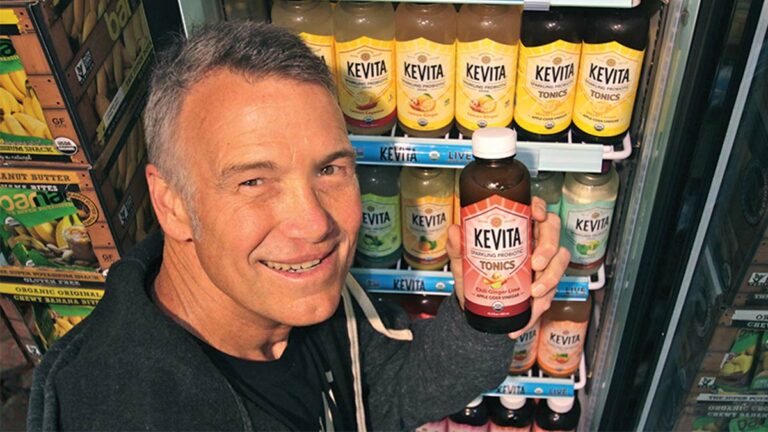
Probiotics have become popular in the health industry over the last decade. And KeVita provides an easy and convenient way to get them, with their sparkling fermented drinks. The company launched in 2010, and their products can be found in Whole Foods, New Leaf and other health stores. We spoke with co-founder Robert Adams, the Santa Cruzan of the group. (The other two are Bill Moses and Chakra Earthsong Levy). Adams told us all about the health benefits of drinking probiotics, and the other products they sell. Why consume probiotics? ROBERT ADAMS: Probiotics are the ultimate functional ingredient in preventative health, which was why we started the company, to empower people to take control of their health. What probiotics do is help your digestive track. What that really means is it helps you metabolize and assimilate all the vitamins and minerals, which ultimately leads to a higher level of immunity and a healthy gut. Something like 70 percent of diseases start in the gut. Probiotics have been present in a lot of food products, not just the fermented drinks: yogurt, sauerkrauts even. We may not have known what they were doing scientifically, but I think we knew that we felt better and our health was generally improved by eating those types of products. So here we are in the past 10-15 years, it’s really entered the American lexicon, that probiotics are probably the most important supplements you can take. Is getting probiotics from your drink a better source than other products? I think beverages are always a great delivery system. They’re very convenient. You’re on the go, you grab one, you don’t have to remember your pill. I think it’s also what science has found is that variety is good. Not one probiotic fits all. In fermented foods and specifically in our products, you have probiotics that complement the natural flora we all have in our system. What are your different product lines? KeVita is unique in the entire chilled wholesome beverage category. We have three. We have the original sparkling probiotic. It’s actually a water kefir. We also have kombucha, which is an entirely different product. Using black teas and green teas, it’s a fermentation that puts off organic acid, it has beneficial yeast. Then we have a third product. We developed a line of tonic, which includes apple cider vinegar. That specific line also has digestive benefits with the apple cider vinegar, as well as anti-inflammatory properties. It’s basically the same water kefir ferment that’s in the KeVita product, but with the addition of apple cider vinegar. It’s the only product like it on the market. You can actually drink it. You don’t have to hold your nose as you take a shot of it.
It sounds like a YA (Young Adult) story: goofy girl with a big heart and a bizarre fashion sense, witty but tragic young man, and lots of shoes. But the themes in Me Before You, based on the best-selling novel by Jojo Moyes, are adult in nature—the dignity of death vs. a severely compromised life. And rookie director Thea Sharrock, working from a script by Moyes, manages to make the film more palatable than expected. She coaxes engaging performances out of stars Emilia Clarke and Sam Claflin. Keeping the focus on these two personalities, she takes the time to unfold the progress of their friendship—which becomes the heart of the story. It’s a modern fairy tale with a poor girl, a rich boy, and a castle. Clarke stars as 26-year-old Louisa “Lou” Clark, who lives with her boisterous, working-class family in a small English village in the shadow of an ancient castle. (You’ll recognize actress Clarke’s full lips and expressive eyebrows as dragon girl Daenerys on Game of Thrones.) Undercharging sweet little old ladies for their crumpets at the tea shop where she works, Lou is stalled in a stale relationship with her genial but clueless jock boyfriend, Patrick (Matthew Lewis, formerly Neville in the Harry Potter franchise). But the tea shop closes, and Lou is desperate to find work to help her family make ends meet, accepting a position that requires no skills with the wealthy Traynor family, who live in the manor house adjoining the castle. Lou hires on as companion to son, Will Traynor (Claflin), a former jetsetter, until a traffic accident two years earlier left him a wheelchair-bound quadriplegic. It takes a long time for perky Lou and dry, acerbic Will to find common ground. She finds him mean-spirited and superior; he finds her gauche and ridiculous. (Especially the extreme hand-painted and decorated pumps she makes to go with every shabby-chic outfit.) Predictably, he rebuffs her attempts to show sympathy, and she resents his imperious attitude. But, stuck with each other, they begin to form a grudging mutual respect, and a wisecracking alliance. Will allows Lou to shave off his scruffy beard, and takes her to his favorite spot in the world, the majestic ruins of the castle ramparts, where he played as a child. (In real life, luscious, sun-gilded Pembroke Castle, in Wales.) With Will’s physical caregiver, Nathan (Stephen Peacocke), along to help out, Lou gets Will out of the house to the racetrack, and to a concert. She takes him home to meet her family, and he charms them all. When Will is invited to the wedding of his ex-girlfriend, he takes Lou along; their turn around the dancefloor in his wheelchair is the hit of the event. So it’s a big shock to Lou when she overhears Will’s parents (Janet McTeer and Charles Dance) arguing over Will’s decision to enter a death-with-dignity program in Switzerland. Which only makes Lou more determined to change his mind. Clarke’s buoyant warmth is completely disarming, especially when she delivers a virtuoso comic monologue about life in the village. Claflin has a deft way of underplaying his one-liners—which makes them all the funnier, half a beat later, when we understand what he said. In support, the divine Joanna Lumley (from AbFab) trades a few hilariously tart quips with Lou at the wedding. But the movie fails to make its case in the perceived hopelessness of Will’s situation. Yes, he’s immobilized, unable to bathe or eat by himself. But he’s also young, handsome, witty, smart, and rich—not exactly the ideal candidate for whom assisted suicide was intended. It would be useful if the filmmakers allowed Lou (and the viewer) to actually witness some of the crippling pain everyone tells her Will experiences when she’s not around to see it, or the courage it takes him to face another day. They ought to at least have an honest, heartfelt conversation about it, instead of Will simply issuing decrees. But even then, the foregone conclusion that his life is not worth living is a major speed-bump in an otherwise fluidly told tale.
ME BEFORE YOU **1/2 (out of four) With Emilia Clarke and Sam Claflin. Written by Jojo Moyes, from her novel. Directed by Thea Sharrock. A New Line Cinemas release. Rated PG-13. 110 minutes.
The downtownSanta Cruz hosts will be disappearing this summer, since their employer, Callie West, opted not to renew their contract, City Manager Martín Bernal announced at a State of the City breakfast meeting last month. “We’re switching the hosts and First Alarm security guards with park rangers, who will bring a higher level of security downtown, as well as have the ability to make people feel comfortable and to help them,” Bernal explained, amidst a chorus of clanking forks and chewing, inside one of Hotel Paradox’s conference rooms. After Bernal phases out the hosts’ blue-and-gold uniforms, we had hoped the new rangers would be donning khaki, park-ranger-like suits with cowboy hats. But, alas, parks officials decided in favor of bright neon safety vests for the summer and neon safety jackets for the winter—so that they can be spotted easily by downtown patrons, Parks Director Mauro Garcia tells us. Sigh. Well, at least it’s practical. And no, these rangers will not be galloping around on horseback, either, like ye olde mounted rangers of lore. (Nay, horses’ habit of relieving themselves wherever they’d like would probably detract from downtown’s allure. But we digress.) Instead, the rangers, Garcia says, may have a mountain bike or two.
DARN FLAME
The Trout Farm Inn—beloved in the Santa Cruz foothills for its sunny pool, live music and scenery—burned down over the weekend. The fire, which started in a vent above the kitchen, engulfed the restaurant and left it unsalvageable on Sunday, June 5. No one was hurt in the blaze, but people have been mourning the loss and sharing stories going back decades on the Zayante Road restaurant’s Facebook page. There will be a fundraiser for the family and Trout Farm employees at Joe’s Bar in Boulder Creek, starting at 7 p.m. on Wednesday, June 8. There is also a GoFundMe page. Visit thetroutfarminn.net for more information.
For music lovers, the best place to be this weekend is the Ojai Music Festival. It’s the Festival’s 70th year, Peter Sellers is the music director, and it’s all weekend long—Friday through Sunday. The festival is filled with “energy, courage, allure, inquiry, reflection, and secret revelations.” There’s opera, Noh theatre, Ezra Pound (inspiration), a band from Cairo, music from India and a children’s festival. “Surprising, path-breaking and visionary.” Ojai is 90 miles north of Los Angeles. It’s Shangri-La. Sunday is Shavuot, the Hebrew festival marking the anniversary of the day God gave Moses the Torah (Five Books of Moses), the Jewish Laws. We know them as the Old Testament. If we open a bible at the beginning we see the books of Genesis, Exodus, Leviticus, Numbers, and Deuteronomy. Moses was given the Torah (laws) during the change in the Ages—from Taurus (Egypt) to Aries (Canaan)—as the Hebrew walked in the desert from Egypt to Canaan. Taurus was the Age of Desire (and of slavery for the Jewish people). Aries was the Age of Laws. Thus the “laws” given to the Hebrew people from G-d as they walked toward freedom. Tuesday is Flag Day. Flags, an unrecognized art form, represent the spirit of the people who live under that flag. In the U.S. flag, the 13 stripes (red and white) represent the first 13 British colonies that declared independence from Great Britain. The 50 stars represent the 50 states in the union. Our present flag was created by 17-year-old Robert G. Heft (Sun/Venus in Capricorn, Mercury in Aquarius) as a high school class project. He received a B– for his work!
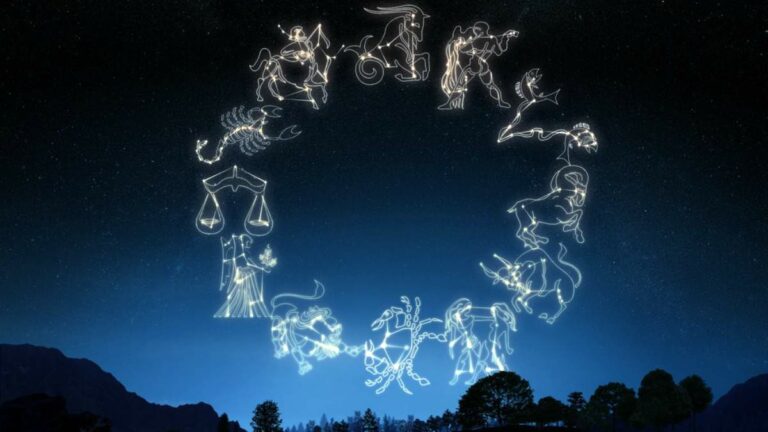
ARIES: Whereas your main gift has been instinct and intuition, a higher super-human level of instinct emerges. It will provide you with greater inner strength and a new faith. Many will be surprised as you become more easygoing, compassionate and concerned for others (not just yourself). A greater belief in yourself also comes forth due to an anchoring of new spiritual ideals. Your identity deepens. Don’t let divine discontent upend you. TAURUS: Idealism is part of your nature along with adaptability and flexibility. These virtues further develop in coming years. As you attempt to always keep the peace, you might discover you’ve lost knowledge of your deepest hopes and wishes. You must find them again. Connections with friends must always have a spiritual basis or you become dissatisfied. You are to develop the arts, for you are the Art of Living itself. GEMINI: What does your intuition tell you about current world trends in business, the arts, humanity, education, politics? In coming years you will develop a deep creativity and vision leading you to the arts, media, things of service and charity. Work on maintaining clear direction lest goals and your calling in life are lost. You’re better than perfect. And you’re responsible. Know these things. Allow no misconceptions of self to be nurtured. CANCER: It’s important to be practical with goals. You have a deep inner faith. It’s good to consider what you believe and why. Where did the concepts come from? It would be good to study different religions, or to even enter a seminary, becoming a minister or pastor. Higher education offers involvement with religious, philosophical or artistic fields. Travel beckons, too, but here you must be careful healthwise. Compassion becomes your teacher. LEO: Are you experiencing spiritual longing, deep sensitivity, fantasies, ecstasy, warrior dreams? If not now, later. In the meantime, something from the past—a relationship, love, person—seems to be important once again. However, you choose not to contact or connect with them—a mistake. Where before the boundaries were blurred, you both have grown. Boundaries are intact now. Careful with money. Give it, don’t loan it. Love more. VIRGO: So often Virgo gives more than they’re able to receive. They seek a soul mate, one linked to them psychically. They see potential, instead of reality at times, seeking others as they wish them to be, not as they are. Sometimes Virgos want to save or be saved (from themselves). These are all developmental stages. They can be confusing and difficult (for a time). Until you realize your potential extraordinary talents.
LIBRA: Daily plans, agendas and affairs (work) become so fluid you may not know where you are at times. All routines seem to float out the door, replaced by chaos, confusion and helplessness. Know that when chaos comes around, it’s announcing a coming new harmony. Rearrange everything in your environments. Tend to health methodically. Interact with the animal, plant and mineral kingdoms with awareness. They bring a new order into your life. SCORPIO: When people use the word drama it’s usually disparaging, judgmental. However, some signs truly have dramatic things occurring relentlessly. We actually have little choice in the matter of our lives and behaviors. We have little choice in how people react and respond to us. Those experiencing drama in their lives are living life deeply, fully, creatively, and with passion. It’s just their time. Your time is now. SAGITTARIUS: Was home, family, relatives, mom, dad, family life as a child complex? Were (are) you sensitive, free-spirited, idealistic, philosophical? Do you need at this time to set limits? Do you long for a new home and sense of place? Do you alternate between being social while also seeking solitude? Do you at times isolate yourself? Is family challenging? And do you have many inflated dreams? A new identity will appear in the next 18 months. With a new path. CAPRICORN: Visualize all that you want to be and do, your future, where you’re called to live, the interior and exterior of your (next) home, the environments calling to you, the gardens and kitchen. Do this on a grand and detailed scale. This creates a magnetic field and what you envision (if it is yours) comes into manifestation. Then you can decide your true wants/needs. We become what we deeply imagine, we express what we can create, we encourage what we love. Do these with confidence. AQUARIUS: It’s important to be balanced about money—not too strict, not too lax. It’s important to know the value of yourself and your work, presenting this to the world. Others may attempt to undervalue your worth and value. Follow your intuition and instincts concerning your use of money. Honor all debts. Value others and their work. Tell them. Do not gloss over monetary details. Be generous. However, care for yourself. This is practical. PISCES: A great sensitivity has befallen Pisces. It’s as if you live in a dream—someone else’s, actually. Others see you through their own projections. This is hurtful. Reality for you isn’t what reality is for others. Tiredness overcomes you often. At times, dizziness, too. Tend to health very carefully. Moods come and go. Sleep more. Calcium needs Vitamin D (lots of it) to be absorbed. Magnesium helps you sleep. Begin painting. Neptune has come home.
ARIES (March 21-April 19): Mythologist Joseph Campbell analyzed fairy tales for clues about how the human psyche works. For example, he said that a fairy tale character who’s riding a horse is a representation of our relationship with our instinctual nature. If that character drops the reins and lets the horse gallop without guidance, he or she is symbolically surrendering control to the instincts. I bring this to your attention because I suspect you may soon be tempted to do just that that—which wouldn’t be wise. In my opinion, you’ll be best served by going against the flow of what seems natural. Sublimation and transcendence will keep you much stronger than if you followed the line of least resistance. Homework: Visualize yourself, as you ride your horse, keeping a relaxed but firm grasp of the reins. TAURUS (April 20-May 20): I will provide you with two lists of words. One of these lists, but not both, will characterize the nature of your predominant experiences in the coming weeks. It will be mostly up to you which emerges as the winner. Now read the two lists, pick the one you like better, and instruct your subconscious mind to lead you in that direction. List 1: gluttony, bloating, overkill, padding, exorbitance. List 2: mother lode, wellspring, bumper crop, gold mine, cornucopia. GEMINI (May 21-June 20): In his poem “Interrupted Meditation,” Robert Hass blurts out the following exclamation: “I give you, here, now, a magic key. What does it open? This key I give you, what exactly does it open?” How would you answer this question, Gemini? What door or lock or heart or treasure box do you most need opened? Decide today. And please don’t name five things you need opened. Choose one, and one only. To do so will dissolve a mental block that has up until now kept you from finding the REAL magic key. CANCER (June 21-July 22): The following excerpt from Wendell Berry’s poem “Woods” captures the essence of your current situation: “I part the out-thrusting branches and come in beneath the blessed and the blessing trees. Though I am silent there is singing around me. Though I am dark there is vision around me. Though I am heavy there is flight around me.” Please remember this poem at least three times a day during the next two weeks. It’s important for you to know that no matter what murky or maudlin or mysterious mood you might be in, you are surrounded by vitality and generosity. LEO (July 23-Aug. 22): A half-dead blast from the past is throttling the free flow of your imagination. Your best possible future will be postponed until you agree to deal more intimately with this crumbled dream, which you have never fully grieved or surrendered. So here’s my advice: Summon the bravest, smartest love you’re capable of, and lay your sad loss to rest with gentle ferocity. This may take a while, so be patient. Be inspired by the fact that your new supply of brave, smart love will be a crucial resource for the rest of your long life. VIRGO (Aug. 23-Sept. 22): Five times every day, devout Muslims face their holiest city, Mecca, and say prayers to Allah. Even if you’re not Islamic, I recommend that you carry out your own unique version of this ritual. The next three weeks will be a favorable time to cultivate a closer relationship with the inspirational influence, the high ideal, or the divine being that reigns supreme in your life. Here’s how you could do it: Identify a place that excites your imagination and provokes a sense of wonder. Five times a day for the next 21 days, bow in the direction of this treasured spot. Unleash songs, vows, and celebratory expostulations that deepen your fierce and tender commitment to what you trust most and love best. LIBRA (Sept. 23-Oct. 22): “The road reaches every place, the short cut only one,” says aphorist James Richardson. In many cases, that’s not a problem. Who among us has unlimited time and energy? Why leave all the options open? Short cuts can be valuable. It’s often smart to be ruthlessly efficient as we head toward our destination. But here’s a caveat: According to my analysis of the astrological omens, you’re now in a phase when taking short cuts may be counterproductive. To be as well-seasoned as you will need to be to reach your goal, you should probably take the scenic route. The long way around may, in this instance, be the most efficient and effective. SCORPIO (Oct. 23-Nov. 21): “Truth is like the flu,” says poet James Richardson. “I fight it off, but it changes in other bodies and returns in a form to which I am not immune.” In the coming days, Scorpio, I suspect you will experience that riddle first hand—and probably on more than one occasion. Obvious secrets and wild understandings that you have fought against finding out will mutate in just the right way to sneak past your defenses. Unwelcome insights you’ve been trying to ignore will finally wiggle their way into your psyche. Don’t worry, though. These new arrivals will be turn out to be good medicine. SAGITTARIUS (Nov. 22-Dec. 21): According to Guinness World records, the most consecutive hours spent riding on a roller coaster is 405 hours and 40 minutes. But I suspect that during the next 15 months, a Sagittarian daredevil may exceed this mark. I have come to this conclusion because I believe your tribe will be especially adept and relatively comfortable at handling steep rises and sudden dips at high speeds. And that won’t be the only rough talent you’ll have in abundance. I’m guessing you could also set new personal bests in the categories of most frequent changes of mind, most heroic leaps of faith, and fastest talking. CAPRICORN (Dec. 22-Jan. 19): Whether we like to admit it or not, all of us have acted like puppets. Bosses and teachers and loved ones can manipulate us even if they’re not in our presence. Our conditioned responses and programmed impulses may control our behavior in the present moment even though they were formed long ago. That’s the bad news. The good news is that now and then moments of lucidity blossom, revealing the puppet strings. We emerge from our unconsciousness and see that we’re under the spell of influential people to whom we have surrendered our power. This is one of those magic times for you, Capricorn. AQUARIUS (Jan. 20-Feb. 18): A few weeks ago you undertook a new course of study in the art of fun and games. You realized you hadn’t been playing hard enough, and took measures to correct the problem. After refamiliarizing yourself with the mysteries of innocent joy, you raised the stakes. You began dabbling with more intensive forms of relief and release. Now you have the chance to go even further: to explore the mysteries of experimental delight. Exuberant escapades may become available to you. Amorous adventures could invite you to explore the frontiers of liberated love. Will you be brave and free enough to meet the challenge of such deeply meaningful gaiety? Meditate on this radical possibility: spiritually adept hedonism. PISCES (Feb. 19-March 20): Poet Sharon Dolin compares artists to sunflowers. They create “a tall flashy flower that then grows heavy with seeds whose small hard shells you must crack to get to the rich nut meat.” As I contemplate the current chapter of your unfolding story, I see you as being engaged in a similar process, even if you’re not literally an artist. To be exact, you’re at the point when you are producing a tall flashy flower. The seeds have not yet begun to form, but they will soon. Later this year, the rich nut meat inside the small hard shells will be ready to pluck. For now, concentrate on generating your gorgeous, radiant flower.
Homework: Psychologists say that a good way to eliminate a bad habit is to replace it with a good one. Do that! Testify at Freewillastrology.com
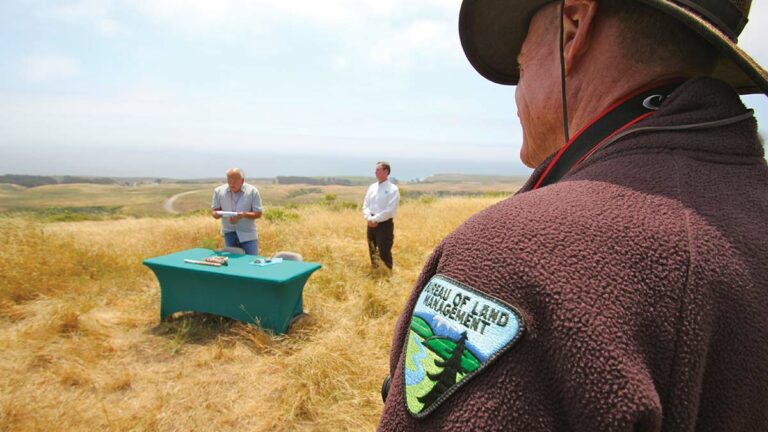
Striking a traditional wooden percussion instrument with his palm, Valentin Lopez sang his Native American tribe’s prayer during a ceremony at the Coast Dairies property last month, as people gathered around. He sang alone, in a voice strong and forlorn, using the ancient words of the Amah Mutsun. The Amah Mutsun are a Native American tribe that dwelled in the expansive stretch of land, nestled in by the ocean and the grass-covered western slope of the Santa Cruz Mountains, with Año Nuevo State Park bordering it to the north, and the Salinas River to the south. Lopez is the president of the Amah Mutsun Tribal Band, made up of the descendants of the ancient tribes that once roamed over the area. Even today, the Amah Mutsun use prayers, song and ceremonies to call back the salmon and migratory birds or to sing for the balance of the four seasons. Joining Lopez and his fellow tribe members at the May 25 ceremony were officials from the Bureau of Land Management (BLM), UCSC, Santa Cruz County government, and the Sempervirens Fund. At the ceremony, the descendents of the area’s indigenous people signed a memorandum of understanding (MOU) with the land managers of the Coastal Dairies property. With the new MOU, the tribe enters into an agreement with the Bureau of Land Management, the federal agency in charge of managing the bulk of the Cotoni-Coast Dairies property. The tribe will have an equal partnership in decisions relating to the property, like management of native plant species, participating in preservation techniques to allow wildlife to flourish and undertaking a more culturally sensitive approach to archaeological study. “It is not only the prayers and ceremonies of Native people that are needed to save Mother Earth,” Lopez says. “It is the prayers and ceremonies of all people.” Under its deed, BLM must create a land management plan that protects vegetation, the land, and opportunities for recreation, says Rick Cooper, a field manager for BLM. Against the backdrop of the partnership, Santa Cruzans are playing wait and see, while Santa Cruz County leaders call on either Congress or President Barack Obama to issue a declaration that would turn the BLM’s 5,741-acre property into the Cotoni-Coast Dairies National Monument—a nod to the former ranching area’s 20th-century landlords and livestock, as well as its original inhabitants. The whole process began in 1998, when the Trust for Public Land purchased nearly 7,000 acres of property from the Coast Dairies and Land Company. The sprawling swath of rolling hills, rocky coastal bluffs and rugged beaches located just outside Davenport represented the third-largest privately held coastal property from San Francisco to Mexico.
Lessons from the tribe
When the Spanish first arrived in Amah Mutsun territory in 1797, they found a network of distinct villages spread up and down the Monterey Bay. The Cotoni people were a distinct tribe with their own language that settled the area that is modern-day Davenport, as well as the ridgelines, swells and redwood-dotted hills that comprise its surroundings. The Spanish, who scorned the Amah Mutsun culture and perspective, persecuted the natives by attempting to eradicate their culture, forcibly converting them to Christianity, while enslaving them to help construct the California missions. That scorn intensified with the arrival of white American settlers from the east in the 1840s and 1850s. Fresh off of battles with the Native Americans of the Great Plains, the settlers violently battled the natives and discounted their perspectives on harmonious living with nature—opting instead to exploit the forests for timber, the rivers for power and the wildlife for food. About a century and a half later, large-scale environmental disasters loom, Lopez says, with the threats of climate change approaching, ocean acidification on the rise, the coast eroding rapidly, and air quality declining. The human family, he says, is harkening back to the Native perspective of harmony within nature rather than dominion over it. “It’s about restoring relationships,” Lopez says. “A big part of this MOU is restoring the spiritual connection to Mother Earth and returning people to an understanding of the connections we have with all things.” The Amah Mutsun tribe is not federally recognized and therefore does not have land, unlike tribes in the Midwest such as the Lakota and Navajo people. They did, however, recently create a land trust that could allow the tribe to purchase land parcels or enter into management agreements. “We plan on incorporating indigenous management techniques into the practices here,” says Rick Flores, a traditional resource management specialist with UCSC. “Hopefully, we will try to restore some of these landscapes back to what they may have looked like prior to contact.” Rick Cooper of BLM says the tribe’s presence will extend beyond incorporating traditional techniques into management of flora and fauna. Cooper has talked with tribal leaders about creating an educational program for kids about the traditional uses of land on the property. “They can come out and look at [the land] and do traditional practices that their ancestors did,” Cooper says. Lopez says the descendants of the Cotoni are scattered, many living in Fresno, having been chased out by the Central Coast’s high cost of living. But he says practicing the rites of the tribe on ancestral lands will help members heal from the depredations of European settlers. “Our history is tragic. The Mission period, the Mexican period and the early American periods were devastating to our peoples,” Lopez says. “The Indian population of California was reduced by over 96 percent. The ancestors said our peoples will suffer for seven generations and then things will get better.” BLM has yet to say when members of the public may begin to access the land, where some Davenport residents are hesitant about what the designation could mean for their sleepy beach town. In the meantime, California State Parks runs about 400 acres of the Coast Dairies property, which includes seven beaches just south of Davenport. The Trust for Public Land has also retained a few parcels located adjacent to agricultural operations in the interest of keeping agricultural uses open, Cooper says. BLM plans to begin scoping sessions, for locals to describe which recreational activities they would like to see—such as mountain biking, equestrian uses and hiking. But the agency has delayed the survey to late summer at the earliest. Lopez says it is important that the Amah Mutsun receive a portion of redress for historic crimes and be able to walk the hollows and hills where they believe the spirits of their ancestors dwell. “We believe the Creator very specifically picked our people to live on these lands and to care for all living things,” Lopez says. “After we were ripped from our lands we were unable to fulfill our sacred covenant, but the directive from the Creator was never rescinded.”
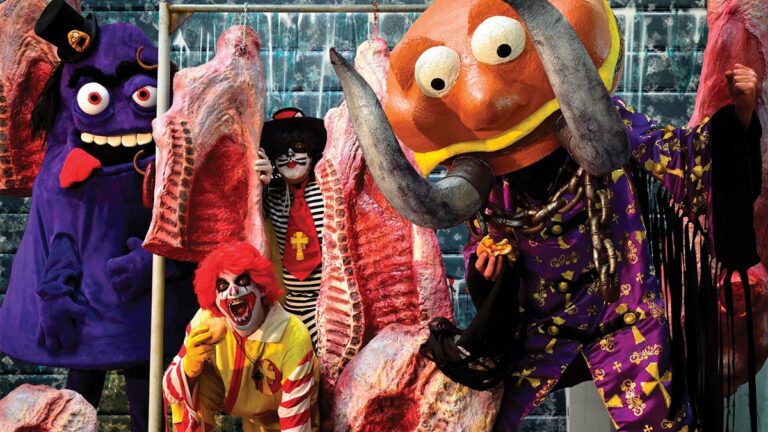
Finally, the music of Black Sabbath and the burgers of McDonald’s have come together to create Mac Sabbath. But really, this band is much weirder than a metal group that sings about fast food. If its backstory is to be believed, the group was formed by scary clown Ronald Osbourne, who time-traveled into the present time from the ’70s to warn the world of the dangers of fast food, GMOs and the corporatization of food. Their stage show involves dark, psychedelic versions of Ronald McDonald (Ronald Osbourne), Grimace (Grimalice), the Hamburglar (Cat Burglar) and Mayor McCheese (Slayer MacCheeze). All of the songs are based off of Sabbath favorites, but the lyrics have been altered. As goofy as it may seem, it’s a political statement: (“Everybody wants it/On gluten bleached flour bread/Everybody needs it/Till they’re fat and dead.”) Unfortunately, the band does not interview, but we were lucky enough to score an interview with manager Mike Odd, who attempted to give us some insight into this peculiar, brutal group.
GT: How’d you find these guys? MIKE ODD: I used to run this odd emporium. It was kind of a freak museum in East Hollywood. I got this anonymous phone call saying to meet somebody at this burger place in California and it’s going to change my life. I’m sitting in this booth waiting, and this abomination of a clown bursts through the door, just spewing all these concepts all over everyone’s lunches and just saying all these incredible things. I thought I was on a hidden camera show or something. He proceeded to tell me that it was my destiny to manage this band Mac Sabbath. He shows me these mutated versions of mascots from my childhood, slamming out these Black Sabbath songs, changing all the lyrics to be about fast food and screaming about GMOs and Monsanto and chemicals that I can’t pronounce. It was the most amazing thing I’ve ever seen. I made this video of them and posted it on YouTube and I put the lyrics at the bottom of the song “Frying Pan,” which is a parody of “Iron Man.” In no time at all it got picked up by Fox News, and then Black Sabbath posted it on New Year’s Day 2015. Right away the phone starts ringing. What do kids think of Mac Sabbath? I find that not only do they really like it, they get it better than adults. I think sometimes the message is lost on adults. Someone in their 20s or 30s will love the show and then afterwards go to the drive-through and get a cheeseburger. One of the first things I booked them at was a Halloween party at an elementary school for kids. There was one part where they were on stage, and this lady comes up to me and she said, “This is amazing. You should do this more often. It’s so great for kids.” At one point we could book a tour with clubs at night for drunks and the elementary school during the day at the cafeteria and do a special set about health food, and involve Michelle Obama or something. The mission of the band is to promote health food? That seems to be a thing with Ronald. He’s very anti-Frankenfood. He’s told me that he’s traveled here through the time-space continuum from the 1970s to warn us all about government food control, and wants us all to get back to the way it was in the 1970s, when music and food were genuine. That’s his whole thing. What are these characters like off stage? Ronald is the tough one. Everyone else seems pretty blissfully happy, and seems to enjoy what they do. Ronald’s always got a conflict there. I think part of it is his non-technological state and inability to adapt. None of this existed back then, that’s why you have to talk to me. I have to be a conduit to this world. He doesn’t like any talk of modern technology. I’ve seen him dump somebody’s cell phone into a large bowl of water. What’s one of your favorite renditions of Black Sabbath the groups does? It’s really exciting for me that the band started playing “Organic Funeral.” It goes further than most of their songs and is very specific about certain things wrong and certain chemicals that are legal in this country, but illegal in other countries. It’s really an attack. It’s an a lot more aggressive attack on certain evils that we’re dealing with right now in our government.
INFO: 8:30 p.m. Friday, June 10, Catalyst Atrium, 1011 Pacific Ave., Santa Cruz. $13/$15. 429-4135.
The days are getting longer. You need a quick meal. You need it now. You refuse to navigate a fast-food drive-by. You are in luck. You live here, in the complete opposite of a food desert (and yes, we are grateful every day for that fact). You need only to walk down the street—both literally and metaphorically—to wrap your mouth around seriously delicious, quick, healthful lunch and dinner dishes ready to take away. To the beach, to the redwoods, to your backyard. Add a glass of something cold and watch the summer unfold. (Say that out loud: it’s a poem.) Here are our go-to solutions. The Buttery, across the street from Shopper’s Corner, has got its act together as far as beautiful take-away sandwiches with slices of ham and cheese laid out on baguettes like starlets on the Riviera. The house kale and cranberry salad is outrageous. So is the collection of gem-like diced fruit. Add a Joe’s Favorite—Black Forest ham, provolone and pickled onions on a soft roll, and head for parts unknown, like Mr. Bourdain. And, yes, as far as my mouth is concerned, Buttery’s carrot cake cupcake is still the best of its tribe in town. The Buttery is at 702 Soquel Ave., Santa Cruz, open 7 a.m. to 7 p.m. daily. Often for a quick dinner I’ll stop by Gayle’s Bakery & Rosticceria and grab either the luscious plump sausages slathered with peppers and onions (add a green salad and red wine!), or a fistful of those addictive lavosh bread “pinwheel” rosti. Gayle’s helpfully provides a full-on old-fashioned meatloaf dinner with green beans and mashed potatoes that you can just pop into the microwave. Gayle’s is killer one-stop food to go for every taste and whim. Gayle’s is at 504 Bay Ave., Capitola, open 6:30 a.m. to 8:30 p.m. daily. We’re devoted to the mighty tuna salad created by the Westside New Leaf Market. We like to have it made into our current favorite lunch sandwich—with all the trimmings. Just as popular for quickie dinners is New Leaf’s rich and delicious turkey chili. Add a roll and salad and it’s lunch or dinner all year round. 1101 Fair Ave., Santa Cruz. Also check out the Leaf’s Summer Cooking Camp for Teens June 20-25 on newleaf.com. After our weekly walk around West Cliff Drive we like to stop by Kelly’s French Bakery for a roasted half chicken with fries, salad and roll to go. At home we add a glass of Grenache and plunge into the irresistible side of french fries. 402 Ingalls St., Santa Cruz, open 7 a.m. to 7 p.m. daily). And we have other reliable standbys for quickies—like El Palomar Taco Bar and Charlie Hong Kong. Some of the best to-go items never even make it out of the parking lot. You know what I’m talking about.
Gluten-Free Report
We sprung for a miniature $5 loaf of frozen gluten-free bread made by Udi’s, having been assured by an Internet taste test that the Udi’s loaf was the best out of 10 loaves sampled by an anonymous group of bread heads. So here, anecdotally, was what we found. (We found out why there isn’t a whole lot of gluten-free bread being high-fived by anyone with tastebuds.) Even with a generous slathering of Somerset English Country butter (my fave), it was (to be generous) mealy in consistency, and downright unfathomable in flavor. Did it even have flavor, we wondered, as we dared a second bite. Well, something was going on in our mouths as we chewed a substance that wandered uncertainly between styrofoam and disintegrating plaster. One suspects that when it comes to toastable slices of bread, gluten is key. The research continues.
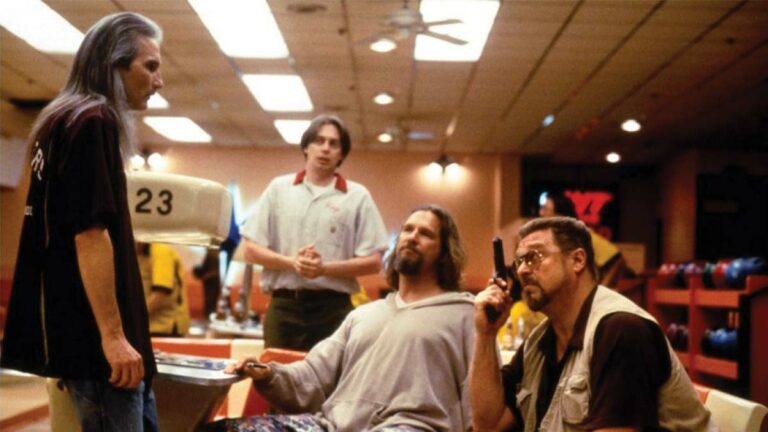
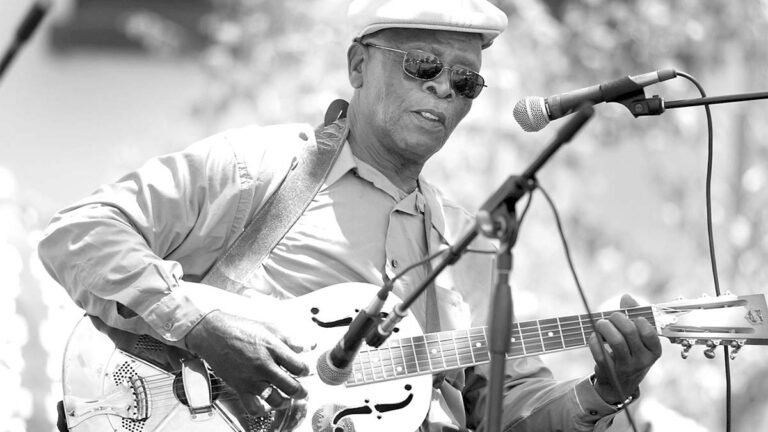
Among Jimmie Dale Gilmore’s many songwriting accomplishments, this one gives me the most ridiculous delight: he co-wrote the all-time greatest song about cognitive dissonance. The very funny “My Mind’s Got a Mind of its Own” is filled with lines like “It takes me out a-walkin’ when I’d rather stay at home/Takes me out to parties when I’d rather be alone” and other lyrics that social psychologist Leon Festinger, who laid out the theory of cognitive dissonance in the 1950s to explain why humans yearn for consistency, could have put straight into his papers. Then again, Gilmore’s entire career has a huge divide these days. On the one hand, he’s a roots music legend, whose West Texas cult band the Flatlanders (which also featured Butch Hancock, the co-writer of “My Mind’s Got a Mind of its Own,” and Joe Ely) is considered one of the most important groups in the early history of the Americana genre, despite never having released an album in their original 1970s incarnation. That led to a singer-songwriter solo career, which has lasted more than four decades. On the other hand, he appeared for a couple of minutes in the famous “mark it zero” scene in The Big Lebowski—the 1998 Coen brothers movie that has unexpectedly become perhaps the most beloved movie of the last 20 years—as Smokey, the pacifist bowler menaced by a firearm during league play. These are two very different, and, let’s face it, very strange things to be known for, and his Lebowski notorietyespecially has reached a level he never imagined possible. “I can hardly go any place in public that somebody doesn’t come up and want to take a picture,” says Gilmore. “I’m still astonished by the magnitude of the ongoing popularity of that movie.” Since Gilmore loved his experience doing The Big Lebowski, it’s all good, but fans of his movie role often experience some cognitive dissonance of their own when they discover his other identity. Like when Gilmore played Lebowski Fest for the first time last year, with his son Colin and a full band. “It was hilarious,” says Gilmore. “I’d say a majority of them did not know I was a musician. After the show, they had a screening of the film. I’d already gone back to the hotel, but Colin and the guys hung out and went to the screening.” Gilmore got the full report on the response that night to the Smokey scene: “They said it was like now the crowd really knew me, and this huge cheer went up.” When Gilmore plays Don Quixote’s on Thursday, June 9, he’ll be performing again with his son, who has become an acclaimed singer-songwriter in his own right. Again, there’s an interesting duality that informs their collaboration. While Colin absorbed a lot of musical influence being around his dad’s outlaw-country friends, he also played in a punk rock band in high school, and then went on to study classical guitar. “Colin has an originality, a creativity, that’s different than mine,” says Gilmore. “His music is more composed, it’s less folky and more professional, in a good way. His music is a lot more difficult for me than my music is for him.” However, they do share some qualities, like a laid-back temperament. “When Joe and Butch and I started out, we never were very ambitious. We never did move to Nashville or anything,” says Gilmore. “That was never our drive, to become famous or successful. We just loved the music, and were mutual fans of each other. We played for the fun of it. And Colin is like that.” Gilmore is planning a new record; his last one was in 2011 with the Wronglers, the group in which his longtime friend Warren Hellman performed. Hellman was best known to music fans as the philanthropist behind the free Hardly Strictly Bluegrass Festival in San Francisco. The Flatlanders play the festival every year, and Gilmore has been performing there since its second year, 2002, when it was still called the Strictly Bluegrass Festival. In December of 2011, the same year Gilmore toured and recorded with the Wronglers, Hellman died of complications from his treatment for leukemia. “I became very close with Warren and that band. He said it was the most fun he had ever had,” says Gilmore. Just like the very first musicians Gilmore had ever surrounded himself with, it wasn’t about the money for Hellman. “It was a deep love of the music that really drove him,” he says. “There’s nobody like him. I wish there were.”
Info: 7:30 p.m., Thursday, June 9 at Don Quixote’s, 6275 Hwy. 9, Felton; $20.
In June of 1865, Major General Gordon Granger, a New York-born West Point graduate and a Union officer in the Civil War, made his way on horseback across the recently defeated Confederacy to Galveston, Texas, with 1,800 Union soldiers at his command. Granger was placed in charge of the Lone Star State and bringing Texas back into some semblance of Union rule. That was no easy feat. “The Great Rebellion,” as the Civil War was more commonly known at the time, had ended two months earlier, in Appomattox, Virginia. President Abraham Lincoln had been assassinated in the aftermath, and his vice president, Andrew Johnson, a southerner by birth and former slave owner, had assumed the presidency. A sense of anarchy and regional resentments reigned in the south. Bands of rebel militias refused to acknowledge defeat and wrought terror on isolated Union commands and slave communities. Legend has it that news of the Emancipation Proclamation, signed into law by Lincoln and effective on Jan. 1, 1863, had been slow to reach Texas. That was not the case. Telegraph news services promptly reported events of the day in newspapers throughout the country. White Texans simply refused to adhere to federal law. The editors of The Galveston Daily News called for a “gradual system of emancipation” and described Lincoln’s proclamation as “repugnant.” It took the presence of an occupying army to administer the law. It was on June 19 of 1865 that Granger posted a declaration that Texas would henceforth be ruled by the U.S. Constitution: “The people of Texas are informed that, in accordance with a proclamation from the Executive of the United States, all slaves are free,” Granger declared. “This involves an absolute equality of personal rights and rights of property between former masters and slaves, and the connection heretofore existing between them becomes that between employer and hired labor.” Slaves in Texas were now formally free—certainly a cause for joy and celebration—but, in practice, the institution of their rights was far more complex. A rarely cited caveat to Granger’s dictum illuminates the broader story: “The freedmen are advised to remain quietly at their present homes and work for wages,” he cautioned. “They are informed that they will not be allowed to collect at military posts and that they will not be supported in idleness either there or elsewhere.” FABRIC OF THE COMMUNITY Siblings Ana Marden and David Claytor or Sure Thing Productions & Managment have taken over the mantle of Juneteenth celebrations in recent years. PHOTO: DYLAN DUNN Real change was hard wrought. As one former Texas slave named Katie Darling, who worked for her mistress six more years, recalled: “[She] whip me after the war jist like she did ‘fore.” However limited their practical freedoms may have been, former slaves in Texas began celebrating “Juneteenth” one year later, in June of 1866, to commemorate the actualized anniversary of their freedom. The celebration caught hold in southeast Texas, then regionally, and eventually nationally. In essence, it became African-Americans’ version of Independence Day. As abolitionist and social reformer Frederick Douglass had noted in his own celebrated proclamation given in Rochester, New York, in the summer of 1852: “What, to the American slave, is your Fourth of July? I answer: a day that reveals to him, more than all other days in the year, the gross injustice and cruelty to which he is the constant victim. To him, your celebration is a sham; your boasted liberty, an unholy license; your national greatness, swelling vanity.” Juneteenth challenged—and continues to challenge, in the age of Donald Trump and white privilege—the national vanity on race.
Cut to Santa Cruz, spring of 1991. Raymond Evans, then serving as assistant director of the Louden Nelson Center, decided it was time to bring the Juneteenth celebration to his adopted city. A native of Texas, Evans once told me that he was shocked to find that there were no traces of Juneteenth in the region when he first arrived here. He had grown up in the predominantly all-black neighborhoods of Dallas, and from his earliest memories, Juneteenth was celebrated by the entire community, with “music and food, prayer and ecstatic jubilation.” It was, he declared, “Black America’s Fourth of July.” Evans recalled his mother cooking, baking and making Juneteenth picnic baskets—the “entire community got excited about the festivities.” It was a holy day and a jubilee all rolled into one, he said. Evans wanted to recreate that sense of excitement and community pride in Santa Cruz. Saturday, June 11, marks the 25th anniversary of local Juneteenth celebrations—and a quarter century of Evans’ enduring vision. “Very few occasions provide for the opportunity to bring our community together,” says Ana Marden, who, along with her brother and fellow arts maven David Claytor of Sure Thing Productions, has taken over the mantle of Juneteenth from Evans here in Santa Cruz and spearheaded recent celebrations. “It’s a legacy that brings multi-generational families out in an open celebration of their heritage,” says Marden. “We call it ‘The Fabric of the Community.’” “Juneteenth is one of the few events in Santa Cruz that traditionally brings out the county’s black population,” says Claytor. “It gathers African Americans from all the corners of our county and reminds ourselves, and others, of both our presence and our legacy.” “What it boils down to, for me,” Claytor says, “is that it’s a reminder of where we came from—the history of slavery—and it’s important that we remember, and that our community remembers that history. And at the same time it celebrates the transformation of that struggle into a celebration. I guess you’d say that’s the magic of Juneteenth. We want to acknowledge the contributions of black people to our history.” Part of what has made the Juneteenth celebrations at Louden Nelson Community Center such an overwhelming success over the years is the eclectic nature of their offerings. This year’s potpourri of events provides no exception. Beginning at 11:30 a.m. there will be a Juneteenth parade— led by Double Dee’s Brass String Band—that begins at the Museum of Art & History (705 Front St., Santa Cruz) and will wind its way to the Louden Nelson Community Center (301 Center St., Santa Cruz.). As always, admission is free. HONORING A LOCAL ICON Members of the Louden Nelson Memorial committee from 1953 are shown at Nelson’ grave in Evergreen Cemetery. From left to right are C.H. Brown, chairman of the morial committee; Frank Guliford, president Santa Cruz Improvement Club; Rev. Dennis E. Franklin, NAACP; Rev. W. M. Brent, pastor, Santa Cruz Missionary Baptist Church; Herman Gowder, secretary, Memorial Committee; and Henry Pratt, president, F. & A. club. The formal festivities start at noon and will continue on through to 5 p.m. Headlining the afternoon jubilee will be the Sista Monica Tribute Band, honoring the late local blues and soul singer who died in 2014, and featuring the magnificent Terrie Odabi and Tammi Brown. Also performing will be Rich Tycoon’s Original Showcase, and the Monterey Peninsula Community Gospel Choir. Other performing artists and speakers will include Rev. Deborah L. Johnson of Inner Light Ministries, DJ M.L.E. Wax, Kaya Johnson, Lee Earl, Gregory Speed Sr., and WVG. There will also be live interactive painting for all ages by Elijah Pfotenhauer. For those looking for more physical activities, from noon to 3 p.m. there will be a Basketball Skills Contest coordinated by Harbor High basketball coach Stan White and sponsored by the Santa Cruz Warriors, with a three-point shoot-out at noon, a skills challenge at 1 p.m., and a shot competition at 2 p.m. Special warm-up fitness sessions with Trenise Pot (Truly Toned) and Eugenia Rice (Soca/Zumba) will also start at noon. There will be booths sponsored by ABC/African-American Community Health Group of the Central Coast,NAACP Santa Cruz and other local nonprofits. MAH will stage a Pop-Up Museum on local African-American history, and Mayor Cynthia Mathews will be on hand to issue a formal proclamation at 2 p.m. A variety of soul food and other African-American fare will also be available, a veritable cultural gumbo. As Marden notes, “There’s something for everyone.”
One of the historic links that Evans sought to make between Juneteenth and Santa Cruz was the longtime community legacy of former slave London “Louden” Nelson, who made Santa Cruz his home in the 1850s in the decade leading up to the Civil War, and after whom the community center downtown was named, following a sometimes contentious struggle, in 1979. As I explained to Evans at the time, Nelson’s life had been celebrated by generations of local schoolchildren who made annual pilgrimages to his burial site at Evergreen Cemetery in Santa Cruz. There, in the quiet sylvan glade that has been so remarkably transformed in recent years by the Museum of Art & History, his weathered white marble gravestone reads:
Louden Nelson
Native of Tennessee
Born May 5, 1800
Died May 17, 1860
He was a colored man
and willed all his property
to Santa Cruz School
District No. 1. Rest in Peace.
Nelson’s legendary act of generosity to the local school system has been a cultural touchstone in the community for more than a century. But for much of that time, the legend was more than a bit vague, if not distorted, and a significant error was made in the spelling of his name from London to Louden. Eventually, historical research caught up to the legend. Using slave records and genealogical materials originally compiled by the Mormon Church in Utah, my late friend and historian Phil Reader was able to trace Nelson’s birth to a North Carolina (not Tennessee) cotton plantation owned by a slave master named William Nelson. As was the practice at the time, slaves were forced to assume the family name of their owner. William Nelson, in turn, named the slave children born onto his plantation after English place names: Canterbury, Marlborough, Cambridge—and London. William Nelson’s youngest son, Matthew, eventually inherited the Nelson slaves from his father, and moved the family plantation to Tennessee. The discovery of gold in California in 1949, however, lured him farther westward. Promising both London and his younger brother, Marlborough, their freedom if they joined him, Matthew set up a claim on the American River, where the trio was to mine successfully for four years. With his freedom secured, London Nelson eventually found his way to Santa Cruz in 1856, where, with his earnings from the goldfields, he bought a small piece of land (near what is today the rear parking lot of the downtown post office.) As Reader also discovered, Nelson joined another freed slave in Santa Cruz named Dave Boffman. Santa Cruz County was an abolitionist stronghold before the Civil War, and thus provided a tolerant, if not necessarily egalitarian, setting for a freed slave of African descent. JUNETEENTH THE FIRST The first known photograph of a Juneteenth event in “East Woods,” Texas, June 19, 1900. Photograph taken by Grace Murray Stephenson. Courtesy Austin History Center By then in his mid-50s and suffering from poor health, Nelson raised small crops of onions, potatoes and melons, and also worked as a cobbler to support himself. He joined the local Methodist Church and lived a relatively quiet life on his land. From there, according to legend, he was able to view children playing on the grounds of the old Mission Hill school, which was having financial difficulty at the time. The fate of the children and their education concerned him. Nelson’s health, however, continued to deteriorate. He began to cough up blood, and in April of 1860, a local physician, Dr. Asa Rawson, realized he had only a short time to live. Rawson and Elihu Anthony, friends of Nelson’s from the Methodist Church, recorded his last will and testament, in which Nelson bequeathed “unto Santa Cruz School District, No. One, all of my estate … forever, for the purpose of promoting the interest of education therein …” He signed the document with an “X.” Nelson died a short time later, on May 17, 1860, less than a year before Lincoln’s election and the signing of the Emancipation Proclamation. His property, onion crop, a note due to him from Hugo Hihn, and assorted other belongings were valued at roughly $370. The following day, the Santa Cruz Sentinel, identifying him solely as “Nelson,” paid substantial tribute to the “pioneer Negro” whose soul “beat responsive to noble and benevolent emotions.” The Santa Cruz News, in an obituary entitled “Old Man Nelson,” lauded him as “a man respected by those who knew him well enough to appreciate his good sense, his honesty and fidelity to friends.” Neither article made reference to his first name. So how did his first name get changed?
“History never stops revealing itself. It always continues. In some ways it’s a miracle that we’ve maintained this tradition.” — David Claytor
While going through the handwritten probate records on Nelson’s estate, I found at least three instances, the earliest dating back to August of 1860, in which Nelson’s first name appears to be spelled “Louden”—though it’s easy to see how the “n” in “London” could have been misconstrued for a “u,” and the “o” for an “e.” The handwriting was that of Elihu Anthony. The initial printed record of his probate, however, published in the Weekly Sentinel, clearly identified him as “London.” A prominent local businessman, a former Methodist minister and an ardent Republican abolitionist (who would, ironically, in later years, become a leader in the city’s virulent anti-Chinese movement), Anthony had been chosen by Nelson to serve as the executor of his will. Whether by simply mistaking two letters on other written documents, or because he honestly believed that’s how the name was spelled, Anthony unwittingly initiated a conundrum that was to last for more than a century. But Anthony was not alone in creating the controversy over Nelson’s name. While various probate records appearing in the Santa Cruz Sentinel identified him as London, the closing probate record in that paper referred to him as “Linden.” Given the overt racism that still existed in post-Civil War America, the irony of Nelson’s generosity was not lost on the local community. A Sentinel editorial in 1868 pointed out that while Nelson had bequeathed his property to local schools, “There are a half dozen colored children in the District who … are anxious to be educated. Yet the white Christians deny them this boon, and refuse them admission.” A blatantly racist article in the Santa Cruz Surf of 1896 was headlined “Nigger Nelson … The Story of an Every Day Darkey Who Turned His ‘Watermillions’ Into Dollars for the White Pickaninnies.” In that article, Nelson was referred to as London, although only a few weeks earlier he was identified by the same paper as “Ludlow Wilson.” Throughout the early 1900s, local newspapers and historians invoked “London,” “Louden” and “Loudon,” but as the decades wore on, the mistaken name on his headstone began to take hold. Some ugly racism also permeated local history at that time. As late as 1939, Sentinel historian Robert Burton referred to him as “Nigger Nelson” and described him as “a humble darky” and “being, as all southern negroes are, a connoisseur of watermelon.” Burton—who got Nelson’s first name right—was a teacher at Santa Cruz High School and later served two terms on both the Santa Cruz City Council, and, in the 1960s, on the Santa Cruz County Board of Supervisors. In the aftermath of World War II, the overt racism in newsprint diminished, but the mistake in Nelson’s name became ever more entrenched. For members of Santa Cruz’s post-World War II African-American community—many of whom had served in the all-black 54th Coast Artillery Regiment at Lighthouse Field—and for those of us who were raised in Santa Cruz during the postwar era, the legendary figure who was embraced as a symbol of generosity and goodwill at Evergreen Cemetery was named Louden Nelson—not London. It was the only name in common usage during this era. It was the name first invoked in the 1950s by Chylow H. Brown, the first president of the local NAACP chapter, when he founded the Louden Nelson Foundation as an adjunct to his civil rights efforts here in Santa Cruz. Two decades later, with the Rev. Lowell Hunter, Brown’s son-in-law, and Wilma Campbell leading the charge, it was Louden that was fought for and Louden that was championed by activists in renaming the city’s community center in 1979. Two decades later, Reader believed that Nelson’s name “London” should be restored to his given name at the community center and elsewhere in the historical record. Evans wasn’t so sure. As he pointed out, London was merely the man’s slave name, and we will likely never know his African name—the name his parents first gave him on the plantation in Carolina two centuries earlier. That, of course, is the American legacy of racism which we all must bear. Perhaps it is fittingly ironic that Nelson’s slave name has been bastardized by history, and, maybe, that’s how it should be left. I will leave that for others to decide. But the controversy over his name should not obfuscate his generous legacy, nor the humanity of the man who had been born into slavery when Thomas Jefferson—another slave owner and the father of slave children on his plantation in Virginia—assumed the presidency in what has long been celebrated as a golden moment in the American democratic tradition. At best, it is a deeply tarnished tradition. But it makes the life of London Nelson all the more remarkable. He survived the atrocities of slavery in North Carolina and then Tennessee, made his way west to the California Gold Rush, freed himself through his tenacity and his labor, and made a life for himself in Santa Cruz on the western outpost of the American empire. He didn’t live long enough to experience the Emancipation Proclamation, nor the ensuing Civil Rights amendments. But he did live long enough to celebrate his own freedom. Which brings us back to Juneteenth—the 150th anniversary of the first formal Juneteenth celebration in 1866 and the Silver Anniversary here in Santa Cruz. It’s a tenacious legacy. “History never stops revealing itself,” organizer Claytor says. “It always continues. In some ways it’s a miracle that we’ve maintained this tradition. But even at this stage of the game it’s growing, still expanding. We’ve been blessed with a lot of support and generosity from the community. And our goal is to make Juneteenth survive and thrive.”
Juneteenth will be held from noon to 5 p.m., Saturday, June 11, at the Louden Nelson Community Center. A parade led by Double Dee’s Brass String Band will begin at the Museum of Art & History at 11:30 a.m. Sponsors for the event include the Santa Cruz Warriors; the Louden Nelson Community Center; the Museum of Art & History; Sure Thing Productions & Management; the Arts Council of Santa Cruz County; the City of Santa Cruz; and Ow Family Properties. Portions of this article appeared in Santa Cruz Is in the Heart: Volume II, by Geoffrey Dunn (Capitola Book Company).