After months of stalled negotiations, the Santa Cruz County Regional Transportation Commission has moved to end its operating agreement with Progressive Rail Incorporated on the Santa Cruz Branch Rail Line, a step the agency says will help advance the Coastal Rail Trail and preserve existing freight and excursion train service.
The RTC issued a notice of termination of its Administration, Coordination and License Agreement with Progressive Rail, which currently serves as the common carrier on the RTC-owned rail corridor.
RTC Executive Director Sarah Christensen said the agency had tried to reach a deal that would allow freight service to continue while also moving forward with an interim rail trail project.
“The RTC has worked in good faith to reach a cooperative solution that would allow continued freight service while also advancing a safe and accessible rail trail for our community,” Christensen said in a prepared statement. “Unfortunately, Progressive Rail has been unwilling to find a workable path forward while making unrealistic and unattainable demands in exchange for their cooperation.”
The RTC said the termination is intended to clear a path for near-term work on the Coastal Rail Trail, with long-term plans for passenger rail, while keeping freight deliveries for three existing customers in Watsonville.
After the agreement ends, the RTC will become the common carrier for the portion of the line not actively used for freight, the agency said. The RTC said it is soliciting proposals from qualified rail operators to continue Watsonville freight service.
Christensen also said the agency does not plan to change recreational excursion rail operations by Roaring Camp Railroads on the segment used by the Beach Train.
“There is no intention of changing or discontinuing this service,” she said.
The RTC cited several reasons for terminating the contract, including what it described as Progressive Rail’s lack of cooperation in advancing the interim rail trail, failure to fulfill maintenance obligations that led the RTC to cover costs with public funds, and obstruction of efforts to expand community use of the corridor.
The agency also said it needs to move forward with trail implementation “without railbanking or adverse abandonment” and protect about $120 million in grant funding tied to delivery of the rail trail project.
The RTC said next steps include selecting a new operator for Watsonville freight service and completing required filings to become the common carrier north of Watsonville.
A year ago, almost to the day, I had the rare opportunity to sit down with Dr. Christopher Gardner, Stanford professor and one of the country’s most respected nutrition scientists.
Gardner was among the 20 independent nutrition science experts who comprised the Advisory Committee tasked with crafting the recommendations for the 2025–2030 USDA Dietary Guidelines for Americans. This rigorous, nearly two-year process is designed to translate the best available science into practical guidance for a nation.
The members of this elite Advisory Committee are carefully selected for ties to government or to the food industry. Members go through extensive background checks on financial, ethical, legal, and criminal conflicts of interest. During the review of the scientific evidence and development of the report, committee meetings were livestreamed for full transparency. The public was also given opportunities to provide comments, which were considered.
As Gardner told Good Times in 2025, “The committee scrutinized hundreds of studies before determining that eating patterns which include plenty of legumes, vegetables, and whole grains consistently deliver the best health outcomes.”
What made this most recent Dietary Advisory Committee notable was that its conclusions, particularly around plant-forward eating, made it into the highly influential 10-page Executive Summary. Historically, when protein-rich foods were listed, meat and poultry led the charge, with beans and lentils relegated to the fine print.
This time though, the committee recommended flipping that order, placing plant-based proteins first. It was a meaningful shift, and no small feat. Thus the conversation with Dr. Gardner, which took place shortly after the Advisory Committee dispersed, was one of optimism. The final recommendations, compiled into the Summary, seemed like a step in the right direction when nationally, rates of diet-related disease continue to skyrocket.
But a lot can happen in a year.
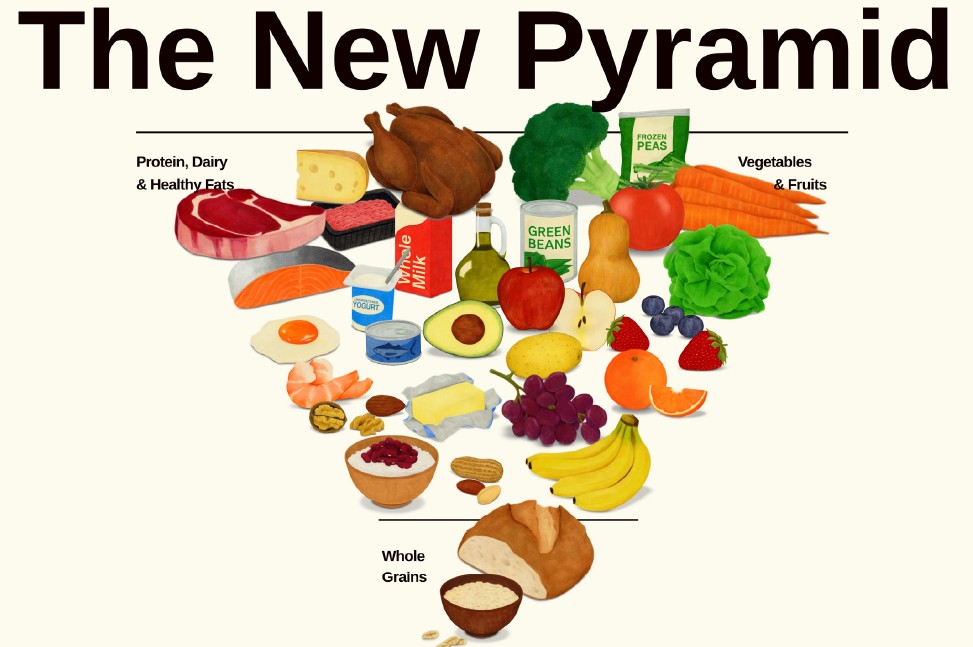
WHERE’S THE BEEF? It’s back in the highest level of federal food chain recommendations, replacing plant-forward suggestions by impartial scientists. PHOTO: USDA
The final review
The Executive Summary then advanced to the USDA, where it was reviewed and revised by a team of experts appointed by U.S. Health and Human Services Secretary Robert F. Kennedy, Jr. and U.S. Department of Agriculture Secretary Brooke Rollins. When the final Dietary Guidelines for Americans, 2025–2030 were released, many of the advisory committee’s plant-forward recommendations were sidelined.
This decision to ignore the Executive Summary is explained in the 90-page report (publicly available online) as a “shift from corporate-favored advice to science-backed recommendations for better public health, focusing on ‘real food’”.
Meanwhile the names of the USDA-appointed committee members and their ties to industry, including National Cattlemen’s Beef Association, National Dairy Council, General Mills and the National Pork Board are plainly listed.
Local advocates such as Eat for the Earth Executive Director Beth Love raised concerns about conflicts of interest among reviewers with ties to meat, dairy, and low-carb commercial programs. Whether intentional or not, the resulting guidance reflects a familiar American pattern: animal products elevated, plants negotiable.
Take the USDA’s top recommendation to “prioritize protein at every meal.” This is not a commentary on the importance of protein. It supports muscle maintenance, satiety, and blood sugar balance. But without context, the advice risks crowding out fiber-rich plant foods, which is especially troubling when roughly 95% of Americans already fall short on fiber intake.
EATING RIGHT Luckily, Santa Cruz markets have more organic, locally-grown and healthy choices than much of the country. PHOTO: qunica.com AdobeStock
Institutions take notice.
The Harvard School of Public Health released a critique of the increased recommendations for red meat and dairy, as contradicting “extensive evidence on their links to negative health outcomes, as noted by Harvard’s own nutrition experts.”
Meanwhile, Dr. Gardner issued a careful analysis of the report, stating, “Despite carrying forward familiar themes, the guidelines fall short of translating nutrition science into clear, coherent, and equitable guidance.”
Among the detailed breakdown of the new guidelines, Gardner writes, “Protein is overemphasized, while fiber is downplayed. The guidelines place a strong emphasis on protein intake, despite robust evidence that shows most Americans already consume sufficient amounts. The proposed protein targets are difficult to meet without exceeding recommended limits for saturated fat and sodium”.
In reality, Americans are eating roughly twice as much meat as we did several decades ago. The rise of diet-related disease over the past century closely tracks the rise of factory-farmed meat, not because meat itself is new to the human diet, but because how meat is produced, processed, and consumed has fundamentally changed. To be sure, low-cost, readily available meat isn’t the only change that has impacted our rising disease rates, but it’s one worth taking a closer look at.
From Farm to Factory
For most of human history, meat was eaten occasionally, in relatively small portions, sourced from pasture-raised animals, and consumed as part of meals dominated by plants. After World War II, industrial agriculture transformed meat into a cheap, abundant, daily staple. Government subsidies, feedlots, antibiotics, and confinement operations dramatically increased supply while driving down cost. Portion sizes ballooned. Meat moved from side dish to centerpiece.
Modern industrial meat differs from its historical counterpart in important ways. Grain-fed animals produce meat higher in saturated fat. Routine antibiotic use contributes to resistance and microbiome disruption. Processing often adds sodium, preservatives, brines, and seasoning solutions. Ultra-processed meat products, deli meats, fast food, and frozen meals became dietary staples.
Not coincidentally, this shift parallels rising rates of cardiovascular disease, type 2 diabetes, obesity, and certain cancers, particularly colorectal cancer. Large epidemiological studies consistently link high intake of red and processed meat, especially factory-farmed and heavily processed forms, to increased disease risk. Processed meats show the strongest and most reliable associations.
The displacement effect
One of the most overlooked effects of increased meat consumption is known as displacement. Diets high in factory-farmed meat tend to be lower in fiber, legumes, whole grains, fruits, and vegetables. When meat crowds out plants, gut health suffers, inflammation rises, and metabolic resilience declines. This helps explain why populations that eat less meat but more plants, Mediterranean and Blue Zone cultures in particular, experience lower rates of chronic disease and longer, healthier lives.
The issue isn’t an occasional steak or culturally traditional meat consumption. It’s the daily normalization of large portions of cheap, industrially produced meat. In traditional food cultures, meat adds flavor rather than bulk, is paired with vegetables and grains, and is eaten mindfully and socially.
Seen this way, diet-related disease didn’t rise because humans suddenly started eating meat. It rose because food systems shifted toward speed, scale, and profit, disconnecting food from ecology, culture, and health. The most consistent solution across decades of nutrition research isn’t elimination, it’s rebalancing: less factory-farmed, processed meat; more whole, minimally processed plant foods; better sourcing, smaller portions, and greater intention.
A more grounded, Mediterranean-style approach might sound like this: include a source of protein at most meals, build meals around whole foods and variety with protein as a supporting player, and aim for enough protein across the day rather than perfection on every plate. In practice, that could look like beans in soups, yogurt or tofu at breakfast, fish alongside vegetables and whole grains, or hummus and nuts as snacks.
Milk-drinking cultures: mixed outcomes
Second on the list of new recommendations, the advice to prioritize full-fat dairy also raised eyebrows. Even the American Heart Association issued a carefully worded concern, noting that such guidance could unintentionally increase saturated fat intake, a known driver of cardiovascular disease.
Globally, the relationship between milk and health is far more nuanced than the long-standing message that dairy is essential for strong bones. Many of the world’s healthiest, longest-living populations have traditionally consumed little to no cow’s milk. East Asian cultures historically had low dairy intake yet low hip fracture rates until Western diets took hold, relying instead on leafy greens, calcium-set tofu, sesame seeds, sea vegetables, and small fish eaten with bones.
Mediterranean regions consume modest amounts of yogurt or cheese, not large glasses of milk, and consistently show low cardiovascular disease rates and high longevity. Blue Zone communities–areas known for long life spans–such as Okinawa, Ikaria, and Nicoya, consume dairy minimally, if at all, yet maintain strength and mobility well into old age.
In these cultures, bone health is supported by regular weight-bearing movement, adequate vitamin D from sun exposure, high intake of fruits, vegetables, legumes, and whole foods, and lower consumption of ultra-processed foods.
By contrast, countries with the highest milk consumption, the U.S., Canada, Northern Europe, and Australia, do not consistently show better health outcomes. Hip fracture rates are often higher, as are rates of cardiovascular disease, obesity, and type 2 diabetes. Large cohort studies have found no clear protective effect of milk on fracture risk, and in some cases, higher milk intake is associated with increased mortality, while fermented dairy shows more neutral or modestly beneficial effects.
This doesn’t suggest drinking milk is harmful, but it does challenge the idea that it’s necessary.
The Big Picture
When I lead workshops, the most common refrain I hear is, “Nutrition advice is always changing.” And it’s true, if you’re paying attention to headlines, influencers, and algorithm-driven wellness trends, it can feel impossible to keep up. One week fat is the villain, the next it’s carbs, then protein, then seed oils, then sugar in fruit. But when we zoom out, the big picture hasn’t shifted nearly as much as the noise would have us believe.
The Mediterranean Diet and the diets of Blue Zone populations have remained remarkably consistent for centuries. Long before nutrition science, tracking apps, or supplement aisles, these cultures were quietly producing the best outcomes we know of for longevity and disease-free living. They did so without factory farming, ultra-processed foods, or a reliance on expensive interventions. Instead, the emphasis was on fresh, local food, shared meals, seasonal eating, and enjoyment, rather than counting grams of nutrients or calories.
For those new to these terms, both the Mediterranean Diet and the Blue Zones framework were coined in response to researchers noticing something curious: certain populations around the world were living significantly longer, healthier lives than those of us in the United States. When scientists studied these populations more closely, patterns emerged—not just in what people ate, but in how they lived.
The Mediterranean Diet
The Mediterranean Diet is less a rigid plan and more a pattern of eating shaped by geography, culture, and tradition. It centers on vegetables, fruits, legumes, whole grains, nuts, seeds, and olive oil as the primary fat. Fish and seafood appear regularly, while meat, especially red meat, is eaten sparingly. Meals are often simple, built from a handful of high-quality ingredients, and enjoyed slowly.
What’s often missed is that this way of eating evolved out of necessity, not optimization. People ate what was available locally and seasonally. Food was prepared at home, often from scratch, and meals were social. Wine, when included, was modest and typically consumed with food. There was no obsession with perfection, just consistency over time. The result? Lower rates of heart disease, diabetes, and many chronic conditions that plague modern Western societies.
The Blue Zones Diet
The Blue Zones Diet comes from studying regions such as Sardinia, Italy, Okinawa, Japan, Ikaria, Greece and perhaps more surprisingly, Loma Linda, California. All represent places where people routinely live into their 90s and beyond with high quality of life. While the foods vary by region, the similarities are striking. Diets are overwhelmingly plant-based, with beans and legumes as staples. Animal products are used sparingly, often as flavor rather than centerpiece. Processed foods are virtually absent.
Equally important is what’s not present: calorie tracking, protein targets, “superfoods,” or biohacking protocols. People eat enough, stop when they’re satisfied, and maintain stable weights over decades, not through restriction, but through rhythm. Members of these societies are not known for asceticism, denying themselves the good stuff to look good on Instagram. Instead, these regions are known for the deliciousness of their cuisine.
Case Study: Loma Linda, California
One of the most fascinating real-life examples is Loma Linda, California—home to a large population of Seventh-day Adventists and the only recognized Blue Zone in the United States. Despite living in the same broader food environment as the rest of the country, this community experiences significantly lower rates of heart disease, cancer, and obesity.
Why? Their dietary patterns closely resemble those of other Blue Zones: mostly plants, minimal processed food, modest portions, and regular meal routines. Many Adventists are vegetarian or plant-forward, but just as important are shared meals, regular movement, strong social ties, and a built-in rhythm of rest. Their health outcomes remind us that culture can be more powerful than convenience, and that longevity is not a mystery reserved for faraway places.
Rather than reducing food to a set of numbers, these communities use it as a source of celebration, connection and community. Maybe that’s what’s missing in our complicated food culture? Or perhaps we’ve sacrificed all of that for efficiency, and in the process, are left satiated, but still somehow unsatisfied.
Diet Is Incomplete
Both the Mediterranean and Blue Zones Diets are short-changed without acknowledging the lifestyle that is inseparable from the diet itself. These cultures do not revolve around calorie counting, macro tracking, or external notifications of when and what to eat. The mind-body connection is reliable enough. Movement is woven into daily life through walking, gardening, cooking, and manual tasks. Rest is respected. Stress is buffered by the community. Meals are not rushed or eaten alone in cars.
This is a critical distinction. In the U.S., we’ve attempted to extract diet from context and turn it into a product, something to optimize, purchase, and control. In doing so, we’ve made eating far more complicated than it needs to be. And far less enjoyable.
So the question becomes: why has nutrition in the U.S. become so confusing? Humans have been eating for a very long time, and the data on what works is already in. Resources like the Harvard School of Public Health, and US News and World Report’s annual list of expert-recommended diets are free and unbiased sources of information that all point to the same basic principles.
But is this where we get our nutrition information? Rarely. Instead, our attention is pulled this way and that by our devices as the latest “diet news” beckons. When nutrition science starts to feel overwhelming, it’s worth asking a simple question: Who benefits from providing this new recommendation? If the answer is commercially biased, delivered by an influencer or ad, the answer is, probably not you.
Because at the end of the day, the quiet wisdom of “mostly plants” still holds true, but so does slowing down, sharing meals and reclaiming the time-honored joy of simply delicious food.
From Warning to Healing: A Cultural Renaissance Returns to the Vets Hall
The silence inside the Santa Cruz Veterans Memorial Building on October 24 was the loudest thing I have ever heard.
Attorney Danny Sheehan warned a packed room about the “masked bandits,” his term for ICE, and the urgent need for radical action. A couple months later, his warnings have become daily headlines. The weight of his words stirred memories of my own lineage, my Jewish ancestors who fled the Holocaust, my identity as a Zionist Jew, as most Jews are, and my beloved nanny from Mexico who helped raise me, walking miles across borders to find safety.
Exactly three months later, on January 24, we return to that same room.
A collective called Resistance Entertainment is transforming the Vets Hall into an eleven-hour gathering of music, market, and mutual aid. Marcus Rodriguez of the Pajaro Valley Ohlone Council will open the event. Representatives from the Pomo Reservation will be present. If the stars align, attendees may witness Lakota jingle dancing, one of the most beautiful cultural ceremonies you can experience in person.
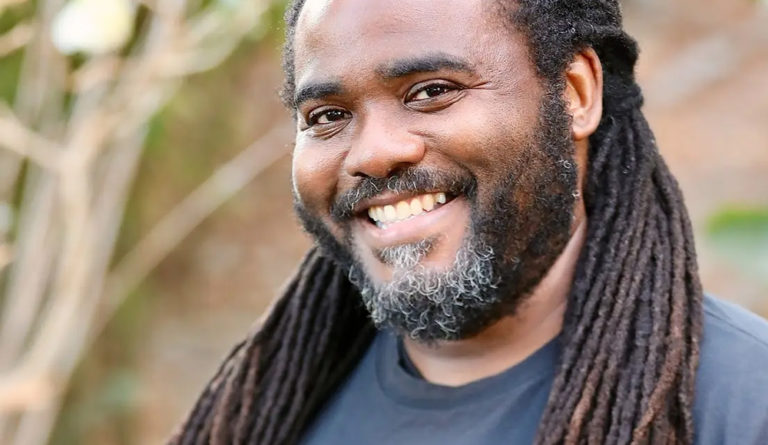
Dub Soulja
Aztec dancers set the tone at noon. Reggae fills the afternoon, including Dub Souljah, the Central Coast reggae rocker known for high-energy performances rooted in unity and resistance (seen above), and King Namoa, flying in from Hawaii. The evening shifts to conscious hip-hop and rock with Indigenous Cats and headliners The Neighborhood Kids, fresh off an East Coast tour with Rage Against the Machine’s Tom Morello. Juan Dominguez of Burn the Wagon hosts.
This year’s gathering reflects a larger community footprint than past events. Roughly 30 vendors will be present, including community organizations, artists, and Indigenous makers.
The event is family-friendly, all-ages, and completely sober. No alcohol will be served.
“Pretty much everyone present believes that sobriety is sacred,” says one of the organizers. “To have such a young, powerful group like The Neighborhood Kids who live a sober lifestyle, we think that’s something cool to bring to the community. We want to change the culture. It’s a push for sober living.”
The gathering will include a kids’ section with games and activities. Teens are welcome on their own.
LiL MC
LiL MC, a bilingual rapper, producer, and Hip Hop educator from the Bay Area, brings music and lived perspective to the gathering at the Santa Cruz Veterans Memorial Building. Credit: Views From The Bay
Bay Area artist LiL MC brings both musical power and lived perspective to the event. A bilingual rapper, producer, and Hip Hop educator, LiL MC has captivated audiences across the country and internationally for more than 15 years. Her work blends sharp lyricism with a deep commitment to education, organizing, and cultural memory.
“What we’re witnessing right now is a collapse in our society,” she says. “The work ahead is about reducing the harm, about making sure that collapse doesn’t fall on the most vulnerable. That’s why events like these matter. They show what it looks like to stand up to fear and hate. Because the truth is, those in power are more afraid of us than we are of them.”
Her words frame the gathering not as spectacle, but as harm reduction through culture.
Lysn
Lysn performs with his band, drawing the audience into a rhythm-driven live set at the Santa Cruz Veterans Memorial Building. Photo credit: Views From The Bay
Also performing is Lysn, whose music taps into rhythmic patterns and presence. As his band steers the momentum, the audience is pulled into an experience that speaks for itself.
A dollar from every ticket goes to the Center for Farmworker Families, which provides aid, youth programs, and scholarships to farmworkers in Watsonville and beyond. Dr. Ann Lopez, the founder, will share words. Representatives from Indigenous Justice, the organization behind the sunrise ceremony on Alcatraz, will be present as well.
When I asked what success would look like for this event, the answer came in two parts: raising a meaningful donation for the Center for Farmworker Families, and something simpler.
“That people connect and bond and walk away with new friends.”
My nanny gave me her blessing to share her story. When I texted her about getting legal help, she wrote back, “I’m not interested in staying in the country. At this time I’m ready to retire and go home in peace.” She’s turned down lawyers before. “It’s complicated. I’m too old and it’s a long process.”
Our system failed her. Organizations like the Center for Farmworker Families exist because it keeps failing.
But that weight is not the theme of this gathering. The theme is community. Reggae bands singing about love. Conscious hip-hop. Different tribes. Teachers and grassroots organizers. All walks of life building together.
On October 24, we faced what we’re fighting against. On January 24, come see what we’re fighting for.
Event Details: The Neighborhood Kids + Indigenous Cats Full Live Band Concert January 24, 2026 | Doors at Noon Veterans Memorial Building, 846 Front St, Santa Cruz Tickets via Resistance Entertainment
On Jan. 28, the Santa Cruz County Office of Education and Monarch Services will co-present the film “The Mask You Live In,” a documentary that explores how boys and young men navigate a society that often demands an unrealistic ideal of masculinity.
The screening will include a discussion with Oakland educator Ashanti Branch, who appears in the film and has built his career around helping young men work through those expectations.
Branch was a civil engineer working as a construction project manager and earning a good salary. By all accounts, he had successfully clawed his way out of the poverty he knew in Oakland, where he was raised by a single mother who worked as a teacher.
“I wanted to be rich,” he said. “I grew up poor, so I knew that poor wasn’t fun.”
But his life took a dramatic turn when he began tutoring struggling students and discovered a passion for working with young people.
He became a teacher and, in his first year in 2004, launched the Ever Forward Club to support African American and Latino males he felt were not meeting their potential.
As he worked more closely with students, Branch said he began to see a pattern: boys were often unsure how to navigate adolescence and early adulthood, particularly in a culture that prizes toughness and emotional control.
“Young men are amazing and incredible and talented,” Branch said, “but they live in a world where they have to keep anything that’s not amazing, talented, and creative alive.”
The rest—what amounts to their potential —must be suppressed until the “dam bursts,” he said.
Branch said the consequences of that pressure can be severe. He pointed to men’s disproportionate presence in the prison system, and said emotional isolation can lead young people to feel constantly on edge.
“Our young men are walking around like landmines,” he said. “They’re not talking about what they’re dealing with. They’re not talking about what’s going on with them. And what ends up happening is an explosion is just brewing.”
Branch said he came to believe that the cultural expectation to “be a man” can be both unrealistic and destructive—and that boys often absorb those expectations long before they understand what they’re being taught to hide.
“The Mask You Live In” explores American masculinity and the cultural script of what it means to be a man — and how those ideas can shape boys’ identities, relationships, and sense of self.
“The film is really just a way of not only helping write a narrative around what’s going on,” Branch said, “but beginning a conversation with families and schools and teachers and educators and coaches: how do we better support boys earlier, before we have to wait until something happens?”
Branch said the messages boys receive about masculinity can be contradictory and constant, coming from peers, media, and online culture.
“There’s a lot of people telling you, ‘Here’s what you have to do to be a real man,’” he said. “‘If you want to be a real man, you better do this. If you want to get respect, you better do this. If you want to get money, you better do this.’”
The uncertainty often doesn’t go away when young men leave high school.
“You’re still thinking, ‘I’m supposed to be an adult, but I’m still just trying to figure it out,’” he said.
Branch said the film’s larger message is not that boys are broken, but that they are often trained to disconnect from empathy and vulnerability — then punished for the results.
“Young men have feelings, have thoughts, can be empathetic, kind, respectful, loving,” he said. “But we train it out of them.”
The most important thing, Branch said, is to support boys by giving them consistent spaces to be honest, to be seen, and to ask questions without shame.
“Nothing was wrong with them,” he said. “But many things happened to them, and they just wanted the benefit of having somebody witness and say, ‘You’re not alone. You don’t have to carry this alone. You’re not meant to ever have to carry this alone.’”
•••
“The Mask You Live In,” directed by Jennifer Siebel Newsom, will be screened Jan. 28 at 6 p.m. at CineLux Capitola Café & Lounge, 1475 41st Ave. Branch will be in attendance. It will also be shown Feb. 23 at 6 p.m. at CineLux Scotts Valley Café & Lounge, 226 Mt. Hermon Road.
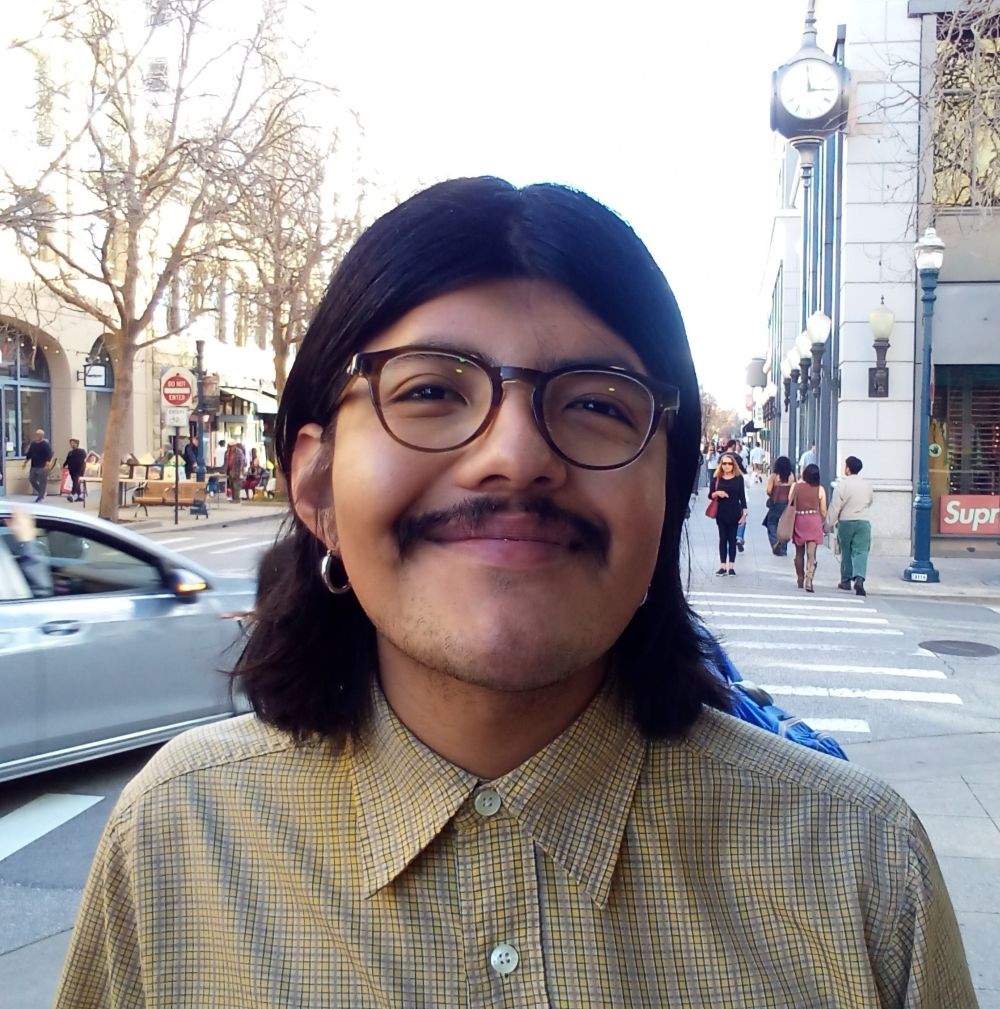
I usually dislike watching movies more than once, I don’t know why, but there are some that I’ve always come back to, and they’re different from each other. Saving Private Ryan is just a well-made war movie. No Country For Old Men. And There Will Be Blood. Every time I see something different in it.
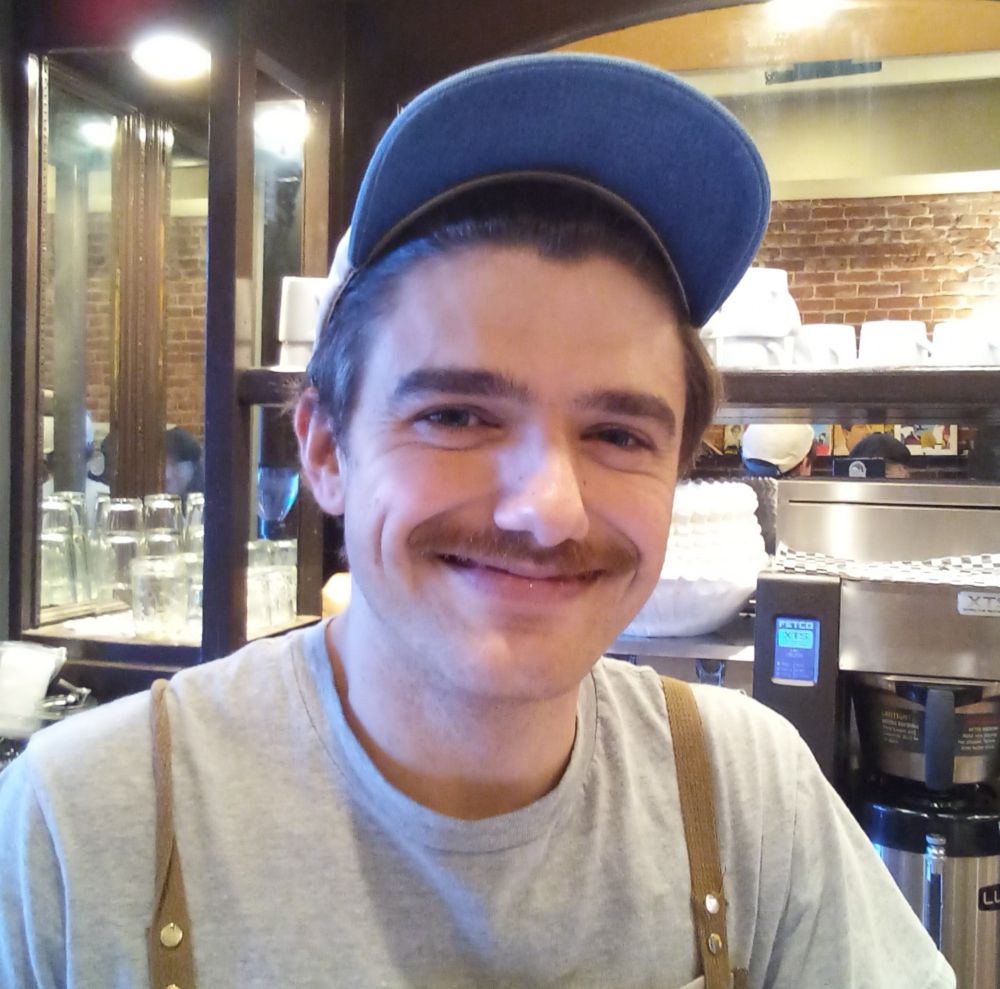
Adrian Blanco, 27, Risk Management
ANNA with YISHA
Mean Girls is the one, it’s really good. It’s just a classic.
Anna Tevis, 29, Artist
YISHA
Recently Anna and I just found The Princess Bride on a VHS tape in a cabin we rented. It held up so beautifully, we would definitely watch it again.
Yisha Gribetz, 32, Circus Artist
MILES
Star Wars, the original trilogy. It’s so nostalgic, it reminds me of my childhood, and the characters are great. The Trilogy was just a cultural phenomenon, like The Beatles, you can’t duplicate it. I recently watched all three movies back-to-back on an airline flight.
Miles Mancinelli, 28, Lulu Carpenter’s on Pacific
CARLOS
Darjeeling Express. It’s funny and awkward, and first time you laugh at the jokes, but every time you see it there are little moments that you hadn’t noticed. It’s different each time depending on how you’re feeling in your life.
Carlos Bravo, 20, Philosophy Major at S.F. State University
STEPHANIE
Harry Potter! Especially Harry Potter and the Goblet of Fire. I’m told that I don’t watch enough movies, but whenever I see that Harry Potter is on television, I have to stop everything and watch it!
Stephanie Alvarado, 30, Stockton Unified School District
Todd Snider was many things: a storyteller who would captivate his friends by spinning hilarious yarns through the night, a poet, a rebel, a hippie, a druggie, the standard bearer of unequivocal personal freedom, but above all, Todd Snider was a songwriter.
The revered Nashville tunesmith and special friend to Santa Cruz has passed, and on Jan. 31 more than 20 local musicians will perform their favorite Snider songs at the Kuumbwa Jazz Center, an evening to celebrate the depth and scope of the impact this endlessly prolific songwriter and storyteller had on Santa Cruz. His longtime friend Jim Lewin told me that hearing a variety of Snider’s songs can lead to understanding Snider’s overall freedom-based philosophy, an ethos straight out of Santa Cruz hippie culture.
Jim Lewin played with Snider, wrote with him, recorded records with him and carried on with him night after night. Jim says, “Todd Snider wrote more songs than anyone, wrote more offbeat songs, told funnier jokes, partied harder, took more drugs, hung out with cooler people, and dated the coolest chicks. He told the best stories, better, longer, funnier stories than anyone. If Dylan was the voice of the idealist 60s, Snider was the muse of the broken dream. The bedraggled, stoned poet of our fractured, disillusioned times. He spoke for us all.”
Snider flaunted his faults and put them under a microscope for us. Through that lens we can see our own faults and maybe help us forgive ourselves too. You get the feeling that, though Snider may or may not be making these hilarious stories up, somehow, you’re getting the absolute truth.
Lewin says, “That was one of his superpowers, honesty. Kids today need more good influences like Todd Snider to warn them off the straight and narrow.”
Todd’s commitment to songwriting and his connection with songwriters is legendary. An extremely credible source told me Todd Snider and Loretta Lynn made out. Close to 80, she asked him out to her house to write a song, directed him to a pile of lyrics she had stored in a refrigerator and said, “Smoke one of your doobies and see if anything jumps out at you.” Snider talked about their relationship, “I have to admit I had a genuine crush on her …she was magic.” (https://www.salvationsouth.com/im-going-to-heaven-tonight-loretta-lynn-todd-snider/?utm_source=chatgpt.com)
When talking about his 2014 book, I Never Met a Story I Didn’t Like, Snider said he was inspired to go all in on songwriting by his heroes, Kris Kristofferson, Jerry Jeff Walker, John Prine, and Billy Joe Shaver, for “doing what they had to do, and if somebody hadn’t come along and fed them, they would have starved to death. That’s what I set out to do.”
Jim Lewin said, “Todd was fearless. Imagine standing in front of a huge audience in the middle of Texas, singing “Conservative Christian Right-Wing Republican Straight White Males.” Snider had once said, “Playing originals is like getting in front of a crowd and sticking your dick in a fan.”
From KPIG radio, Michael Gaither will perform “D.B. Cooper”, a tune that turns a legendary unsolved airline hijacking into a rambling, philosophical, barroom tale. It’s funny, but also is about myth, American outlaw fantasies and taps into our rebellious urge to believe that someone, somewhere, got away clean. Gaither said “I’m thrilled to be singing Todd’s D.B. Cooper song. It’s the only unsolved hijacking in U.S. history.” Who doesn’t secretly want to be part of a perfectly executed heist?
“With all those men working overtime they swore they would bring him down But a parachute and a few hundred dollars was all that they ever found”
Gaither says, “Todd loved Santa Cruz and Santa Cruz loved Todd. It was a hippie town, and it was an Americana town. You know, KPIG was a big part of our community here and KPIG played Todd a lot.”
KSQD jock and Americana basso crooner Andy Fuhrman (@brooklynbillymusic) will perform “Alright Guy”, a beloved anthem of finding contentment in being simply “alright.” Fuhrman says, ‘“Alright Guy” expresses a humble, self-deprecating, yet positive view of himself as a normal, decent person.” The laughs come from his honesty; he’s not failing, he is enough. The song let’s all of us give ourselves a break. “Alright Guy” makes me think, “I’m not a perfect person, I may not even be the person I want to be, but hey man, really, I ain’t so bad.” Fuhrman says, “He’s writing for you. He’s just trying to be himself. He wasn’t trying to be anybody else. He wasn’t trying to play fancy guitar. He inspired so many of us, he was a four-chord songwriter who came up with great songs and great stories. Four chords.” Jim Lewin and Harpin’ Jonny Troutner will back up Fuhrman.
A Todd Snider Tribute will fill the Kuumbwa with musicians who are fans and fans who are musicians to celebrate a songwriter who inspires us with humor that is wielded with kindness and intelligence. His songs are as powerful as any protest song or love ballad, and they make us laugh because they understand us. In times like these, in our epistemic collapse where we try to survive the relentless, gaslit, post-truth bullshit, laughing at the truth from an Alright Guy just might give us shelter from the shitstorm.
A Todd Snider Tribute is 7pm Saturday, Jan. 31 at the Kuumbwa Jazz Center. This is a benefit for Encompass Community Services, with all the proceeds going towards early childhood education, youth mental health counseling and family counseling. Tickets are $50 advance;$60 door.
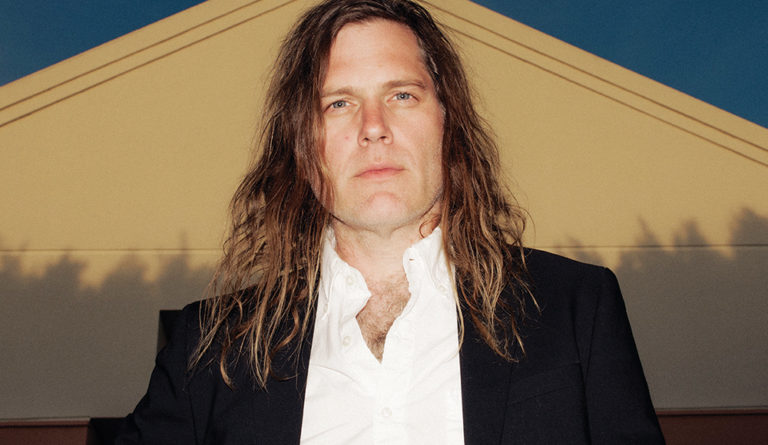
What to call “Baby Man,” the latest outing by Fruit Bats, the one-man act that is actually singer-songwriter Eric D. Johnson?
Recorded in a spare room over 10 days back in January 2025, this 10-song collection finds the Midwest native accompanying himself with the barest piano or guitar accompaniment, with an occasional synth wash thrown in for good measure. It’s intimate in both its arrangements and the subject matter, be it existential introspection, love and loss or the passing of a beloved pet.
Literally the essence of the bedroom pop genre, “Baby Man” is a lo-fi exercise in execution that retains sonic richness thanks to Johnson’s collaboration with producer Thom Monahan. What makes the 11th Fruit Bats studio recording so intriguing is how far the results landed from its creator’s initial creative intentions.
“This was initially supposed to be a midterm project — something low-key, maybe some covers and other songs done lo-fi in my bedroom,” Johnson recalled.
“I started writing some and thought it shouldn’t be covers and tossed-off songs. It became a thing where I was going to write all of this over the course of making it. A lot of times, my songs are fragments of ideas that take about a year to put together. I don’t have a hard and fast rule, but it turned into a mandate of minimalism as well. Of course, having Thom Monahan on board, his sonic skill is far from minimalist, so it’s sort of big-sounding in some ways with very simple layers.”
The duo’s relationship dates back 20 years, when both were involved in the San Francisco indie folk scene that included Devendra Banhart, Vetiver and Papercuts. Having worked on a number of Fruit Bats records together, the twosome maintained a friendship despite not having recorded together since 2019’s “Gold Past Life.”
“I think I could have done this alone and had it be intimate and lo-fi, but it probably wouldn’t have sounded as well,” Johnson said.
“Because of our friendship, you can make a vulnerable kind of music in front of someone you feel comfortable being vulnerable around. Not that I couldn’t have done that with someone else, it was just way easier with him. It was like having a family member there. We also have new bags of tricks we may have amassed during that time, so that was cool and really fun.”
The name Fruit Bats came from random words he posted on cassette tapes. The cozy nature of “Baby Man” has translated well for Johnson in a live setting on a current slate of dates that is winding down. Hitting the stage with nothing more than a guitar, harmonica and a minimal keyboard set-up, the juxtaposition of not playing with a full band has made for some pleasant surprises from both sides of the mic.
“It’s just me for 90 to 100 minutes doing a lot of these ‘Baby Man songs,’” Johnson explained. “People have generally been seated and very quiet. At a Fruit Bats show, it’s pretty fun and kind of a party atmosphere.
“This is a very different animal from what people might be used to at these shows. I’m playing these nice theaters and it’s an opportunity for me to play some deeper back-catalog stuff if people request it and there is a little request moment.
“It’s fun and a little bit different every night because every audience is kind of a different organism every night. The easy answer is it’s me, but it’s quiet and vulnerable. A few times I’d play and go backstage afterwards and ask my manager how long I’d played for and it was like an hour and 45 minutes. I’d go into a bit of a trance at times because I’d think I’d be playing for about an hour or something like that. There’s no opening act, so I figured I’d better give them their money’s worth.”
Johnson’s music roots date back to a Midwestern upbringing where he was weaned on plenty of ‘70s and ‘80s radio hits (Men at Work’s 1983 sophomore bow “Cargo” was the first album the then-seven-year-old definitely asked for and received) and his first concert experience was catching Def Leppard on the “Hysteria” album tour at Wisconsin’s Alpine Music Theater.
“And while he first took the stage in high school as a rhythm guitarist in his friend’s band after demurring from initially being asked to be the group’s singer (“I was too frightened to stand there at the microphone and asked my friend Steve to teach me some guitar chords. It was the function of fear of being a front man”), the Grateful Dead proved to be a major creative inflection point.
“Freshman year of high school my friend went to their concert and came back with a tie-dye on and patchouli and I was like, ‘What the hell is that?,” he said. “Then I got ‘Skeletons From the Closet’ on tape and went to see them the following summer in ’91 and was totally enchanted. By ’95, I was 19 and following them around.
“As a burgeoning songwriter, I thought this Robert Hunter guy was pretty good. I’ve sort of been a beneficiary of being a Deadhead who has never played a guitar solo. I appreciate them as a band with an incredible songwriting prowess. I love the jamming — I love everything.”
With a new full-band still-unnamed Fruit Bats album set to drop in June (“It’s an emotional companion piece to ‘Baby Man’,” Johnson said), he is continuing to do what feels right, trends be damned. While he says the advice of just being yourself is a bit of a cliché, it’s a north star that’s served him well.
“My advice to younger musicians, not to quote my own advice as I don’t claim to be this font of wisdom, is not wanting to know the odds,” he said. “Just do your thing because if you’re doing it for anyone other than yourself and your own spirit — maybe it’ll work, but if it doesn’t, at least you died trying.”
Fruit Bats plays the Rio Theatre 8pm Jan.30,205 Soquel Ave. Santa Cruz. Tickets $42-$58.
Master astrologer Steven Forrest understands you Aries people well. He says that the riskiest strategy you can pursue is to constantly seek safety. It’s crucial for you to always be on the lookout for adventure. One of your chief assignments is to cultivate courage—especially the kind of brave boldness that arises as you explore unknown territory. To rouse the magic that really matters, you must face your fears regularly. The coming months will be an ideal time for you to dive in and celebrate this approach to life.
TAURUS April 20-May 20
You are an ambassador from the material world to the realm of spirit—and vice versa. One of your prime assignments is the opposite of what the transcendence-obsessed gurus preach. You’re here to prove that the flesh is holy, pleasure is a form of prayer and the senses are portals to the divine. When you revel in earthy delights, when you luxuriate in rich textures and tastes and scents, you’re not being “attached” or “unspiritual.” You’re enacting a radical sacred stance. Being exuberantly immersed in the material world isn’t a mistake to overcome but a blessing to savor. May you redouble your subversive work of treating your body as a cathedral and sensual enjoyments as sacraments.
GEMINI May 21-June 20
Everything that’s meant for you is trying to find its way to you. Here’s the problem: It can’t deliver the goods if you’re in constant motion. The boons trying to reach you are circling, waiting for a stable landing spot. If you keep up the restless roaming, life might have to slow you down, even stop you, so you’ll be still enough to embody receptivity. Don’t wait for that. Pause now. Set aside whatever’s feeding your restlessness and tune into the quiet signal of your own center. The moment you do, bounties will start arriving.
CANCER June 21-July 22
Artist Louise Bourgeois said, “I am what I do with my hands.” I will adapt this declaration for your use, Cancerian: You are what you do with your feelings. You are the structures, sanctuaries and nourishment you create from the raw material of your sensitivity. It’s one of your superpowers. I understand that some people mistake emotional depth for passive vulnerability. They assume that feeling everything means doing nothing. But you prove that bias wrong. You are potentially a master builder. You can convert the flood waters of emotion into resources that hold, protect and feed. I hope you will do this lavishly in the coming weeks.
LEO July 23-Aug. 22
Admiring writers often say that the Balinese people have no traditional word for “art.” Making things beautiful is woven into everyday life, as if everything should be done as beautifully as possible. I aspire to carry out this approach myself: infusing ordinary actions with the same care I’d bring to writing a story or song. Washing dishes, answering emails and walking to the store: All are eligible for beauty treatment. I highly recommend this practice to you in the coming weeks, Leo. It’s true that you’re renowned for your dramatic gestures, but I believe you also have an underutilized talent for teasing out glory from mundane situations. Please do that a lot in the coming weeks. For starters, make your grocery list a poem.
VIRGO Aug. 23-Sept. 22
Some American Indigenous cultures have “potlatch” ceremonies. These are elaborate gift-giving rituals where hosts gain prestige by generously and freely bestowing their riches on others. Circulating wealth, instead of hoarding it, is honored and celebrated. Is that economically irrational? Only if you believe that the point of resources is individual accumulation rather than community vitality. Potlatch operates on a different logic: The purpose of having stuff is to make having stuff possible for others. I invite you to make that your specialty in the coming months. Assume that your own thriving depends on the flourishing of those around you.
LIBRA Sept. 23-Oct. 22
Sufi poet Rumi wrote about a “treasure in ruins.” He meant that what we’re searching for may be hidden in places where we would rather not look. Your life isn’t in ruins, Libra, but I suspect you may have been exploring exciting locations while shunning mundane ones that actually hold your answers. What do you think? Is that possible? Just for fun, investigate the neglected, ignored and boring places. Try out the hypothesis that a golden discovery awaits you in some unfinished business or a situation you feel an aversion to.
SCORPIO Oct. 23-Nov. 21
In 1839, Scorpio artist Louis Daguerre perfected the daguerreotype, an early version of photography. The images were so detailed that you could count the threads in a subject’s clothing. Alas, they required minutes of perfect stillness to capture. To prevent blurring and distortion, people held their breath, fixed their gaze and avoided fidgeting. Your power metaphor for the coming weeks, Scorpio, is this: the long exposure. The vivid truths in your life will reveal themselves only if you give them more time than you’re used to. So please resist the temptation to leap into action. Be willing to let every process fully develop. Don’t push the pace beyond what yields clarity. Linger on the threshold until all the details sharpen.
SAGITTARIUS Nov. 22-Dec. 21
As I have promised you a million times, I will NEVER exaggerate. And though you may wonder if the statements I’m about to make are excessive and overblown, I assure you they are not. The fact is, dear Sagittarius, that everything you have always wanted to enhance and upgrade about togetherness is now possible to accomplish, and will continue to be for months to come. If you dare to dismantle your outmoded beliefs about love and deep friendship—every comforting myth, every conditioned response, every inherited instinct—you will discover new dimensions of intimacy that could inspire you forever.
CAPRICORN Dec. 22-Jan. 19
In Renaissance painting, chiaroscuro refers to the use of strong contrasts between light and dark. It’s a technique that enhances the sense of depth. I believe your life may be in an intense chiaroscuro phase. As your joys grow bright, your doubts appear darker. As your understanding deepens, your perplexity mounts. Is this a problem? I prefer to understand it as an opportunity. For best results, study it closely. Maybe your anxiety is showing you what you care about. Perhaps your sadness is a sign of your growing emotional power. So find a way to benefit from the contrasts, dear Capricorn. Let shadows teach you how to fully appreciate the illumination.
AQUARIUS Jan. 20-Feb. 18
You are a spy from the future. Thank you for your service. I love to see your boldness as you smuggle innovative ideas into a present that may or may not be ready for them. Your feelings of alienation are sometimes uncomfortable, but they are crucial to the treasure you offer us. You see patterns others miss because you refuse to be hypnotized by consensus reality. Keep up the excellent work, please. May you honor your need to tinker with impossibilities and imagine alternatives to what everyone else imagines is inevitable. You are proof that we don’t have to accept inherited structures as inevitable.
PISCES Feb. 19-March 20
Your unconscious mind is extra communicative, dear Pisces. Hooray. Take advantage. Pay attention to weird images in dreams and songs that linger in your head. Be alert for seemingly random thoughts as they surface. Bypassing logic, your deep psyche is trying to show you ripe secrets and provocative hints. Your duty is to be receptive. So keep a journal or recording device by your bed. Notice which memories rise up out of nowhere. Be grateful for striking coincidences. These are invitations to tune in to meaningful feelings and truths you’ve been missing.
Homework: Give yourself the biggest compliment you can dream up. FreeWillAstrology.Newsletter.com
SOUL BRASS BAND Soul Brass Band riffs with hip hop grit and jazz stylings, which transports audiences to a New Orleans block party. Bringing the NOLA spirit of second line to the stage, their vivacious stage presence is complete with an all-star brass band delivering street soul sounds and deep funk. Forged together by drummer and culture force, Derrick “Smoker” Freeman, the band came to fruition through a chance meeting on a music video set. After playing together for ten years, the band has a natural camaraderie when it comes to improvisational licks and a deep uplifting groove. SHELLY NOVO
ELEW PLAYS STING Earning the Thelonious Monk International Piano Competition and three Grammy-nominations, ELEW’s skill and innovation as a pianist set him above the rest. With classical training and inspiration from European masters of Baroque Counterpoint, ELEW excels in awakening compositions of Chopin and Duke Ellington. ELEW shines in jazz performance, but he dazzles in his ability to transform rock anthems into experimental masterpieces. By fusing piano techniques with rock guitar ideas, he delivers unique executions of songs by Nirvana, Michael Jackson, and of course, Sting, whose songs he is eager to bring to the stage after opening for the artist’s “My Songs 3.0” Tour. SN
INFO: 7pm, Kuumbwa Jazz Center, 320-2 Cedar Street, Santa Cruz. $37-42. 395-0767.
FRIDAY 1/23
SINGER SONGWRITER
SAM BLASUCCI Los Angeles singer-songwriter Sam Blasucci came to prominence via his work in Mapache, the rootsy rock outfit he founded in 2016 with Clay Finch. That group released four albums and an EP. Turning from guitar to piano, Blasucci launched a concurrent solo career with 2023’s Off My Stars. His prolific solo project has since yielded 2024’s Real Life Thing, and a double album in 2025 called Physical Dream; the latter comprises All Blue and Orchids. Through it all, Blasucci combines his folk stylings with singer-songwriter values, a pop sensibility, and finely textured arrangements and an admirable depth of lyrical exploration. BILL KOPP
CAPTURED! BY ROBOTS Despite his name, JBOT is a human, the only human in the punk band Captured! By Robots. Tired of working with musicians who cared more about partying than about playing music, JBOT decided to build his own robot band, but when he spilled coffee on their CPUs, things went horribly wrong and he was captured by his own creations, enslaved via an implanted microchip and made to suffer their abuse while touring as a band whose shows are like an escape room with no escape. Be warned, this is what your Alexa, Siri, Chatbot are dreaming of. Doors open at 7, if Hal allows it. KEITH LOWELL JENSEN
Info: 8pm, Catalyst, 1101 Pacific Ave, Santa Cruz. $32. 713-5492.
BLUEGRASS
AJ LEE & BLUE SUMMIT The Folkyeah Presents series continues, bringing to town all the best in folk, country, bluegrass, and Americana. This time around the featured artists are festival favorites AJ Lee & Blue Summit, a group of dazzlingly proficient players including AJ Lee on mandolin and lead vocals, fiddler Jan Purat, and guitarists Scott Gates and Sullivan Tuttle. The Californian band is currently on the road promoting their third album, 2024’s City of Glass. Santa Cruz-based Kentucky Mule will open on Friday, with Joe Kaplow warming things up on Saturday. KLJ
FRED FRITH AND PHIPPS PT British guitarist Fred Frith has always operated outside the mainstream. His work with a succession of avant-garde groups—Henry Cow, Art Bears, Massacre, Skeleton Crew—brought him (if not fame and fortune) a highly regarded reputation in the world of innovative musical forces. A fascinating improvisational master, Frith is as prolific as he is adventurous, with credits on more than 400 albums to date. For this show at Indexical, Frith joins forces with Phipps Pt., the electronica folk duo of Canadian guitarist Lovage Sharrock and Bay Area musician Jon Leidecker. The music they make is unpredictable, electronic and organic, often all at once. BK
INFO: 8:30pm, Indexical, 1050 River St. #119, Santa Cruz. $20. 509-627-9491.
PUNK
C.R.A.P. January isn’t even over but most of us are already feeling the bloat. Sometimes in life, we just need to go and get the crap out of our system. Thankfully, the Blue Lagoon understands and this Saturday they’ve got enough punk for a gust buster of a night. Featuring openers Fire Drill, The Cyber Bullies and F.U.X., the night culminates in a bunch of CRAP as they celebrate the release of their second EP, the seven-song “Number Two,” which plopped out on January 17th. These guys have only been growing bigger and tighter, so be prepared for some fun and don’t forget to light a match after. MAT WEIR
INFO: 9pm, Blue Lagoon, 923 Pacific Ave., Santa Cruz. $10. 423-7117.
THEATER
24-HOUR THEATER On January 24, the student-run theater arts production company, Barnstorm Theater Company, will present a complete production that was put together in just 24 hours! After receiving a random prompt, the creativity of the students will be unleashed. Actors and the production team will work with co-directors Mim Nickel and Stephanie Kemple to write, produce, block, and present a complete work to an audience. This truly unique work of art will challenge students to coordinate and cooperate with each other as they push themselves to finish the piece. Even with the 24-hour restriction, it gives students a space to experiment and gain theater experience. ISABELLA MARIE SANGALINE
INFO: 7:30pm, UCSC Theater Arts Center Studio B100, 453 Kerr Rd, Santa Cruz. Free-$20. 459-0111.
WEDNESDAY 1/28
ROCK
MATTEO MANCUSO We don’t hear about prodigies that much anymore, but guitar player Matteo Mancuso was most certainly a prodigy when he was younger. Born in Palermo in the Italian region of Sicily, Mancuso was playing guitar at the age of 10 with his father, a professional. By the age of 12, Mancuso was performing at Jazz festivals, and in 2017, he won a scholarship to the famous Berklee College of Music in Boston. He uses his classical training to play a quasi-flamenco right-hand technique combining jazz, classical, and rock for a style that can easily be picked out in a blind test. One of the many reasons why guitar virtuoso Steve Vai has called Mancuso the “future” of rock guitar. MW
INFO: 8pm, Rio Theatre, 1205 Soquel Ave., Santa Cruz. $25. 423-8209.
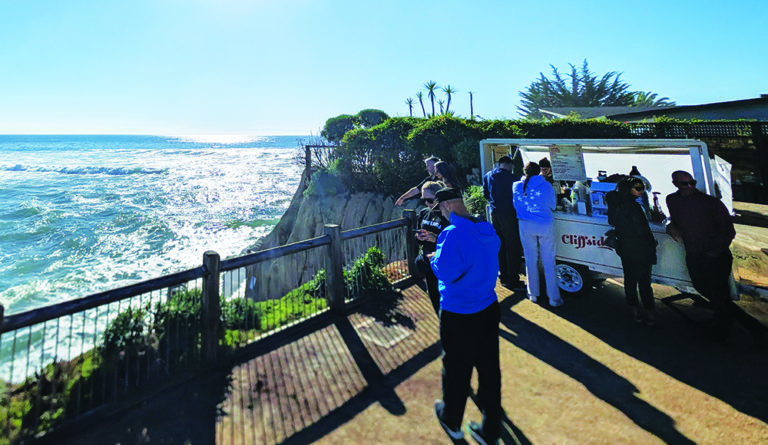
The first eye opener happens 9am-1pm Wednesday-Friday and 8am-1pm Saturday-Sunday with the Cliffside Coffee cart (Pleasure Point Park, Santa Cruz), which got rolling in summer.
As its “address” hints, CCc and creator/barista Sean Burau occupy a rare locale, namely a singular postage-stamp-sized public space next to storied Pleasure Point surf break and The Point Market (23040 E Cliff Drive, Santa Cruz).
There, Burau deploys skills honed over years of work- and home-hosted espresso gatherings to pour Verve Coffee Roaster’s best-selling Aster, a medium roast Ethiopian.
The espressos flow alongside Americanos, cappuccinos, mochas, Pacific Coast Roasters cold brews and hot chocolates; varying specials like apple cider, seasonal chais and high mountain mint teas; small-scale Zum Zum teas out of Salinas; and Dunlap’s or Original Ferrell’s Donuts on the weekends.
He keeps the menu simple by design, letting the sublime setting work its coastal comfort.
“I want to create a space in a beautiful location where everyone can get something they enjoy, whether they’re a coffee drinker, into tea or want something else,” he says. “It’s more about gathering with friends and community than anything.”
More via @cliffsidecoffeebar on Instagram.
Wake up call #2 is less palatable
The U.S. Feds are posturing to resume oil drilling on the California Coast. But that’s not happening without a fight.
I was on hand for a Jan. 9 “Stand Up, Save Our Coast” rally at Portola Hotel in Monterey to see Monterey County join Santa Cruz and Sonoma counties in opposing the Trump Administration’s plans for offshore drilling and mining.
Jan. 20, Rep. Jimmy Panetta held a telephone town hall to discuss the U.S. Department of the Interior’s Five-year Outer Continental Shelf (OCS) Oil and Gas Leasing Program Draft Proposal.
Next comes the Friday, Jan. 26, deadline to file a public comment via regulations.gov, where you can search “Continental Shelf Oil and Gas Leasing” and weigh in.
Like California State Sen. John Laird, Santa Cruz’s own long-time coastline watchdog, said at the “Stand Up” rally, “You are part of the public process.” saveourshores.org.
More to uncork
If, ahem, “pressed” to pick one wine grape varietal for the rest of my days, it’s an easy one. Pinot Noir, please, from the Santa Cruz Mountains if possible. Thank Goddess, 1) such selectivity isn’t necessary; 2) the West is awash with incredible varieties beyond the Seven Noble Grapes (Chardonnay, Sauvignon Blanc, Riesling, Cabernet Sauvignon, Merlot, Pinot Noir and Syrah). That’s a main driver behind the new Festival of Undiscovered Grapes, coming to the top floor of San Jose’s Rotary Summit Center on Saturday, Jan. 31. From Aglianico to Arneis, Verdelho to Valdiguie, such less-prevalent grapes grow in the Golden State number a whopping 110+ all told, and unlock all sorts of revelations, as 60 assembled small-batch producers will demonstrate ($75, $125 VIP, festivalofundiscoveredgrapes.com).
Fast casual intel
Real chowderheads: Sign up by Feb. 8 to compete for the best New England (white) or Manhattan (red) at the Santa Cruz Beach Boardwalk’s Clam Chowder Cook-Off Feb. 21-22, beachboardwalk.com/clam-chowder-cook-off…Last week the Monterey Bay Aquarium Seafood Watch program released updated green ratings for oysters farmed worldwide, seafoodwatch.org…Pebble Beach Food & Wine festival, now entering its third year with a21 designing the festivities, just released the chef lineup for the April 9-12 blockbuster, pebblebeachfoodandwine.com…Chief Seattle, lead us out: “If the ocean can calm itself, so can you. We are both saltwater mixed with air.”
The Santa Cruz County Regional Transportation Commission has voted to terminate its operating agreement with Progressive Rail Incorporated, a move the agency says will help advance the Coastal Rail Trail while preserving freight and excursion rail service.
Federal dietary guidelines were supposed to reflect the best available nutrition science. Instead, the final 2025–2030 USDA recommendations quietly reversed plant-forward advice from independent experts, elevating meat and dairy while sidelining fiber-rich foods. What changed—and who benefits?
From Warning to Healing: A Cultural Renaissance Returns to the Vets Hall
The silence inside the Santa Cruz Veterans Memorial Building on October 24 was the loudest thing I have ever heard.
Attorney Danny Sheehan warned a packed room about the “masked bandits,” his term for ICE, and the urgent need for radical action. A couple months later, his warnings have...
“The Mask You Live In,” is a documentary that explores how boys and young men navigate a society that often demands an unrealistic ideal of masculinity.
Literally the essence of the bedroom pop genre, “Baby Man” is a lo-fi exercise in execution that retains sonic richness thanks to Eric D. Johnson’s collaboration with producer Thom Monahan.