It’s funny to think that while most of us watch the Republican National Convention from across the country with morbid curiosity, one of Santa Cruz’s most famously leftist former mayors is in the thick of it. Chris Krohn is wandering the streets of Cleveland this week covering the convention for the BerkeleyDaily Planet. “It just brings a lot of people together that you only see from afar,” Krohn says over the phone from a noisy room. “You figure out what the questions are. Or the answers.” Krohn, a UCSC internship director who will also write a column for brattononline.com, is at his sixth national convention, and plans to go to the democratic one in Philadelphia this month as well. He talked to rapper Chuck D., who teamed up with former members of Rage Against the Machine and other artists to create a supergroup called Prophets of Rage. The band brought its “Make America Rage Again” tour to the Cleveland streets this week. He talked with Chris Matthews about President Barack Obama, marijuana legalization and the MSNBC news host’s recent interview with Bill Maher. Krohn even talked to Cleveland Mayor Frank Jackson about all the money the feds have put into the event. But Jackson, according to Krohn, doesn’t know how big of a bill the Rock ’n’ Roll Capital of the World will have to pay when all’s said and done. Law enforcement has poured in from 21 states, and California Highway Patrol is even helping out with the beat. Outside the Quicken Loans Arena, Krohn says there were about 2,000 protesters and 3,000 officers. Most of Monday’s speeches focused on familiar tropes, Krohn explains, like small government and national security. “Every one could have been written 10 years ago,” he says.
Each of the 12 signs provides humanity with a task, a specific labor, which helps humanity recognize and step upon the Path of Return. Humanity, in the Labors, is represented by Hercules, the son of God who is also the son of man (Sanskrit for the “thinking ones”—all of humanity at this time). As Hercules enters upon each sign, he faces trials and continuous tests. Each lifetime, as each sign represents, certain tasks and tests are completed. As this occurs, Hercules is flooded with understanding, his sight is widened, his mind illumined, love gathers in his heart. The 12 petals of the heart open and Hercules finally, the world disciple, enters the Rain Cloud of Knowable Things. Here intuition and pure love reside. Each sign’s labor is different building one upon the other. In Hercules’ Fourth Labor (Cancer), Hercules must have wisdom, obedience of the heart and discernment which allows him to choose rightly. This particular task is important to understand. The world situation is demanding that we, too, make “right” choice between the dual realities offered us. Our choice determines our future. From the “Labor of Cancer” we read, “The Great Presiding One within Shamballa asked the Teacher: ‘Where is the son of man, who is the son of God? How fares he, how is he being tested and with what service is he now engaged?’ We say; ‘Our world is engaged in war now, O Teacher.’” After Cancer’s fourth Labor comes Leo’s fifth Labor. “Let Hercules burnish bright his shield. Let him prepare. Hercules must have courage strong. He is to seek the Temple of the Lord. But first he must rest from the last labor, resting at the fifth Gate. Afraid yet not afraid. Alone yet not alone.”(to be continued)
ARIES: The full moon created a challenge between home and profession, bringing that duality to light so you could integrate both realities. Polarization, duality can be a source of difficulty, pulling one in two different directions. Visualize, imagine and plan for a synthesis of the two worlds, bringing them into a harvest of light. As you lead others, have both willingness and love, or leadership fails. TAURUS: You’re emerging as a teacher. The Cancer/Cap full moon is a time when the Teacher is recognized and gratitude given. The Dalai Lama said we were to rejoice in the Teacher (and the teachings). What teachers blessed you with goodness so you gained knowledge? Thank them. You are to become greater than your teachers. The student is always to surpass the teacher—the student’s spiritual task. GEMINI: You’re to be sensitive to impressions from greater realms (Venus and the starry realms) so you can understand more deeply the ancient mysteries. What concerned you prior to the Cancer festival and full moon is forgotten. Venus, Gemini’s Soul ruler, asks you to list your values (things, events, people, creatures, behaviors, facts, plans, teachers, etc.). As you see your values in words a greater self-identity emerges. CANCER: To figure out what’s truly important, we often have to observe our daily routines. What is routine this week and month and how do these routines help define you? What helps you decide what to accomplish each day? Do you provide yourself with the same nurturance, safety and security you provide others? Careful with communication. You may not be able to hear yourself clearly. LEO: Allow yourself time away from work and responsibilities. Give yourself time to use your imagination. Allow yourself to play. These soothe, comfort and create a sense of care that sometimes you seek from others. Work continues to be quite transformative and in-depth. Prepare yourself each day with proper foods and exercise so weariness doesn’t set in. Are you remembering your father? VIRGO: Your mind is always filled with new ideas and plans, detailed organizing that others never consider. So much about you is inspired. Recognize this with delight. Virgo’s ability to discern, organize and tend to things in detail are deeply creative gifts. Eliminate all that’s not needed in your home. Reimagine your home. Offer loving care to those around you. Your heart is touched by Jupiter. LIBRA: So much is in flux, with less and less knowable direction. As you change, your home life transforms. You always focus on bringing forth beauty, order and organization to all environments. Notice if your thoughts and beliefs are changing, too. If you feel obstructed in any way, look around. There’s something important to see. Be kind in all your interactions, especially with family. SCORPIO: There’s an ongoing question concerning resources, money and finances. This, at times, causes anxiety. It’s good to communicate about these things. Communicating expands awareness and calms reactions to what seems like continual change. You continually feel the need to create a hopeful philosophy of life. Paring down expenses allows for emerging new and unusual resources (and imaginative thoughts) to appear. SAGITTARIUS: It’s good to follow the advice about finances for Scorpio. A transformation is occurring, inner and outer, concerning resources and values. This is an important time when you think deeply on how you want to improve upon how you are in relationships. Notice your moods. From heights of achievement and authority to lack of confidence. These are normal behaviors for everyone in times of transition. The right time, place, direction, knowing appears. CAPRICORN: Careful driving, communicating and doing things that demand a focused mind. Neptune is refining your thinking. At first veils seem to drop over your eyes. Then your mind feels empty or confused. Then there are bursts of creativity, visions of new worlds. You will want to communicate these things. This is normal behavior for Neptune. You might have thoughts of attending church or praying more. For healing and for beauty. AQUARIUS: Tend carefully to your money. Know where it is at all times. Also, consider yourself valuable in all ways. You’re the new culture’s hero(ine), artists for the coming times, its creative spirit, dream and vision. Have confidence in all that you do, think and say. Build community whenever, wherever you can. You bring forth for others new and different perspectives. Be very disciplined with money, finances and resources. PISCES: Home is your Vestal light, your refuge, place of freedom and creativity. Carry out daily tasks of nurturance rhythmically. With Neptune in Pisces, your nervous system needs a protective enclosure. This means a home and garden of one’s own. If sounds are disturbing, take Aconite, calcium and magnesium. Some Pisces need an actual home. Pisces need the deepest care of all the signs. You want to return home again. Pray for and visualize what you need.
ARIES (March 21-April 19): You now have more luxuriant access to divine luck than you’ve had in a long time. For the foreseeable future, you could be able to induce semi-miraculous twists of fate that might normally be beyond your capacities. But here’s a caveat: The good fortune swirling in your vicinity may be odd or irregular or hard to understand. To harvest it, you will have to expand your ideas about what constitutes good fortune. It may bestow powers you didn’t even realize it was possible to have. For example, what if you temporarily have an acute talent for gravitating toward situations where smart love is in full play? TAURUS (April 20-May 20): A directory published by the U.S. Department of Labor says that my gig as an astrologer shares a category with jugglers, rodeo clowns, acrobats, carnival barkers, and stunt persons. Am I, therefore, just a charming buffoon, an amusing goofball who provides diversion from life’s serious matters? I’m fine with that. I may prefer to regard myself as a sly oracle inflamed with holy madness, but the service I provide is probably more effective if my ego doesn’t get the specific glory it yearns for. In this way, I have certain resemblances to the Taurus tribe during the next four weeks. Is it OK if you achieve success without receiving all of the credit you think you deserve? GEMINI (May 21-June 20): Over the course of a 57-year career, Japanese movie director Akira Kurosawa won 78 major awards for his work, including a Lifetime Achievement Award from the Oscars. Among the filmmakers who’ve named him as an inspirational influence are heavyweights like Ingmar Bergman, Werner Herzog, Bernardo Bertolucci, Robert Altman, Francis Ford Coppola, and Martin Scorsese. But Kurosawa wasn’t too haughty to create lighter fare. At age 86, he departed from his epic dramas to create a 30-second commercial for a yogurt drink. Did that compromise his artistic integrity? I say no. Even a genius can’t be expected to create nonstop masterpieces. Be inspired by Kurosawa, Gemini. In the coming weeks, give your best to even the most modest projects. CANCER (June 21-July 22): Capricorns may be the hardest workers of the zodiac, and Tauruses the most dogged. But in the coming weeks, I suspect you Cancerians will be the smartest workers. You will efficiently surmise the precise nature of the tasks at hand, and do what’s necessary to accomplish them. There’ll be no false starts or reliance on iffy data or slapdash trial-and-error experiments. You’ll have a light touch as you find innovative short cuts that produce better results than would be possible via the grind-it-out approach. LEO (July 23-Aug. 22): My friend’s 12-year-old daughter Brianna got a “B” on her summer school math test. She might have earned an “A” if it weren’t for a problem her teacher had with some of her work. “You got the right answer by making two mistakes that happened to cancel each other out,” he wrote on her paper next to question seven. I suspect you will soon have a similar experience. Leo. But the difference between you and Brianna is that I’m giving you an “A.” All that matters in the end is that you succeed. I don’t care if your strategy is a bit funky. VIRGO (Aug. 23-Sept. 22): Have you ever fantasized about being a different gender or race or astrological sign? Do you suspect it might be fun and liberating to completely change your wardrobe or your hairstyle or your body language? The coming weeks will be an excellent time to experiment with these variables, and with any others that would enable you to play with your identity and mutate your self-image. You have a cosmic exemption from imitating what you have done in the past. In this spirit, feel free to read all the other signs’ horoscopes, and act on the one you like best. Your word of power is “shapeshifter.” LIBRA (Sept. 23-Oct. 22): The Golden Goose Award is given annually to “scientists whose work may have been considered silly, odd, or obscure when first conducted,” but which ultimately produced dramatic advances. Entomologists Raymond Bushland and Edward Knipling were this year’s winners. More than 60 years ago they started tinkering with the sex life of the screwworm fly in an effort to stop the pest from killing livestock and wildlife throughout the American South. At first their ideas were laughed at, even ridiculed. In time they were lauded for their pioneering breakthroughs. I suspect you’ll be blessed with a vindication of your own in the coming weeks, Libra. It may not be as monumental as Bushland’s and Knipling’s, but I bet it’ll be deeply meaningful for you. SCORPIO (Oct. 23-Nov. 21): I hope it doesn’t sound too paradoxical when I urge you to intensify your commitment to relaxation. I will love it, and more importantly your guardian angel will love it, if you become a fierce devotee of slowing down and chilling out. Get looser and cozier and more spacious, damn it! Snuggle more. Cut back on overthinking and trying too hard. Vow to become a high master of the mystic art of I-don’t-give-a-f*ck. It’s your sacred duty to steal more slack from the soul-anesthetizing grind. SAGITTARIUS (Nov. 22-Dec. 21): I regularly travel back through time from the year 2036 so as to be here with you. It’s tough to be away from the thrilling transformations that are underway there. But it’s in a good cause. The bedraggled era that you live in needs frequent doses of the vigorous optimism that’s so widespread in 2036, and I’m happy to disseminate it. Why am I confessing this? Because I suspect you now have an extra talent for gazing into the unknown and exploring undiscovered possibilities. You also have an unprecedented power to set definite intentions about the life you want to be living in the future. Who will you be five years from today? Ten years? Twenty years? Be brave. Be visionary. Be precise. CAPRICORN (Dec. 22-Jan. 19): Here’s one strategy you could pursue, I guess: You could spank the Devil with a feather duster as you try to coax him to promise that he will never again trick you with a bogus temptation. But I don’t think that would work, frankly. It may have minor shock value, in which case the Devil might leave you in peace for a short time. Here’s what I suggest instead: Work at raising your discernment so high that you can quickly identify, in the future, which temptations will deliver you unto evil confusion, and which will feed and hone your most noble desires. AQUARIUS (Jan. 20-Feb. 18): After a cool, dry period, you’ll soon be slipping into a hot, wet phase. The reasonable explanations that generated so much apathy are about to get turned inside-out. The seemingly good excuses that provided cover for your timidity will be exposed as impractical lies. Are you ready for your passion to roar back into fashion? Will you know what to do when suppressed yearnings erupt and the chemicals of love start rampaging through your soft, warm animal body? I hereby warn you about the oncoming surge of weird delight—and sing “Hallelujah!” for the revelatory fun it will bring. PISCES (Feb. 19-March 20): I’m composing your horoscope on my iPhone after midnight on a crowded bus that’s crammed with sweaty revelers. We’re being transported back to civilization from a rural hideaway where we spent the last 12 hours at a raging party. I still feel ecstatic from the recent bacchanal, but the ride is uncomfortable. I’m pinned against a window by a sleepy, drunken dude who’s not in full control of his body. But do I allow my predicament to interfere with my holy meditation on your destiny? I do not—just as I trust you will keep stoking the fires of your own inspiration in the face of comparable irritations. You have been on a hot streak, my dear. Don’t let anything tamp it down!
Homework: Which actor or actress would be the best choice to play you in a film about your life? Go to Realastrology.com and click “Email Rob.”
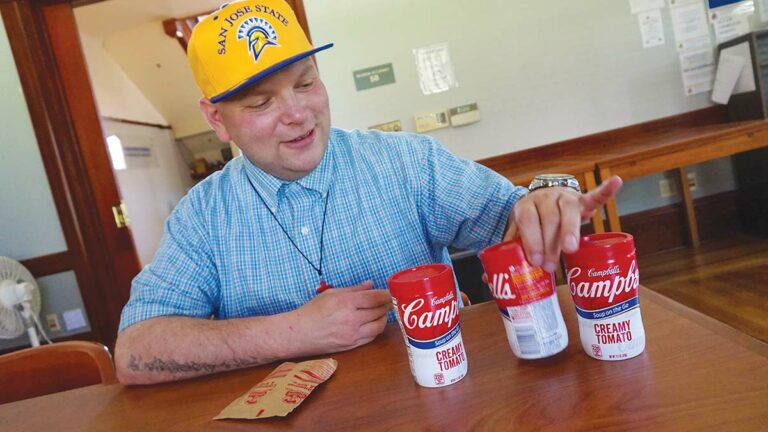
In his early college years, Jerry Wilburn had a hard time focusing on his studies because he had to worry about where to find his next meal. He was 30 years old when he enrolled at San Jose State University (SJSU) in 2010, and newly jobless after Fremont-based New United Motor Manufacturing Plant buckled under the weight of global recession. For a time, Wilburn’s schedule revolved as much around his six classes as it did around his daily treks to local soup kitchens and food pantries. He ate ramen and canned veggies from the campus food shelves, and, by way of a meandering bus trip, the occasional hot meal from Sacred Heart Community Service. The stress, he says, drove him to counseling. “I had savings, but I burned through them after six months,” he says. “When you start running out of your savings, it’s all focusing on survival. Once a student is in that frame of mind, the chance of [focusing on] being a student becomes really slim because you’re thinking about quitting college and working for another company full time to make rent.” After months of agonizing over hunger and the threat of eviction, Wilburn put himself on a list for crisis counseling. Thankfully, he found a part-time job at the university to pull him out of survival mode and into a mindset that allowed him to see the future again. Now 36 years old and working on his master’s degree, Wilburn says he makes enough cash to get by and stay focused on what matters: his education. But Wilburn is hardly alone in his experience. One in five California State University (CSU) students—57,000 of them—worry about hunger, according to a striking new report commissioned by Chancellor Timothy P. White. Meanwhile, one in 10 deal with homelessness. The survey of 460,000 students marks the first time in the nation that a public university system asked students about their personal experience with hunger and homelessness. University officials plan to use that data to figure out how to meet those subsistence-level needs so students can focus on graduating. “These are our students,” White said in a statement last month about the findings. “These are the strivers who will define for a generation what it means to radically change the course of one’s life. We must do all that we can to ensure that they have a place in this world where they can go when they are hungry and have no place to sleep.” San Jose State conducted a similar campus-wide study in 2014, which showed that about half of students skipped meals because of cost. And one in three said they’ve had to choose between food or rent, transportation and utilities. Wilburn, who helps manage the same campus food pantries that pulled him through years ago, says he knows of at least 53 San Jose State students who sacrifice stable housing to stay in school. It doesn’t help that California’s public university tuition costs have doubled over the past decade and tripled since 2000, according to a recent analysis by the Sacramento Bee. Compounding the problem are the rising costs of textbooks and rent, a dearth of affordable housing and higher student loan fees. “When you look at Silicon Valley, rent is high,” says Stephanie Fabian, who manages the school’s student food resources. “When you are dealing with a city where rent is dramatically different, you can see the struggle among students who are deciding if their salary should be going to textbooks, rent or food.” Similar problems persist at UCSC, with Santa Cruz being the fifth most expensive metropolitan area in the country for renters. To afford a two-bedroom unit without spending more than 30 percent of income on housing, a Santa Cruz tenant needs to work full-time and make $33.77 an hour—a figure that is out of the question for most full-time college students. As of 2014, one in four UC undergraduates system-wide—some 37,500 students—were food insecure. The World Food Summit defines food security as “when all people at all times have access to sufficient, safe, nutritious food to maintain a healthy and active life.” Last year the UC Office of the President put $75,000 per UC campus toward addressing the problem. This year, the office is pledging an additional $151,000. At UCSC, this money has funded short-term solutions distributed by Slug Support, which helps students sign up for CalFresh, distributes food bags to those eligible, and issued 640 dining hall passes. According to the Pew Research Institute, millennials stand to become the most educated generation in history. That they have to choose between their academic success and basic survival is unconscionable, SJSU officials say. It means delaying graduation to take on more work or dropping out altogether—especially if they have children to feed and house. Going homeless and hungry also means suffering mental and physical maladies. A 2014 study by the American Society for Nutrition found that people who lack food are more likely to lapse into depression. Another report in the Journal of the American Academy of Child and Adolescent Psychiatry found that hunger increases the risk of anxiety, a litany of mood disorders and drug and alcohol abuse. All of which, studies show, lead to less focus and lower grades. Food stamps—officially called the Supplemental Nutrition Assistance Program, or SNAP—offer little help. To qualify, a person must actively look for a job, and not voluntarily quit or reduce hours to focus on school. California’s CalFresh program may allow for some exceptions, depending on the county and extenuating circumstances. After the 2014 survey that showed the extent of student hunger, SJSU formed a committee to bolster resources for those who need help. The school now keeps 15 stocked pantries throughout the campus and requires no identification or sign-in for the food. Although, on a recent visit to one pantry, it looked like slim pickings: a dozen Campbell soup cans and a single packet of instant oatmeal. Wilburn says that underscores the need for more donations. But the state’s yearlong study showed some ways to improve the safety net for SJSU students. Struggling students have access to only a limited number of emergency meals, according to the report. They can apply for a short-term $500 loan, but have to repay it within two months or at the end of semester. To make up for the lack of on-campus assistance, the school is making efforts to connect students with outside nonprofits and government subsidies. Elizabeth Agramont-Justiniano, an SJSU sociology major who spearheaded the school’s food shelf program in 2012, says Costco delivers about $2,500 worth of food every month, but that it still falls short of what’s needed to feed students. The issue hits close to home, she says, as her college-educated parents relied on food stamps when she was a child. “There were times growing up when we couldn’t eat,” she says. “I just remember that experience, growing up and even having some of the resources and not getting enough. That’s why I’m trying to help the students.”
Additional reporting contributed by Georgia Johnson.
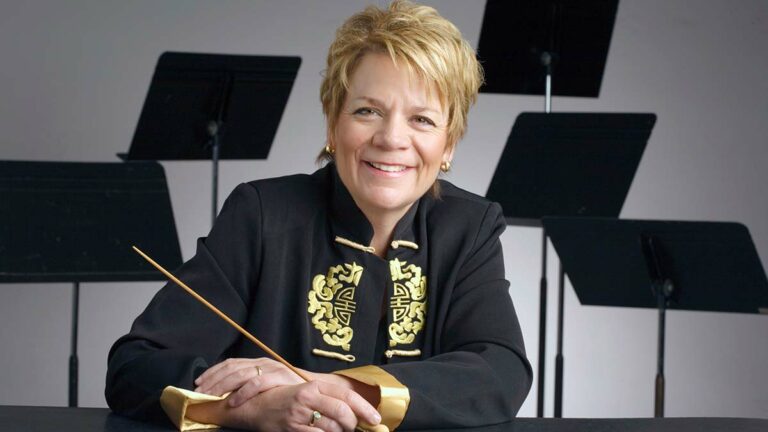
For Marin Alsop, the conductor and music director for the Cabrillo Festival of Contemporary Music, “cash is not the currency. New music is the valuation.” And in her 25 years with the festival, she’s created a gold standard. The two-week summer festival has an international reputation for launching composers, and a legacy of nurturing artists and audiences. When Alsop finishes this year’s Cabrillo Festival, which runs July 31-Aug. 13, she will take her final bow after 25 years at the helm, showcasing new music by living composers. “It’s not that I wanted to leave Cabrillo to do something else, it’s more about an evolution. After 25 years, I am attracted to certain kinds of music, certain kinds of composers who write certain kinds of music,” she says in a recent phone interview. “It’s a good moment to have another perspective—someone coming in with a different set of passions for different composers, for different styles of music, to take the orchestra and challenge them in new ways. And to challenge our audience in different ways.” Alsop wants to go out on top when the festival is going strong. “I feel that many of the relationships that have been established between audience and composers that I brought to them will last a lifetime … You don’t need me to broker that anymore,” she says. She believes the Cabrillo Festival is set up well for her successor. “Twenty-five is a good number. It’s not easy, because I really love it there. There’s no motivation besides feeling that it’s a good moment, and it’s a healthy transition time.”
“Every summer has been unique because of the personalities involved, and also because of the musicians. The musicians are very, very special. They’re there because they love new music. The audience is there because they love new experiences. And you certainly can’t say that about most audiences, or most situations.” — Marin Alsop
Festival Executive Director Ellen Primack understands the logic behind the decision. “Marin is incredibly beloved by this orchestra and this community, and she has done so much for the Cabrillo Festival on so many levels. She will be dearly missed,” says Primack. “She left us strong and vibrant and in a greater position for the future.” That doesn’t mean it was easy news to get, Primack admits. “After the initial shock of Marin’s news and the sheer fear and heartbreak, she was the first one to encourage the board and staff to be excited and to embrace the possibilities and encourage us knowing that we face a really rich and bright future,” Primack says. The festival board has formed an Artistic Leadership Team that is already vetting candidates. She says the festival’s commitment to featuring living composers and advocating for new music is as strong as ever. But decisions about the future won’t happen until the fall. This is Alsop’s season. “What’s extraordinary about Marin,” says Primack, “she’s brought so much to the Cabrillo Festival with the wellspring of creative ideas she has. The desire to bring the audience and community into the fold, and the deep respect she has for musicians for coming here for all the right reasons. And one of the things that made her so successful here and had such an impact is she embraced the culture and sense of possibility here. She loved Santa Cruz. She loves the vibe of the festival. It created an artistic outlet and haven for her. She capitalized on that throughout her rising career.” The award-winning Alsop is the director of the Baltimore and the São Paulo (Brazil) symphony orchestras, and has established OrchKids, a youth music program and Rusty Musicians, a program for amateur adults, both in Baltimore, where she is also the director of the graduate conducting program at the John Hopkins Peabody Institute. Her reputation for innovative programming and developing talent has earned her an impressive series of honors, including a MacArthur Fellowship. She has guest conducted for some of the greatest orchestras in the world, and has a close relationship with the London Philharmonic and London Symphony orchestras. SURELY THEY ‘JEST’ The Attacca String Quartet will perform John Adams’ ‘Absolute Jest’ at the festival’s Aug. 6 concert titled ‘Inspiration and Impact’. When Alsop started with the Cabrillo Festival, now in its 54th year, she was a young and upcoming artist, and a former student of conductor Leonard Bernstein. “What’s funny is when I came in, it was Dennis Russell Davies who approached me about taking on the directorship. He said he’d been there 19 years. I thought to myself—you know, in my 32-year-old little pigeon brain—‘Who would stay some place for 19 years?’ And here I am 25 years later,” Alsop says with a laugh. The contemporary music festival’s summer camp feel, and the presence of both famous and new composers, is part of the attraction. “You know, it’s not like a normal symphony experience,” says Alsop. “Cabrillo is very unique in that every summer it’s a different journey, and a very unique and special journey because of the living composer elements. I think that’s a testament to the creative recharging I get from being there. From really working with musicians and composers in such a positive, nurturing setting.” Highlights over the last 25 years of conducting and directing include the performance of Leonard Berstein’s Mass in 1999, and collaborations with Osvaldo Golijov, John Corigliano and Jennifer Higdon, among others. The performed work has always been enhanced by the presence of its creators. “Every summer has been unique because of the personalities involved, and also because of the musicians,” says Alsop. “The musicians are very, very special. They’re there because they love new music. The audience is there because they love new experiences. And you certainly can’t say that about most audiences, or most situations.” This openness to new experiences leads to experimentation, risk and results. The Cabrillo Festival of Contemporary Music is one of the places for new artists to make their first marks.
COMPOSERS AND CREATORS
“I always like to say Beethoven was new music too, at one point. So, I try to approach every piece like that, maybe not with that depth of reverence, but certainly with the idea that if we don’t have new music, we will miss the next Beethoven. I feel certain about that,” says Alsop. “It’s very, very rewarding to work with the composers and creators. And for me, I’ve never really been a person who’s deeply impressed by credentials. I’m much more deeply impressed by talent.” Alsop features composers who she thinks have a special voice, whether they’re well known or not. “Once the composer comes to Cabrillo, if that connection is enhanced by their experience with the orchestra, then they develop their own relationship with the orchestra and the community, and so they become regulars,” Alsop says. Some of the artists, such as Jennifer Higdon (whose music is featured Aug. 12) become well established and then recommend students. The creative mentoring cycle continues. It has resulted in unexpected connections with some of the most famous living composers in the world today, right here in Santa Cruz. That includes John Adams (“Nixon in China,” “On the Transmigration of Souls”) featured on Aug. 6; James MacMillan (“Veni, Veni Emmanuel”) featured Aug. 5; and John Corigliano (Pulitzer, Grammy, Oscar winner) featured Aug. 13. “They’re all like family in many ways,” Alsop says. “John Adams, I’ve known him for decades now. He has a unique relationship with the festival, because he was the music director for a season [1991], and he lives in the area. That’s a very special bond. He’s also become a lead mentor at the festival through supporting these commissions for younger composers. He’s connected to us in at least those three ways.” FORECAST: FAIR The Cabrillo Festival’s popular Church Street Fair returns Aug. 6 and 7. In Alsop’s honor, the Cabrillo Festival Orchestra has commissioned a piece by Adams, “Lola Montez Does the Spider Dance,” premiering Aug. 6, based on themes from an upcoming opera. “That’s what I’m doing in all my spare time–spider dancing,” she says. “I don’t know what a spider dance is, it must be like a tarantella that goes crazy … I can’t wait to see it. I think the fact the musicians got together to honor me in this way is extremely emotional. It’s really an incredible thing. I am very, very touched by it.” James MacMillan’s “Death of Oscar” will be performed Aug. 5. “Someone like Jimmy MacMillan, I’ve championed his music since the early ’90s, and he’s been to the festival a few times. He fell in love with the festival the first time he came, and talks it up worldwide,” she says. “Every time I see him, he asks about everyone there. I think it’s the same with everyone. It’s a very special place.” Corigliano’s Symphony No. 1 will be reprised on Aug. 13, the last day of the festival. It was first conducted in 1993 at Mission San Juan Bautista, and will be Alsop’s finale for the festival. Symphony No. 1 memorialized friends and colleagues lost to AIDS, which at the time was a fairly new and devastating epidemic. “That was the idea. To try to close the circle in some ways. Also to point out how 25 years ago, [when] the subject matter inspired his writing, the piece was more urgent and in the news. The essence of the piece is as relevant today as when it was written. And that’s what great art is all about. That was my motivation,” Alsop says. Corigliano asked Alsop to marry him to his partner Mark Adamo at the Cabrillo Festival in 2008. “I think that speaks volumes about how much people love the area, but also the feeling of acceptance they embrace that exists at Cabrillo,” she says. Alsop will now turn her attention to teaching, mentoring and spending more time with her 12-year-old son Auden. Her afterschool Orchkids program for children has become an important component of education in West Baltimore, with more than 1,000 kids participating. Her Rusty Musicians Project allows adult amateur musicians to play with professionals in an intensive weeklong summer camp. “I was reading about the fact that more people play instruments today than ever before in history,” Alsop says. “We should really be connecting with these people. These are the people who love classical music.” Alsop says it’s the only thing she has ever done where everyone who filled out a survey for the camp had 100 percent satisfaction. “All based on the same principles I try to bring to Cabrillo,” Alsop says. “Art is for everyone, not just a select few. The creative process is a process that is owned by every single human being, not just ‘talented’ people, and sharing the creative process is a win-win. It’s what we do at Cabrillo. Everything’s about access, inclusion, information and enjoyment.”
The 2016 Cabrillo Festival of Contemporary Music
The Cabrillo Festival of Contemporary Music is a two-week music festival focusing on new music by living composers, many of whom are in residence. Dance and imagery are often part of the concerts, and artists with international reputations solo with the acclaimed Festival Orchestra. This will be Conductor and Music Director Marin Alsop’s final season with the festival. Composers in residence include John Adams, Mason Bates, Anna Clyne, John Corigliano, Jennifer Higdon, Michael Kropf, Alexander Miller, Kevin Puts, Christopher Rouse, Gregory Smith. Not in residence but of note: James MacMillan, Osvaldo Golijov and Marlos Nobre. In honor of her last season, the evening’s concerts have been named for the qualities that make her so extraordinary: “Power and Devotion,” “Inspiration and Impact,” ”Courage and Connection” and “Memory and Meaning.” The festival runs July 31 through Aug. 13, with five main evening shows at the Santa Cruz Civic Auditorium and a host of open rehearsals, talks, a family concert and the Church Street Fair as part of the season. Church Street Fair runs 11 a.m.-8 p.m. Aug. 6 and 7 featuring music, dance, art, food and wine.
REHEARSALS AND WORKSHOPS
Free open rehearsals will be held 7-9:30 p.m. on July 31; 2:30-5 p.m. on Aug. 1; 10 a.m.-12:30 p.m. on Aug. 2-3; 2:30-5 p.m. and 7-9:30 p.m. on Aug. 4, with a concert talk in between; 2:30-5 p.m. and 7-9:30 p.m. on Aug. 9; 10 a.m.-12:30 p.m. and 2:30-5 p.m. on Aug. 10; and 10 a.m.-12:30 p.m. and 2:30-5 p.m. on Aug. 11. There will be a free conductors workshop 4-6:30 p.m. on Aug. 3.
CONCERTS
All concerts are at the Civic Auditorium, 307 Church St., Santa Cruz, unless otherwise noted. Details: cabrillomusic.org and 426-6966. July 30 at 4:45 p.m: Donors Concert: Chamber concert of contemporary solo works by the Festival Orchestra. For festival donors of $250 or more and Three Steps to the Future pledges. Aug. 2 at 6 p.m: “In the Works”: Featuring works by composers Viet Cuong, Dani Howard and Michael Schachter led by six emerging conductors. Aug. 5 at 8 p.m.: “Power and Devotion”: Two West Coast premieres by Christopher Rouse “Thunderstruck” and Oboe Concerto featuring Katherine Needleman; “Death of Oscar” by James MacMillan; and RIFT, a symphonic ballet by Anna Clyne featuring the Hysterica Dance Co., choreographed by Kitty McNamee and commissioned by the festival. $37-$65. Aug. 6 at 8 p.m.: “Inspiration and Impact”: Two festival commissions are featured in this concert. “Lola Montez Does the Spider Dance” by John Adams and “Spinning Music” by Michael Kropf, both are world premieres; Attacca String Quartet performs Adams’ “Absolute Jest”; West Coast premiere and co-commission with the festival of “The City” by Kevin Puts, accompanied by a film by John Bartolomeo. $37-$65. Aug. 7 at 1 p.m.: Free Family Concert: “Tempus Fugit” and “Mr. Smith’s Composition” by Gregory Smith, who also narrates. Free. Aug. 7 at 8 p.m.: “In the Blue Room: Sticks and Reeds”: Featuring performers from the oboe and percussion sections of the Festival Orchestra, including a piece by oboist Alexander Miller and two short documentaries on festival musicians. $30. Aug. 10 at 6:30 p.m.: “Music in the Mountains”: At Nestldown. Festival fundraising event featuring the Los Angeles Duo, concertmaster Justin Bruns and members of the Festival Orchestra. $200.
Aug. 12 at 2:30 p.m.: “Student Staff Ensemble”: Featuring performances of original works by young members of the Festival’s Student Staff Program, age 16-24. Free.
Aug. 12 at 8 p.m.: “Courage and Connection”: West Coast premiere of Jennifer Higdon’s Violin Concerto featuring Justin Bruns; “Scherzo Crypto” by oboist Alexander Miller; and Mason Bates’ “B-Sides.” $37-$65. Aug. 13 at 8 p.m.: “Memory and Meaning”: West Coast premiere of Marlos Nobre’s “Kabbalah”; Osvaldo Golijov’s “Oceana” featuring The Choral Project, Alicia Olatuja, Los Angeles Duo and boy soprano Lucas Fedronic; Symphony No. 1 by John Corigliano. $37-$65. Edit 10:26 a.m. 7/21/16: Corrections were made to times and dates of concerts.
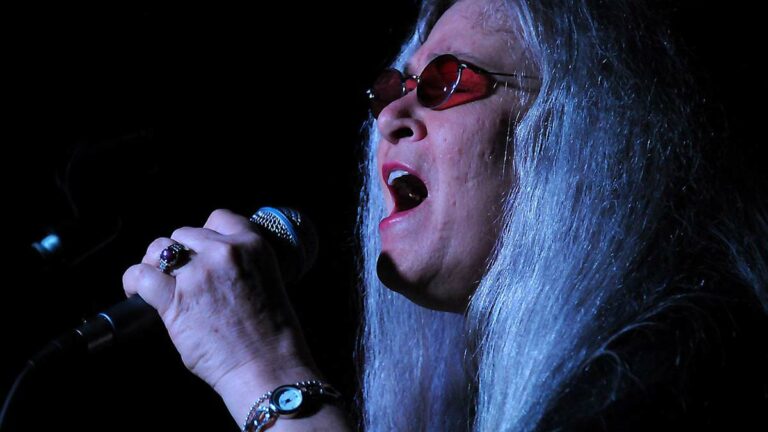
Donna Jean Godchaux-MacKay was inducted into the Rock ’n’ Roll Hall of Fame in 1994 for singing in America’s most eclectic and esoteric ensemble, the Grateful Dead. Most people would expect that to far overshadow her induction earlier this year into the Alabama Music Hall of Fame, but for her, the latter was even more important. “To be honored by your peers from your home state—your own town actually, Muscle Shoals—cuts a little deeper,” Godchaux-MacKay tells GT from her neighboring home in Florence, Alabama. “That’s where I started out and learned my craft. It’s where I began my trip and adventure into the music business and it’s where I’ve returned to live.” It’s staggering how many great musicians and singers come from Alabama—Nat King Cole, Hank Williams, Percy Sledge, Tammy Wynette, the Commodores, Wilson Pickett and Emmylou Harris top a very long list. In the late 1950s, within the small community of Muscle Shoals, a music aficionado named Rick Hall opened a recording studio called FAME Studios, which produced a treasure chest of national hits. “I went to my first recording studio when I was 12,” says Godchaux-MacKay. “My mother’s friend was a cousin to Rick Hall. I saw all that equipment at FAME Studios and I got hooked. I got nailed. If I didn’t know before, I knew at 12 years old [that] that was what I wanted to do. I set my heart, my hand and my life into singing. I had no other plan. I pursued it and because of FAME studios I was fortunate enough to be in the right place at the right time when all this incredible music was being released and hitting the national charts during my high-school years.” The lithe, raven-haired beauty would run to FAME Studios straight from cheerleading practice, arriving in her uniform, her friends unaware of what was brewing. “They didn’t even know there was a music scene going on until the documentary came out in 2013,” chuckles Godchaux-MacKay. “The Rolling Stones, Bob Dylan, so many people came to Alabama to record, but nobody in the area had any idea what was going on. On a certain level, it was almost covert what we were doing.” Godchaux-MacKay sang at small sock hops in high school and in the studio with people like Elvis, Duane Allman, Cher, and Boz Scaggs. A fortuitous move to San Francisco led her and her husband at the time, Keith Godchaux, to join the Grateful Dead. So, when she performed with them for the first time at Winterland in 1972, it was also her first time in front of a big, colorful, chaotic audience. “That was a huge leap,” says Godchaux-MacKay. “What provided the confidence was that I knew I was where I was supposed to be. It was daunting being in a big boy band. I had to hold my own. You either sink or swim with the Grateful Dead, and I was going to swim!” A conduit between Jerry Garcia and Bob Weir, Godchaux-MacKay sang her heart out, but this was 1972. Audio technology was stuck in the high-school auditoriums of the ’50s and ’60s. There were times, and every Deadhead will attest to this in varying degrees of emotion, that Godchaux-MacKay could simply not hear herself. By 1974, the Grateful Dead were performing through 92 tube amplifiers and crushing 26,400 watts through 604 speakers. It was the loudest sound since the big bang. Godchaux-MacKay was recently back in the saddle singing with the most recent incarnation of the Dead, Dead & Company. The singer/songwriter is positive about that experience and admits that she always loves singing with her old bandmates whenever the occasion arises. But, Godchaux-MacKay’s heart is at home with her extremely talented friends and family in Alabama. “My next project is redoing some of the songs I’ve written,” says Godchaux-MacKay. “My husband David MacKay is recording an album of basses, and I’m involved with that project. I’m not embarking on putting a new band together. When you get to be my age, you get to choose what you want to do. This is a great time in my life. I don’t have to prove anything to anyone. I get to just have fun.”
Donna Jean Godchaux-MacKay will perform with Shady Groove at 8:30 p.m. on Friday, July 22 at Don Quixote’s in Felton. Tickets are $20.
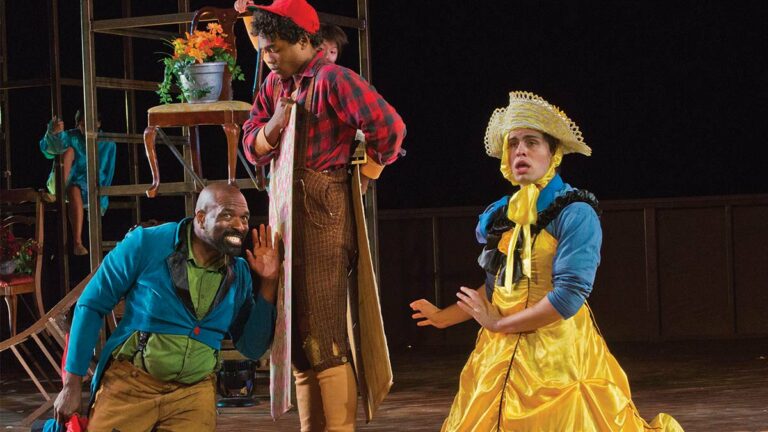
It’s fitting that Santa Cruz Shakespeare chooses A Midsummer Night’s Dream as the inaugural production for its spanking new venue at DeLaveaga Park. That they even got the stage erected in time for opening day is no less a feat of magic than anything devised by Puck and his fleet of fairies. The set and costumes may be minimalist, but a wonderful cast performing Shakespeare’s beloved comedy, and a sense of adventure on both sides of the stage, keep patrons happily engaged. First, the facts: the Festival Glen at UCSC is no more, at least as a performance space for this company. Ousted by the university (which retained the original name, Shakespeare Santa Cruz), the company has risen phoenix-like, rebranded itself as Santa Cruz Shakespeare, and found a new home in DeLaveaga Park. City Council approval to build the new space was only granted in February of this year, meaning SCS has had a scant five months to complete construction. The stage nestles in a grove of pine and eucalyptus, with an open space for picnicking in front of tiered rows of permanent benches and chairs. Sightlines are good, and the box office, restrooms, and parking lot are all immediately adjacent to the performance space (so you no longer need hiking boots and GPS to navigate to the stage area). Named in honor of the company’s intrepid co-founder and tireless supporter, the space is called Audrey Stanley Grove. Once you drive all the way through the golf course, turn right at the Club House and keep going. Director Terri McMahon begins her production with youthful fairies wandering onstage with pillows to fall asleep in comical poses. The play’s four plots quickly kick in. An extravagant wedding ceremony is about to be held for Duke Theseus of Athens (Cody Nickell) and the Amazon Queen Hippolyta (Mia Ellis). But first, a noblewoman, Egea (Carol Halsted) brings a suitor that her daughter, Hermia (Katherine Ko—appropriately little and fierce, also funny), refuses to marry, Demetrius (Brian Smolin)—formerly engaged to Helena (Mary Cavett).
The set and costumes may be minimalist, but a wonderful cast performing Shakespeare’s beloved comedy, and a sense of adventure on both sides of the stage, keep patrons happily engaged.
But Hermia and Lysander (Kyle Hester) are in love, so that night they run away—followed by Demetrius, who is followed by Helena. All are soon lost in the forest, where Oberon and Titania, the king and queen of the fairies, (also played by the commanding Nickell, and the warm, regal Ellis) are having a tiff. Meanwhile, some tradesmen of the town are rehearsing a play to perform for the duke’s nuptials. This amateur troupe is led by “Penny” Quince (usually called Peter, a male role), whom Kate Eastwood Norris plays as a kind of imperious librarian with a funny, loopy trill to her voice. Most enthusiastic of her crew is Nick Bottom, all too eager to take on every part in their show, played with endearing comic bombast by Bernard K. Addison. Unseen by the mortals, Oberon commands his cohort, the wily Puck (Larry Paulsen), to work a love charm. (That Nickell and Paulsen manipulate an invisible love potion by mime and sound effects, using no props whatsoever, is hysterically effective.) But it goes awry: both Athenian men are suddenly smitten by the increasingly perplexed Helena. (Smolin, so good last year in The Liar, is a riot as lovesick Demetrius.) Meanwhile, the fairy queen falls instantly in love with Bottom—who has acquired the head of an ass (symbolized by a pair of donkey ears in typical productions, although costume designer Christina Dinkel also outfits Addison with equine legs, tail, and a furry loincloth). Dinkel’s costumes are simple and effective. (It’s funny that she dresses sidekick Puck like Smee in Peter Pan, with piratical striped stockings and headscarf.) Collette Pollard’s smart, stark forest set features towers of metal bars, through which we see the actual trees beyond, while the random chairs they sprout are used as fairy perches, or piled up to make thrones. And all is beautifully lit—especially those trees—by lighting designer Kent Dorsey. It may not be as ornate as some versions of Dream, but the sheer cleverness of this minimalist production makes us eager to see what SCS does next.
INFO: The Santa Cruz Shakespeare production of ‘A Midsummer Night’s Dream’ plays through Aug. 28, at the Grove, DeLaveaga Park. Call 460-6399 or visit santacruzshakespeare.org/tickets.
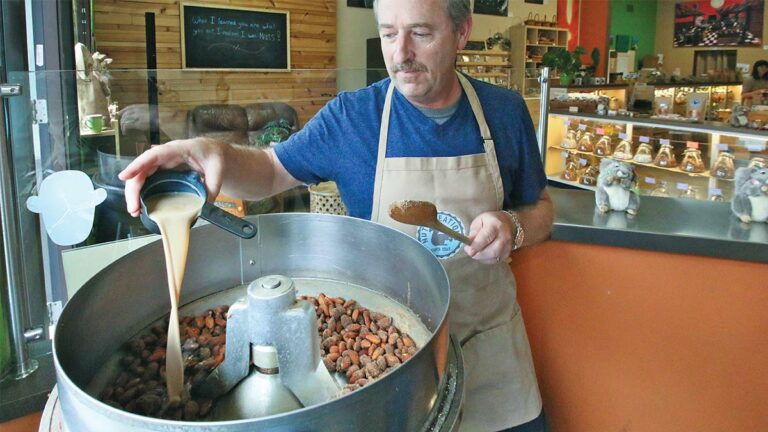
I’m standing next to Craig Olsen’s pralinator, and I’m pretty into it. It’s a Saturday afternoon, and Olsen, who owns Nut Kreations with his wife Tami, is cooking up a batch of Bailey’s roasted almonds right up by the front window of the store. He pours a mixture of brown sugar, water and cinnamon onto the nuts in the pralinator—a shiny, midsize industrial machine for caramelizing in the kitchen—and as he brings it to a boil, the almonds hardening as the moisture around them evaporates, he pours in the Bailey’s Irish Cream. I’m marveling at this pralinator, which costs thousands of dollars and doesn’t so much as scratch the nuts as it cooks their candy shells on with military precision. I get it, I think to myself. This is the secret weapon, the Death Star of nut entrepreneurship. But oh, how little I understand. Because just a couple of minutes later, Olsen points a few feet away to his real secret weapon, which is a fraction the size of the pralinator, made of plastic, and costs about 15 bucks at Target. “That fan is one of my biggest things,” Olsen says of the little oscillating portable near the store entrance. “I blow the smell out the door. This is my marketing. I’ve had people say they were like six blocks down, and they just followed their nose all the way into the front door. It just works.” I can understand why it does. There’s something about the smell of roasting nuts; standing next to Olsen’s current batch, my olfactory senses are generating a bizarre Christmas-in-July scenario for my brain that makes me feel warm all over—although the pralinator does cook to 400 degrees, so maybe this isn’t entirely psychological. More than that, though, is the promise of flavor I haven’t experienced. For me, that’s huge. You know when you’re walking by a bag of potato chips in the supermarket with some janky new flavor like “habanero maple pizza crunch,” and you’re thinking, “Who would even try that?” The answer is me. I would try that, at least once. Olsen is my flavor-seeking soulmate, I can tell. Not just because his store is full of all kinds of crazy flavor permutations already, but because he’s up in this window cooking every weekend and Wednesday afternoon, looking for the next great taste. “A lot of this has been experimenting,” he admits. “I love to cook, so part of this for me is I’m passionate about it and I want to see if something works or not. The only way to figure out if it works is you’ve got to just do it. And then we do tastes. So we’ll do something new, we’ll put it in taster cups, and I’ll send somebody out on the corner to get feedback on it.” There are moments of uncertainty for sure—he still isn’t totally convinced he got the right amount of ginger in the honey ginger pecans, and he’s got the sriracha cashews on the verge of being declared a biological weapon trying to make them spicy enough for the heat freaks. “What I was surprised about was how much hot sauce I put in them, and still people wanted more,” he says, with a tone of genuine bewilderment. “Forget just sriracha, I put Tabasco, I put Tapatio, I put cayenne pepper—I would shake it like it was going out of style. Still, people would come in and go ‘Yeah, it’s getting better, but it’s not hot enough.’ I’m like, oh my god! And literally people would come in here and cry. They’d walk in the front door and be crying, because the place is full of hot sauce. I’m like, ‘how much hotter can I get it without driving everybody out of my store?’ Plus me too, I’m crying, I’m a mess! I need a box of Kleenex every time I’m cooking it.” But the hazmat work is paying off, especially since James Beard Award-winning chef Michael Mina started picking up his product for 49ers home games. This will be Olsen’s third year of that, and he’s never given them the same product twice. It’s led to a lot of mail orders, but his third-party business is expanding, too. Nut Kreations is in demand at resorts and hotels like Ventana in Big Sur, and Chaminade, Seascape Resort and Hotel Paradox locally. They’re at the Del Mar and Nickelodeon, the Rio Theatre, beer places from Oakland’s Good Hop to Soquel’s Beer Thirty, and even Los Angeles movie sets, thanks to directors and producers discovering Nut Kreations at Beverly Hills yoga studios. Then there are my fellow flavor hounds, like the guy who first suggested to Olsen that he do the Bailey’s roasted almonds we cooked (and which turned out amazing, like the holidays on a sugar high). He had just gotten out of the army after being stationed in Germany, where Bailey’s roasted almonds are seriously a thing, and he needed a fix. Olsen happened to have a bottle of Bailey’s in the store, so he told the guy to come back in an hour to “see if I got ’em right.” “He was amazed that I did it,” says Olsen. “Now he and his wife, they call me to make sure I have it before they come to the store. And they buy a couple of pounds at a time. They’re serious about it.”
Real Estate has long been considered Ducktails singer-songwriter Matt Mondanile’s main band. But somewhere along the way, Ducktails stacked up more album releases than Real Estate, and just a few months ago, Mondanile announced that he’d be leaving Real Estate to focus more on Ducktails. The two groups always had a similar style: wistful, dreamy, low-key indie-pop. In the early days, Ducktails was a much more experimental, lo-fi version of Real Estate’s shimmering, melancholy psych-pop sound. But Ducktails’ last album, 2015’s St. Catherine, sounded a lot like a Real Estate album. Makes sense now, knowing that he’s focusing all his creative energy on Ducktails. AARON CARNES INFO: 8 p.m. Don Quixote’s, 6275 Hwy. 9, Felton. $15. 335-2800.
GARAGE ROCK
LEVITATION ROOM
Remember how psychedelic rock used to be dance music and not just masturbatory freeform jams? Granted, you were probably on acid at the time, but you were seriously cutting a rug (and seeing trails around your arms). Highland Park’s Levitation Room brings back that swinging psychedelic sound, plucked right out of the Summer of Love and right into the Crepe Place this Wednesday. The beats are groovy and hip-shaking, and the guitars are mind-expanding. Singer Julian Porte channels a sunbaked John Lennon. AC INFO: 9 p.m. Crepe Place, 1134 Soquel Ave., Santa Cruz. $8. 429-6994.
THURSDAY 7/14
BLUES
ERIC LINDELL
Singer-songwriter Eric Lindell was born and raised in San Mateo. It was when he moved to New Orleans, however, that he hit the national radar, releasing three albums on the outstanding independent blues label Alligator Records. Now a well-established blues veteran, Lindell blends rock, soul, R&B and blues into a hip-sway-inducing, dance-floor-packing sound. CAT JOHNSON INFO: 8 p.m. Moe’s Alley, 1535 Commercial Way, Santa Cruz. $20/adv, $25/door. 479-1854.
SOUTHERN PSYCH ROCK
NEW MADRID
After building a cult following in the Athens, Georgia scene, New Madrid took to the road on a summer tour stretching across the United States. The four college-age musicians threaten to put the South back on the map with their unique blend of alternative/southern psych-rock fusion, soaked in reverb but leaving just enough breathing room for their rockabilly vocals. The lead singer’s mullet is impressive and not out of place. KATIE SMALL INFO: 8 p.m. Catalyst, 1011 Pacific Ave., Santa Cruz. $10/adv, $12/door. 429-4135.
FRIDAY 7/15
JAZZ
TERENCE BLANCHARD E-COLLECTIVE
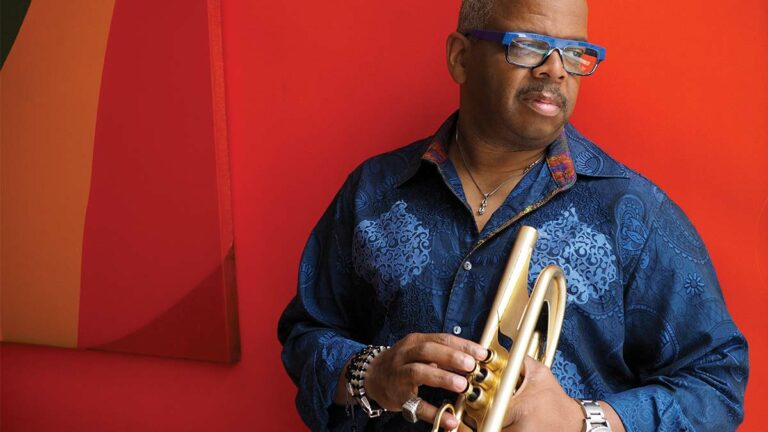
Multi-Grammy-award-winning jazz trumpeter and composer Terence Blanchard isn’t afraid to take on tough topics with his music. A top scorer for Spike Lee films, including Do the Right Thing, Jungle Fever, Malcolm X and the four-hour Hurricane Katrina documentary When the Levees Broke: A Requiem in Four Acts, he puts his music where his consciousness is. The title of Blanchard’s latest release, Breathless, refers to Eric Garner’s last words during his 2014 confrontation with New York City police. The album is a commentary on the treatment of minorities by American law enforcement, created by the E-Collective, his quintet that has been described as a “hip young band full of funk, R&B and groove colors.” CJ INFO: 7 p.m. & 9 p.m. Kuumbwa Jazz, 320-2 Cedar St., Santa Cruz. $30/adv, $35/door. 427-2227.
DISCO FUNK
LOS AMIGOS INVISIBLES
Disco is risen, in the form of fiery Latin funk fusion band Los Amigos Invisibles. The Venezuelan group got their big break in the ’90s, when David Byrne stumbled upon their debut album in a Manhattan record shop; the Talking Heads frontman immediately called up Los Amigos to sign them to his Luaka Bop record label. Since then, the members of the group have moved to New York, created their own record label, won a Grammy, and toured extensively in more than 60 countries. The music video for their latest single, “Otra Cara Bonita” (“Another Pretty Face”), features a dancing pug wearing a Hawaiian shirt. Lounge music never looked so good. KS INFO: 9 p.m. Moe’s Alley, 1535 Commercial Way, Santa Cruz. $25/adv, $30/door. 479-1854.
SATURDAY 7/16
JAZZ
GRACE KELLY
Mentored by alto sax great Phil Woods, saxophonist Grace Kelly started collaborating with master improvisers as a teenager, even recording with alto legend Lee Konitz. But she’s been determined to find her own musical path, mixing it up stylistically and even singing on her albums and gigs. Her recent album Trying to Figure It Out makes it clear that the 24-year-old considers herself a work in progress who enjoys pop and R&B as much as bebop. In a felicitous pairing, she’s found a regular musical home within the catholic creative proclivities of pianist/keyboardist Jon Batiste and Stay Human on Stephen Colbert’s Late Show. ANDREW GILBERT INFO: 7:30 p.m. Kuumbwa Jazz, 320-2 Cedar St., Santa Cruz. $25/adv, $30/door. 427-2227.
SUNDAY 7/17
CELTIC
PAUL MCKENNA BAND
Dubbed the best folk band to have come out of Scotland in the last 20 years, the Paul McKenna Band blends a love and deep appreciation of traditional folk music with a fresh, modern sound that has established the band as one of the standouts of the contemporary Celtic scene. If the bouzouki, fiddle, flute, whistles, bodhrán, percussion and tight vocals are your thing, don’t miss this opportunity to catch one of the best bands of their generation. CJ INFO: 7 p.m. Don Quixote’s, 6275 Hwy. 9, Felton. $15/adv, $17/door. 335-2800.
MONDAY 7/18
POP
ALEXANDER JEAN
It’s kind of strange that duo Alexander Jean does not play music you can dance to. Mark Ballas, who formed the group with girlfriend BC Jean, makes his living as a professional ballroom dancer on Dancing With The Stars. (He’s been on 18 seasons thus far!) The duo plays a sound that falls somewhere between Alicia Keys-style ballads and acoustic-pop à la John Mayer. The group charted last year on iTunes with their tune “Roses and Violets,” a powerful, deeply emotional tune that easily sounds like it could have been penned for Adele. AC INFO: 9 p.m. Catalyst, 1011 Pacific Ave., Santa Cruz. $12/adv, $15/door. 429-4135.
IN THE QUEUE
SWMRS
Punk rock outfit out of Oakland. Friday at Appleton Grill, Watsonville.
GUY FOX
Indie-pop out of the East Bay. Friday at The Pocket
ERIC MORRISON & THE MYSTERIES
Santa Cruz Americana. Friday at Don Quixote’s
PATO BANTON
Legendary British reggae artist. Sunday at Moe’s Alley
CULTURE SHOCK
Alternative Tentacles presents World Inferno and Friendship Society. Tuesday at Catalyst
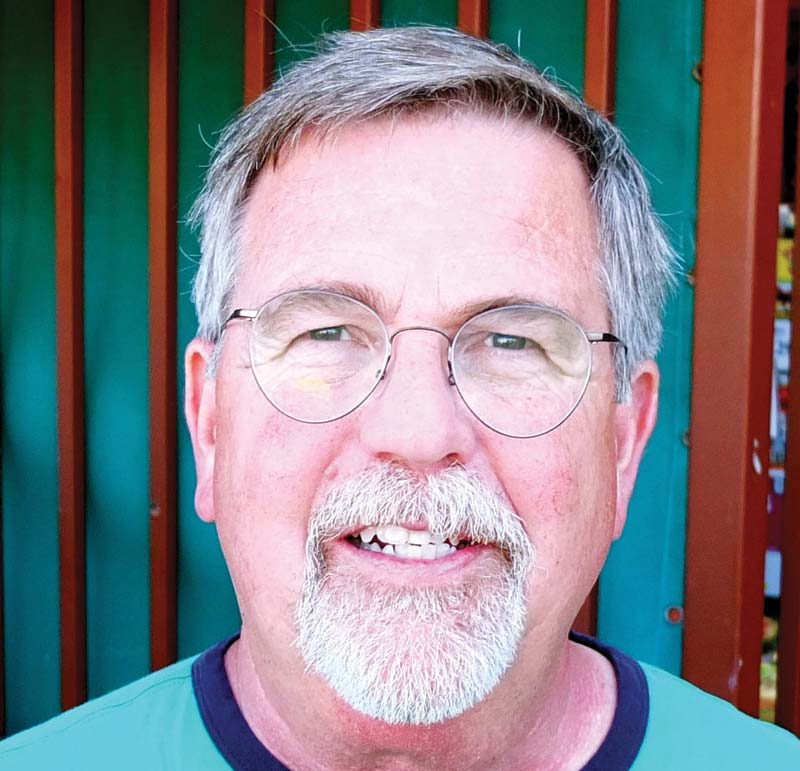
“All the baggy clothes. I just don’t think that it looks good—and I’m wearing them, too.”
Dan Quinto
Scotts Valley
Paramedic
“High-waisted cut-off shorts that are just too short. ”
Grace Poppke
Santa Cruz
Student
“Pants below the butt.”
Sunita Chethik
Soquel
Retired Teacher
...