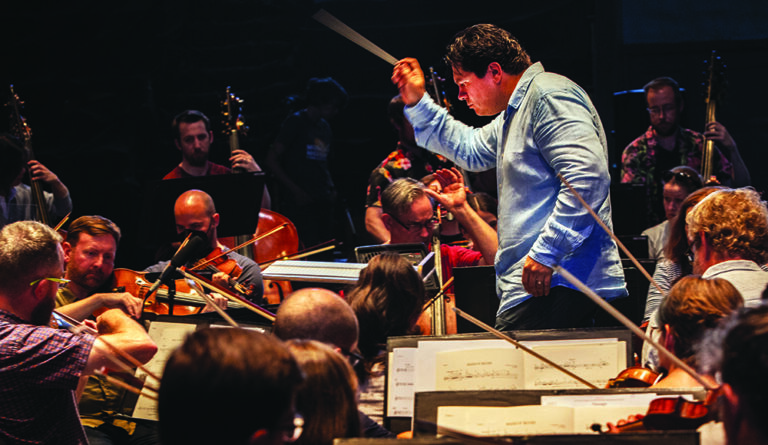

The most lovable sponge in the universe is coming to UCSC. The SpongeBob Musical is set to premiere on Nov. 14, with performances continuing through the 23rd. It’s a wacky play with subversive undertows.
In 1984, marine biologist Stephen Hillenburg was asked by his employer, the Orange County Marine Institute, to create an informative comic book to educate students who were interested in the complicated ecosystems of the ocean. Hillenburg’s picture book, The Intertidal Zone, was not only the origin of SpongeBob SquarePants, but the inflection point where Hillenburg began to change directions from teacher to full-time artist.
By 1993, the aspiring artist was hired by Nickelodeon as an animator. And in 1999, our somewhat trusty SpongeBob hit the airwaves and never left, making it the fourth longest continuing animated series. And in 2016, just like every concept that lives in a pineapple under the sea, SpongeBob was turned into a musical.
SpongeBob, an innocent and naive sponge, is big on enthusiasm and short on common sense. Director Rebecca Wear is a theatre enthusiast who uses play and comedy, and theatricality, as ways to invite the audience into the bigger ideas. “SpongeBob is definitely a story about climate change. And it’s also a story about xenophobia. Part of the draw of it for me is that it presents those issues in such a way that they’re intergenerationally appropriate,” Wear explains.
Fans have posited that the award-winning cartoon character has neurodivergent traits and is possibly “autistic”—a theory supported by comedian Tom Kenny, the voice of the animated SpongeBob. And so what is celebrated on screen and stage is an underwater community that welcomes, and wouldn’t exist without, diversity.
But one of the most important things in a musical is the music. “Inherent to the piece is also celebrating this range of music. And so even as it’s talking about how we all need to come together and, in the context of this specific piece, to face the impending doom of a volcano erupting, and try to figure out if they can save Bikini Bottom. I think it’s also just as much about celebrating what makes each of these characters unique, and what their particular strengths are. And about affirming the fact that there’s a place for every lobster in the ocean, just as much as there is for every squid,” Wear says.
And with a catalogue of songs written by people like David Bowie, Cyndi Lauper and the Flaming Lips, this feisty musical production about the residents of the submerged Bikini Bottom community, including characters such as Mr. Krabs, Squidward Tentacles and the villainous Plankton, the tunes will be having attendees singing and Krab dancing in the aisles.
SpongeBob is a contemporary cultural hero. Albeit a reckless and bluntly obnoxious hero, but time and time again, SpongeBob saves the day. And this resonates throughout several generations. When the call went out for auditions it wasn’t only theater kids who tried out, but students who are majoring in cognitive psychology, economics, and who are part of HAVC (History of Art and Visual Culture) and History of Consciousness. “It’s been delightful and inspiring to see how much talent there is within this group of students who come from all different areas of interest and study,” Wear enthusiastically elucidates.
Ava Leones is an 18-year-old UCSC student from Southern California, majoring in theater, and she is indeed a theater kid. “I’m in the ensemble, the band The Electric Skates, and a dance captain (in SpongeBob). I think it’s also just about accepting our strengths and, like, how we can use our strengths to uplift others. I think it’s a very important reminder to know where we are in the world and to just further appreciate the world that we live in,” Lenoes makes clear.
As SpongeBob says, “F is for friends who do stuff together!”
The studio gallery of Robert Azensky Fine Art in the heart of Soquel, internationally known as a place to have art restored to its original state, is a place full of wonders, filled with centuries-old collectable treasures, and art—so much art, of every style and subject.
From California landscapes to Surrealist dreamscapes, modern abstracts to mythical pre-Raphaelites, you’ll find it here. Every piece that arrives has one of two stories: either it has been adored for decades or neglected for far too many, and the job of the artists who work magic here is to write the next chapter while reversing time, restoring history for a range of prices up to $40,000—in a building that was once a meat locker.
FRAGILE FLOWERS Vulnerable to accidents, a painting can go from treasure to trash in an instant, or over decades. Restorationists repair, conservators preserve. Photo: Diana WilsonTRACING STEPS Artists at Robert Azensky’s studio intuit the strokes made decades ago, painting in and re-experiencing the moment of creation. Here, the painting that was nearly ruined has a new life. Photo: Diana Wilson
FORWARD INTO THE PAST
In his khaki cargo shorts, Robert Azensky appears more like a character from an Indiana Jones movie than a dealer in fine art—not surprising, from his decades spent in the world of antiques and lost treasures.
In the early days, Azensky didn’t set out to become an art dealer. “I was a real estate agent and then an antique dealer,” he says.
A life-changing moment came when he fell in love with an entire collection of abstract art, the beginning of a new passion for buying and selling paintings and sculpture.
When a lease expired on an early gallery, Azensky was at a crossroads in his career, weighing his options. He could open a new gallery, return to antique street fairs, or take his chances in the emerging world of online auctions. He tried listing paintings on eBay and similar sites—but sales came slowly.
Then he noticed a respected dealer carrying stacks of paintings at a flea market, priced at $20 or $30 each. Curious, Azensky discovered that the man was selling them through One Kings Lane, a high-end marketplace known for designer décor. The discovery was a revelation.
“I called them and they said, ‘We don’t want your antiques—we want your art,’” Azensky says. At the time he had some 3,500 paintings in stock. Within weeks, he was slowly uploading pieces to the platform, learning as he went.
Fate stepped in upon a chance encounter with Diana Wilson, a friend from local trivia nights. “We’d crossed paths before. She’s very striking—blonde hair, with a glass of Chardonnay,” he remembers. “I told her I was over my head with my online art business, and she said, ‘Maybe I can help.’”
She could—and did. Wilson introduced structure to the chaos. “She got an Excel program going, cataloged everything, numbered every piece. We had hundreds stacked against the wall,” Azensky says. “Within a few months we were assigning 20 to 30 paintings a week to One Kings Lane.”
Azensky even taught himself restoration.
“When you’ve got hundreds of paintings and they’re yours, you learn how,” he laughs. “I tried different cleaners, did some research, wrecked a couple pieces—but you learn. I once cleaned what I thought was a nocturne—a night scene—and after I sold it, I saw it in another gallery. It was a sunrise. They’d cleaned it properly.”
Together the pair built a sustainable rhythm: Azensky’s deep knowledge of art history and pricing paired with Wilson’s logistical discipline. The secret, he says, is “knowing what to buy, how to buy—that comes from 37 years of learning, trial and error.”
NO MONKEYING AROUND Robert Azensky takes pleasure in a serious business with no room for error: valuing, authenticating and restoring lost art treasures. Photo: Brad Kava
A DAY, A LIFE, IN ART
Wilson, the studio’s conservator and restorationist, examines her current restoration work in progress, assessing its accuracy. Her standard for releasing a finished work is plain: “If I can see the fix, it’s not done,” she says.
Wilson’s path into the gallery began on the marketing side, teaming with Azensky after a long career in tech, working for Intel, Google and Microsoft.
Fifteen years in, she is a member of the American Institute for Conservation. She loves the work of restoration and the hunt for new additions to the collection. She scouts widely, sometimes finding worthy pieces in unglamorous corners of the internet, like an oil by the renowned American painter William Coulter, found on Shop Goodwill.
She describes herself as unusually sensitive to color and detail, with “a memory for color” that’s been there since childhood. It’s a talent that made restoring and conserving art a natural evolution.
Practicing the art came first; chemistry came later. Learning solvents, varnishes, and the structural side—relining, mending, stabilizing—was the steep slope she had to climb.
What helped was a mix of formal community and visual learning: the knowledge exchange through the American Institute for Conservation’s forums, and the very practical reality of watching procedures via video when a demonstration clarified more than a paragraph ever could.
She’s candid about starting on lower-value pieces and learning by doing. The through-line is patience and pace: most work happens in tiny increments, mere inches at a time, with constant checks to be sure nothing is lifting or reacting badly.
“You have to be a marathoner. The more valuable the painting, the more likely we are to invest time in it,” she says, recalling a John Charlton that occupied her—on and off—for three years.
Wilson works on restoring oils, and explains how her Ben Lomond-based colleague Lina Pukstaite, museum-trained, specializes in paper.
“That’s like next-level alchemy,” she says. “There’s no margin for error. None. That’s heart-stopping stuff to me.”
FINDING FAKES
In the art world, reproductions abound—some honest, others deceptively convincing. With every work, the studio vets authenticity with method and consensus.
Research is essential, into artist palettes, subject matter, signatures, period trends and provenance trails.
Jocelyn Auld is an essential member of the Azensky team, the Fine Art Research and Curation Specialist, with a BA in Fine Art from Swarthmore College. She follows every clue, every record, to guarantee the authenticity of every painting.
Wilson points to a recent case involving days spent in the UC Berkeley library cross-checking a Paul Klee catalog raisonné, then translating non-illustrated entries to see if a work might match by description and size.
Even when passing a first inspection, Wilson stresses, that’s not enough on its own. If the team is not unanimously in agreement, a work doesn’t go forward as advertised.
“Our reputation is on the line,” she says.
SOUL DEEP Diana Wilson finds comfort and purpose in revealing the true beauty of art dimmed and damaged by time. Photo: Brad Kava
REVEALING MICHELANGELO
The oldest forms of “repair” were crude: monks repainting icons, framers repairing canvases, early conservators replacing missing bits in a mural. Over centuries the craft grew more refined. By the 19th and early 20th centuries, the practice became more exacting—introduce a varnish, test solvents, isolate layers, document everything.
In 1980, scaffolding began to climb the walls of the Vatican’s most sacred chamber. Above it, Michelangelo’s ceiling—painted between 1508 and 1512—had darkened into a fog of soot, candle smoke and centuries of varnish. To many, this dimness was part of their grandeur. To a handful of restorers led by Gianluigi Colalucci, it was a veil that needed to be lifted. Under the supervision of the Vatican’s Laboratory for the Restoration of Pictures they tested patch after patch of the frescoes, recording the reaction of every pigment. Each test square became a miniature window into the 16th century.
When the first panels were unveiled, the world gasped. Michelangelo, it turned out, had painted in fierce, luminous color—closer to modern comic art than the sepia solemnity people had imagined.
What emerged was not just a restored masterpiece but a shift in philosophy. The Sistine project became a benchmark for modern conservation. Every solvent was tested, every intervention recorded, and every decision framed around reversibility—the ability to undo any treatment in the future. Colalucci’s team even left small “control patches” untouched as a record of the past and proof of their restraint.
Robert Azensky’s workshop reflects this lineage. The gallery thrives in the world of buying and selling of art, but they’re not just picking treasures, they’re rescuing them.
REVELATIONS Katlyn/Kiara Leonardich works inch by inch, removing yellowing varnish and stroke by stroke, repairing art, some centuries old. Photo: Brad Kava
ART NECROMANCY
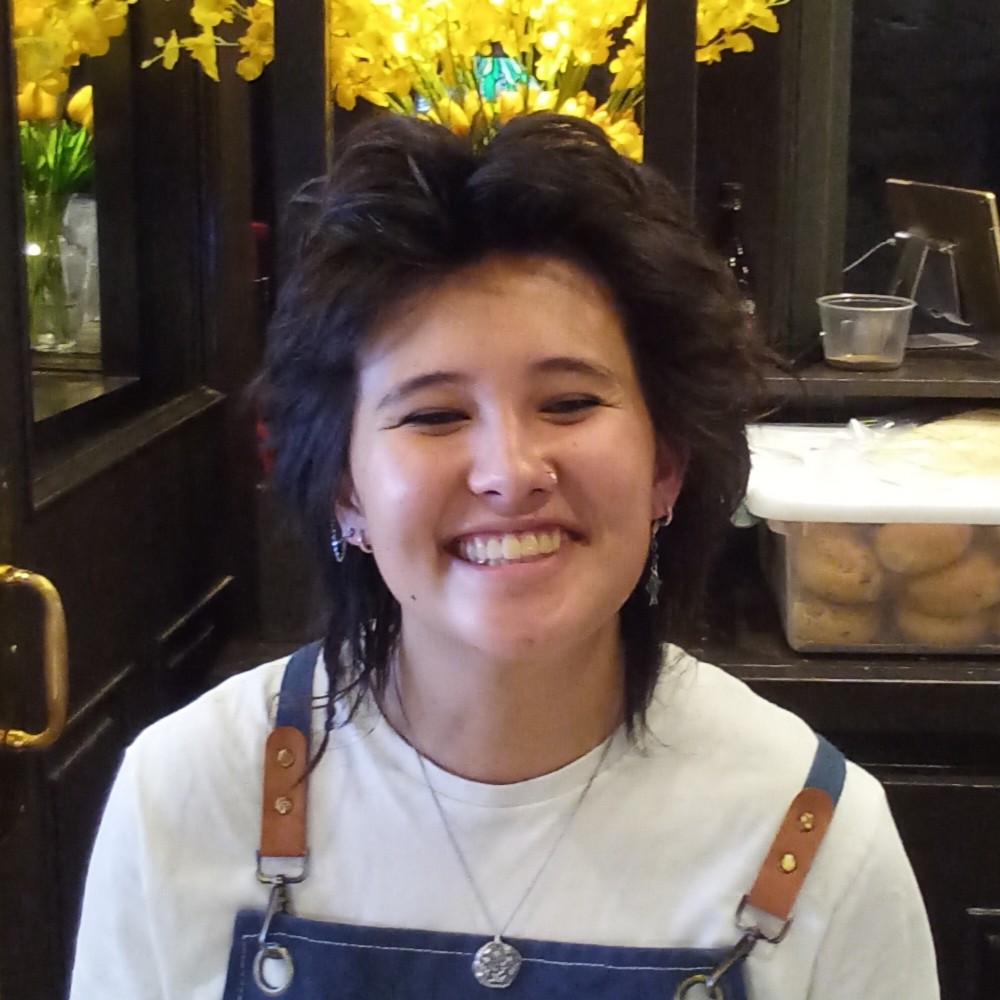
Art restoration specialist Katlyn/Kiara Leonardich, 23, a San Jose State art grad, is immersed in repairing a reproduction of Tarquinius and Lucretia, originally painted by the 16th-century Italian artist Titian. Her brush, dabbed with a perfectly matched flesh tone, restores the color of Lucretia’s arm, whose hand clutches a dagger meant for herself.
Leonardich brings both a steady hand and a bright-eyed fascination to her work. Her roots run deep in art—drawing since third grade, when library books on “how to draw horses” filled her afternoons.
Raised first in a tiny Sierra Nevada mountain town and later in the Santa Cruz Mountains, she eventually graduated from Los Gatos High after years of cramming her schedule with every art class she could find. Encouraged by teachers and parents, she spent every spare hour in studios and summer programs, eventually earning her art degree from San José State after briefly considering a career in teaching.
When she’s not restoring century-old paintings, she still keeps her playful side alive—working weekends as a face painter at birthday parties and school festivals, bringing color to kids’ cheeks instead of canvases.
She pursues her own career as an artist, creating worlds from her imagination.
“I love fantasy films and imagery, so when people have a fantastical concept and represent it really well, I’m in love with that, and I want to get there.”
That lifelong love of making art also fuels her work at the gallery’s restoration bench.
Cleaning a painting, she says, can feel like time travel, and the ghost of the original artist’s touch flickers back to life.
“I like knowing the history of things, and when I first started here, I thought a lot about how someone else’s hands once did this—and now I’m touching it,” she says.
“It feels like art necromancy.”
Leonardich learned fast that not every resurrection goes smoothly.
“Within my first week,” she remembers, “I did make kind of a big oopsie when I was applying an iron-on patch on the back of a canvas. I forgot to put something non-stick under it and huge chunks came off on the cardboard beneath.”
Showing her talent and determination, she fixed the damage with patient in-painting. Since then, she’s become ever more confident, even repairing disastrously bad prior “restorations,” tackling everything from questionably wax-filled surfaces to cracked oil paint “repaired” with car-repair bondo.
Still, she admits that some repairs can spike her anxiety.
“We have one painting that honestly, I am still avoiding because the restoration is super difficult. It’s super nerve-wracking because the only way to fix it is possibly damaging the base a little bit, and you want to avoid that at all costs.”
NIGHT MEETS LIGHT A California landscape, dimmed to twilight by smoke, varnish and age, is patiently cleaned to reveal a new day in an old treasure. Photo: Diana Wilson
BULLETS AND BLOOM
Every painting that enters a restoration studio comes with its own scars. Some are predictable—grime, varnish gone yellow, paint that has curled and lifted in little waves—but others tell stranger stories. Wilson remembers one in particular.
What had looked like a small puncture was assumed to be accidental damage, until the pattern around it suggested otherwise. The team examined it under magnification, with light raking across the surface. The verdict: a bullet hole! The owners declined the repair, retaining that record of the painting’s life, a part of its story.
Like the scar of a stray bullet, damage sometimes becomes character, the visible record of survival. Some damage threatens to destroy a canvas; much dims the beauty that once breathed through it. Surface cleaning lifts away decades of smoke, candle soot and airborne grime, each pass revealing color that hasn’t been seen in years. Yellowed varnish, once applied to protect the surface, is dissolved in tiny, tested swabs until the true tones reappear.
More urgent are the physical ailments: cupping and lifting, when the paint layer starts to curl or separate from its ground. Each loose flake is stabilized before it can fly free. Abrasion—the faint scuffing where a frame rubbed or an overzealous cleaner once pressed too hard—gets retouched only enough to restore continuity, never disguise history.
Then there’s bloom: a ghostly white haze that can blanket the varnish when moisture or chemical reaction clouds it. Under the right hand and the right solvent, it melts away in seconds, like fog lifting from a window.
And there’s craquelure—the fine network of cracks that time itself inscribes. Most owners assume it’s damage; restorers know it’s personality. Craquelure maps the painting’s life, its expansions and contractions through countless seasons. It’s usually left untouched unless flakes begin to loosen.
As a group, the team leans on the profession’s first principle: “First, do no harm.”
Wilson and her restorers fix what threatens the work and preserve what makes it unique. That includes, occasionally, a bullet hole—proof that even art can survive a little chaos and still be worth keeping.
RESTORATION IN THE VIRTUAL WORLD
Gallery Director Devon Brockopp-Hammer is affectionately described as running “a tight shipwreck.” He oversees the vast online collection of the gallery’s art offerings.
He also plies his art skills digitally, achieving in Photoshop what the restorationists will do in reality. With so many paintings arriving for triage and stored awaiting their chance for renewal, he repairs with pixels and lists the art as it will look, making it available as soon as possible, rather than languishing for months.
The repairs are far more involved than a click of a digital healing brush, requiring knowledge of everything that can and can’t be repaired, but critically, presenting the art as close to reality in natural light.
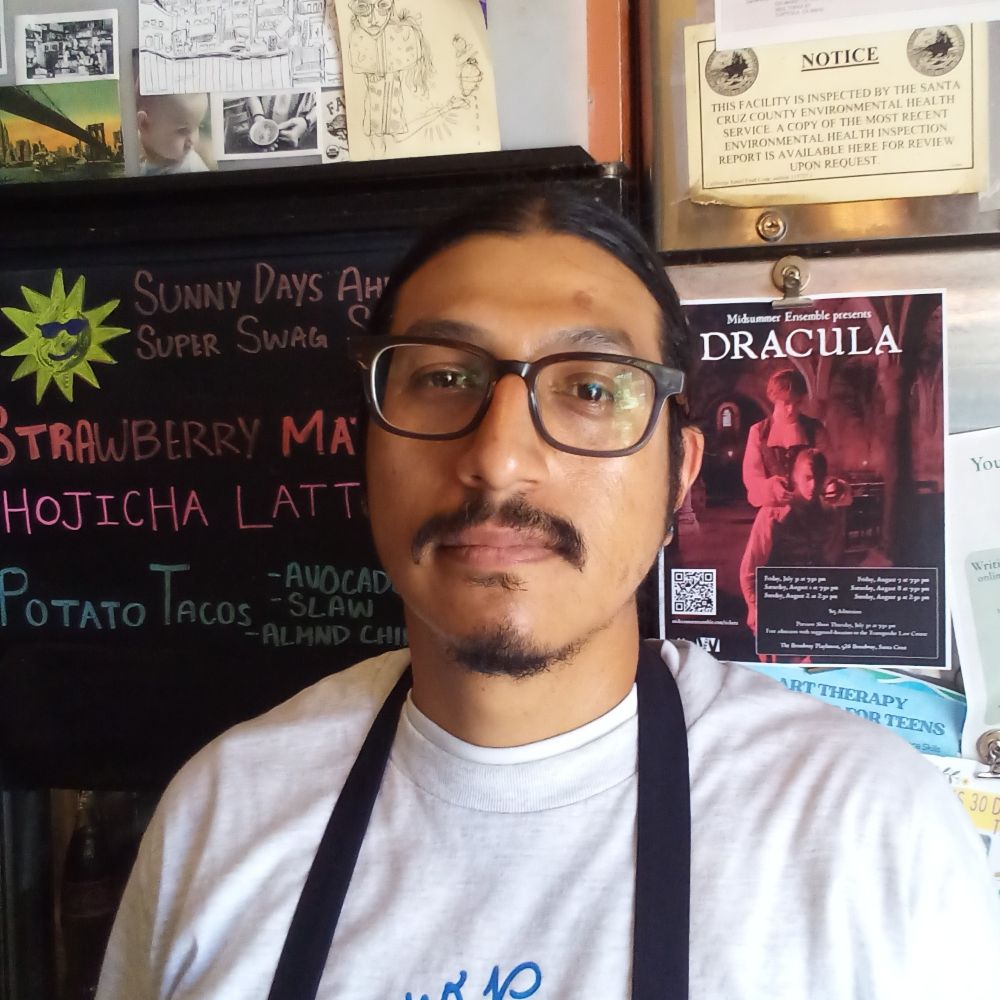
Devon found the studio through a help-wanted ad, and later reached out to Kiara, a friend from their artists’ Meet-Up. Away from work, his creative passion is music of the experimental kind, often incorporating the technique of “looping.”
GIFTS OF REBIRTH
It’s one thing to wrap a gift. It’s another to bring something back to life.
Nearly every family seems to have a painting quietly aging in the background, or stored away half-forgotten, dulled by dust, damaged, or clouded with varnish.
During the holidays, the team at Azensky studio are often busy receiving those treasures and returning them renewed. Not a new possession, but a restored memory.
Not every canvas in need of rescue was painted by someone famous.
A professional restorer is there for anyone who wants to keep a personal history intact. When they look at an heirloom, they don’t see “low-value art.” They see the same materials that every master once used.
Owners are often astonished by the emotional payoff. A dull gray sky turns cobalt again; a haze of yellow vanishes to reveal pink skin tones that feel almost alive. It’s like hearing a voice you thought was lost.
RESTORER or CONSERVATOR? WHO TO TRUST?
When an old painting darkens with age or flakes from its canvas, the person you call might call themselves a restorer or a conservator—and sometimes both. The difference is subtle but important. A restorer focuses on visual renewal. A conservator is trained to preserve and stabilize with minimal interference.
Most reputable studios, including Azensky’s, blend the two disciplines. For anyone who owns a painted heirloom, the safest path is to seek a professional who honors both arts: conservation for integrity, restoration for beauty.
FINDING JOY
Diana Wilson’s license plate jokes that she’s an “art wizard,” but though everything is not high-stakes oil on canvas, she’s serious about her devotion to everything she restores. The emotional payoff is similar.
“Almost every painting is like a revelation,” she says.
Wilson is surprised that more young artists don’t discover art restoration.
“In terms of work-life balance, this is a wonderful career,” she says.
With a little hired help, her work even allows her to care for her 94-year-old mother. She points to her own experience as proof of the opportunities the work can bring.
“I’m not working 60 hours a week like when I was in tech, plus the commute, which is soul-killing,” she says,
“I’m able to roll in at 11 and leave at 4.”
Even working on a Saturday, she can put on some Rolling Stones and enjoy a mimosa. “And I can live wherever I want to live.”
“But I think more importantly, when I fix the painting something in my soul is fixed,” Wilson says with a look of gratitude. “It just makes sense. The universe is back in balance.”
Scroll through thousands of curated art pieces in the Robert Azensky Collection online at Artsy, Chairish and 1st Dibs. To buy, sell, or plan a restoration of art by appointment, call (831) 346-6465 or email, ******************@***il.com“>ro******************@***il.com.
How many times have I passed by the old meat locker on San Jose-Soquel Road and not given it a passing thought?
Then, with the joys of journalism—being able to see behind the curtains—I got to go inside to shoot some photos for John Koenig’s cover story. It was mind-blowing.
There’s a collection of art treasures, more than in any museum this side of San Francisco. Many of them are damaged and being repaired by a highly trained group of artists. This is something you would expect to see at the Smithsonian or the Metropolitan Museum of Art, not in placid Soquel, with its seemingly mysterious name that outsiders find impossible to pronounce.
There were beautiful modern and classical works, being lovingly restored from smoke damage, mishandling, paint falling off the canvases, and even a bullet hole.
They don’t need a giant gallery, although it would be cool to see all the works on display, because you can see them and buy them on their website. With the internet, this local business has a worldwide customer base.
I imagined a job this like would be one of the most stressful things ever. One mistake on a centuries-old canvas and you’ve destroyed history. My hands would be shaky.
Luckily, they have ways to avoid major damage, including putting a layer of gloss over the work to be repaired, to make sure the repair fits and then doing it after removing the gloss. Still, it takes steady hands, a skilled eye and patience.
One of the artists says she took two years for a restoration because she was so nervous of doing harm.
As journalists, we are largely storytellers, letting people know what’s going on around them and getting the information they might not find otherwise. My favorite thing is learning about something I see all the time and had no clue about what it really was or the story behind it. It awakens me to the surrounding world and it’s a joy to share it with readers.
I think you will love John’s story. We have so many things around this county that go overlooked and open up the world when you learn about them. Enjoy and be dazzled.
On other fronts: you can read about an experimental Korean music festival coming up this week in an article by the writer DNA. Talk about the benefits of having a world-class university in town! You get a lifelong education here.
You can also find entertainment for the whole family at UCSC’s presentation of The SpongeBob Musical with songs by the likes of David Bowie and Cindy Lauper.
There’s even more culture at the new Native American exhibit at the Aptos Public Library. We can travel the world without leaving the second smallest county in California. (Who knows it’s the smallest, by land mass?)
In the food department, you can read about a new restaurant with a Le Cordon Bleu-trained chef from Costa Rica in Andrew Steingrube’s Foodie File.
Happy reading.
Brad Kava | Editor
PHOTO CONTEST
BIRDS FLEW Sunset, taken from Light House Point, Oct. 12. Photograph by Alex Kraft
GOOD IDEA
Residents who were renting or previously owned a home in Santa Cruz or Monterey counties during the 2023 floods can attend a free Homebuyer Workshop at 7–8pm Thursday, Nov. 13 in Watsonville.The workshop will introduce the ReCoverCA Homebuyer Assistance (HBA) Program, which provides up to $300,000 in forgivable home loan assistance to help eligible households purchase homes in lower-risk areas, specifically outside designated special flood hazard zones and high fire-risk areas. Location: Hampton Inn & Suites Watsonville, 75 Lee Road, Watsonville. Register at: qrco.de/bgQnYU
GOOD WORK
In the face of the ongoing federal government shutdown and sweeping changes to national nutrition assistance policy, Community Bridges’ Meals on Wheels for Santa Cruz County and Grey Bears are launching a new project to bolster food and nutrition services for vulnerable older adults. This ensures that homebound older adults receive nutritious, ready-to-eat meals and gain access to Grey Bears’ Healthy Food Program, which delivers weekly grocery bags filled with fresh produce and pantry staples, at no cost.
QUOTE OF THE WEEK
‘The deader, the better.’ —Art restorer Diana Wilson, assessing the value of artists’ paintings
Behold my nominee for the coolest bottle shop in the Santa Cruz area: Deer Park Wine & Spirits (783 Rio Del Mar Blvd., Aptos).
Which serves as a reminder: Best of Santa Cruz nominations are open and ongoing through Sunday, Nov. 16, at goodtimes.sc/best-of-ballot.
The vast and uncommon inventory speaks for itself, and the service is old-school earnest and approachable, but the real differentiators are the free or affordable ($20 max) educational tastings happening several times a month, and a whiskey club for whiskey obsessors and blossoming beginners alike.
The first Friday of every month features “wines curated and loved in the shop” and is hosted by industry experts.
The third Friday features an assortment of spirits shared and still more experts, riffing and sipping everything from gins to amaros.
DPWS owner-operator-whiskey whisperer Cheyne Howell stays vigilant on seeking out rare finds, and stoking locals on maximum education. One of his recent discoveries represents another potential Best Of nominee and my new preferred clear spirit: Corralitos Vodka is a bit of a unicorn, as it’s one of the few truly local and family-owned liquors in the area, and unlocks a strikingly soft, floral and apple-based experience on the palate.
“Like the farmers market or Costco, when you taste a consumable product you can better decide for yourself,” Howell says. “You can only learn so much about a product without trying it. It opens the door for a lot more conversation too!”
All of the edu-tastings happen 4–7pm and are best tracked by DPWS’s newsletter, subscribable via deerparkwines.com.
SWEET SUCCESS
You had me at “moukie.” That fiendishly delicious creation—part mousse, part mini madeleine cake—ranks among the draws at Spontaneous Confections (1855 41st Ave., Capitola), which celebrated its grand opening Nov. 1 at the Capitola Mall. Pastry Chef Justin Lenorovitz learned his way around brownies, tarts and other treats at Institut Culinaire de France in Bordeaux, France, and now slings pastries and desserts like his four takes on a from-scratch Dubai bar—dark chocolate, milk chocolate, hazelnut crunch and Persian love—for limited hours 10am–2pm Monday–Tuesday and noon–5pm Friday, spontaneousconfections.com.
HELP FOR THE HUNGRY
Second Harvest Food Bank is reminding locals that 1) CalFresh/SNAP benefits are delayed in November due to the federal government shutdown; 2) If you receive benefits, the State of California will notify you directly about the delay; 3) This is not a termination of your benefits or a change in your eligibility; and 4) Second Harvest team members stand by ready to help at 831-662-0991, and by way of the “Find Food” tab at thefoodbank.org, which will help you home in on a distribution site near you.
HOLIDAY HAPPENINGS
Homeless Garden Project’s new store in downtown Santa Cruz (1339 Pacific Ave. Santa Cruz) is now open 11am–6pm daily across the street from its old space, which flooded earlier this year—and ready to fill your Santa sack with natural bath and body products, hand-dipped beeswax candles, organic baking mixes, soy candles, strawberry jam, local artisans’ jewelry, books, cards and more, homelessgardenproject.org…Eat for the Earth’s free holiday celebration happens 7–9pm Dec. 6, with nourishing plant-based foods, the jazz stylings of Eliot Kalman and Eat Music, a silent auction, drawings and spotlights on the nonprofit’s allies, at Santa Cruz Seventh-day Adventist Church (1024 Cayuga St., Santa Cruz), eatfortheearth.org…The latest Get Hooked! dinner to benefit Monterey Bay Fisheries Trust happens at Solstice (46840 Highway 1, Big Sur) with seafood towers, sparkling wines, multiple chefs and multiple courses, and supports the trust’s awesome community seafood outreach program connecting those in need with fresh catch, while supporting area fishermen, $145, montereybayfisheriestrust.org…Teddy Roosevelt, lead us out: “Do what you can, with what you have, where you are.”
Aspiring to be a chef since age four, Tyler Reiner is that and the co-owner of the recently opened Circle & Square in Corralitos. Born in Sacramento, he grew up in Costa Rica and has lived in seven states and moved 40 times in his life. “Food was always my constant,” he says, explaining that he was inspired by diverse cuisines and church pot lucks from a young age. Graduating from Le Cordon Bleu in 2002, he worked in fine dining before a humanitarian transition to assisted living facilities, drug rehab centers and youth organizations. Living locally and seeking a sense of community for the last 13 years, he decided to do what he loved—cook—and let the community come to him.
With that guiding vision, Circle & Square opened its doors in August with a classic bistro motif amid earthy colors and Bohemian touches. The small menu is described as California-centric with a global approach utilizing French techniques, seasonal inspirations and what Reiner calls “intuitive cooking.” Appetizers include local tomatoes paired with burrata cheese and a roasted winter squash salad with pear butternut vinaigrette. Entrée favorites are chargrilled ribeye steak with chimichurri, a pork belly sandwich and weekend seafood specials. Dessert is a rotating seasonal option.
What’s it like being the only cook in the kitchen?
TYLER REINER: I’m able to hyper-focus on freshness, quality and attention to detail. Every plate that comes out of our kitchen has been cooked by me and me only, which is almost unheard of in the restaurant industry. A lot of this is out of necessity, but we do plan on bringing on apprentice chefs.
How does your location inspire you?
Our concept is community, and our name is representative of this. As individuals, we are all a bunch of squares. But stacked on top of each other, we create a circle to gather and share—and this metaphor guides our philosophy and business. We honor where we live and work, and the local bounty of produce, proteins, wine and beer. I source our food intentionally and try to cut out third parties, I really like to personally know the people growing and providing for us. The Corralitos area is a great place to be able to execute this vision; it’s very validating, and we are so happy to be here.
There was a lot of trash talk Sunday in Santa Cruz. Not gossip. Literal trash.
In the ocean and deep into the food chain.
Close to 400 people gathered at the Rio Theatre to hear some of the latest research on the health of the ocean and what steps can be done to combat pollution on land and sea.
“Even in the face of industrial mining and fishing—if that stops—our oceans can recover,” said Sally-Christine Rodgers, who works for an anti-pollution organization called Trash Talkers. “And right here in our county, our litter, our cigarette butts, our plastics are going into our watershed, and we’ve got to stop it.”
This group of scientists lamented that plastic is everywhere, even the most remote oceans.
UCSC adjunct and environmental toxicologist Dr. Myra Finkelstein spoke of her research on Midway Atoll in the South Pacific, which revealed dangerous amounts of plastic in the eggs and digestive tracts of seabirds such as albatross.
“We saw this everywhere,” she said. “But we have little data on what the harm was and if you don’t have harm, it’s really hard to advocate for change. But there is also a lot of evidence that humans are also ingesting microplastics.
“I do think we, as a society, can do something about this; we can make this change and clean up this mess.” She advised joining the Pitch In initiative and using less plastic in daily behavior and “don’t microwave plastic,” adding, “And think that even that one plastic cap you pick up—and it doesn’t get in the storm drain—maybe that’s one less thing that’s going to end up in an albatross chick’s stomach.”
Hosted by Sally-Christine Rodgers, Trash Talkers organizer, the nearly four-hour event featured scientists Dr. Anela Choy, associate professor, Scripps Institution of Oceanography, UC San Diego; Dr. Myra Finkelstein, environmental toxicologist and adjunct professor, UC Santa Cruz; Dr. Alexa Fredston quantitative ecologist and assistant professor of Ocean Sciences, UC, Santa Cruz; and Dr. Ivano Aiello, marine geologist and sedimentologist, San José State University/Moss Landing Marine Laboratories.
Also on site were four information tables by Watsonville Wetlands Watch, Coast Watershed Council, Pitch In Santa Cruz County, O’Neill Sea Odyssey and Save Our Shores.
Dr. Aiello stressed one main point: “Whatever happens on land, it goes into the ocean,” while emphasizing “how delicate our coastal systems are.” He said that farmers typically use around 20 million pounds of plastic every year in the Monterey Bay area, some of which ends up in waterways and the sea. He stressed “fantastic restoration ecosystem work” being done by the Elkhorn Slough National Estuarine Reserve, including recovering previous wetlands that were dyked and sunk.
He said the use of certain mulches, biodegradable plastics, recycling plastics and long-term monitoring will make a big difference in healing the oceans and coastlands.
Fredston touched on the unhealthy picture of many of today’s coral reefs, coated in plastic pollution, while emphasizing widespread efforts to end the behavior that causes that.
“If we stop producing so many of these plastics, I think a lot of these ecosystems can recover,” she said. She explored how human behavior blended with natural currents, climate change, container ships, and fishing gear “jointly affect marine ecosystems.” She stressed reducing plastics and chemical production that reaches the sea, and endorsed creating more regulations on over-fishing, and protecting coastal regions.
Choy talked of the enormous range of sea life, from seabirds, whales, shrimp, and crustaceans, that live amidst a flurry of plastic waste.
“It is really important to think about the products that we use every day,” she said.
The event culminated with a new documentary film by David Attenborough, Ocean.
“We must open our eyes right now to what is happening…below the waves,” Attenborough said in the one hour and 50 minute film. “We have drained the life from our ocean but I would find it hard not to lose hope. “The ocean is our final frontier,” he said, and “a healthy ocean keeps the entire planet stable and flourishing.”
The Pajaro Valley Unified School District may lay off more than 150 employees to save $15 million in the district of 17,000 students and 34 schools.
The Board of Trustees will hear a report on the possible layoffs on Nov. 12, and on Dec. 10 will discuss them.
The information was released hours after administrators handed out notices of possible layoffs to several school employees in advance of the Wednesday night Board of Trustees meeting.
Possible cuts include reading intervention teachers, counselors, behaviorists, health care assistants and instructional assistants, mental health clinicians and special education workers.
The district has until March to issue final layoff notices to teachers.
Handing out layoff notices now gives affected employees time to consider other possible employment options before those deadlines, said PVUSD spokesman Alejandro Chavez.
“If they are going to look for other positions or move into other positions within the school district, it gives them ample time to have that opportunity,” he said.
The notices come as the district seeks to cut approximately $15 million from the budget, Chavez said.
Many of the positions, he said, were paid for by one-time Elementary and Secondary School Emergency Relief (ESSER) funds, which dried up in February 2024.
But the cuts go deeper than that, with many full- and part-time teachers facing the possible loss of their jobs.
The discussion follows a letter issued Sept. 15 by the Santa Cruz County Office of Education warning the district that declining enrollment over the next three years—a loss of approximately 716 students by the 2027-28 school year—paints a troubling financial picture.
Chavez said PVUSD has seen a loss of 450 students since last year.
“That’s a whole school,” he said.
In addition, PVUSD is projecting it will be deficit spending by more than $10.4 million this year, $15.4 million next year and $17.7 million in 2027-28, SCCOE stated in the letter.
“This level of deficit spending cannot be sustained,” the letter states.
Diniz questioned why the district sent public notice of the meeting on Oct. 31, but without the additional information about which positions were slated for possible elimination.
The district, Diniz said, explained that it wanted to meet with the employee groups in advance of releasing the list to the public. But that explanation was insufficient, he said.
“It’s frustrating,” he said. “What we want is transparency, and it is not transparent to upload a part of the agenda and leave people twisting in the wind like this.”
The cuts would “absolutely be devastating for our community and they need to be rejected,” Diniz said.
He also pointed to the possible elimination of 11.85 FTE of reading intervention teachers, with the district’s explanation that the positions were added with one-time Covid funds.
“We have less intervention teachers now than we did pre-Covid,” he said.
Diniz said the district should instead look to administrative jobs in the district office.
“Cuts need to take place as far away from the classroom as possible,” he said. “These cuts are an outright assault on our members, our community and our students.”
Almost a year after the largest lithium-ion battery storage facility in the world caught fire at Moss Landing, spewing toxic material and forcing the evacuation of 1,200 people, Santa Cruz residents gathered to warn against a proposal to build three more of the facilities in the county.
Firefighters had no way to put out the Jan. 16 blaze and had to wait for it to go out on its own, which it did two days later. But then it reignited for a day in February, and officials say it will take a year to clean up the site.
Some 50 people joined a meeting held by a local group called Stop Lithium Battery Energy Storage Systems (BESS) In Our Neighborhoods Monday at the Simpkins Family Swim Center in response to proposals to build three storage plants near homes, schools and a hospital.
“We advocate for safe, non-lithium battery technology, transparency, and our community’s voice in the decision-making process,” the group’s website says. “By raising awareness, educating the public and advocating for safe community environments, we work to prevent the development of hazardous lithium BESS facilities near homes, schools, hospitals, congregate care facilities, farms and natural habitats.”
The state government has been pushing for more battery storage units in an effort to wean off carbon fuels for electricity generation. The batteries store energy from solar and wind and the state’s department of energy has plans to build many more. From 2018 through mid-2025, battery storage capacity in California increased from 500 megawatts to more than 16,900 MW, according to a report by the California Energy Commission. The state projects 52,000 MW of battery storage will be needed by 2045.
There is debate over who should approve and regulate the units: the state or local governments.
Nina Audino, co-founder the group, told the meeting that in order to get a permit to operate a better facility, it is better to have local control, through county planning, than it is to go to the state control of battery facilities.
“Local control only works better for the community if the control is centered in a rigorous ordinance that protects us,” Audino said. “If there isn’t such an ordinance, then essentially local control means that the developer gets to do what they want to do. It’s the job of the county to create a really tough ordinance. … In our case, as part of our local control the county is stating the developer’s consultant will write and pay for an environmental review, which is typically the case.”
Audino stressed that the county must step in with a “tough ordinance.”
Panel member Karell Reader said her research into battery storage was triggered by the Jan. 16 fire, the hazardous toxic fallout and a thermal runaway at the edge of the Monterey Bay Sanctuary.
“We are in a place where we need to store the electricity that we are producing with solar and onshore wind,” she said, “and we need to find a way to keep this energy in our grid so we will not have blackouts and brownouts.” But as her research deepened, she said, she learned that “lithium was the problem.”
“There is no way to have a lithium battery storage facility without danger…they are not stable,” Reader said. She then spoke of “new batteries” now being used that are unlike the Moss Landing batteries that caught fire, that use a “slightly different chemistry” and that advocates for them “say they won’t burn, and won’t explode.”
“But they do,” she said. “That is completely made up.”
Much of the meeting focused on a proposed BESS system at 90 Minto Road in Watsonville, a neighborhood surrounded by homes and farmland near College Lake.
“We have to look really hard at why lithium is the problem and that there are better alternatives that are hard to fund but they are doable. We just want our county to think a little bit more broadly and maybe give some of those new technologies a chance.”
Audino pointed out how BESS planners are seeking rural areas everywhere “not just in America but all over the world; they’re choosing farmland areas that are wide open, and that is not okay.”
The panel played two videos of fire officials speaking strongly about the daunting tasks of trying to quell fires at battery facilities and the hazards that loom over surrounding neighborhoods.
Reader said that the electricity stored in BESS will not necessarily be used locally.
“It will go to the highest bidder,” she said. “Little Watsonville, Pajaro, Santa Cruz—Gilroy even—they’re not going to be the highest bidder for the industry that we store for them…the highest bidder will be Santa Clara or Woodside or maybe Sacramento. But we are being asked to risk and bear a burden in our community for which we currently have no real lower energy costs or less chances of brownouts or blackouts. I don’t think that’s fair.”
She said she believes “we are doing this for big AI data storage.”
The panel also addressed the lifespan of lithium batteries, safe transport of expired batteries to a receiving landfill in Nevada, misleading claims of safety and common failures.
Santa Cruz County officials on Nov. 6 released a preliminary set of rules that would govern new BESS facilities. The board will discuss the draft plan on Nov. 18. It can be accessed at bit.ly/4orihVV
“Sleep is the best meditation.” says the Dalai Lama.
That may be true, but while meditation is optional, sleep is non-negotiable. And despite what we like to tell ourselves, both the quality and quantity of nightly shut-eye matter—a lot.
The facts are sobering. According to the National Sleep Foundation’s 2025 Sleep in America Poll, adults who are satisfied with their sleep are 45% more likely to be flourishing across multiple measures, including vitality, happiness and productivity. Yet six out of ten adults still don’t get enough rest.
That’s the bad news. The good news? A local expert has just written the playbook for making the most of this nightly opportunity to maximize health and wellness.
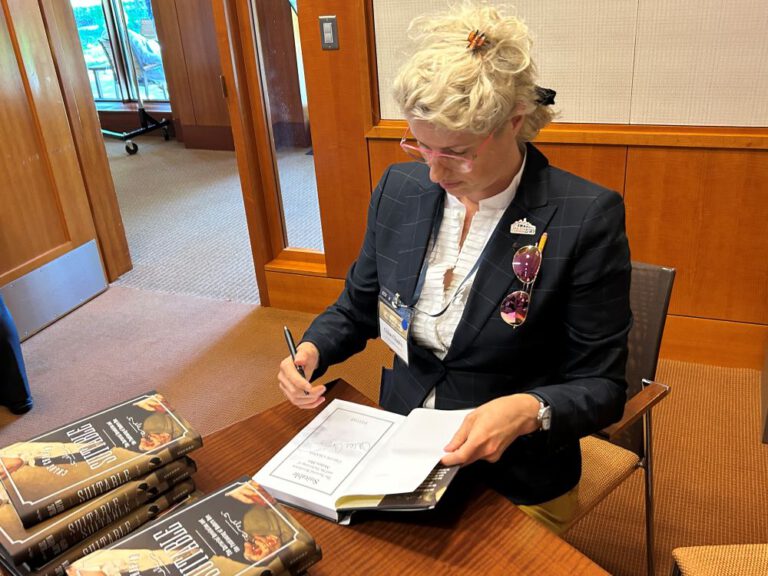
Dr. Suhas Kshirsagar, a longtime Santa Cruz Ayurvedic practitioner and former medical director at the Chopra Center, has co-authored a new book called Awakened Sleep—along with Dr. Sheila Patel, another former Chopra Center director. Deepak Chopra himself wrote the foreword, calling the book “a bridge between ancient wisdom and modern insights.”
Despite the authors’ impressive credentials, Awakened Sleep is approachable and engaging. The case studies feel relatable and grounded in real life. After all, who among us hasn’t spent a night tossing and turning, mind racing with work worries or tomorrow’s to-do list?
The book begins with the basics: daytime habits, nighttime rituals and even guided meditations—all designed to help readers “set themselves up for sleep success.” Yet Awakened Sleep takes the topic far beyond the usual checklist.
“Insomnia, it’s not a disorder; it’s a symptom,” the authors write.
According to Ayurveda and other forms of holistic medicine, insomnia is a symptom of an underlying problem. The key is identifying the imbalance that’s causing it, and then working gently to restore harmony.
Kshirsagar and Patel remind readers that we’re all wired differently. In Ayurvedic philosophy, these differences are explained through doshas—the three fundamental life energies known as Vata, Pitta and Kapha—which shape both our physical and mental characteristics.
Our dominant dosha, the authors say, can even predict our sleep tendencies. Vata types may struggle to fall asleep because of restless minds; Pitta types might wake up in the middle of the night replaying stressful thoughts; Kapha types tend to oversleep yet still feel sluggish. Understanding your unique constitution, the book explains, is the first step toward sleeping—and living—better.
Fortunately, Awakened Sleep makes this ancient system easy to grasp, offering self-assessments to help readers discover their own dosha and tailor their sleep practices accordingly.
If this sounds complex, the authors reassure readers that it’s actually empowering. By tuning into our individual nature, we can discover what truly works for us—not just what’s trending on social media or being pushed by the latest “sleep tech.”
In contrast, Western medicine often treats sleep like a one-size-fits-all problem. Can’t sleep? Take a pill. Too wired? Try an app, a patch, or a wearable device that monitors your every breath. While technology can be useful, the Ayurvedic approach offers a refreshing counterpoint: sometimes the most powerful data comes from within.
One of the most important aspects of Ayurveda, the authors explain, is cultivating awareness of internal stimuli—learning to listen to your body’s subtle cues. As Awakened Sleep describes, maintaining both an inner and outer ecosystem that supports balance is key to sustained well-being.
In fact, the authors call Ayurveda “the original biohacking methodology.” When we understand ourselves in the context of nature rather than data, we can make simple, sustainable changes that ripple through every area of life.
The book offers practical guidance—everything from evening wind-down rituals to dietary recommendations—and then invites readers to explore the deeper spiritual dimensions of sleep. Once we’ve addressed the physical foundations, Drs. Kshirsagar and Patel guide us into the connection between rest and higher states of consciousness.
Through practices like breathwork and sensory awareness, we can begin to view sleep as more than just a nightly reset. It becomes a pathway for emotional healing and spiritual insight—a chance to process, restore, and even awaken.
Dreamwork, too, plays a fascinating role in the book. The authors describe it as a proactive process: by observing and engaging with our dreams, we can uncover messages from our subconscious, heal emotional wounds and spark creative inspiration.
“Sleep is like a lamp at the door, giving you a glimpse into your consciousness, and illuminating both your inner world and the world around you,” they write. “It’s a chance to heal and awaken to the deeper truths of your existence. While sleep is often associated with darkness and fear, it doesn’t have to be. These feelings can be dispelled with practice. The techniques shared in this book are designed to help you convert sleep into something better, something to look forward to. When you approach sleep with a peaceful, sattvic quality, it becomes a tool for self-discovery.”
In a culture obsessed with doing more, Awakened Sleep reminds us of the simple, sacred act of being still. It’s an invitation to rest—not just our bodies, but our minds and hearts.
So maybe the Dalai Lama was right after all. Sleep really is the best meditation.
Awakened Sleep is available locally and online. Find more about Dr. Kshirsagar’s Santa Cruz–based Ayurvedic practice at ayurvedichealing.net. Sweet dreams!
Elizabeth Borelli is an author, yoga and breathwork teacher, plant-based nutrition expert. To learn more, visit ElizabethBorelli.com.
Since Nov. 3, 40 artists from near and far have been taking part in the 2025 Capitola Plein Air, a six-day outdoor art event that will culminate in a show and sale on Sunday from 11am to 4pm at New Brighton Middle School, 250 Washburn Ave.
Plein Air, which means to paint outdoors, is an annual event that welcomes artists to the town of Capitola, inviting them to capture scenes around town from Nov. 3 through Nov. 9 and take part in various activities along the way.
One such activity is “Quick Paint,” taking place 10am–2pm this Saturday, Nov. 8, in Esplanade Park. Artists are challenged to create an entirely new piece of artwork in two hours. The event will feature live music by Clay Moon.
To mark Capitola Plein Air’s 10th year, says event specialist Jaquelyn Johnson, “We have a host of special activities in store, honoring the rich history of this celebration of art, artists, and the city itself.”
A public exhibition and sale will showcase art created during Plein Air. A $1,000 first prize, sponsored by Dan Aspromonte, will be awarded by a panel of judges.
For information about Capitola Plein Air, visit the City of Capitola’s website and check out the Artists’ Spotlight Posts on the Capitola Community Services and Recreation Instagram account (@CapitolaRecreation).
The most lovable sponge in the universe is coming to UCSC. The SpongeBob Musical is set to premiere on Nov. 14, with performances continuing through the 23rd. It’s a wacky play with subversive undertows.
While meditation is optional, sleep is non-negotiable. And despite what we like to tell ourselves, both the quality and quantity of nightly shut-eye matter—a lot.