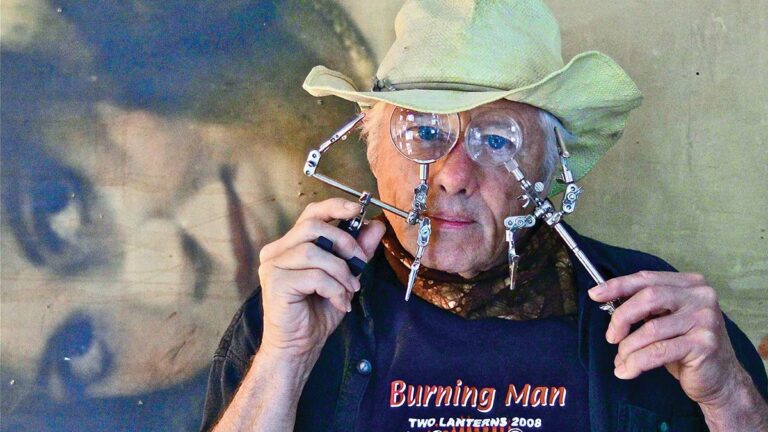
Burning Man was made for Keith Muscutt, so perfectly in synch are the missions of the annual desert potlatch and the arts-and-tech conceptualist. Growing up with one foot in academia and the other on the Gonzo trail, Muscutt is arguably a latter-day Indiana Jones. For the past two decades he has led expeditions into the Andes, exploring and discovering lost pre-Columbian ruins, he pioneered pop-up performance events in the ’70s, and for the past nine years has been an active participant in Burning Man installations. For the 2016 installment of Burning Man, Muscutt and his 2-Lanterns Camp collaborators have come up with something both environmentally and artistically provocative. Riffing on Ant Farm’s celebrated Cadillac Ranch installation of 10 gorgeous gas-guzzlers half-buried on Route 66 (Ant Farm founder Chip Lord was a colleague of Muscutt’s at UCSC), Muscutt has planned nothing less than an homage involving virtual electric cars rising up out of the searing desert floor. “I’ve always had this idea kicking around,” admits the tanned, silver-haired conceptual artist, “of the globe with a car inserted on one side and exiting on the other.”
“We were sitting around talking and I mentioned this whimsical idea of mine. They loved car culture, and had been involved in automotive design.” — Keith Muscutt
That idée fixe led to the current project, a whimsical response to Cadillac Ranch. “People have done various riffs on that installation, and I thought, ‘well, this is the place to do it,’” says Muscutt. Given that the idea of finding 10 Cadillacs of that vintage was “a bit of a stretch,” he grins, “we had to come up with something else.” Electric Renaissance is the name of the project, which when launched will not only form a visual homage to the iconic automotive burial, but will also allow Burning Man participants to sit inside fabricated Tesla-inspired electric vehicles, offering interactivity as well as a witty echo of the now-historic automotive installation. A U.K. native, Muscutt came to Santa Cruz after his Master of Fine Arts work in dramatic arts at UC Davis. When his exchange-program visa ran out, he traveled in Latin America, worked in England and Canada, and came out to UCSC to help set up their fledgling film and electronic music facilities in the late ’70s. He also managed to concoct proto-hippie art happenings and inflatables, complete with sound and light show design, in his psychedelically saturated spare time. Between electronic art design and archaeological treks, Muscutt held down a day job as UCSC Assistant Dean of the Arts until his retirement in 2007. That year marked his first journey to Burning Man. Two years ago Muscutt’s Burning Man team, largely tech directors from UCSC, met up with a group of architects and engineers from Aachen, Germany. “They knew all about Chip and Cadillac Ranch,” Muscutt says of his new German colleagues. “We were sitting around talking and I mentioned this whimsical idea of mine. They loved car culture, and had been involved in automotive design.” His eyes light up. “At first they suggested burying 10 Priuses.” Then it just morphed into using the Tesla trope. Admitting that “it doesn’t make sense to do a half-million-dollar project for just one week,” Muscutt and Co. are planning a long term version of the Electric Renaissance as a permanent installation. “The time to do it is 2024, the 50th anniversary of Cadillac Ranch. Imagine 10 virtual Teslas on I-80, the route from Silicon Valley to New York.” And in the “be careful what you wish for” category, last October Muscutt submitted a letter of intent to the Burning Man Arts group, which promotes, funds and manages art projects at the celebrated desert gathering. “We got a grant from them in February—Burning Man Arts has been fabulous,” he contends. “It’s the most artist-friendly group I’ve ever seen.” But now the rest of the funds have to be raised—for materials, to fabricate, transport, and site-install the homage to Cadillac Ranch. “Come hell or high water we’re going to make it happen.” The actual fabrication will take place in the Santa Cruz Makerspace in the old Wrigley building. Idea Fab Labs, part of the maker movement, will be fabricating the assembled prototypes—all cut by computer. “And then we’ll burn it!” he adds, with relish. This year marks Muscutt’s ninth year of participation in Burning Man, which he describes as “the best of the Summer of Love, all over again—with intellectual integrity.” Once this project is completed, Muscutt’s lifelong restlessness will doubtless re-emerge. “Whatever happens, next summer I will for sure be back in Peru,” he says with the serious playfulness that seems to inflect every project he touches. “I’ve always said I wanted to do everything—once.” _______________________________ Find Electric Renaissance on Facebook, and their crowd-funding campaign on indiegogo.com.
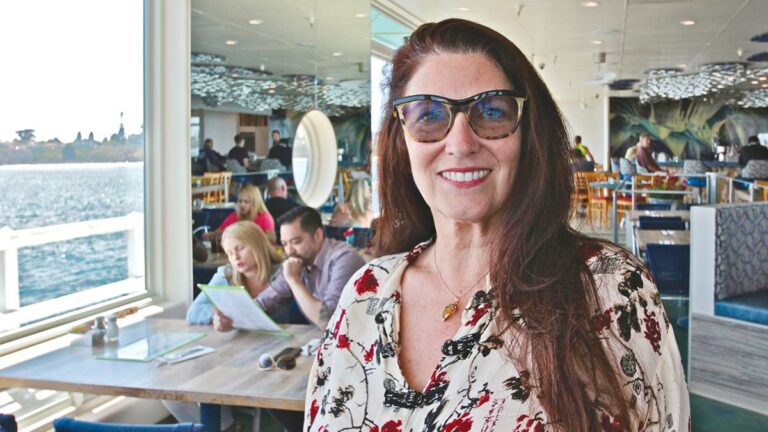
Schools of silver fish swim along the ceiling of the glamorous new Splash, echoing the silver glints of sun reflecting on the water outside. The long-awaited brainchild of Germaine Akin (owner of Red and 515) and Martin Drobac, opened softly last weekend to spectacular views of surfers, swimmers, and sailboats—and even the water below the wharf, thanks to embedded glass “viewpoints” in the restaurant’s floor. Two bars—a third if you count the oyster bar—greet patrons, the front bar lined with aquamarine lava lamps, the back featuring, yes, a rotating floor, which means that everyone sitting at this showcase circular bar has a view of the ocean. Akin left no detail unattended in appointing her latest restaurant. Serpentine banquettes curve deeply enough to mimic private booths, smartly upholstered in hypnotic abstract patterns. A long table welcomes large parties in the center of the dining room, next to a hemispherical booth big enough to hold eight. With Martin’s brother Peter Drobac greeting the invited group of guests last week, the soft opening went brilliantly. And gorgeous cocktails (we’d expect no less from the mixology standards set by the 515 and Red) were the rule. We started with a fine Caesar salad and munched on warm beer-battered artichokes. Fab with house tarragon ranch dressing. The fried chokes arrived in a yellow enamel, napkin-lined colander. Katya’s entree of New York steak was done exactly as requested, and arrived with scalloped potatoes and pencil-thin steamed asparagus. My lobster mac and cheese involved gooey, delicious orecchiette pasta oozing with Gouda, Swiss and Parmesan cheeses embedded with fat chunks of moist tender lobster. The menu, so far, sticks to updated seafood house classics. The views of the water are unsurpassed, but there are so many sweet details at Splash, from aquatic murals on the ceiling to sleek recycled wood on floors and lots of other chic touches. Dreamy and exciting all at once. And, thanks to the digital ocean projections after dark in the lounge area, Splash is bound to make an after-hour ripple. On our way out, we took a moment to gawk at the bronze fountain of decoratively interlocking octopuses, by UCSC foundry star Sean Monaghan. All in all, we liked what we saw and tasted. Splash was worth the wait. Santa Cruz Municipal Wharf, open daily 11 a.m.-10 p.m. 466-9766.
Inspired Surf Food Stop
From the restless culinary genius of Fran—The Truck Stop—Grayson, comes an idea that was way overdue in the West Cliff Drive neighborhood. Now there’s a place to sit, grab some super delicious power food and drink, and check out the waves at the same time. It’s Steamer Lane Supply, designed and built by the super-clever Grayson. Those inviting aqua chairs out front are your invitation to scarf down a serious quesadilla or poke bowl with fruit drink, and refuel after a morning on the waves. Even if you’re just walking from the wharf over to Lighthouse Point, you’re sure to spot this low-key cafe right next to the shower and parking lot. From Tuesday through Sunday, from 7 a.m. until 6 p.m. (expanded hours coming soon), the sleek little kitchen, counter and outdoor seating offers freshly made easy-to-eat items, plus the killer orange “S” logo is visible from a mile away. If you’ve ever fallen in love with Grayson’s Truck Stop-enlightened fresh fish tacos, you’ll be mad for Steamer Lane Supply. It does just what it says. Inspired street food is now inspired surf food. Come by and hang out.
Wine of the Week
The bold Tannat-Merlot-Zinfandel blend from Uruguay’s Artesana (available at Soif), offers the tannic glamor of Uruguay’s top red grape, softened brilliantly by Merlot and Zinfandel. Both graceful and yet robust, this supple beauty is capable of partnering pasta and barbecue with style. Try the 2013, at Soif, priced in the low 20s.
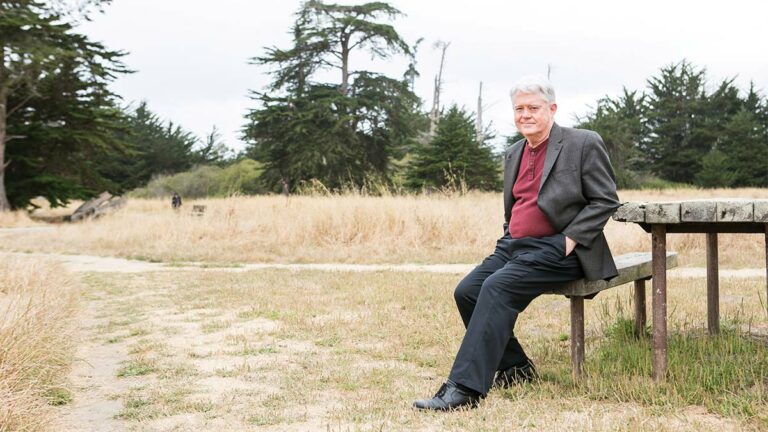
Lighthouse Field, the 38-acre coastal meadow on West Cliff Drive, is one of several wooded places in the city where the homeless sleep at night. In a way, the field is a perfect respite. Low-slung cypresses and pines create private nooks, where people can hide from the trails. There’s less foot traffic than there is downtown, so anyone sleeping there is unlikely to be woken at night. The field, a state park, also has fewer patrols than it used to. The California Department of Parks and Recreation reluctantly bought the field in 1981 after a failed development project, and as part of the deal, the city began managing the park, with financial help from the county. In 2007, the deal expired and the city and county decided the $200,000 annual maintenance cost was too high. Management of the field fell to the cash-strapped state parks system. A walk around the field’s eastern half reveals at least six makeshift latrines under the trees, littered with used toilet paper, feminine pads and human waste. Needles, spoons and other evidence of drug use are also regularly found by maintenance crews. Former city councilmember Mike Rotkin lives next to the field, and says every night someone sleeps in a car on his street. Around sunset, when the rangers close the field’s parking lots, he sees people with packs and sleeping bags walk through his neighborhood toward the field. “The average numbers are probably around 15 to 20 people,” Rotkin says. “And it ranges from a person who plops down a sleeping bag to people who drag mattresses and trash and camp stoves and bicycle parts and all that kind of stuff.”
What Lighthouse Field Means to Santa Cruz
In 1972, plans were approved for a high-rise hotel, convention center, shopping mall and condominium complex in Lighthouse Field. A group of concerned residents quickly formed the Save Lighthouse Point Association, which began meeting in living rooms to figure out how to stop the behemoth project. They hired Gary Patton, then a young environmental lawyer, who realized that nobody except the city council, developers and business leaders, wanted construction. LIGHT SOURCE The Mark Abbott Memorial Lighthouse, which now houses the Santa Cruz Surfing Museum, was built in 1967, and is now one of Santa Cruz’s most iconic buildings. “Most people thought it was a horrible idea, but they didn’t know there was any way to stop it,” Patton says. He wrote a 1974 ballot measure—the first initiative to go on the ballot since the city’s 1948 charter—that passed decisively, eliminating any city funding of the proposed development. Around the same time, the newly formed California Coastal Commission rejected the project, another nail in the coffin. Patton, who became a county supervisor in 1975 and served two decades, says the Lighthouse Field victory completely changed local politics. At the time, the county was the fastest-growing in the state and the fifth fastest-growing in the nation. There were plans for a freeway through the city’s center and for high rises for the entire Eastside. The county’s goal was to have a population of half a million by the year 2000, which of course, was never realized. Before the movement, Patton says, “Nobody believed that the people could actually be in charge of the government. In other words, the elected officials—really, it’s not unlike what’s going on in the national campaign right now—the official elected representatives really didn’t represent the people. They represented the people who had money—the business community and the developers.” Local politicians were known for being pro-growth and pro-development, until Patton won his board of supervisors race in 1974. “What happened right then is that the public woke up that we were headed to be like Silicon Valley and nobody here wanted that,” Patton says. “And there was something we could do about that. We could change local politics.”
“What happened right then is that the public woke up that we were headed to be like Silicon Valley and nobody here wanted that. And there was something we could do about that. We could change local politics.” — Gary Patton
Other prominent local politicians came out of the movement: Katherine Beiers, Bert Muhly, Sally DiGirolamo and Carole De Palma, members of the Save Lighthouse Point Association, joined city council. Andy Schiffrin, another association member, became Patton’s administrative analyst. John Laird, also a member, joined city council in 1981 and later became a state assemblyman. “Everybody who had sort of assumed there was nothing that could be done, decided, wait, maybe if we got involved in local politics, we could change the way things are happening,” Patton says. “So that was what was so significant. It galvanized approximately 20 years of very intense political involvement.” Today, Lighthouse Field is one of California’s last remaining coastal headlands in an urban area. It has a protected area for migrating monarch butterflies, which nest in clusters on eucalyptus trees at the field’s northern edge. A historic red brick lighthouse overlooks Steamer Lane, a world-class surf break, at the field’s southern edge. Dog walkers, families, tourists and others hike its network of trails, and in June, Steamer Lane Supply, a sandwich and ice cream shop, opened in the field’s existing building. Since the 1980s, plans for sports fields and other facilities in Lighthouse Field have been presented, but each idea failed. “It’s fair to say that the natural park, while it takes some maintenance, takes less than if it were not,” Patton says. “There was an overwhelming public sentiment to keep it natural. I hear it from people all the time who remember that I had something to do with it, and they always say, ‘Thank god you saved Lighthouse Field just natural.’”
A New Deal?
But can it be saved now? Every so often, rangers sweep for illegal campers, as they did in early June, with off-hour patrols. The first morning, they found 15 homeless people, directing them to services and issuing citations. By the week’s end, they found only one or two, as word of the patrols spread, according to Bill Wolcott, state parks public safety superintendent. Many of those displaced went to Seabright State Beach. The patrols required extra funding and were meant to be short-lived, according to state parks staff. When the patrols stop, the homeless will most likely return.
“I’m a firm believer in local government and local control. And when the city and the county were providing the resource in managing the park, they were never very far from the people, and when you have issues, people address them.” — John Laird
State parks crews are ill-equipped to deal with waste left by illegal campers, with a six-person crew maintaining not just Lighthouse Field and the neighboring Its Beach, but also Wilder Ranch State Park, Natural Bridges State Beach and the Santa Cruz Mission. Five years ago, that crew was twice as large. Santa Cruz resident John Laird is now California’s secretary for natural resources and oversees the California Department of Parks and Recreation. He says the agency doesn’t have the resources that the city and county had when they were in charge. “In other places, there were long-established relationships in management, and this was thrown into the state budget in its 31st year of operation as a park,” Laird says. “And it probably has not gotten the attention financially from the state that it should have once the city and the county stepped away.” When the Lighthouse Field deal expired in 2007, Laird was a state assemblymember. He brokered a deal that would have allowed the city to buy the field for $1.3 million, but the city balked, believing it would have to pay another $1 or $2 million for an environmental review, says Laird. “I did the most impossible thing you can imagine,” Laird says. “I got language into the state budget that allowed for the state to sell the state park to the city. I can’t tell you how hard that was.” It’s only happened one other time in history, he says. Since it’s written in law, a deal is still possible if the city ever wanted to step forward. Likely, part of the reason the city was wary of a deal in 2007 was that in 2003, the city was sued by opponents of off-leash dog hours at Its Beach. The city lost, and was directed to conduct an environmental study to continue off-leash hours. The city declined, and began issuing citations for off-leash dogs. The field was better managed by the city, says Laird. “I’m a firm believer in local government and local control. And when the city and the county were providing the resource in managing the park, they were never very far from the people, and when you have issues, people address them,” Laird says. “And I think when you have a broad parks system and you have a whole region and you have to patrol the beaches on the north coast or Henry Cowell or Nisene Marks or New Brighton Beach or Manresa or any of the other parks in the system, it’s all about allocating resources.”
Sleeping Problem
Nearly every Tuesday for a year, a group of homeless people and protesters have slept outside the city council chambers, hoping to gain political attention. They call themselves the Homeless Freedom Sleepers, and they’re fighting for the right to sleep outside, which is currently illegal in Santa Cruz. The city is increasingly ticketing people for illegal camping, but resources for homeless people are not improving, says Keith McHenry, co-founder of Food Not Bombs, one of the movement’s organizers. Since the Homeless Services Center cut its programs last July, the transient community has had a rough year, McHenry says. Now fewer than two dozen emergency shelter beds exist for hundreds of homeless people in Santa Cruz. They have no choice but to sleep outside, then are woken several times a night and told to move—what he calls a “cruel and unusual punishment.” The Freedom Sleepers have not been able to change any laws. On March 8, Councilmember Don Lane introduced legislation that would allow people to sleep outside, but not in a blanket or sleeping bag. Lane wrote in his report that illegal-camping laws and park curfews are necessary. But if shelters don’t exist and people have nowhere to go, citing people for sleeping criminalizes homelessness, he said. “I continue to wonder what the harm is from the act of sleeping or wrapping oneself in a blanket on a cold night,” Lane writes. “And, more importantly, I wonder what the harm is when a government penalizes people for behavior they cannot and should not avoid.” His proposal was voted down, a major blow to the Freedom Sleepers. Then on June 28 the council outlawed overnight parking of oversized vehicles on city streets and lots, except for residents with permits. The law targets homeless people who park their RVs along the coast. Mayor Cynthia Mathews says the ordinance was formed after years of complaints about the trash and waste left by people in RVs. It’s part of a varied approach to the problem, which includes a subcommittee tasked with prioritizing resources for the homeless and a treatment program for repeat offenders, she says. However, exactly how much the city and county has spent on homeless services is unclear, since funding is tracked only for each program, and not homeless services as a whole. What is clear, however, is that it’s getting harder for homeless people to sleep outside in the city. Since 2012, the city Parks and Recreation Department has increased fencing and security at its city parks. In 2014, a curfew was approved for Cowell Beach, which neighbors Lighthouse Field. “The purpose was to reduce the number of needles, glass, feces, and other misconduct that was occurring during the night,” reads a city parks report. The same year, the city council also passed an ordinance allowing city officers to order cited users to vacate the park or beach for 24 hours. This year, a new ranger position was also added. From 2012 to 2014, the number of citations issued by park rangers increased by more than six-fold. Mathews says that the increase in citations is not due to a city initiative, but to public complaints. Residents are increasingly reporting homeless people to 911. Once in a while, the city sweeps its encampments, clearing trash and issuing citations in the city’s greenbelts. “There’s no conscious moving of people from point A to point B,” Mathews says. “Enforcement of camping prohibition is done by complaint in the more populated parts of the city, and it’s done for environmental cleanup and protection in our open spaces.” Martín Bernal, city manager, agrees. “I don’t think the city is pushing people out at night. The city’s just responding,” Bernal says. “We don’t really have a choice. If somebody calls and complains about illegal activity, we’re sort of forced to do that. But again, I don’t think that’s a solution. I don’t think we want to do that. We need to provide places for people to go, alternatives, whether it’s housing, whether it’s services. And that’s what’s lacking.” The city’s influence on public health issues is limited to decisions on funding for the few local nonprofits. For example, the city doesn’t administer the needle exchange or housing for the homeless. It partners with existing groups. “We don’t have a health department or a human services department. We don’t get money to do that, so we’re kind of removed from the expertise and the programs and issues around that. We tend to do what we have at our disposal, which is enforcement,” Bernal says. But until better solutions are found for Santa Cruz’s homelessness issues, its problems in Lighthouse Field are not likely to go away, either. “We’d rather focus on helping people get out of homelessness than giving people a ticket,” Bernal says. “We realize that’s not solving the problem. It’s just moving it.”
A country rocker in the vein of Linda Ronstadt and early Emmylou Harris, Michaela Anne is an up-and-coming songwriter whose classic sound, smooth voice, and simple approach to storytelling have endeared her to fans and critics, alike. But don’t be fooled by the sweetness. A recent transplant from Brooklyn to Nashville, Anne increasingly taps into all the aspects of herself—sweet and otherwise. “[My] new record reflects the strength and ballsiness that I was trying to push myself toward with the songs,” she told Rolling Stone. “There’s a lot of diversity behind me that hasn’t come through in my music yet, a lot more attitude.” CAT JOHNSON INFO: 8 p.m. Moe’s Alley, 1535 Commercial Way, Santa Cruz. $8/adv, $12/door. 479-1854.
THURSDAY 6/30
R&B
JACQUEES
Atlanta R&B singer Jacquees is one of the hottest new R&B singers out right now whose music brings to mind the smooth, feel-good R&B sound from the ’90s. But if he wanted, he could be a rapper. He’s got the flow—he spits verses every once in a while in his tunes—but more so, he’s got the swagger. In one Spin article, he told the interviewer that he “doesn’t need to sing,” because his presence on stage alone riles up a crowd. Damn! His mixtape Mood, released earlier this year, is what really put him on the map. It’s sweet—Jacquees isn’t a softy, and his songs can get raunchy, but it feels like it’s coming from a place of love. AARON CARNES INFO: 9 p.m. Catalyst, 1011 Pacific Ave., Santa Cruz. $15/adv, $18/door. 429-4135.
FRIDAY 7/1
EXPERIMENTAL
CUDDLEFISH
Not to be mistaken for the cuttlefish, a cephalopod that resembles a squid, Cuddlefish is a local duo whose experimental tendencies have made them one of the area’s more interesting—if underexposed—musical acts. Comprising Val Hall and Peter Koht, Cuddlefish draws from world music, dub, jazz, rock, and found sounds to create something odd and lovely that morphs and grows on its own, without being restricted by genre, stylistic confines, or anything that has gone before. On Friday, the duo hits the Rio Theatre. CJ INFO: 8 p.m. Rio Theatre, 1205 Soquel Ave., Santa Cruz. $5. 423-8209.
PUNK
RIBSY’S NICKEL
Any Santa Cruzan worth their weight in the music scene knows the name Ribsy’s Nickel. For two decades, this quartet has played its blend of reggae, punk and surf, sharing the stage with other quintessential local acts like the Chop Tops and Expendables. Whether it’s surfing, skating or just kicking back at the Point with a few beers, Ribsy’s Nickel is the perfect soundtrack for every summer party. This Friday they’ll be joined by another decades-running Santa Cruz act, Spun, for a Fourth of July kick-off party. MAT WEIR INFO: 8:30 pm. Don Quixote’s International Music Hall, 6275 Hwy. 9, Felton. $10. 335-2800.
SATURDAY 7/2
GYPSY JAZZ
BESO
A few weeks ago Beso Negro helped kick off the San Francisco Jazz, transforming a Hayes Valley intersection into a raging street party. Now a stripped-down version of the string-powered band brings the high energy punk-inflected Gypsy jazz sound to a much cozier setting. Billed simply as Beso, the trio features Adam Roach on guitar and vocals, Cheyenne Young on upright and electric bass, and Ethan Turner on drums and vocals. Focusing on originals songs, the combo combines the coiled energy of a power trio with the exuberant flair of true Djangophiles. ANDREW GILBERT INFO: 9 p.m. Crepe Place, 1134 Soquel Ave., Santa Cruz. $10. 429-6994.
FUNK
FUNKANAUTS
You probably could have guessed that the bio of a band called Funkanauts would say they were “Brothas From Planet Funk.” But what you probably wouldn’t guess is the level of variety they bring to the funk. They play it slow or fast, with elements of rock, psychedelic, pop and reggae. It’s like a cross between later Fishbone, Parliament and Sexual Chocolate, the incredible band in the Eddie Murphy’s film Coming to America. Their funk is all over the map. Remember when Arsenio Hall had a show and he used to call to his bandleader to give him (insert random crazy description) style of funk? Well, that’s Funkanauts. AC INFO: 9 p.m. The Pocket, 3102 Portola Drive, Santa Cruz. $7. 475-9819.
ELECTRONIC HIP HOP
THE PATH TO NORTHERN NIGHTS
Hold on to your festy hats, because this one’s a doozy! With the three-day Northern Nights Festival on the border of Mendocino and Humboldt Counties just around the corner, the good people at the Catalyst and Euphoric.net have teamed up to throw a free pre-party this Saturday. Along with Portland DJ Tiger Fresh and Santa Cruz’s own duo AB.CLU, the Path will also feature the sounds of Californians Trevor Kelly and Lafa Taylor, who recently collaborated on several new songs with artists like Bassnectar and Beats Antique. MW INFO: 8 p.m. Catalyst, 1011 Pacific Ave., Santa Cruz. Free. 429-4135.
REGGAE
SPAWNBREEZIE
Before he was even in grade school, Spawnbreezie was playing the piano and drums and was on his way to picking up the guitar and bass, as well. This well-roundedness has served the multi-instrumentalist artist well as he crafts reggae, hip-hop and a laid-back sound into what he describes as “island hip-hop.” A hit on the mainland as well as across the South Pacific, Spawnbreezie is an emerging star of the positive, island reggae scene. Also on the bill is House of Shem, a reggae harmony trio out of Aotearoa, New Zealand. CJ INFO: 9 p.m. Moe’s Alley, 1535 Commercial Way, Santa Cruz. $25/adv, $30/door. 479-1854.
IN THE QUEUE
APOTHESARY
Metal out of San Francisco. Wednesday at Catalyst
PARADISE SOUL SAVERS
Santa Cruz-based funk and soul outfit. Thursday at Crepe Place
BLUE SUMMIT & WILD IRIS
Local bluegrass and roots music double-bill. Thursday at Moe’s Alley
LIBERATION MOVEMENT
Tribal dub, reggae and beats. Friday at Moe’s Alley
TSUNAMI
Classic rock from the ’60, ’70s and ’80s. Saturday at Crow’s Nest
Set in Prohibition-era Chicago, Chicago is the longest-running American musical in Broadway history, and is considered one of Bob Fosse’s greatest works. Based on the 1926 play of the same name, Chicago tells the tale of “merry murderesses” Velma Kelly, who murdered her husband and sister when she found them in bed together, and Roxie Hart, who murdered her lover. The two women pursue fame, fortune and acquittal, as Cabrillo Stage puts its always-fantastic touch on the beloved production.
INFO: 8 p.m. Friday, July 8. Cabrillo Stage, 6500 Soquel Drive, Aptos. $16-$40. 479-6154. WANT TO GO? Go to santacruz.com/giveaways before 11 a.m. on Wednesday, July 6 to find out how you could win a pair of tickets to the production.
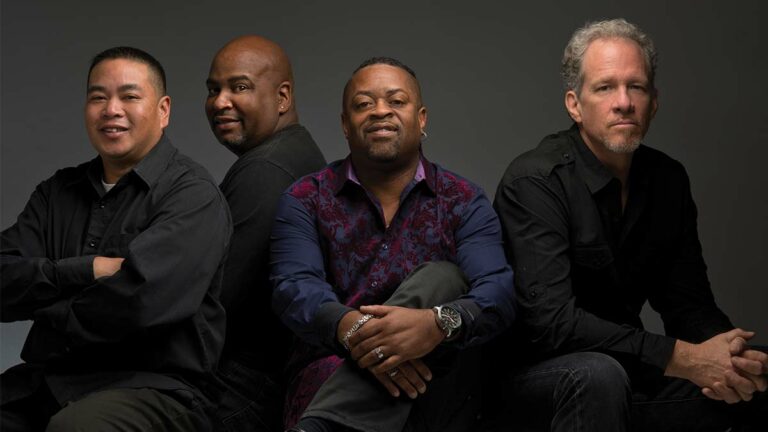
The Joint Chiefs have been bringing soulful funk to Santa Cruz’s music scene since 1989. James Brown, Jimi Hendrix and Jaco Pastorius are just a few of the band’s main influences, and any given set will include popular covers and a few of their own R&B originals. For singer/guitarist Don Caruth and bassist Daniel Vee Lewis, music is a full-time gig; the two stay busy giving lessons and playing in multiple bands, with shows nearly every night of the week, including regular monthly restaurant gigs and an open jam session that they host at the Pocket. For Lewis, playing gigs every night never gets old: “I’ve had real jobs, I’ve worked 50-hour weeks, so I can compare the difference,” he says. “Any time it gets tough I’m like, ‘Wait, look what you do.’ I love it, and I’m very grateful.” Caruth agrees. “I do it ’cause I love it, and I’m very blessed to make a living at it. But if musicians didn’t get paid anywhere, I’d still be doing it.” Their advice to younger aspiring musicians? “Practice and learn your craft before you just go out and start playing it in front of a bunch of people,” Caruth says. “When I was trying to get into clubs when I was young, if you couldn’t play, they wouldn’t let you in there! And these days—I don’t mean to put anybody down, but I see a lot of guys out, and they’re not ready to be out. So my advice is to practice, practice, practice.”
The Joint Chiefs play at 9 p.m. on Friday, July 1 at the Crow’s Nest. $6.
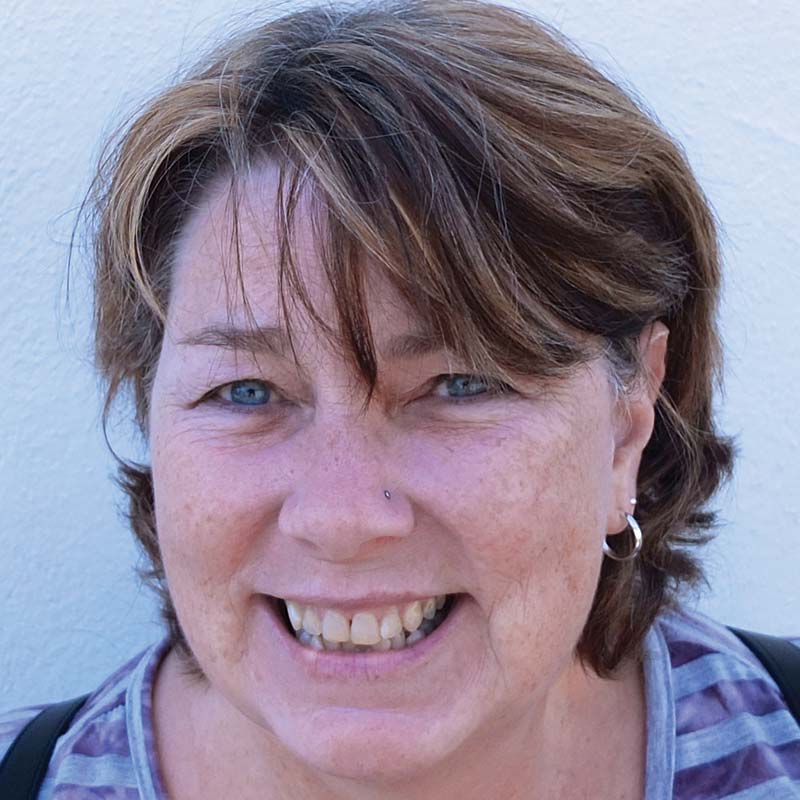
“Revamp the needle exchange program. I think it’s crap, because it’s not an exchange—they’re just handing them out.”
Debra Mapes
Santa Cruz
Self Employed
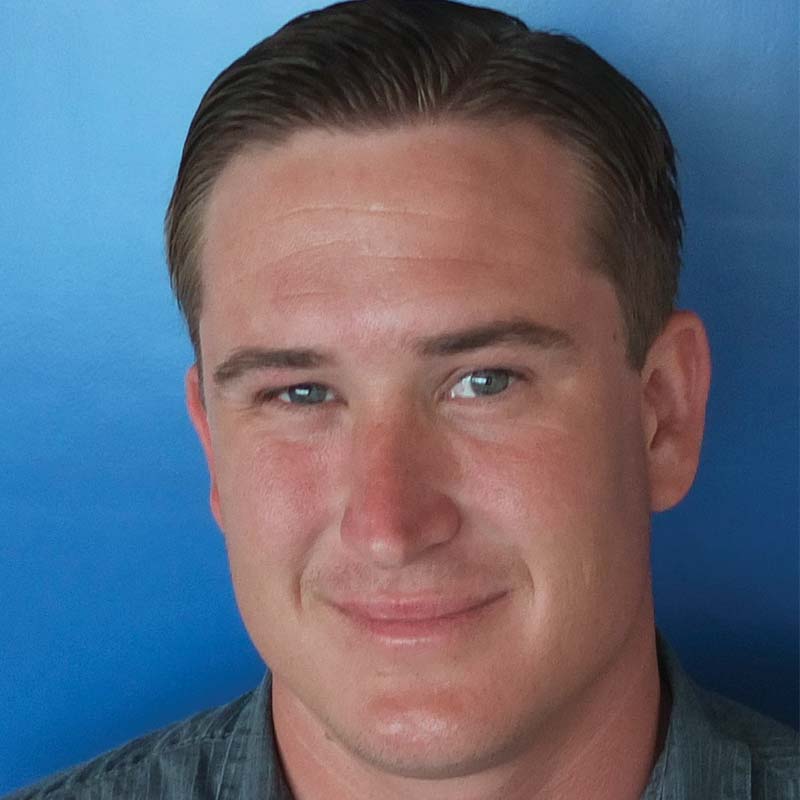
“I support the one-for-one needle exchange because I think it would be better than what they have now.”
Eric Skaug
Santa Cruz
Bar Manager
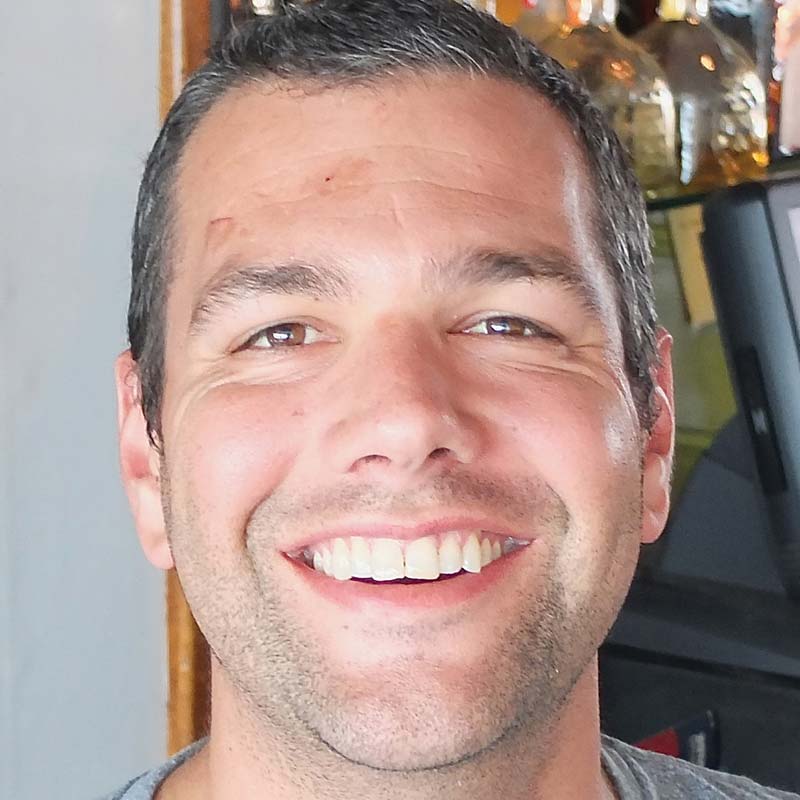
“They should mark the needles so they’re able to distinguish who received the needle and hold that person accountable in some sort of way, but I don’t know how you do that.”
Aldo Oliviari
Santa Cruz
Bartender
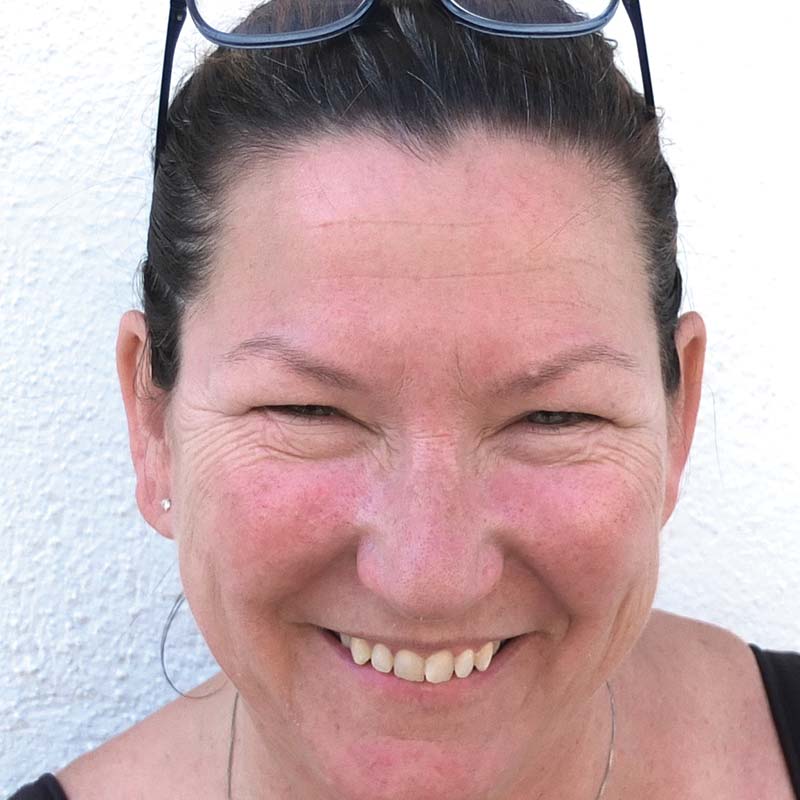
“The exchange should be a one-for-one exchange, and that will drive down drug use and disease related to drugs.”
Bernadette Bossinger
Santa Cruz
Mother
“The needle recycle program is really critical—and easy access to the recycle program so that it’s convenient for people who need to exchange their needle. Then they don’t have to do it on the beach.”
Why is it important to have women in the field of winemaking? It’s not a question most of us would think about very much, even if we were reading a story about women winemakers. At most, we would probably give it a sort of standard Santa Cruz-y answer like “Because gender equality is important in any field.”
That’s certainly true, but what I like most about Christina Waters’ cover story this week is that it goes deeper than the easy answer—it explores what unique qualities women bring to the field of winemaking, and even whether wine made my a woman might taste different than wine made by a man. Just as in winemaking, those more complex properties are what make a story like this particularly intriguing.
It’s also an interesting look at how much opportunities for women have grown—or not—in the wine industry, and a great introduction to some local winemakers you may not have met before. Let’s raise a glass to them!
STEVE PALOPOLI | EDITOR-IN-CHIEF
Door Man
Re: “Mosh Path” (GT, 6/22): The influence of Noah Levine in the Buddhist community cannot be overemphasized. He took a mostly white, fairly smug middle-class world and opened its doors to punks, addicts and other outsiders. When I first saw his book Dharma Punx, I looked at the photo of the heavily tattooed geek and said to myself, “Well, I got nothing in common with this guy,” and tossed it back on the table. Years later, I joined his sangha in Los Angeles and found his honesty, courage, inclusiveness and deep compassion wildly refreshing in a Buddhist community so busy being “politically correct” it often avoided discussion of topics on the fringe.
Matt Perry | Santa Cruz
Defined How?
Re: “Redefining Marriage” (GT, 6/1): While many of us are striving to redefine gender, the cover graphic for this article simply serves to reinforce stereotypes (that of women in dresses/men in pants). Also, the graphic implies that the redefining of marriage seems to be that of three people with a gender-fluid person in the middle. The article content does not include this structure, so the ill-matched graphic is misleading and perhaps counterproductive. An apology from the editor is warranted.
Orly Laluz | Santa Cruz
Give and Take
Re: “Hashed Out” (GT, 5/25): The names that groups choose for themselves are often quite indicative. Take Back Santa Cruz implies that the city, in which many of them did not grow up, is rightfully theirs, but has been wrongfully taken from them, a sentiment that often derives from selfish entitlement or fear of those who are different. As local organizations go, I far prefer Santa Cruz Gives.
Mordecai Shapiro | Santa Cruz
Weaving History
Thank you Geoffrey Dunn for weaving so many pieces of Santa Cruz’s African-American history into your piece illuminating and contributing to the historical knowledge of Santa Cruz, Louden London Nelson and Juneteenth (GT, 6/8).
Dunn’s pulling together all the facts and laying them out was very enlightening for many, I’m sure.
I can think of no one better to have taken this on. In our present climate, you have given readers and our community much to ponder about where we’ve been and where we’re headed.
Our Juneteenth committee has received many comments about this article and people have been sending it to their friends and family all over the planet. It has touched many and certainly contributed to a very successful 25th Juneteenth anniversary in Santa Cruz. Thank you again!
Ana Elizabeth | Co-Producer of Juneteenth
Online Comments Re: Measure S
The library used pollster Gene Bregman and Measure S passed. The college used pollster FM3 (like the RTC for its upcoming transportation sales tax measure) and Measure Q failed.
— Bruce Holloway Re: Beach Flats Garden
Plants and flowers around the Boardwalk will be very nice. Outsource the nursery. Even to the gardeners. I wonder what Seaside thinks the savings or convenience will be to have their own on-site nursery.
— Lillie Ross Re: Mark Mesiti-Miller
Okay, I agree with you, Mark—now what? When does vision become action? How does the public spearhead affordable, high density housing?
— Carol Carson
PHOTO CONTEST WINNER
Submit to ph****@*******es.sc. Include information (location, etc.) and your name. Photos may be cropped. Preferably, photos should be 4 inches by 4 inches and minimum 250dpi.
GOOD IDEA
A new bill signed by Gov. Brown last week will provide more educational opportunities to prisoners, including those who have not yet been sentenced and await trial. Until now, educational programs were available only to those already sentenced. Assemblymember Mark Stone (D-Scotts Valley), who wrote the bill, wants to better reintegrate prisoners back into their communities through classes varying from substance abuse treatment to parenting. Participating inmates can get up to six weeks off their sentences. The law will take effect Jan. 1, 2017.
GOOD WORK
Catholic leaders across the counties of Santa Cruz, Monterey and San Benito have gotten together to fight climate change. Churches in the Diocese of Monterey have partnered with Green Power, a division of the Romero Institute, to create sustainable infrastructure at churches and get the word out about Community Choice Aggregation, a local plan to pool resources to provide cheaper, locally sourced, more sustainable energy. The campaign has announced a launch event from noon to 4 p.m. on Sunday, July 17 at the Resurrection Church in Aptos.
QUOTE OF THE WEEK
“Age is just a number. It’s totally irrelevant—unless, of course, you happen to be a bottle of wine.â€
ARIES (March 21-April 19): During winter, some bears spend months hibernating. Their body temperatures and heart rates drop. They breathe drowsily. Their movements are minimal. Many hummingbirds engage in a similar slow-down—but they do it every single night. By day they are among the most manic creatures on earth, flapping their wings and gathering sustenance with heroic zeal. When the sun slips below the horizon, they rest with equal intensity. In my estimation, Aries, you don’t need a full-on immersion in idleness like the bears. But you’d benefit from a shorter stint, akin to the hummingbird’s period of dormancy. TAURUS (April 20-May 20): “Dear Dr. Brezsny: A psychic predicted that sometime this year I will fall in love with a convenience store clerk who’s secretly a down-on-his-luck prince of a small African country. She said that he and I have a unique destiny. Together we will break the world’s record for dancing without getting bitten in a pit of cobras while drunk on absinthe on our honeymoon. But there’s a problem. I didn’t have time to ask the psychic how I’ll meet my soulmate, and I can’t afford to pay $250 for another reading. Can you help? – Mopey Taurus.” Dear Mopey: The psychic lied. Neither she nor anyone else can see what the future will bring you. Why? Because what happens will be largely determined by your own actions. I suggest you celebrate this fact. It’s the perfect time to do so: July is Feed Your Willpower Month. GEMINI (May 21-June 20): Of all the concert pianos in the world, 80 percent of them are made by Steinway. A former president of the company once remarked that in each piano, “243 taut strings exert a pull of 40,000 pounds on an iron frame.” He said it was “proof that out of great tension may come great harmony.” That will be a potential talent of yours in the coming weeks, Gemini. Like a Steinway piano, you will have the power to turn tension into beauty. But will you actually accomplish this noble goal, or will your efforts be less melodious? It all depends on how much poised self-discipline you summon. CANCER (June 21-July 22): Once upon a time, weren’t you the master builder who never finished building your castle? Weren’t you the exile who wandered aimlessly while fantasizing about the perfect sanctuary of the past or the sweet safety zone of the future? Didn’t you perversely nurture the ache that arose from your sense of not feeling at home in the world? I hope that by now you have renounced all of those kinky inclinations. If you haven’t, now would be an excellent time to do so. How might you reinvest the mojo that will be liberated by the demise of those bad habits? LEO (July 23-Aug. 22): In accordance with the astrological omens, I have selected three aphorisms by poet James Richardson to guide you. Aphorism #1: “The worst helplessness is forgetting there is help.” My commentary: You have the power to avoid that fate. Start by identifying the sources of healing and assistance that are available to you. Aphorism #2: “You do not have to be a fire to keep one burning.” My commentary: Generate all the heat and light you can, yes, but don’t torch yourself. Aphorism #3: “Patience is not very different from courage. It just takes longer.” My commentary: But it may not take a whole lot longer. VIRGO (Aug. 23-Sept. 22): You may not know this, but I am the founder and CEO of Proud To Be Humble, an acclaimed organization devoted to minimizing vanity. It is my sworn duty to protest any ego that exceeds the acceptable limits as defined by the Geneva Convention on Narcissism. However, I now find myself conflicted. Because of the lyrical beauty and big-hearted charisma that are currently emanating from your ego, I am unable, in good conscience, to ask you to tone yourself down. In fact, I hereby grant you a license to expand your self-love to unprecedented proportions. You may also feel free to unleash a series of lovely brags. LIBRA (Sept. 23-Oct. 22): The next 28 days will not be a favorable period to sit around passively wishing to be noticed. Nor will it be a good time to wait to be rescued or to trust in others to instigate desirable actions. On the other hand, it will be an excellent phase to be an initiator: to decide what needs to be done, to state your intentions concisely, and to carry out your master plan with alacrity and efficiency. To help ensure your success during the next 28 days, make this declaration each morning before breakfast: “I don’t want to observe the show. I want to be the show.” SCORPIO (Oct. 23-Nov. 21): “In life, as in bicycling, pedal when you have to, coast when you can.” So says author James Lough, and now I’m passing on his advice to you—just in time for your transition from the heavy-pedaling season to the coasting-is-fun phase. I suspect that at this juncture in your life story you may be a bit addicted to the heavy pedaling. You could be so accustomed to the intensity that you’re inclined to be suspicious of an opportunity to enjoy ease and grace. Don’t be like that. Accept the gift with innocent gratitude. SAGITTARIUS (Nov. 22-Dec. 21): “When a jet flies low overhead, every glass in the cupboard sings,” writes aphorist James Richardson. “Feelings are like that: choral, not single; mixed, never pure.” That’s always true, but it will be intensely true for you in the coming weeks. I hope you can find a way to tolerate, even thrive on, the flood of ambiguous complexity. I hope you won’t chicken out and try to pretend that your feelings are one-dimensional and easily understandable. In my opinion, you are ripe to receive rich lessons in the beauty and power of mysterious emotions. CAPRICORN (Dec. 22-Jan. 19): Pop artist Andy Warhol said that in the future, everyone would be famous for 15 minutes. His idea had a resonance with the phrase “nine days’ wonder,” which as far back as Elizabethan times referred to a person or event that captured the public’s fascination for a while. You Capricorns are entering a phase when you’re far more likely than usual to bask in the spotlight. Between now and September 2017, I bet you’ll garner at least a short burst of glory, acclaim, or stardom—perhaps much more. Are you ready for your close-up? Have you prepped for the influx of attention that may be coming your way? AQUARIUS (Jan. 20-Feb. 18): One of my readers, Jay O’Dell, told me this story: “After my cancer surgery, a nurse said to me, ‘You may as well try magical thinking. Regular thinking hasn’t helped.’ I said to the nurse, ‘Well, why the hell not?’ That was seven years ago.” In bringing O’Dell’s testimony to your attention, I don’t mean to suggest you will have any health problems that warrant a strong dose of magical thinking. Not at all. But you may get wrapped up in a psychological twist or a spiritual riddle that would benefit from magical thinking. And what exactly is magical thinking? Here’s one definition: The stories that unfold in your imagination have important effects on what actually happens to you. PISCES (Feb. 19-March 20): Let’s talk about X-factors and wild cards and strange attractors. By their very nature, they are unpredictable and ephemeral, even when they offer benevolent breakthroughs. So you may not even notice their arrival if you’re entranced by your expectations and stuck in your habitual ways. But here’s the good news, Pisces: Right now you are not unduly entranced by your expectations or stuck in your habits. Odds are high that you will spy the sweet twists of fate—the X-factors and wild cards and strange attractors—as they float into view. You will pounce on them and put them to work while they’re still fresh. And then they will help you hike your ratings or get the funding you need or animate the kind of love that heals.
Homework: For one week, pretend to already be something you’re on your way to becoming. Report results to tr**********@***il.com.
There are many icons for the sign of Cancer. Garden gate (where spirits enter matter); crab in water, on land and under its shell; red vermillion bird, Hydra, lighthouse; and a “Lighted House to Dwell Therein.” Cancer is about one’s home and home’s comfort, roots, foundations, family history, nurturing traditions, and being patriotic. Cancer has an extraordinary memory, is very sensitive (Leos are too) and, due to the Moon’s rulership, fluctuating moodiness and a brooding over things. Often Cancer sensitivity can interpret situations, words and events in ways that separate them from others. Cancers, when feeling hurt, fold into their shells. Cancers are tenacious, strong willed, and, due to their cardinal energy, like to be first. Kind, nurturing and gentle, they can also manipulate, sulk, and be temperamental, all the while protecting home and family. It’s good for Cancers to exercise. It helps work off sad feelings. Cancers are wise and instinctual and later, directed by the Soul, intuitive. Monday, July 4, is the 240th birthday of the United States (signing of the Declaration of Independence). It’s also a new moon on the U.S. Sun (both 12 degrees Cancer), next to the blue star of freedom, Sirius (13 degrees Cancer). New moons signify new beginnings. The Cancer new moon, occurring in the second house (values and resources) could initiate new economic values and agendas, an economic reorientation (of American values and resources). Perhaps our country will begin to see humanity (Cancer) and the children of the U.S. as valuable and vital resources. Cancer is the sign of humanity. Let the government of the people reach down into our nation and be no longer against our people but for our people.
ARIES – Home and how it sustains your relationship must hold your focused attention. There’s much to be done here. Ask yourself what the bigger picture is concerning your life, geography, relationships, partnerships. Careful if working in the hot sun. You may not be absorbing enough water. Maintain proper and adequate electrolytes each day. Something challenges you, calling you to consider other realities. Step into them. TAURUS – Mercury and Venus (your ruler) surround the Sun and Moon in Cancer this week and your communication aligns with your true hopes and dreams. A line of light streams directly into your mind and heart. It unifies polarities if you love (Ray 2) and cooperate and listen more. Study and gather facts on finances, resources, gold and silver, land, gardens, foods and herbs that sustain a large community. GEMINI: You hop, skip and jump between home and work, attempting to unify both. Home feels expansive, as if the future rests there. Work seems cloudy, old and wounding. This is a crisis! Daily life is filled with desires for change. But nothing seems to move. You’re on a cross, attention called in four different directions. Nothing’s consistent. You’re seeking, navigating the waters of change. Return to a previous spiritual study. CANCER: Being creative is a good self-identity. Creativity seeks you every minute calling you to initiate new endeavors that respond to all the changes coming your way in terms of order and organization, relationships and self-identity, all of these important. Observe everything with calmness. Tend to health with a focus on proper digestion (probiotics, enzymes, green foods, alkaline waters, etc.). Communicate and share more. LEO: An inner silence and solemnity is preparing for your birthday. Sitting amidst your Sun is the past, providing you with opportunities to remember, forgive and ask for forgiveness. Gratitude is part of forgiveness. You’re asked to value every person, event and occurrence in your life. When you’re able to understand and work on these, a new breath of life, a baptism fills you. And all restrictions, hindrances and obstructions disappear. VIRGO: A new life and self identity beckon. Be sure to navigate slowly; allowing yourself rest so that your physical body, emotions and mind can catch up to the expansiveness flowing through you. You will restructure all beliefs and ideals. We need this reorientation several times in our lives so values and pioneering inner resources can emerge from spiritual sources. A new Jupiter cycle begins. Jupiter is Ray 2, expanding Love/Wisdom. LIBRA: Communication may be difficult and you may feel anger and frustration. Simultaneously, others could be acting out those feelings for you in daily life. Just observe and know the planets are acting out, just for you. There’s a situation with money? Know whatever you give opens a gate of return, tenfold. That’s a cosmic law. Is there a wound or hurt occurring? Something you don’t understand and it’s limiting you? A cold laser light would help. And turmeric. SCORPIO: Try not to be careless when communicating about people’s lives. Maintain ethics within the constant variations of reality. Your values have shifted so now you’re evaluating communications. This is good. Home is dissolving and coming together simultaneously as you seek comfort within groups. A wound seems to come from the future/past. Don’t worry about these strange occurrences, normal in times of reorientation. SAGITTARIUS: A deep inner light focuses on money and resources. Questions appear concerning what you value. It’s good to create a list of values, concerning all aspects of life; personal, public, political, possessions, people. Who do you value? Why? What do you value, in terms of relationships and communication? Why? Your inner self needs to be discovered more deeply and so these questions are posed. Pluto is asking. CAPRICORN: An illumination of new beginnings occurs this new moon which is opposite your Sun. Do you (like Virgo) feel stretched in many directions? The direction of others, of work in the world, of home, family and finally yourself (where are you)? Tension leads to polarity which leads to a sweep into the future. Acknowledge all realities including tension. It’s purposeful. Place (visualize) an angel at each of the four directions of your home (and work). Stand in the center and intelligently and lovingly conduct the symphony of your life. AQUARIUS: Each day is busy, filled with responsibilities, tasks, errands, strivings attempting to create comfort and nurturance. Simultaneously, dreaminess seems to permeate daily life and choices. Relationships become more important and you wonder if you need to learn different communication skills. The answer is yes. Learn ones that are less strict and more conciliatory, as if you’ve been listening with loving curiosity and kindness. PISCES: As you step more into a state of repose and reflection, hidden abilities come forth, awakening a deeper spiritual self-identity. You recognize you’re to direct, teach, learn from, work with and serve others. So many (humanity and its children) need nurturing and you need the skills. However, you feel a great tension and unease of not being in the right place. Yet you continue forward. Something will change soon. Quietly carry on.
Risa is founder of the Esoteric & Astrological Studies Institute. Reach her at ri**********@***il.com, and find her on the web at nightlightnews.org and as Risa D’Angeles on Facebook.